This article was first published on TurkishNYR.
Crypto has become comfortable talking about speed as funds move in minutes, wallets stay open around the clock, and donors can track transfers on a public ledger without waiting for a bank statement to arrive. That is part of the appeal. In 2024, crypto donations to nonprofits were estimated at about $1 billion, a sign that digital giving is no longer a niche experiment. Still, the bigger question is not how fast money moves.


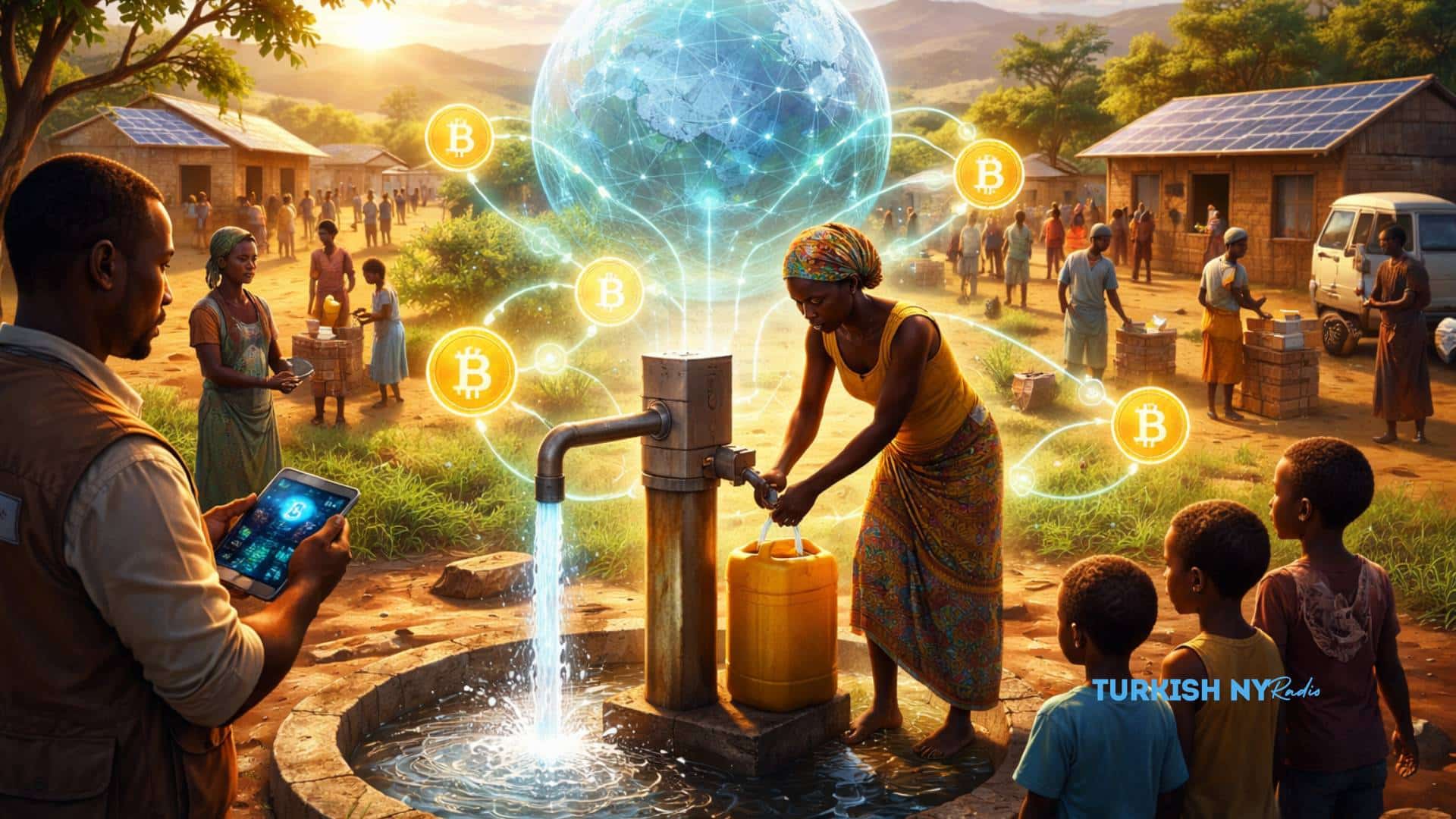
It is whether that money leaves behind something that still works a year later. That is where blockchain philanthropy faces a harder test, especially in African communities where infrastructure, maintenance, and local governance matter more than any fundraising headline.
Why blockchain philanthropy looks stronger online than on the ground
At first glance, the case for blockchain philanthropy sounds persuasive. Public ledgers can show when funds were sent, which wallet received them, and how transactions moved from one address to another. In a sector where donors often worry about waste or leakage, that level of traceability feels refreshing. It gives supporters a cleaner paper trail and gives projects a way to prove that money was not simply lost in a black box.

But transparency is not the same thing as proof of results. A transaction record cannot confirm that a water pump still runs, that a clinic still has supplies, or that a school building is being maintained after the cameras leave.
Research on community and local development has long shown that durable impact depends on local control, planning, and implementation, not only on visible flows of money. That gap explains why blockchain philanthropy can look efficient online while producing weak results on the ground.
What blockchain philanthropy gets right and where it still falls short
To be fair, blockchain philanthropy is not built on empty promises alone. Cross-border donations can move faster than older rails, recordkeeping can be cleaner, and global donor participation can expand when people give in digital assets instead of converting funds through several intermediaries. Those are real advantages, and they help explain why the model continues to attract attention.
The weakness appears when the fundraising model becomes the whole story. Some campaigns are built around token excitement, social media momentum, or a feel-good burst of attention. That can raise money quickly, but it does not automatically create maintenance budgets, local oversight, spare parts, or trusted operators. In practice, blockchain philanthropy often performs best at mobilizing interest, while the hard work begins after the donation wallet stops trending.
Africa tests whether the system can last
That tension becomes sharper in Africa because many philanthropic needs are tied to physical systems, not digital dashboards. Clean water networks, solar installations, school facilities, and community health projects all require upkeep.

When outside teams design projects without enough local leadership, responsibility can fade once the initial campaign ends. Development research has repeatedly found that stronger community ownership improves sustainability because people are more likely to protect, manage, and adapt projects they genuinely control.
This is why critics argue that blockchain philanthropy in Africa is often judged by the wrong metric. The industry likes visible donation totals. Communities need working infrastructure and predictable support. Those are not the same thing.
When a project is built for visibility first, it may deliver short-term relief yet still fail the long game. When it is built around local custodianship, training, and repair funding, the odds improve. That is less glamorous, admittedly, but it is how durable systems are usually built.
The better model is slower, quieter, and more useful
A more mature version of blockchain philanthropy would treat the ledger as one layer of accountability rather than the whole mechanism of trust. Onchain records can support audits, donor confidence, and transparent disbursement. They cannot replace local institutions. They cannot substitute for community buy-in. They cannot solve maintenance by themselves.
That is the real lesson. Blockchain philanthropy is not failing because the technology is useless. It struggles when technology is asked to do the job of governance, planning, and stewardship. If the next phase of blockchain philanthropy is going to matter, it will need fewer splashy launches and more patient structure. In development work, the flashy part is usually the easy part. The lasting part is where the truth comes out.
Conclusion
The current debate around blockchain philanthropy is really a debate about standards. Digital assets can improve fundraising efficiency and financial visibility, but those strengths only matter when projects are rooted in local ownership and long-term care. Africa has become a clear proving ground for that idea. The sector does not need less ambition. It needs better follow-through.
FAQs
What is blockchain philanthropy?
It is the use of blockchain-based assets and tools to raise, move, and track charitable donations.
Why is Africa central to this debate?
Because many projects there involve real-world infrastructure, where long-term upkeep matters more than fundraising speed.
Does transparency guarantee success?
No. Transparent transactions help, but they do not prove that a project still works months or years later.
Glossary of Key Terms
Onchain transparency
A public record of transactions that shows how funds moved across wallet addresses.
Local ownership
A structure in which communities help manage, protect, and maintain a project over time.
Maintenance funding
Money set aside for repairs, operations, and long-term functionality after launch.
Source
Disclaimer: This article is for informational and educational purposes only and should not be treated as investment, legal, or development-policy advice.