![Sun [New]](https://s2.coinmarketcap.com/static/img/coins/64x64/10529.png)



This article was first published on TurkishNY Radio.
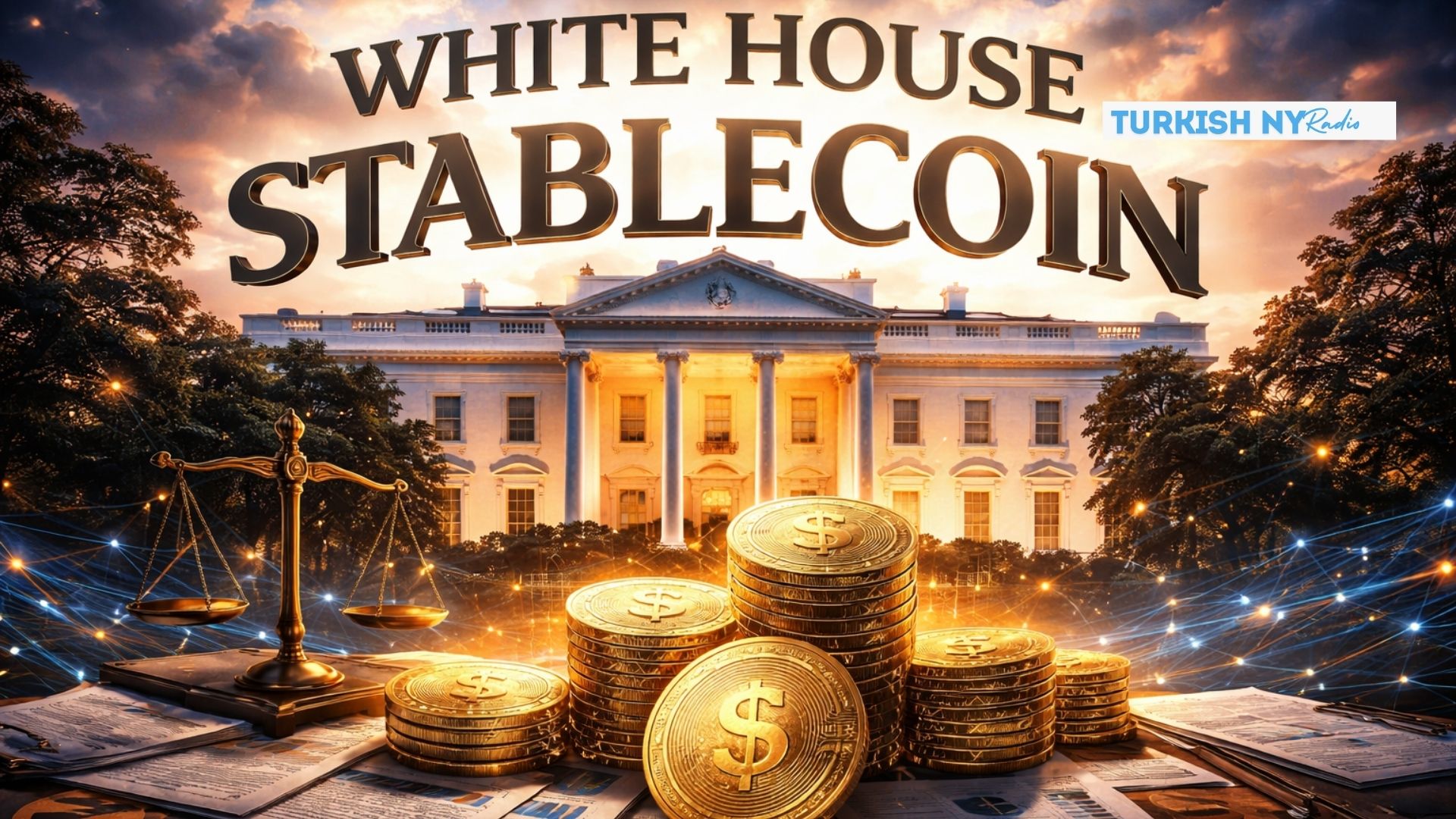
The White House Stablecoin dispute is entering a critical phase, with US authorities stepping in to resolve differences on yield and enforcement guidelines. After weeks of confidential discussions between lawmakers, regulators, cryptocurrency startups, and banking organizations, the White House has taken a more active role in creating legislation.


The crux of the disagreement relates to whether stablecoin developers should be permitted to give yield to holders, and if so, under what conditions. The conclusion of the White House Stablecoin conversations may influence the future of digital money development in the United States.
White House Steps In on Yield Restrictions
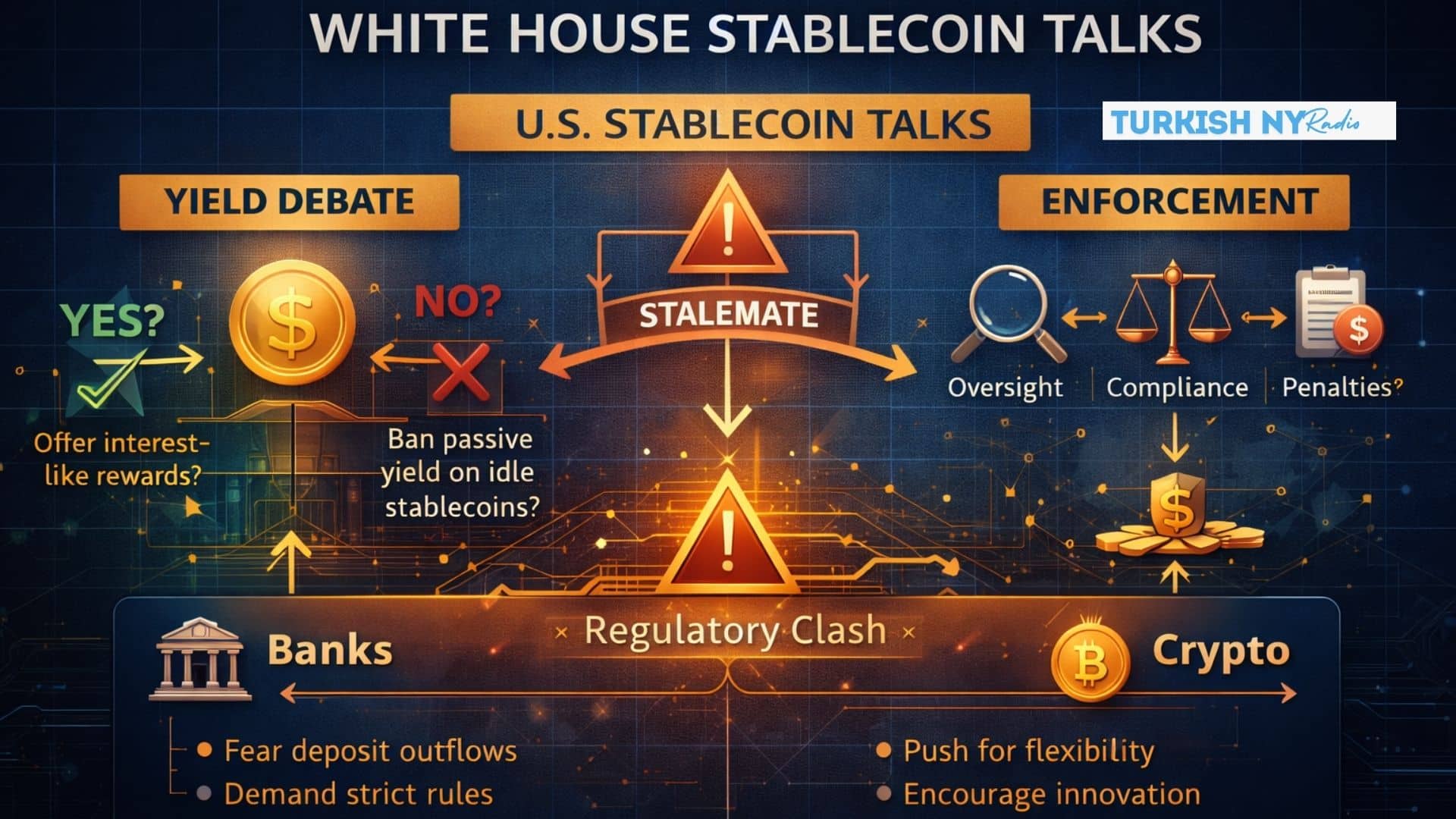
Sources familiar with the talks say administration officials have worked to reduce the scope of debate, especially around yield-bearing stablecoins. The White House Stablecoin position reportedly leans toward restricting passive interest on idle balances while leaving room for activity-based rewards tied to user engagement.
One attendee characterized the discussions as “productive but unresolved,” with yield still the most difficult topic. Banking organizations fear that enabling stablecoin issuers to give interest-like rates will drive deposits away from existing banks, creating risk of liquidity.
Meanwhile, crypto businesses argue that yield systems are necessary for global competition and innovation. The White House Stablecoin strategy currently looks to be aimed at striking a balance between financial stability concerns and industry expansion.
Enforcement Measures Under Discussion
Along from yielding, limitations from regulations are another problematic point. Politicians are thinking about strict adherence regulations and severe penalties for offenders. As reported by policy insiders, the White House Stablecoin conversations include proposals for daily fines for issuers that fail to meet safeguarding, accountability, or license standards.


Regulators want unambiguous government power to monitor stablecoin issuers. Some versions apparently call for obligatory examinations and contemporaneous reserve disclosure.
“The administration wants enforceable guardrails,” one policy advisor said, emphasizing that credibility will depend on strict oversight. The evolving White House Stablecoin proposal suggests that enforcement may be as important as yield limitations.
Banking Versus Crypto Companies
The distance among banks and cryptocurrency firms remains stark. Traditional banking institutions worry that yield-bearing stablecoins may increase deposit withdrawals, especially during times of economic hardship. They suggest that stablecoins with interest might operate as uninsured bank accounts.
Crypto enthusiasts argue that creativity should not be impeded. They argue that current payment infrastructure necessitates programmable digital currencies that can combine incentives and decentralized apps.
The White House Stablecoin discussions attempt to mitigate systemic risk while maintaining US competitiveness. Officials are allegedly looking for an arrangement that avoids disrupting banks while still allowing stablecoin development under controlled settings.
Congressional Delay and Resistance
With MPs demanding for regulatory certainty by 2026, the competition is on to create a structure. The White House Stablecoin project reflects a broader, bipartisan interest in implementing comprehensive digital asset rules.
As stated by industry leaders, legal certainty might improve adoption by institutions and the US dollar’s dominance in worldwide markets for cryptocurrency. Critics claim that stringent laws may drive innovation elsewhere.
As conversations keep going, the White House Stablecoin procedure highlights how important stablecoins are becoming in fiscal policy debates.
Conclusion
The next few weeks could decide either America chooses a liberal or restricted stablecoin system. The White House Stablecoin conversations indicate a complex struggle between preserving the banking sector and fostering digital asset development.
If consensus is reached, the resulting framework could become the foundation of U.S. digital dollar regulation for years to come. For now, yield and enforcement remain the defining issues shaping the future of stablecoin policy.
Summary
The White House Stablecoin conversations have heated up as officials reduce their focus on yield caps and enforcement guidelines. Banks are opposed to interest-earning stablecoins, citing monetary stability problems, but crypto companies claim that incentive systems drive innovation. Enforcement ideas include stringent supervision and severe punishments. As legislators seek clarification in 2026, the conclusion might shape how the United States balances financial security with digital object expansion.
Glossary of Key Terms
Stablecoin: A digital currency linked to a secure commodity, usually the US dollar.
Yield: Refers to the amount of profit or income gained by owning a commodity.
Reserve Requirements: Guidelines mandating issuers to have enough backup securities.
Enforcement Provisions: Include legal sanctions and supervision measures to ensure conformance.
Liquidity Risk: Refers to the possibility that insurance companies would fail to satisfy their immediate liabilities.
FAQs for White House Stablecoin
1. What is the controversy about dividend in stablecoin oversight?
institutions warn that yield-bearing stablecoins may draw deposits from traditional institutions, causing instability.
2. What exactly is the White House’s participation in the discussions?
The White House is aiding discussions and focusing parliamentary goals.
3. Might stablecoin sellers face monetary penalties?
Yes, plans contain severe fines for noncompliance with resource or reporting standards.
4. Whenever may regulations be adopted in full?
Representatives intend to approve a structure in 2026, although no definitive timetable has been set.
5. What exactly would this indicate for digital currency customers?
Based on the conclusion, users may face restrictions on passive yield but better-regulated safeguards.