
• Home
  • About Us
  • Terms and Conditions
  • Privacy Policy
  • Disclaimer
  • Contact
17 April Friday, 2026
  • tr Türkçe
  • en English
TurkishNY Radio
No Result
View All Result
  • Home
  • Cryptocurrency
  • Business
  • Economy
  • Home
  • Cryptocurrency
  • Business
  • Economy
No Result
View All Result
  • tr Türkçe
  • en English
TurkishNY Radio
No Result
View All Result
Bitcoin Bitcoin (BTC) $75,777.12 ↑ 1.45%
Ethereum Ethereum (ETH) $2,364.96 ↑ 1.03%
Tether USDt Tether USDt (USDT) $1.00 ↑ 0.02%
XRP XRP (XRP) $1.45 ↑ 2.14%
BNB BNB (BNB) $633.01 ↑ 1.93%
USDC USDC (USDC) $1.00 ↓ -0.02%
Solana Solana (SOL) $88.14 ↑ 3.30%
TRON TRON (TRX) $0.32 ↓ -0.94%
Dogecoin Dogecoin (DOGE) $0.10 ↑ 2.29%
Hyperliquid Hyperliquid (HYPE) $43.65 ↓ -2.66%
UNUS SED LEO UNUS SED LEO (LEO) $10.16 ↑ 0.07%
Cardano Cardano (ADA) $0.26 ↑ 3.36%
Bitcoin Cash Bitcoin Cash (BCH) $450.19 ↑ 2.33%
Chainlink Chainlink (LINK) $9.54 ↑ 2.32%
Monero Monero (XMR) $348.25 ↑ 1.56%
Ethena USDe Ethena USDe (USDe) $1.00 ↓ -0.02%
Canton Canton (CC) $0.15 ↑ 1.47%
Stellar Stellar (XLM) $0.17 ↑ 4.78%
Zcash Zcash (ZEC) $333.09 ↓ -2.97%
Dai Dai (DAI) $1.00 ↓ 0.00%
MemeCore MemeCore (M) $3.73 ↑ 26.30%
RaveDAO RaveDAO (RAVE) $18.72 ↑ 23.71%
Litecoin Litecoin (LTC) $56.29 ↑ 1.43%
Avalanche Avalanche (AVAX) $9.64 ↑ 1.27%
World Liberty Financial USD World Liberty Financial USD (USD1) $1.00 ↓ -0.01%
PayPal USD PayPal USD (PYUSD) $1.00 ↓ 0.00%
Hedera Hedera (HBAR) $0.09 ↑ 4.19%
Sui Sui (SUI) $1.00 ↑ 2.49%
Shiba Inu Shiba Inu (SHIB) $0.00 ↑ 2.89%
Toncoin Toncoin (TON) $1.41 ↑ 0.73%
Cronos Cronos (CRO) $0.07 ↑ 1.39%
Bittensor Bittensor (TAO) $252.71 ↑ 5.37%
Tether Gold Tether Gold (XAUt) $4,786.75 ↓ -0.19%
World Liberty Financial World Liberty Financial (WLFI) $0.08 ↑ 0.95%
PAX Gold PAX Gold (PAXG) $4,791.94 ↓ -0.28%
Global Dollar Global Dollar (USDG) $1.00 ↓ -0.01%
Mantle Mantle (MNT) $0.68 ↑ 2.42%
Polkadot Polkadot (DOT) $1.31 ↑ 2.66%
Uniswap Uniswap (UNI) $3.45 ↑ 4.70%
Pi Pi (PI) $0.18 ↑ 6.15%
OKB OKB (OKB) $86.41 ↑ 1.28%
NEAR Protocol NEAR Protocol (NEAR) $1.39 ↓ -0.50%
Sky Sky (SKY) $0.08 ↑ 3.71%
Aave Aave (AAVE) $116.68 ↑ 9.48%
Aster Aster (ASTER) $0.68 ↑ 1.96%
Pepe Pepe (PEPE) $0.00 ↑ 3.64%
USDD USDD (USDD) $1.00 ↑ 0.02%
Ripple USD Ripple USD (RLUSD) $1.00 ↓ -0.01%
Internet Computer Internet Computer (ICP) $2.63 ↑ 2.16%
Ethereum Classic Ethereum Classic (ETC) $8.65 ↑ 1.41%
Bitget Token Bitget Token (BGB) $1.90 ↓ -0.10%
Ondo Ondo (ONDO) $0.27 ↑ 1.15%
KuCoin Token KuCoin Token (KCS) $8.63 ↑ 0.37%
DeXe DeXe (DEXE) $12.37 ↑ 7.77%
Algorand Algorand (ALGO) $0.12 ↑ 3.19%
United Stables United Stables (U) $1.00 ↓ -0.11%
Worldcoin Worldcoin (WLD) $0.31 ↓ -1.12%
Kaspa Kaspa (KAS) $0.04 ↑ 8.52%
Ethena Ethena (ENA) $0.11 ↑ 10.50%
Render Render (RENDER) $1.88 ↓ -0.02%
Polygon (prev. MATIC) Polygon (prev. MATIC) (POL) $0.09 ↑ 1.85%
Quant Quant (QNT) $76.46 ↑ 2.65%
Cosmos Cosmos (ATOM) $1.82 ↑ 1.41%
GateToken GateToken (GT) $7.31 ↑ 2.42%
Arbitrum Arbitrum (ARB) $0.14 ↑ 12.11%
Aptos Aptos (APT) $0.98 ↑ 4.52%
Morpho Morpho (MORPHO) $1.90 ↑ 8.63%
Filecoin Filecoin (FIL) $0.99 ↑ 0.35%
OFFICIAL TRUMP OFFICIAL TRUMP (TRUMP) $3.02 ↑ 3.20%
Flare Flare (FLR) $0.01 ↓ -0.56%
Pump.fun Pump.fun (PUMP) $0.00 ↑ 3.28%
Jupiter Jupiter (JUP) $0.18 ↑ 7.58%
XDC Network XDC Network (XDC) $0.03 ↑ 0.67%
VeChain VeChain (VET) $0.01 ↑ 1.94%
Midnight Midnight (NIGHT) $0.04 ↑ 6.03%
LayerZero LayerZero (ZRO) $1.96 ↑ 0.39%
Nexo Nexo (NEXO) $0.92 ↑ 1.39%
Stable Stable (STABLE) $0.03 ↑ 1.32%
Bonk Bonk (BONK) $0.00 ↑ 4.09%
JUST JUST (JST) $0.06 ↑ 9.53%
PancakeSwap PancakeSwap (CAKE) $1.62 ↑ 1.43%
Artificial Superintelligence Alliance Artificial Superintelligence Alliance (FET) $0.23 ↓ -0.74%
siren siren (SIREN) $0.69 ↓ -20.57%
TrueUSD TrueUSD (TUSD) $1.00 ↑ 0.00%
Pudgy Penguins Pudgy Penguins (PENGU) $0.01 ↑ 5.15%
Virtuals Protocol Virtuals Protocol (VIRTUAL) $0.74 ↑ 4.17%
Dash Dash (DASH) $36.73 ↓ -2.23%
Stacks Stacks (STX) $0.24 ↑ 2.49%
EURC EURC (EURC) $1.18 ↑ 0.13%
Chiliz Chiliz (CHZ) $0.04 ↓ -4.15%
edgeX edgeX (EDGE) $1.22 ↓ -1.57%
First Digital USD First Digital USD (FDUSD) $1.00 ↓ -0.05%
Venice Token Venice Token (VVV) $9.05 ↑ 4.46%
ether.fi ether.fi (ETHFI) $0.49 ↑ 6.42%
Sei Sei (SEI) $0.06 ↑ 2.62%
Tezos Tezos (XTZ) $0.38 ↑ 3.12%
Monad Monad (MON) $0.03 ↓ -4.72%
Aerodrome Finance Aerodrome Finance (AERO) $0.42 ↑ 11.28%
币安人生 币安人生 (币安人生) $0.37 ↑ 8.71%
Celestia Celestia (TIA) $0.40 ↑ 10.89%
Home Economy

What is Liquid Staking Token: The DeFi “Receipt” Powering Passive Yield in 2025

Jonathan Swift by Jonathan Swift
14 December 2025
in Economy, Cryptocurrency
Reading Time: 6 mins read
0
What is Liquid Staking Token: The DeFi “Receipt” Powering Passive Yield in 2025

This article was first published on TurkishNYR.

Liquid staking is no longer a niche corner of crypto as Proof-of-Stake networks mature, more capital is being locked to earn staking rewards, and more traders want that capital to stay usable. The result is a simple invention with big ripple effects: the Liquid Staking Token, a tradable receipt for assets that remain staked.


Table of Contents

Toggle
    • YOU MAY BE INTERESTED
    • How CLARITY Act Caught in Fight Over Stablecoin Rewards
    • Altcoin Season Approaches – BTC Stays Violent, Avalanche Advances While APEMARS Leads Best Crypto To Buy Now
  • The mechanics that make it work
  • Why 2025 keeps pulling liquidity into staking receipts
  • The upside: capital efficiency with fewer dead zones
  • The downside: risks that stack, not risks that disappear
  • The indicators that matter most before chasing yield
  • A quieter tailwind: regulation and wrappers
  • Conclusion
  • Frequently Asked Questions
    • Glossary of key terms
      • References

YOU MAY BE INTERESTED

How CLARITY Act Caught in Fight Over Stablecoin Rewards

How CLARITY Act Caught in Fight Over Stablecoin Rewards

17 April 2026
image 368

Altcoin Season Approaches – BTC Stays Violent, Avalanche Advances While APEMARS Leads Best Crypto To Buy Now

16 April 2026

In plain terms, staking typically makes tokens illiquid. Liquid staking wraps that locked position into a token that can move through DeFi, while the underlying stake keeps working in the background.

The mechanics that make it work

On a Proof-of-Stake chain, staking supports consensus and network security. Withdrawals are not always instant. Ethereum, for example, uses protocol rules and queues to pace withdrawals and exits.

A liquid staking protocol accepts deposits, delegates stake through validators, and mints a receipt token. That receipt is the Liquid Staking Token, representing a claim on the underlying staked assets plus rewards that accumulate over time. The original assets remain committed to staking, while the receipt can be traded, sold, or used in DeFi.

Why 2025 keeps pulling liquidity into staking receipts

DeFi is collateral hungry as a receipt that can be posted as collateral or swapped during volatile sessions is valuable. In that setup, a Liquid Staking Token can act as portable collateral across multiple venues. That is why liquid staking receipts show up across lending markets, liquidity pools, and structured strategies.

The category is also large enough to matter systemwide. As of 11 Dec 2025, data aggregators tracking liquid staking protocols put total value locked around $60.78b, with the largest protocol near $28b.
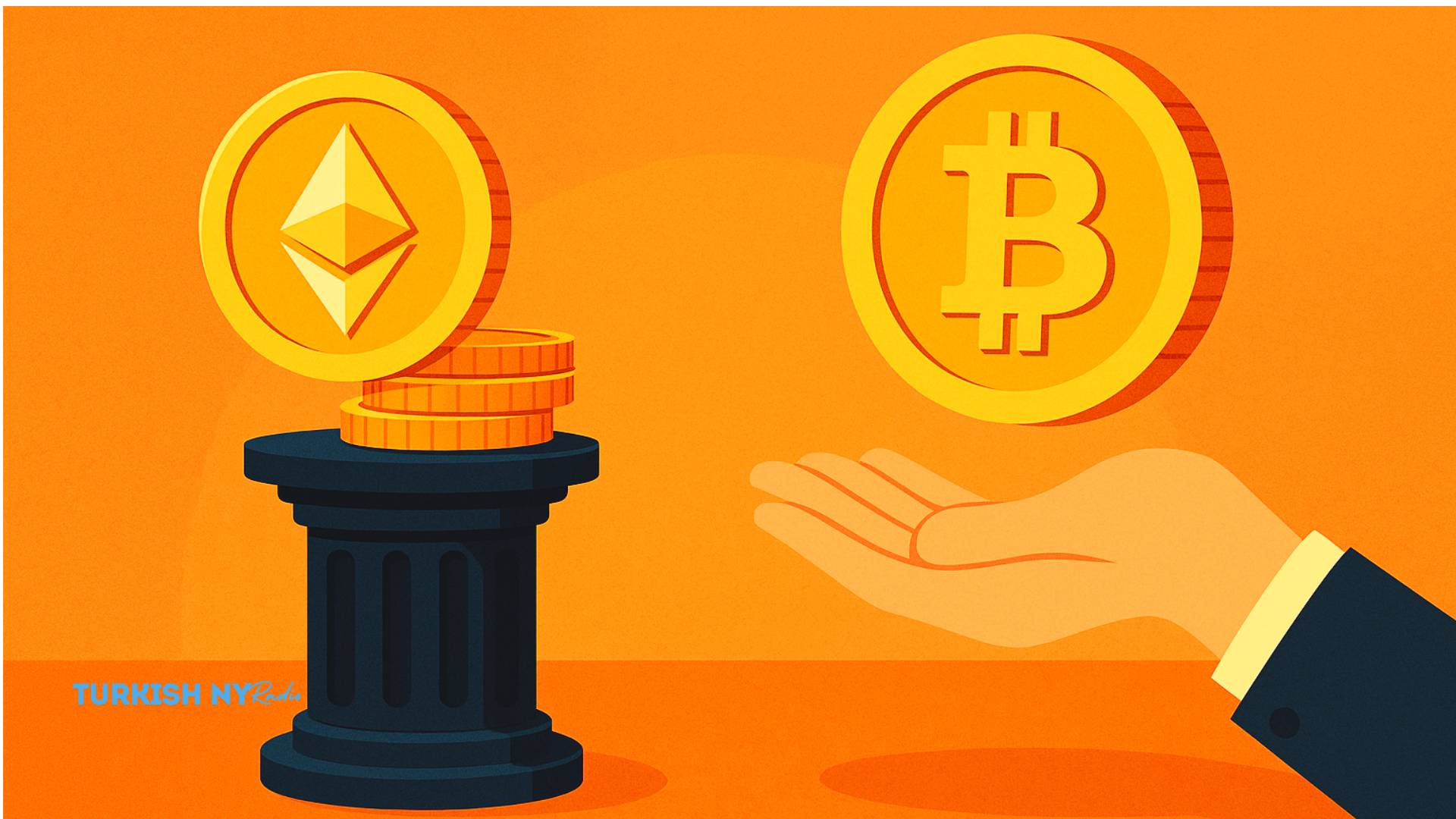
What is Liquid Staking Token: The DeFi “Receipt” Powering Passive Yield in 2025

The upside: capital efficiency with fewer dead zones

The appeal is capital efficiency as a staker can earn the base staking yield and still keep exposure deployable, instead of waiting through a withdrawal process to regain flexibility. This is why the Liquid Staking Token is often treated as DeFi plumbing: it keeps capital moving.

Some strategies add a second layer by using the receipt in lending or liquidity pools. Others go further into restaking, which can resemble rehypothecation because the same underlying stake is reused to secure additional services in exchange for extra yield.

The downside: risks that stack, not risks that disappear

Liquid staking is not native staking with better marketing. It introduces additional risk surfaces.

Smart contract risk is real because the receipt and its accounting live in code. Ethereum documentation explicitly notes that minting a liquid staking receipt introduces smart contract risk relative to staking directly.

Validator risk also remains. Proof-of-Stake includes penalties for downtime and slashing for dishonest behavior, and slashing can destroy part of a validator stake and eject them from the validator set.

Then there is the market risk that tends to hurt the most during panic: liquidity. Even when a receipt tracks its underlying asset most days, it can trade at a discount when sellers overwhelm liquidity or when leveraged positions unwind. Onchain research around the 2022 staked ETH discount highlighted how discounts can trigger liquidations that intensify selling pressure.

That is the key reminder: a Liquid Staking Token is a market instrument, not a guaranteed 1:1 promise at every second.

Proof-of-Stake

The indicators that matter most before chasing yield

Liquid staking rewards discipline, not vibes. Several indicators help separate healthy receipts from fragile ones.

The first is the discount or premium. A widening gap between a receipt and its underlying asset can signal stressed liquidity or exit friction, and it can tighten collateral health across lending markets.

The second is liquidity depth and venue quality. Deep pools support orderly exits; thin pools can turn normal selling into abrupt dislocation.

The third is concentration and integration risk. When one receipt becomes the default collateral across DeFi, shocks can spread faster, especially if governance or validator sets are highly concentrated.

The fourth is the yield stack. A headline APY can blend base staking yield with incentives, borrowing loops, or restaking rewards. Higher yield usually means more dependencies. This is where Liquid Staking Token due diligence moves from rate shopping to risk mapping.

A quieter tailwind: regulation and wrappers

Regulatory tone has also shifted in ways that matter for adoption. In August 2025, reporting noted that U.S. regulators clarified that liquid staking tokens and related services were not treated as securities in that context, which reduced uncertainty for platforms and market participants.

At the same time, staking exposure has been moving into more familiar vehicles, including institutional products that hold staked receipts. That trend pushes the market toward clearer disclosures, predictable redemption mechanics, and deeper liquidity.

Conclusion

Liquid staking is a genuine upgrade for Proof-of-Stake markets because it reduces the tradeoff between earning yield and staying liquid. Still, the benefit comes with complexity. The safest looking yields can hide the sharpest edge when liquidity thins and leverage unwinds.

In 2025, the strongest projects are not the ones promising the highest number. They are the ones keeping liquidity deep, withdrawals credible, and risk transparent, so the Liquid Staking Token remains useful when markets stop being calm. This article is educational and not investment advice.

Frequently Asked Questions

What is a liquid staking token?

It is a tradable receipt that represents staked assets on a Proof-of-Stake network, plus accrued rewards.

Is a Liquid Staking Token the same as staking?

ADVERTISEMENT

No. It is a tokenized layer on top of staking that can be traded and used in DeFi, which adds smart contract and market risks.

Why can receipts trade below the underlying asset?

Liquidity stress and leverage unwind cycles can push receipts into a discount, which can trigger liquidations and further selling.

What is slashing?

It is a penalty that can destroy part of a validator stake and remove the validator for dishonest behavior.

Does liquid staking guarantee higher returns?

No. It can enable additional strategies, but additional yield generally brings additional dependencies and risk.

Glossary of key terms

Liquid Staking Token: A token that represents a staked position and can be traded or used in DeFi while the underlying assets remain staked.

Proof-of-Stake: A consensus mechanism where validators stake capital that can be penalized or slashed for bad behavior.

Staking rewards: The yield paid for participating in network security and consensus.

Discount or premium: A divergence where a receipt trades below or above its reference asset, often influenced by liquidity and leverage.

Withdrawal queue: Protocol rules that regulate the pace of withdrawals and exits.

References

DeFi Llama

Consensys

Lido Finance

Bitcoin

Tags: defiLiquid StakingLiquid Staking TokenProof of Stake
ShareTweetSharePinSend
Previous Post

Top Crypto to Watch Now: Apeing Whitelist Rockets Ahead While Official Trump and Bonk Heat Up the Market 

Next Post

Top Crypto Whitelist to Join in 2025 Before $APEING Skyrockets and Stellar and Solana Show Gains

Jonathan Swift

Jonathan Swift

A crypto journalist with an understanding of blockchain technology. Skilled in simplifying complex topics for diverse audiences, from beginners to experts. Because I believe in words as they are the children of mind.

SIMILAR NEWS

How CLARITY Act Caught in Fight Over Stablecoin Rewards
News

How CLARITY Act Caught in Fight Over Stablecoin Rewards

17 April 2026
image 368
Sponsored Article

Altcoin Season Approaches – BTC Stays Violent, Avalanche Advances While APEMARS Leads Best Crypto To Buy Now

16 April 2026
image 362
Sponsored Article

Best Crypto Presale: APEMARS 2,363% ROI Structure Signals a Crypto Bull Run, as Solana and Hyperliquid Face Selling Pressure

16 April 2026

Leave a Reply Cancel reply

Your email address will not be published. Required fields are marked *

Search

No Result
View All Result
DMCA
PROTECTED

Categories

  • Business
  • Cryptocurrency
  • Economy
  • en
  • News
  • Politics
  • Sponsored Article
  • World

Recent Posts

  • How CLARITY Act Caught in Fight Over Stablecoin Rewards
  • Altcoin Season Approaches – BTC Stays Violent, Avalanche Advances While APEMARS Leads Best Crypto To Buy Now
  • Best Crypto Presale: APEMARS 2,363% ROI Structure Signals a Crypto Bull Run, as Solana and Hyperliquid Face Selling Pressure
  • From MemeCore and Pepe Success Stories to APEMARS’ 2,300% ROI Potential: Don’t Miss This Top Meme Coin Presale 2026 – Grab Stage 16 Before the Price Jumps
  • Goldman Sachs Files Bitcoin Premium Income ETF Using Covered Call Strategy
TurkishNY Radio

Site Navigation

  • Home
  • About Us
  • Terms and Conditions
  • Privacy Policy
  • Disclaimer
  • Contact

TurkishNY Radio

Banner 1
Banner 2
No Result
View All Result
  • Home
  • Cryptocurrency
  • Business
  • Economy
  • tr Türkçe
  • en English

  • English