This article was first published on TurkishNYR.
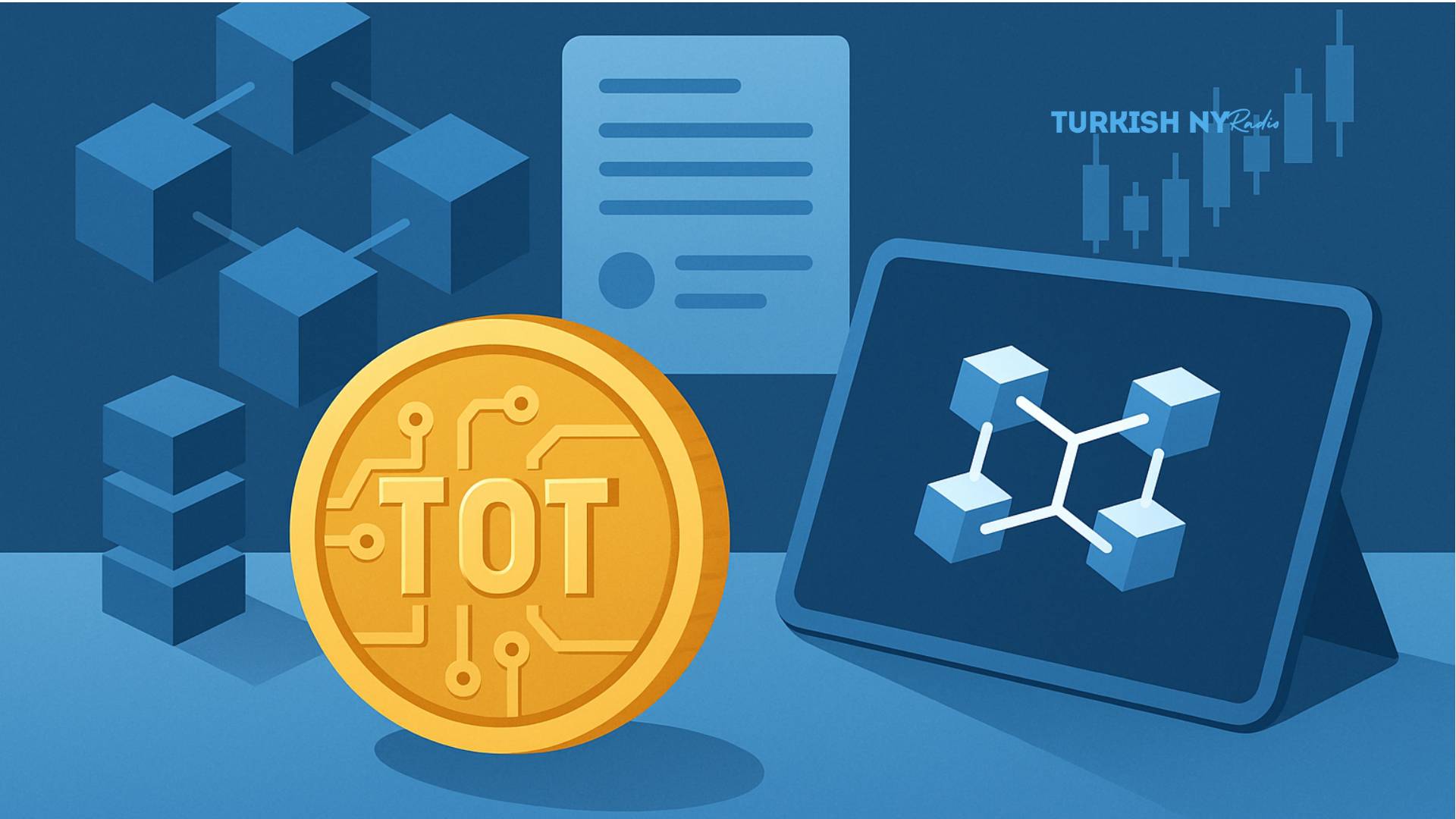
A crypto token is the term for a digital unit of value that lives on a blockchain. It is not paper or metal; rather, it is data on a shared ledger maintained by independent computers across systems. Each time a crypto token moves from one wallet to another, the network checks and adds the transaction to a string of blocks.


This structure allows history to be seen and is very difficult, almost impossible, to change.


In practice, a crypto token can play a wide range of roles. It can function like digital cash, open up a piece of software, give out some earnings, or function as a passport to a community or internet game. Realizing this adaptability is the first step in concocting a cool and professional mindset about token markets.
How Tokens Work on Blockchain
Most large blockchains have a native coin which pays transaction fees and ensures network security. On top of this base layer, developers write smart contracts to create and manage new tokens. When a holder sends one of these tokens, only then does the smart contract update ledger balances, and the consensus mechanism for this chain-property are confirmed by ratification on the network.
This mutual underpinning means thousands of assets can exist on one network. Each project can set rules for its own supplies, rights of access and rewards. Yet all such systems remain securely embedded in a common base of protection; this is one reason why models based on tokens continue to attract organizers, businesses, and internet customers.
Coins compared with tokens
Coins and tokens are interrelated, but only indirectly so. A coin belongs to the base blockchain itself, whereas a token sometimes for instance can be thought of as an offshoot or reflection of something else. A token is typically issued by a project that builds on top of that chain.
The native coin pays fees and may support staking or validation. Each time a different coin is added to the network, it is also unique for its behavior in trading or exchange with all coins beforehand. Someone who holds the native coin is mainly exposed to the health of the core network. The holder of a project token also takes on execution risk, competition risk, governance risk linked to that particular ecosystem.
Major Categories Of Tokens
Of course every project is different, but most designs can be fitted into a few broad categories that appear over and over again across the markets.
Utility tokens
A utility token helps users interact with a product or service. It may pay protocol fees, provide discounts and reward loyal customers. While the economic design is sound, the long-term demand usually comes from authentic platform activity rather than mere speculation.
Governance tokens
A governance token gives holders a formal voice in the future of a protocol. Token holders can propose upgrades, vote on parameter changes, decide how shared treasury funds are used. When a governance token is distributed over a wide spectrum of influencers, power can spread out among many players. When a few big wallets hold most of the supply, major decisions are made for the benefit only of their narrow group interests.
Asset-backed and security style tokens
Some projects issue tokens that represent traditional assets such as equity, funds and property. In many jurisdictions, they are classified under securities or investment laws. In that environment, a token that tracks a real-world asset might mean more efficient settlement and global transfer. However, it also needs strong legal, technical and storage protection.
Non-Fungible Tokens (NFTs)
Tokens that track specific items rather than units can be exchanged. One could be an artwork, a rare in-game object, a ticket, or a membership pass for something like the airline lounge. This same pattern can also carry customer loyalty plans, where a certain amount of loyalty points are converted into points under various brands on Amazon.
Key Indicators for Evaluating Token Projects
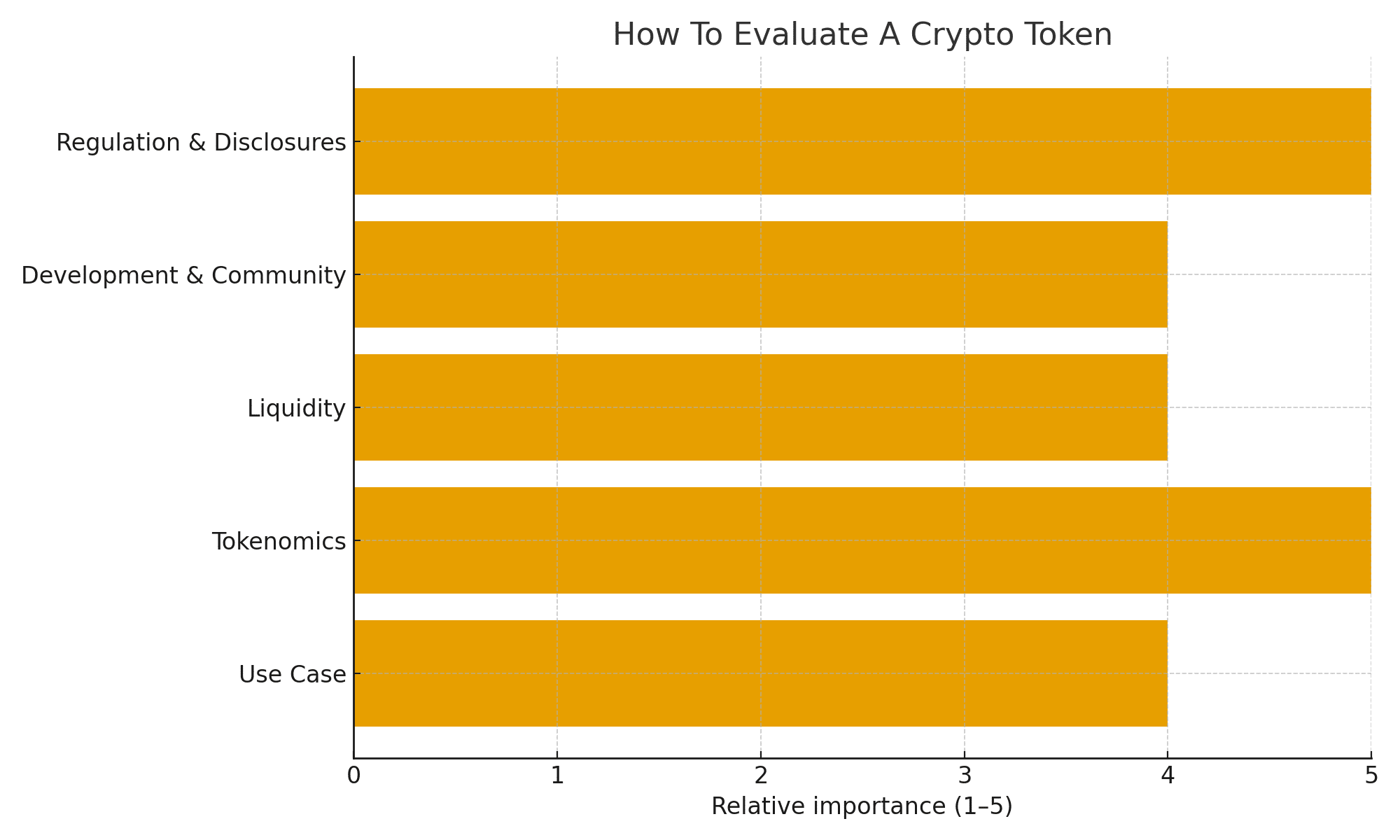
With so many assets clamoring to get listed on exchanges, a simple checklist can bring readers back down to earth as they go over each token.
Real economic purpose
A strong project explains clearly the problem it is solving and why a token is part of the solution. If no fair role can be found for the token outside of raising funds, this is bad news.
Tokenomics and supply
Tokenomics involves how many tokens there are, how new units come into circulation and who has the largest holdings. Clear emission schedules, balanced allocations between teams, investors, and the general public, together with sane lockups, show that without them, holders will be diluted to death. A token whose supply rules are hazy or frequently changing should be looked at with some suspicion.
Liquidity and market quality
Liquidity is healthy when a token trades on more than one venue, and there is enough volume for normal bids and asks to go through without causing drastic price movement. Thin order books increase volatility and can make getting out painful, particularly in less laudable times like these.
Development and community
An active code repository, safety audits, bug bounties and regular public updates show that a team is digging for the long haul. A considerate community that asks tough questions and helps make decisions through governance can add one more layer of push-back on decisions with serious consequences.
Regulatory and disclosure stance
The rules and classification of digital assets are still developing, and vary from region to region. Teams that offer clear documentation, are careful not to overstate potential returns, and respect local guidance are better placed to work over many market cycles. For the investor, strong disclosures are equivalent to a practical token of respect.
Risk, Safety Habits, And Personal Responsibility
Every crypto token has real risks connected with it. Smart contract bugs, design mistakes, treasury scandal and failures in governance have all previously led to large losses. Market cycles can be of a particularly harsh sort; a rapid rally is followed by a sudden, deep correction. It is entirely possible for tokens to lose most of their value if a project fails, or the community moves on.
Personal protection to the fore. Holders are solely responsible for their wallets, seed phrases, and device sanitation. Phishing attacks, fake customer support accounts, and cloned interfaces are still directed at newbies and experienced traders alike. Simple habits like using hardware wallets for larger holdings, and inspecting official links, can cut out a lot of the most common dangers.
Summing up
A clear view of the crypto token changes a complicated subject into something more manageable. Tokens are programmable units of code which reside on blockchains; they can contain information storage, access rights, and governance. From the perspective of purpose, tokenomics, liquidity, development activity, and regulatory policy, readers can distinguish the stronger projects from mere transient noise.
No single framework can remove risk altogether, and this article cannot replace professional independent advice. It does however give a solid beginning for people who wish to approach token-based systems with care and long-term thinking.
FAQs
What makes a crypto token valuable on the market?
Value typically indicates true utility, a limited production of the underlying project, the number of users and how the project itself is perceived.
Can a token exist without its own blockchain?
Yes.Most tokens are based on larger networks and need the guarantees of the said network’s security and consensus mechanism for their smart contracts system.
Is every token suitable for long term storage?
No.Given that most are experimental or quite short-term in nature these days, good diversification, careful research and reasonable sized positions remain important.
Glossary Of Key Terms
Blockchain: A digital ledger shared across a network on which transactions are grouped into blocks, each one linked previous one and secured by cryptographic methods.
Cryptocurrency: A digital asset which uses cryptography and decentralized infrastructure so that it can function without a single central authority.
Crypto token: A programmable digital unit that exists on a blockchain and can represent value, access rights or participation in governance.
Tokenomics: The economic structure of a token, including its supply, distribution and incentives. Also refer to how it circulates.
Utility token: A token that grants access to a service, discount or rewards program, or feature set within a digital ecosystem.
Governance token: A token which allows holders to vote in a decentralized project’s upgrades, parameter changes or treasury spending.
Reference