
The article was first published on TurkishNY Radio.
Regulators no longer view digital assets as a harmless experiment. As trading volumes grow and more institutions step in, governments are tightening the net around crypto taxation. For investors, the message is simple: tax authorities are watching, and ignorance is not a defence.


Today, crypto taxation sits at the intersection of finance, technology, and public policy. In many major markets, tax agencies classify digital assets as property or financial assets rather than as traditional currency, so general rules on gains, losses, and income apply to coins and tokens as well.


Investors who understand the basic structure of crypto taxation gain a clearer picture of their real after-tax returns and can make calmer decisions when markets swing.
How authorities define taxable crypto events
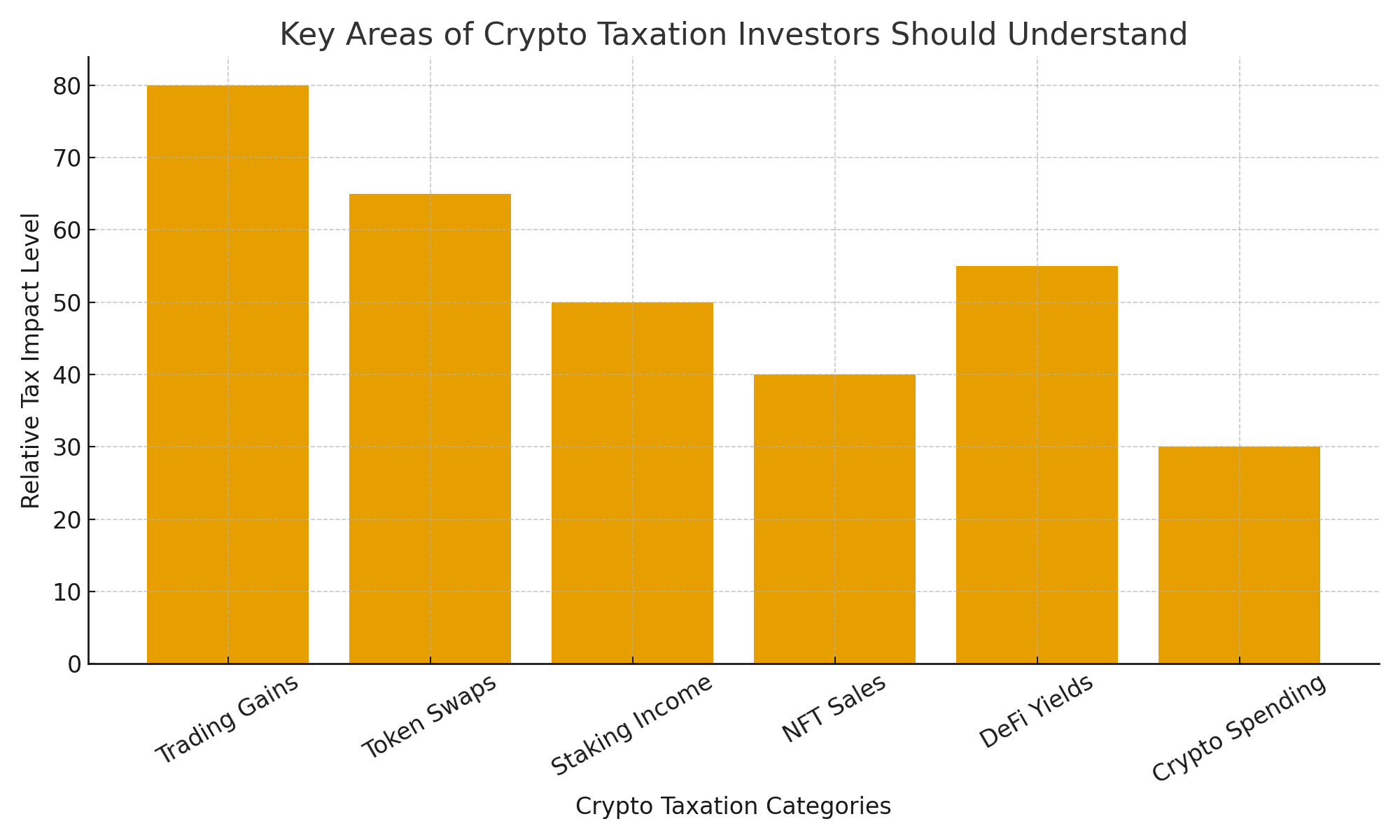
In traditional markets, most people know that selling stock at a profit creates a taxable event. With crypto taxation, the list of taxable actions is often longer and less intuitive. Selling coins for fiat, swapping one token for another, spending crypto on goods or services, or cashing out stablecoins can all trigger a tax bill, depending on the jurisdiction.
Regulators also pay close attention to income style activity. Staking rewards, mining proceeds, referral bonuses, token incentives from play-to-earn games, and yields from lending or liquidity pools are frequently treated as taxable income when received, based on fair market value at that time. Later, when those coins are sold, any extra profit or loss can fall under the capital gains part of crypto taxation.
Capital gains, holding periods, and loss management
For many investors, capital gains sit at the heart of crypto taxation. Short-term gains, where assets are held for a relatively brief period, are often taxed more heavily than long-term gains. That gap encourages some investors to think about holding periods as carefully as they think about entry and exit points on a chart.
Losses matter as much as profits. When markets fall, investors can sometimes use realised losses to offset gains elsewhere in a portfolio, which may reduce their overall tax bill. In some systems, unused losses can even carry forward into future years. Effective planning around crypto taxation therefore depends on accurate tracking of purchase prices, sale prices, and dates across many trades.
Record keeping is now part of the job
The days when investors could rely on memory and a few screenshots are ending. With more exchanges and brokers sharing information with authorities, and with new global reporting standards for digital assets, serious traders now treat record keeping as a core part of crypto taxation compliance rather than an afterthought.
Detailed logs of trades, wallet to wallet transfers, on chain activity, and income events are increasingly important. Many investors lean on specialist software that pulls data from several exchanges, wallets, and protocols and then produces reports in the format local tax offices expect. These tools do not remove responsibility, but they make it easier to build a complete picture for crypto taxation, especially for investors who trade often or across multiple platforms.
DeFi, NFTs, and the new frontiers of tax law
Decentralised finance and non fungible tokens have opened a new chapter in crypto taxation. Yield farming, lending protocols, perpetual futures, and structured products can generate many small income streams and capital gains in a short period of time. NFT trading raises extra questions because some systems treat collectables and artwork differently from standard investment assets.
Policymakers are still catching up. Many governments are running public consultations or publishing draft rules that address these newer use cases and connect them with emerging international standards for data sharing on digital assets. For investors, the lesson is clear: complex DeFi strategies often come with complex crypto taxation outcomes, so tax impact should sit beside yield, liquidity, and risk when someone evaluates a strategy.
Global cooperation and enforcement pressure
Tax transparency around digital assets is moving from optional to expected. Under international frameworks for information exchange, including new rules for reporting on crypto assets, exchanges and service providers are being asked to share more data with tax authorities, who can then pass that data across borders. As more countries sign up, crypto taxation becomes part of a global reporting network rather than a purely local issue.
Recent enforcement trends underline this shift. Some tax authorities have already sent large waves of warning letters to investors suspected of failing to declare digital asset gains, often using information obtained directly from exchanges and on chain analytics. In that environment, investors who ignore crypto taxation risk audits, penalties, and reputational damage alongside any unpaid tax.

Key tax indicators every crypto investor should track
Alongside price, volume, and on chain data, tax variables have become key indicators for serious market participants. Holding periods, realised and unrealised gains, income events such as staking and airdrops, and jurisdiction-specific thresholds all shape the final tax outcome. Two traders may show the same trading profit before tax, yet end up with very different net results once local rules are applied.
Sophisticated investors increasingly build tax awareness into strategy from the start. Some prefer lower turnover spot positions when crypto taxation rules make frequent trading expensive. Others choose long term staking in jurisdictions where policy rewards longer holding periods. In practice, the line between market strategy and tax strategy is now very thin.
Regulatory clarity is still evolving
Despite rapid progress, global rules on crypto taxation remain uneven. Some jurisdictions publish detailed guidance that covers everything from DeFi rewards to NFTs, while others operate with high-level principles and case-by-case interpretation. This patchwork can feel messy, but it reflects how quickly the underlying technology and market structure continue to change.
Investors need to view official tax notices, explanatory guidance, and policy statements as living documents rather than permanent answers carved in stone. Practices that seem acceptable today may be updated after legal challenges, political debates, or new international standards. Staying informed has become part of disciplined compliance, just as watching macro data is part of serious market analysis.
Risk management, compliance, and professional support
For many retail traders, tax language can feel intimidating. However, the risk of ignoring crypto taxation is usually greater than the effort required to understand it. Under reported income, missing forms, and inconsistent records can lead to back taxes, interest charges, and penalties. In more serious cases, deliberate evasion can bring legal action as well as financial loss.
Many investors now seek support from accountants or advisers who understand digital assets. Specialists can help interpret local rules, choose appropriate accounting methods, and align trading or staking strategies with compliant reporting. Responsibility still sits with the investor, but treating crypto taxation as a core part of risk management is a sign of maturity in this evolving market.
Conclusion: Tax-aware investors are better prepared
Digital assets have moved from the fringe to the financial mainstream, and tax policy is racing to keep pace. Investors who engage seriously with crypto taxation gain more than just peace of mind. They understand their true performance after tax, reduce the chance of unpleasant surprises during filing season, and build portfolios that can withstand growing regulatory scrutiny.
The future will likely bring new products, new regulations, and new reporting standards for digital assets. Investors who treat tax planning as a strategic priority, keep precise records, and seek informed guidance when needed will be better positioned to navigate whatever comes next in this fast-moving sector.
Frequently Asked Questions
Q1: Are all crypto trades taxable?
In many systems, sales for fiat, swaps between tokens, and spending digital assets on goods or services are treated as taxable events. Details differ by country, so investors need to follow official local guidance when they file.
Q2: How are staking rewards usually taxed?
Rewards from staking or yield platforms are often treated as income when received, based on market value at the time. When those coins are later sold, any difference between the sale price and the original value is treated as a capital gain or loss, depending on direction.
Q3: Do small trades still need to be reported?
Tax agencies are moving toward full disclosure. Even modest activity can belong in a return unless it is clearly exempt under specific local rules, which is why careful record keeping is important for every active trader.
Glossary of key terms
Capital gain
Profit that arises when an asset is sold for more than its purchase price.
Capital loss
Loss that arises when an asset is sold for less than its purchase price.
Cost basis
The starting value of an asset for tax purposes, usually the purchase price plus eligible fees, used to calculate gains and losses later.