This article was first published on TurkishNYR.
Stablecoins in DeFi have gained traction in recent years as 2025 was the year stablecoins experienced over 50% growth, to get the market cap above $300billion. Daily on-chain stablecoin volume averaged around $3.5trillion, exceeding Visa’s $1.3trillion and stablecoins became a settlement layer connecting payments, trading, collateralization, and treasury operations in DeFi.


In other words, the most widely used stablecoins, like Tether’s USDT and Circle’s USDC, now power decentralized finance, offering a stable dollar-denominated currency for lending, trading, cross-chain transfers and much more.


Overview
Stablecoins are cryptocurrencies that are pegged to a stable asset (like the U.S. dollar). They trade at a constant value, making them good use cases for DeFi. In mid-2025, stablecoins accounted for over 30% of on-chain crypto transaction volume.
They offer a stable unit of exchange, without the fluctuation of BTC/ETH and other tokens. For this reason, DeFi apps almost exclusively use stablecoins for nearly all primary functionality.
Stablecoins themselves have become huge. Stablecoin market cap have surged over $300billion, with Tether (USDT) in the lead. USDT and USDC combined represent more than 90% of total stablecoin supply. There are others such as MakerDAO DAI or newer tokens (PYUSD, USDTB, RLUSD) which are smaller but rapidly growing.
In all, stablecoins settled almost $53trillion of transactions in a year (2024-2025). To put that into context, stablecoin flows now rival the world’s largest payment networks.
So Stablecoins in DeFi refer to a variety of coins and projects. The largest are fiat-pegged (USDT, USDC, USDP and many others), all of which peg 1:1 to USD or other fiat reserves. Some are crypto-backed (like DAI). The rest are algorithmic or hybrid (like Frax’s model, or Ethena’s USDe) that are powered by smart contracts and collateral mix blends.
Today, fully collateralized stablecoins dominate. Regulators are acting aggressively to require transparency and 1:1 reserves. The U.S. GENIUS Act (July 2025) requires 100% reserve backing with liquid assets (USD, short-term Treasuries, etc.) for dollar-pegged stablecoins. It also mandates regular audits and tough marketing rules.
Additionally, Europe’s MiCA rules imposed uniform standards for reserve disclosure and redemption for e-money tokens. These regulations work to favor the biggest, most trusted stablecoins and render experimental or under-collateralized models near obsolete.
| Stablecoin | Issuer | Type/Backing | 2026 Market Cap |
| USDT | Tether Ltd. | Fiat-backed (USD, T-bills) | $186 billion |
| USDC | Circle & Coinbase | Fiat-backed (USD, Treasuries) | $75 billion |
| DAI | MakerDAO | Crypto-collateralized (various crypto) | $4.4 billion |
| USDTB | BlackRock | Fiat-backed (USD Treasuries) | $3.6 billion |
| PYUSD | PayPal | Fiat-backed (USD) | $3.6 billion |
| RLUSD | Ripple | Fiat-backed (USD) | $852 million |
Table: Major DeFi Stablecoins (Latest2026 data).
How are Stablecoins Deployed in DeFi?
A few use-cases dominate:
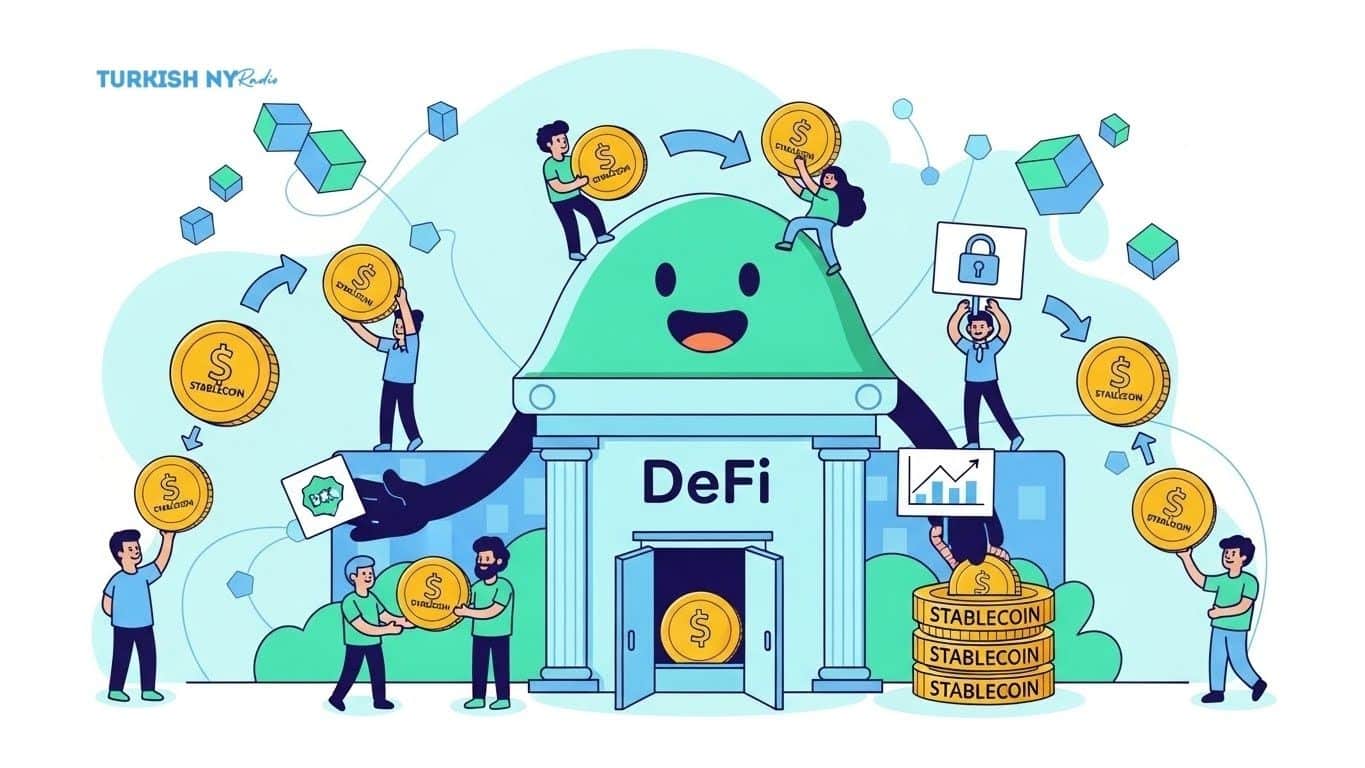
Lending and Borrowing: Stablecoins are the most used collateral and loan currency in DeFi lending protocols. Users deposit USDC/USDT to borrow assets, or lend stablecoins and earn interest. The likes of Aave and Compound are so predominantly used by stablecoin pools.
DEXs Trading: In decentralized exchanges (Uniswap, Curve, etc.), stablecoins generate deep liquidity and serve as major trading pairs. Traders can use this opportunity to hedge, arbitrage or rebalance their volatile tokens against stablecoins.
Yield Farming: A lot of yield strategies are in stablecoin farming. For instance, if one deposits DAI to a vault or pitches USDT into a stablecoin pool, one can get interest tokens. These returns are also frequently safer yields (pegged to lending rates) than the funds offered by altcoin farming.
Payments and Remittances: Beyond crypto markets, stablecoins are being used more and more for moving money. Developing countries, like Nigeria or Ukraine, leverage USD stablecoins for remittances and savings, while Companies such as Stripe or PayPal adopt USD stablecoin rails for global payouts.
Derivatives and RWA Collateral: Stablecoins back on-chain derivatives and tokenized real-world assets. For example, platforms deploy USDC as collateral in perpetuals and futures markets. There are also emerging trends to back tokenized bonds or even stocks with stablecoins.
By and large, stablecoins are no longer a peripheral crypto product but the unit of account in DeFi. Data shows how large the scale they are reaching is: in 2024, stablecoins processed over $27trillion (bigger than Visa/Mastercard combined) and by late 2025, grew to $53trillion.
Today, every DeFi action, such as swaps, loans, and yield farming, passes at some point almost invariably through one stablecoin or another.
Regulation and Standards
Stablecoins have become a top regulatory focus. It is worth mentioning that under the US GENIUS Act (2025), a federal framework for USD stablecoins was designed.
It imposes a double licensing (state and federal) and strong AML regulations on issuers. In a similar vein, the EU’s MiCA enforces obligatory audits, reserves in cash/T-bills, and most importantly, transparent redemption procedures for both fiat-backed and e-money tokens.
Hong Kong, Japan and others have done the same with their licensing regimes. These rules are transitioning the market as only compliant stablecoins will be usable across jurisdictions.
Other unregulated foreign coins onshore are also restricted under the U.S. GENIUS Act. In short, regulators are trying to ensure that stablecoin issuers maintain transparent, liquid reserves and look bank-like enough that itʼs less risky for users.
Stability and Risk
Despite their name, stablecoins can be subject to occasional volatility. Major stablecoins generally stabilize around their pegs, with only minor deviations the majority of the time. Large-scale episodes have been rare and short-lived.
For example, after TerraUSD crashed in May 2022, USDT dropped briefly to $0.96 temporarily (two days). Similarly, USDC slipped to $0.88 in March 2023 after its issuer Circle got funds stuck with the crumbling Silicon Valley Bank.
Markets stabilized rapidly in both cases, USDT bounced back and USDC holders were reassured by their reserves. Today, the deviations are very low, generally within ±0.5%. The resilience has also been hard-built through better collateral practices. The leading stablecoins now hold high-quality assets (cash, treasuries, repos etc) in audited reserves.
However, users should be aware of the risks. Stablecoins rely on issuer honesty, reserve quality and market liquidity. Loss of confidence (or some regulatory action) could cause runs or peg-slippage.
Major Developments (2024-25)
In the last few years, several patterns have come to define stablecoins in DeFi. Notably, institutional-grade stablecoins were introduced: PayPal USD (PYUSD), Ripple’s RLUSD, BlackRock’s USDTB, and others reached billion-dollar market caps by 2025.
These are fully collateralized and palatable to legacy finance. As a result, traditional players are starting to get involved in these. For example, Visa launched USDC settlements in the US, and Stripe added cryptocurrency payout options.
Smart contract tech is continuing to change: Circle USDC introduced native cross-chain transfers (CCTP), which in its words makes it chain-agnostic and prevents liquidity fragmentation.
In the meantime, new blockchains built for stablecoins were developed (e.g. Plasma chain with native support for stablecoins). DeFi itself has matured; lending became more institutional, yield markets more organized, and RWA tokenization (treasuries, etc) expanded.
Conclusion: What to Expect of Stablecoins in the Future.
Stablecoins in DeFi is set to remain a backbone of blockchain finance. Macro factors (e.g. high interest rates) and regulatory clarity (US GENIUS, EU MiCA) is driving adoption. High U.S. rates turned Tether and others into big Treasury investors, since such stablecoins held dollar-like value while providing interest income.
Inflation pressures abroad continue to drive demand in emerging markets. Stablecoins are becoming more seamless, technically, as cross-chain bridges and unified liquidity (LayerZero, CCTP).
At the same time, CBDC progress (e.g., digital dollars, e-euros) is likely to co-exist and co-evolve with DeFi stablecoins rather than displace them.
All in all, the industry looks forward to more expansion of stablecoin use. Bloomberg Intelligence is projecting transaction volume in the segment could reach $56trillion by 2030.
To DeFi end-users, institutions, and regulators alike, stablecoins are at the heart of decentralized finance, and their role will continue to grow through 2026 and beyond.
Glossary
Stablecoin: A coin with a stable value, pegged to a fiat currency (like the USD) or physical asset. Examples: USDT, USDC, DAI.
DeFi (Decentralized Finance): Financial applications constructed on a blockchain (commonly Ethereum and other smart-contract platforms) without the need for traditional intermediaries.
Fiat-collateralized Stablecoin: A stablecoin that is hedged 1:1 to the fiat reserves (or an equivalent).
Crypto collateralized Stablecoin: A stablecoin backed by other crypto assets as collateral. MakerDAO’s DAI is backed by locked-up cryptocurrencies (such as ETH) in smart contracts.
Algorithmic Stablecoin: A stablecoin that, rather than relying on collateral, is governed by smart contracts and algorithms to manage supply. These are the coins that seek to automate pegging via mint/burn mechanisms, and are usually higher-risk.
Peg: The specific, fixed number a stablecoin is supposed to stay at. A “$1 peg” refers to a coin which is meant to trade at or near one U.S. dollar each. The departure of the price from this target is a depegging.
Reserve Audit: An audit where the balances held by a stablecoin issuer are verified to confirm they have enough assets to back the coins currently in circulation.
Frequently Asked Questions About Stablecoins in DeFi
What is a stablecoin and why is it useful in DeFi?
A stablecoin is a type of cryptocurrency that tends to keep the same price at all times (often 1:1 with a fiat currency like USD). Stablecoins are a way to have digital currency without the wild volatility of currencies like Bitcoin in DeFi.
What are the most used stablecoins in DeFi?
The leading DeFi stablecoins in use today are Tether (USDT) and USD Coin (USDC). Between them, they account for the overwhelming majority of stablecoin supply. DAI (crypto-collateralized) is another popular DeFi stablecoin built on MakerDAO. Newer ones, including PayPal USD (PYUSD) and BlackRock’s USDTB have emerged but are smaller.
Are stablecoins in DeFi safe?
No investment is without risk. Top stablecoins, such as USDT/USDC, have proven their reliability as they maintain their peg to $1 with only minimal swings. However, risks include reserve management (does the issuer really hold $1 per coin?) and regulatory changes. Stringent audits and new regulations have brought about a vast improvement in their stability.
How do regulators impact stablecoins in DeFi?
Regulation is a big driver of the stablecoin ecosystem. Laws like the U.S. GENIUS Act demand that stablecoin issuers hold 100% reserves in liquid assets and be licensed. The E.U.’s MiCA law does something similar for euro-pegged coins. These rules restrict what coins can be issued and where they can be offered.
Could stablecoins break their peg in DeFi?
Yes, in rare cases. Stablecoins are not somehow immune to market dynamics. History indicates that occasional extreme stress can cause very brief de-peggings: e.g. USDC traded at $0.88 for one day in 2023 on account of a bank issue.