The Trump South Korea submarine deal, once praised as a symbol of strong economic and defense cooperation, is now tangled in details that neither side seems ready to finalize.
The issue revolves around a powerful symbol of military strength, a nuclear-powered submarine. South Korea says it was promised approval to develop one with U.S. assistance, but Washington is hesitating, citing national security and technology concerns.

Also read: Eric Trump Joins WLFI Board as $1.5B Funding Fuels Exchange Listing
Submarine at the Heart of the Dispute
After the APEC Leaders’ Summit in October, both President Donald Trump and South Korean President Lee Jae-myung said the deal was complete. The Trump South Korea submarine deal was expected to include new tariff rules, investment cooperation, and shared defense projects.
But behind closed doors, the agreement ran into an obstacle, South Korea’s plan to locally build a nuclear submarine. U.S. defense officials have raised red flags, warning that technology transfer and nuclear fuel supply need further review.
“It’s not about mistrust; it’s about maintaining strict nuclear protocols,” one American official told reporters.
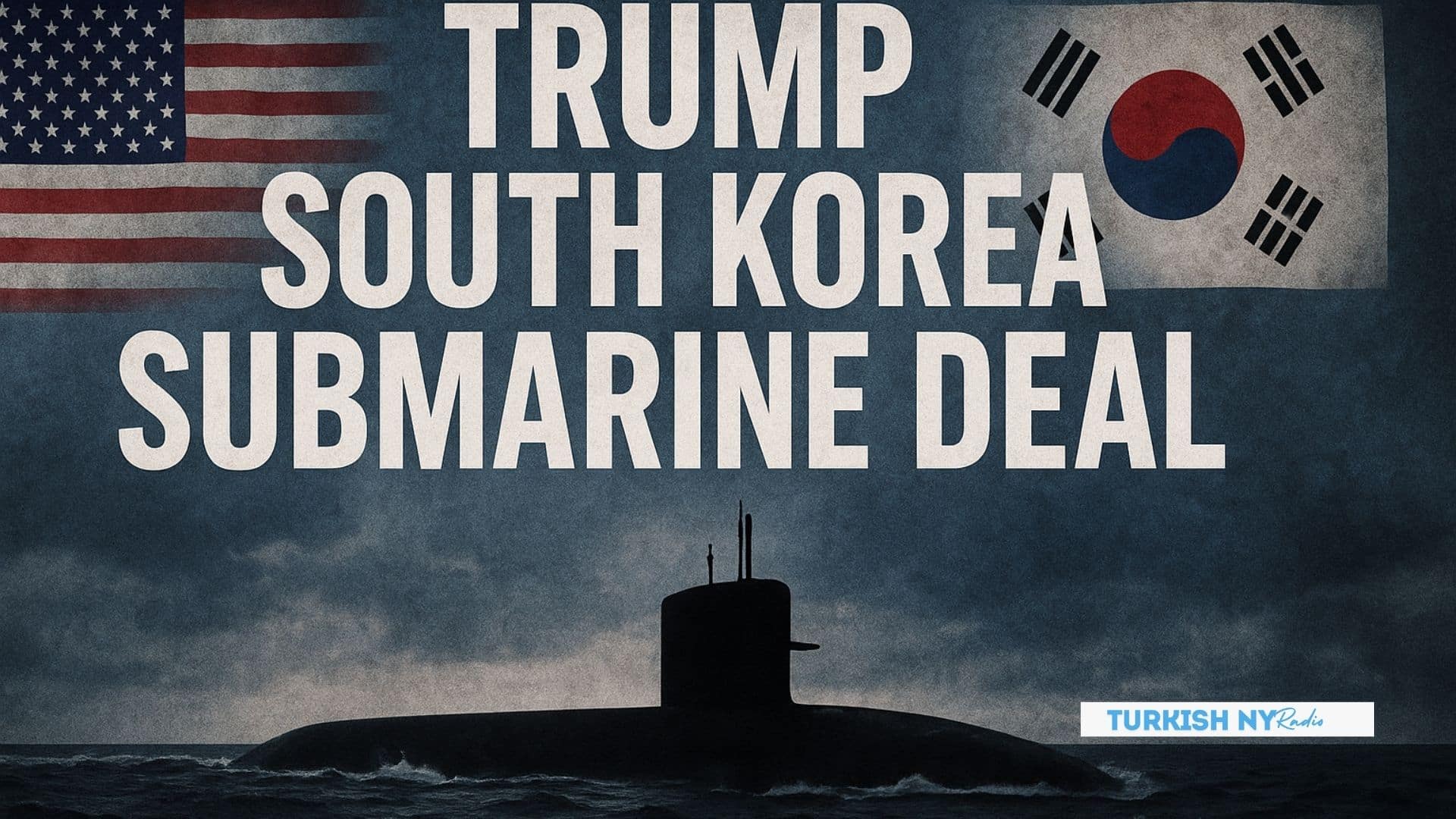
“TRUMP’S SOUTH KOREA DEAL ON THE BRINK – ALL OVER A NUCLEAR SUB…” which captures commentary on the deal’s status. formerly Twitter
Economic Ripples Across Asia
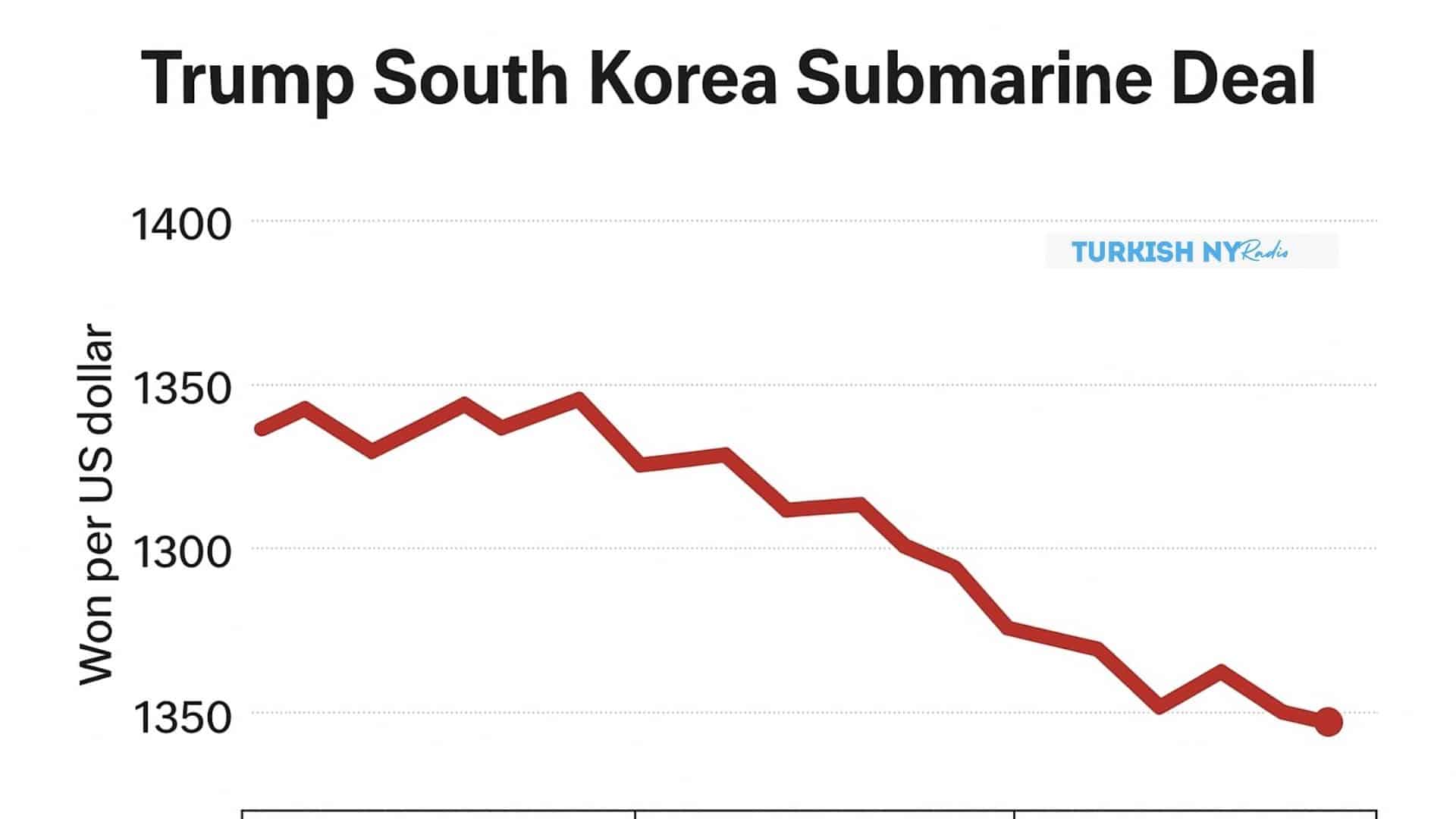
The delay in finalizing the Trump South Korea submarine deal is already causing financial ripples. The Korean won has fallen to its weakest point in seven months, reflecting market anxiety over stalled trade progress.
South Korean companies are also feeling the pressure. Hyundai Motor told parliament that uncertainty around U.S. tariffs is costing the company nearly 300 billion won (about $211 million) per month in lost exports.
“Investors were expecting clarity, not confusion,” said Kim Sung-hoon, a Seoul-based analyst. “When a deal of this size is delayed, it shakes confidence in both markets.”
The economic side of the Trump South Korea submarine deal also includes an estimated $350 billion investment package from Seoul into U.S. manufacturing and energy projects, money that remains frozen until the submarine clause is resolved.
Strategic Stakes in the Indo-Pacific
Beyond the economics, the Trump South Korea submarine deal carries deep strategic weight. Allowing South Korea to operate a nuclear-powered submarine would mark a huge shift in the military balance of East Asia, one that China and North Korea are watching closely.
Security analysts say that if Washington approves the plan, it would show an unprecedented level of trust. If it doesn’t, it could expose limits in the U.S.-Korea alliance.
“This isn’t just a contract; it’s a test of how far Washington is willing to share power,” said Dr. Rachel Kim of the East Asia Policy Center.
Conclusion
For now, the Trump South Korea submarine deal remains a mix of ambition and uncertainty. Both governments have strong incentives to move forward, including economic growth, defense cooperation, and political wins at home. Yet the unresolved question of who builds the submarine and how nuclear technology is shared continues to block progress.
Until those details are ironed out, the deal that once promised a “new era of cooperation” remains just below the surface, waiting to resurface with clarity and trust.
Also read: Tether in Talks With South Korea’s Biggest Banks Over KRW-Pegged Stablecoin
Summary
The Trump South Korea submarine deal is stuck in political and technical disagreements just weeks after being celebrated as a major breakthrough. Both Washington and Seoul announced progress during the APEC summit, but final signatures are still missing. At the heart of the delay is South Korea’s wish to build a nuclear-powered submarine using U.S. technology, a request that has triggered debate in Washington. The delay is now hitting markets, weakening the Korean won, and freezing a $350 billion investment plan between the two allies.
Glossary of Key Terms
APEC (Asia-Pacific Economic Cooperation): A group promoting economic growth and trade across Asia and the Pacific.
Tariff: A tax on imported or exported goods.
Nuclear-powered Submarine: A submarine that runs on nuclear energy, giving it longer range and endurance.
Non-Proliferation: Policies designed to prevent the spread of nuclear weapons or related technology.


KRW (Korean Won): South Korea’s national currency.
FAQs for Trump South Korea Submarine Deal
1. What is the Trump South Korea submarine deal?
It’s a wide-ranging defense and trade agreement meant to strengthen U.S.-Korea relations, including a controversial submarine project.
2. Why is the deal delayed?
The main reason is disagreement over South Korea’s plan to build a nuclear-powered submarine and where it will be manufactured.
3. How does the delay affect markets?
The uncertainty has weakened the Korean won and caused export losses for major Korean firms.
4. What is President Trump’s stance?
He insists the submarine should be built in the U.S., aligning with his “America First” policy.
5. When could the deal be finalized?
Negotiations are ongoing, but officials say the submarine issue could push a final agreement into 2026.