![Sun [New]](https://s2.coinmarketcap.com/static/img/coins/64x64/10529.png)




This article was first published on TurkishNY Radio.
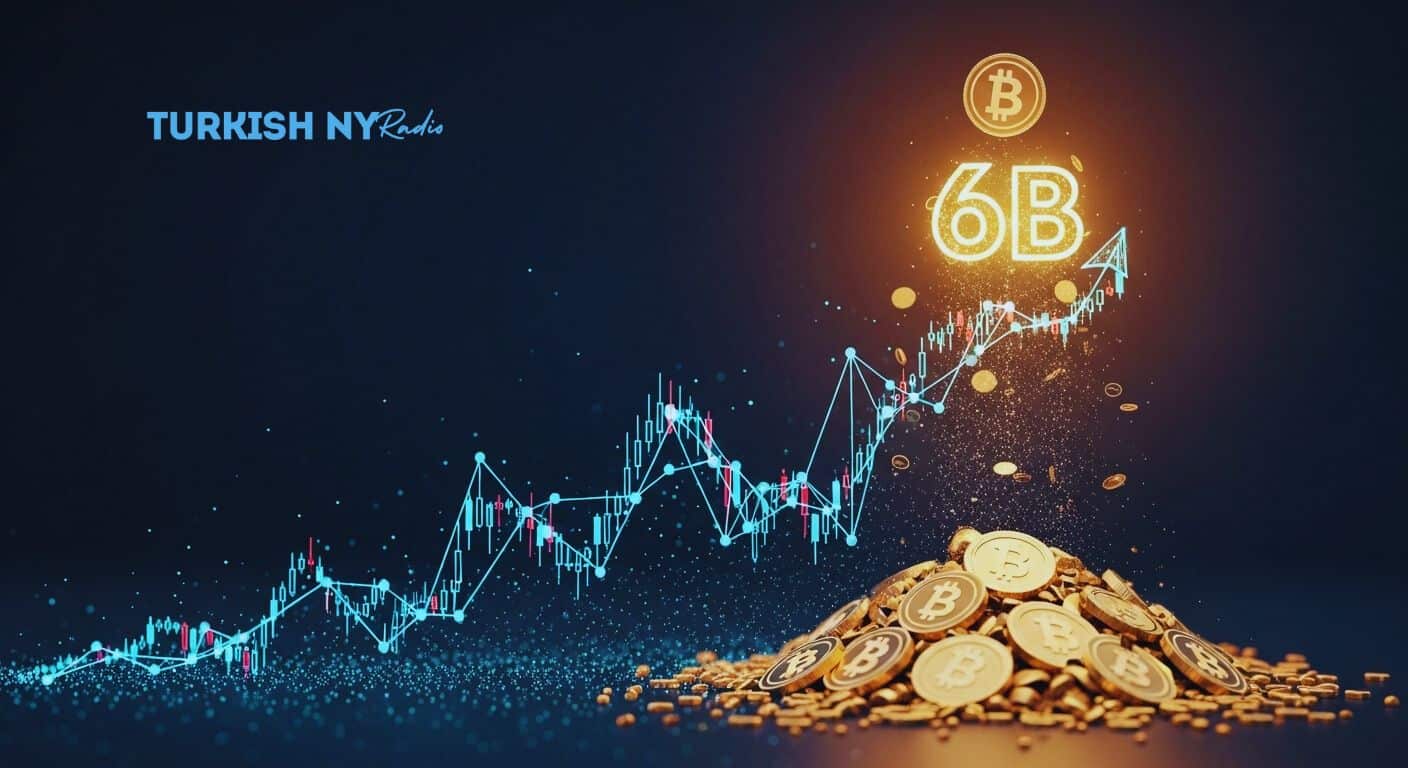
The market for tokenized commodities has quietly crossed a major milestone. In February 2026, total on-chain data shows the sector surpassing $6 billion in value, with gold-backed tokens accounting for the overwhelming share of that growth.


According to data published by Token Terminal, the total market capitalization of blockchain-based commodity tokens has reached a record high. The expansion has been particularly sharp in recent weeks, signaling sustained demand rather than a temporary spike.
What stands out is not just the number itself, but where the capital is going.
Tokenized Commodities Led by Digital Gold
Nearly the entire rise in tokenized commodities is being driven by gold-backed tokens. Two assets lead the sector:
Tether Gold (XAUT) has an approximately $3.6 billion market capitalization
Paxos Gold (PAXG) approximately $2.3 billion market capitalization
Together, they represent more than $5 billion of the total tokenized commodities market. Tether states in its official documentation that
“each XAUT token represents one troy ounce of physical gold.”
Paxos similarly confirms through its transparency reports that PAXG is backed by London Good Delivery gold bars stored in regulated vaults.
These disclosures matter. In a sector where trust is often questioned, reserve backing and audit documentation remain critical. Smaller gold tokens such as PGOLD and XAUM are also present, but their market share is significantly smaller.
Tokenized Commodities Built on Ethereum
Most tokenized commodities are issued on Ethereum. Blockchain explorer data from Etherscan shows that Ethereum hosts the largest circulating supply of both XAUT and PAXG.
Although versions of these tokens exist on networks like Arbitrum, BNB Chain, and Solana, Ethereum continues to serve as the primary infrastructure layer.
That consistency offers several advantages, such as transparent smart contracts, public supply verification, and integration with decentralized finance platforms. Investors can hold gold exposure without managing physical storage or relying on traditional brokers.
Why Capital Is Moving to Digital Gold
The growth in tokenized commodities appears to reflect capital rotation rather than fresh speculation. With crypto markets facing periodic volatility, some participants are choosing to remain on-chain while shifting into gold exposure.
The appeal is straightforward:
- Direct exposure to physical gold
- Fractional ownership
- 24/7 global liquidity
- On-chain settlement transparency
Instead of moving funds back to traditional financial rails, investors are using blockchain infrastructure to access defensive assets.
However, expectations must remain grounded. While current data confirms the $6 billion valuation, future expansion into other commodities such as silver or oil remains speculative.

A Structural Shift, Not a Short-Term Trend
The rise of tokenized commodities suggests a deeper structural development within digital assets. Gold-backed tokens are no longer a niche product; they now represent one of the fastest-growing segments of the blockchain economy.
If transparency standards remain consistent and regulatory clarity improves, tokenized gold could continue gaining relevance as a digital alternative to traditional bullion ownership.
For now, the numbers speak clearly. The tokenized commodities market has crossed $6 billion, and digital gold is leading the charge.
Summary
- The tokenized commodities market has crossed $6 billion in 2026, reaching its highest level to date and signaling growing confidence in blockchain-based assets.
- Gold-backed tokens like Tether Gold (XAUT) and Paxos Gold (PAXG) dominate the space, holding over $5 billion combined.
- Ethereum continues to power most issuances.
- Investors are increasingly choosing digital gold as a safer on-chain alternative during market uncertainty.
Glossary of Key Terms
1. Tokenized Commodities
These are digital tokens that represent real-world items like gold. It’s similar to having an online receipt that proves you own part of something physical stored safely elsewhere.
2. Tokenized Gold
This is digital gold on the blockchain. Each token usually equals a specific amount of real gold kept in a secure vault, so you don’t have to store it yourself.
3. Blockchain
A shared digital record that tracks transactions. You can think of it like a public notebook where entries can’t be secretly changed once written.
4. Ethereum
Ethereum is one of the main blockchain networks where many digital assets are created and traded. It acts like the infrastructure that keeps everything running smoothly.
5. Smart Contract
A smart contract is an automatic agreement built into the blockchain. When certain conditions are met, it completes the transaction on its own, without middlemen.


6. Market Capitalization
This shows the total value of all tokens combined. It helps people understand how big or small a project is compared to others.
FAQs About Tokenized Commodities
1. What exactly are tokenized commodities?
Tokenized commodities are digital tokens that represent real-world assets like gold. When you buy one, you’re essentially owning a share of physical metal stored in secure vaults.
2. How does pricing work for tokenized gold?
The value usually follows the global gold spot price. If gold rises or falls, the token moves with it, with small issuer or platform fees applied.
3. Are tokenized commodities safe to hold?
Leading providers publish reserve reports and store gold in regulated vaults. Still, it’s important to review transparency, custody details, and local regulations before investing.
4. What’s next for tokenized commodities?
Expansion into assets like silver or other commodities is possible. Long-term growth will depend on regulation, trust in reserves, and continued interest in digital asset exposure.
References