This Article Was First Published on TurkishNY Radio.
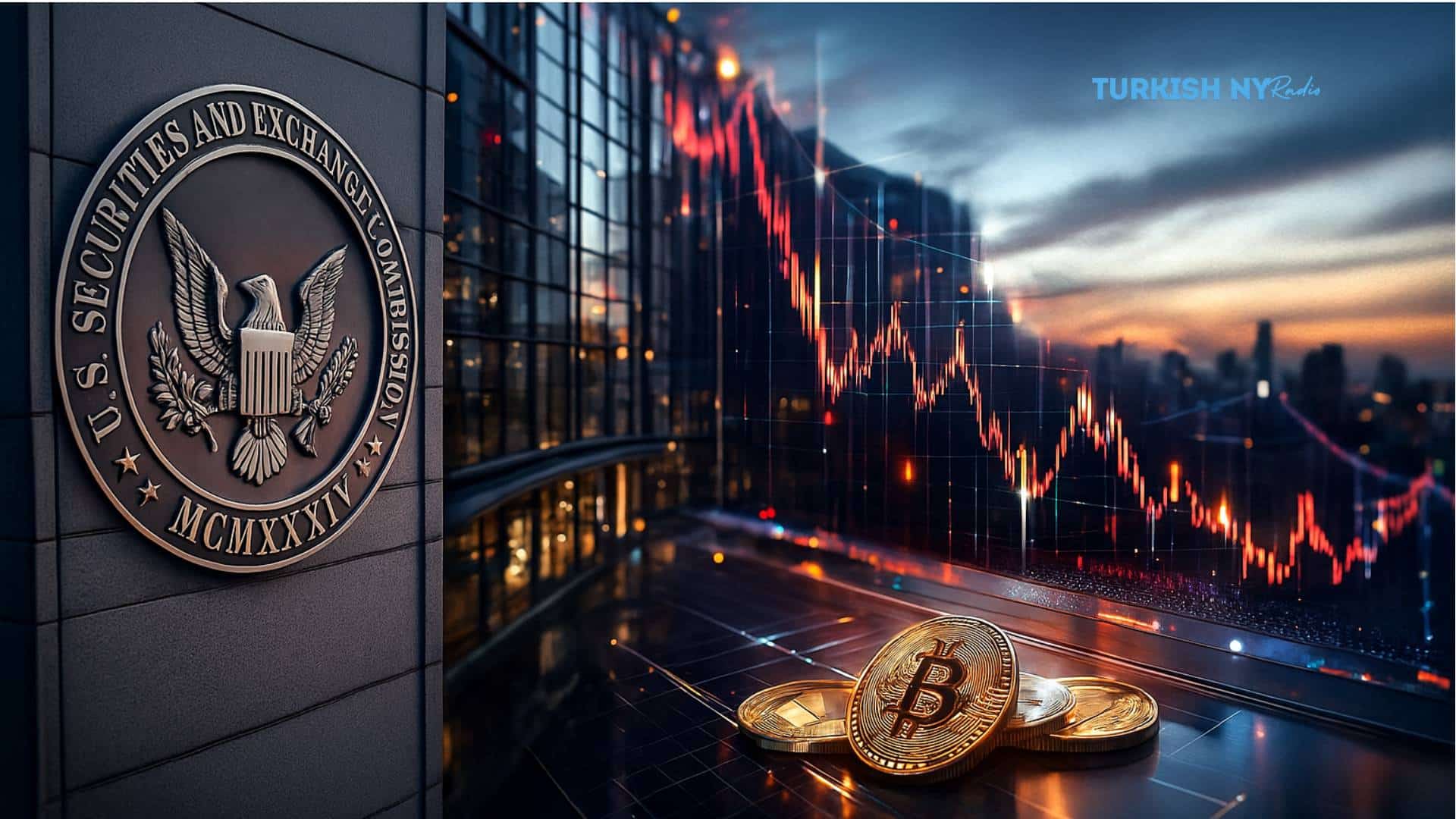
For years, crypto traders spoke about regulators as a distant storm on the horizon. That time has passed. Today, the impact of the SEC on cryptocurrency markets shows up in every major price move, every ETF headline and every enforcement rumor that hits social feeds.


The United States may be only one jurisdiction, but it still anchors global capital. As a result, the impact of the SEC reaches far beyond Wall Street. When the agency approves a new exchange-traded fund or drops a high profile lawsuit, liquidity can shift in minutes, spreads can widen or tighten and institutional capital can either advance or retreat.
From the crackdown era to the ETF green lights
The last few years created a split-screen narrative. On one side, the SEC pursued aggressive enforcement against several large exchanges and token projects, arguing that many digital assets were unregistered securities and that platforms functioned as unlicensed trading venues. On the other side, the market watched ETF applications stack up, waiting for a friendlier reading of the rules.
The turning point came in January 2024, when the agency approved multiple spot Bitcoin exchange-traded products after more than a decade of denials. That decision was a clear impact of the SEC, because it created a regulated bridge between traditional broker accounts and Bitcoin exposure. It also signaled that crypto would not be kept entirely outside the perimeter of mainstream finance.

Bitcoin and the new market structure
Once spot Bitcoin ETFs began trading, the impact of the SEC could be measured in hard numbers rather than speculation. Assets flowed into these vehicles, daily volumes climbed and spreads between ETF prices and underlying spot markets became a new barometer of market efficiency.
The presence of ETFs reshaped how large investors gain exposure. Instead of wiring funds to offshore exchanges, many institutions now route their exposure through regulated brokerage accounts. This reduces some counterparty risk, but it also increases sensitivity to regulatory headlines. Any sign that the regulator might revisit the ETF framework can influence flows, volatility and even correlations with macro assets.
Ethereum, altcoin products and widening access
Bitcoin did not remain alone for long. In 2024, the SEC approved multiple Ethereum ETFs for listing and trading, and in 2025, the green light was extended to spot Ethereum products as well. Each new approval illustrated another impact of the SEC, as markets began to treat Ethereum more like a blue chip asset than a speculative experiment.
Analysts now expect further ETFs tied to assets such as Solana and XRP under streamlined rules, which could deepen liquidity in those markets and draw in traditional investors who previously avoided direct token custody. For traders, that means watching both technical charts and regulatory calendars, because launch dates and filing updates can move prices almost as much as on-chain activity.
Enforcement pressure and legal clarity
While the ETF story looks constructive, enforcement activity has been intense. Research shows that the SEC brought dozens of crypto related enforcement actions in 2023 and 2024, with record monetary penalties driven by a handful of very large settlements. This is another channel where the impact of the SEC is felt, often through short term fear and deleveraging.
High profile suits against platforms such as Binance and Coinbase, and later decisions to dismiss or settle some of those cases, created waves of uncertainty followed by relief rallies. Each complaint, court order or settlement helps define where the boundaries sit on issues like token classification, staking programs and custody. Even when markets dislike the headlines, clearer rules can reduce long term legal overhang.
The Howey test and token classification
At the core of many disputes lies a simple question: is a token a security. The SEC continues to rely on the Howey test, a decades old Supreme Court standard that looks at whether there is an investment of money in a common enterprise with an expectation of profit from the efforts of others.
When a token fits that framework, the impact of the SEC can include mandatory disclosures, registration requirements and potential restrictions on trading venues. If a project markets its token as an investment with strong central management, it faces higher regulatory risk than a more decentralized network with limited promises from a core team. For investors, understanding that distinction is now as important as reading a white paper.
Key indicators traders watch under SEC oversight
In this environment, the impact of the SEC shows up across several key crypto indicators. Market participants pay closer attention to:
Spot ETF assets under management and daily volumes, which reveal how much regulated capital is entering or leaving.
Order book depth and bid ask spreads on major exchanges, which can widen when legal uncertainty spikes and shrink when rules feel clearer.
Volatility measures, especially around major SEC dates such as ETF decisions, policy speeches or court deadlines.
On-chain data that tracks large holder flows, particularly when institutions rebalance around regulatory events.
Price action is still driven by macro trends, technology milestones and sentiment, but regulatory decisions have become a regular item on the checklist.
Investor behavior and liquidity patterns
The impact of the SEC is also visible in how different investor groups behave. Institutions that must comply with strict mandates often prefer ETF exposure or qualified custodians. Retail traders, by contrast, still move quickly between centralized exchanges and self custody wallets, chasing yield, airdrops and new narratives.
When the regulator signals a friendlier stance, liquidity can migrate toward assets that seem more likely to receive approvals or survive scrutiny. When enforcement headlines dominate, leverage tends to shrink, risk premiums widen and highly speculative tokens can underperform large caps like Bitcoin and Ethereum.
Project Crypto and the next chapter
Recent comments from SEC leadership about a new framework often described as Project Crypto suggest that the agency is looking for a more systematic approach to digital assets. Officials have emphasized that many crypto assets are not securities in themselves, but can still be part of an investment contract that falls under securities law.
If Project Crypto delivers clearer guidance on token classification, disclosure standards and exchange obligations, the impact of the SEC could gradually shift from shock and fear toward baseline predictability. That does not remove risk, but it can reduce the regulatory discount that some investors currently apply when they price crypto assets.
Why this regulatory cycle matters
Taken together, the ETF wave, the enforcement cycle and the new policy roadmap show that the impact of the SEC is now woven into the structure of crypto markets. Prices react to filings and speeches, order books track legal headlines and capital allocators evaluate both smart contract risk and regulatory risk.
For long term investors, the question is not whether the regulator will matter. It is how the rules will evolve, and which projects can adapt. Platforms that treat compliance as part of their design are better placed to attract institutional flows, while opaque projects that ignore the policy reality may face higher funding costs or outright exclusion from regulated venues.
Conclusion
Cryptocurrency was born with a strong anti-establishment streak, but it now sits at the center of serious regulatory attention. The impact of the SEC on cryptocurrency markets can be seen in every spot ETF listing, every enforcement settlement and every policy speech that sketches the future of digital asset law.
That influence can feel uncomfortable, especially for early adopters who valued pure decentralization. At the same time, a more stable and transparent rulebook can help unlock larger pools of capital, tighter spreads and deeper liquidity.
The next phase of the market will be shaped not only by code and community, but also by how effectively the industry engages with the regulator that still sets the tone for global finance.
Frequently Asked Questions
How does the SEC influence cryptocurrency prices
The SEC influences prices through ETF approvals, enforcement actions and policy guidance. Positive signals can draw in institutional capital, while lawsuits or restrictive rules often trigger risk reduction and higher volatility.
Why do Bitcoin and Ethereum ETFs matter for crypto markets
ETFs allow investors to gain exposure through regulated broker accounts instead of directly holding tokens. This can increase demand, deepen liquidity and make these assets more accessible to traditional portfolios.
What is the Howey test and why is it important for tokens
The Howey test is a legal standard that helps determine whether a transaction is a security. If a token sale fits that test, the issuer may face securities rules, which affects how and where the asset can trade.
Glossary of Key Terms
Exchange Traded Fund (ETF)
A regulated investment vehicle that trades on stock exchanges and holds underlying assets such as Bitcoin or Ethereum, allowing investors to gain exposure through shares.


Spot Bitcoin ETF
An ETF that holds actual Bitcoin rather than futures contracts. Its price aims to track the spot price of Bitcoin as closely as possible.
Howey Test
A four part legal test that helps determine whether a transaction qualifies as an investment contract and therefore a security under United States law.
Market Liquidity
A measure of how easily an asset can be bought or sold without causing large price swings, often tracked through volume, order book depth and bid ask spreads.
Regulatory Risk
The risk that changes in laws, rules or enforcement actions will affect the value, legality or trading conditions of an asset or business.