
This article was first published on TurkishNYR.
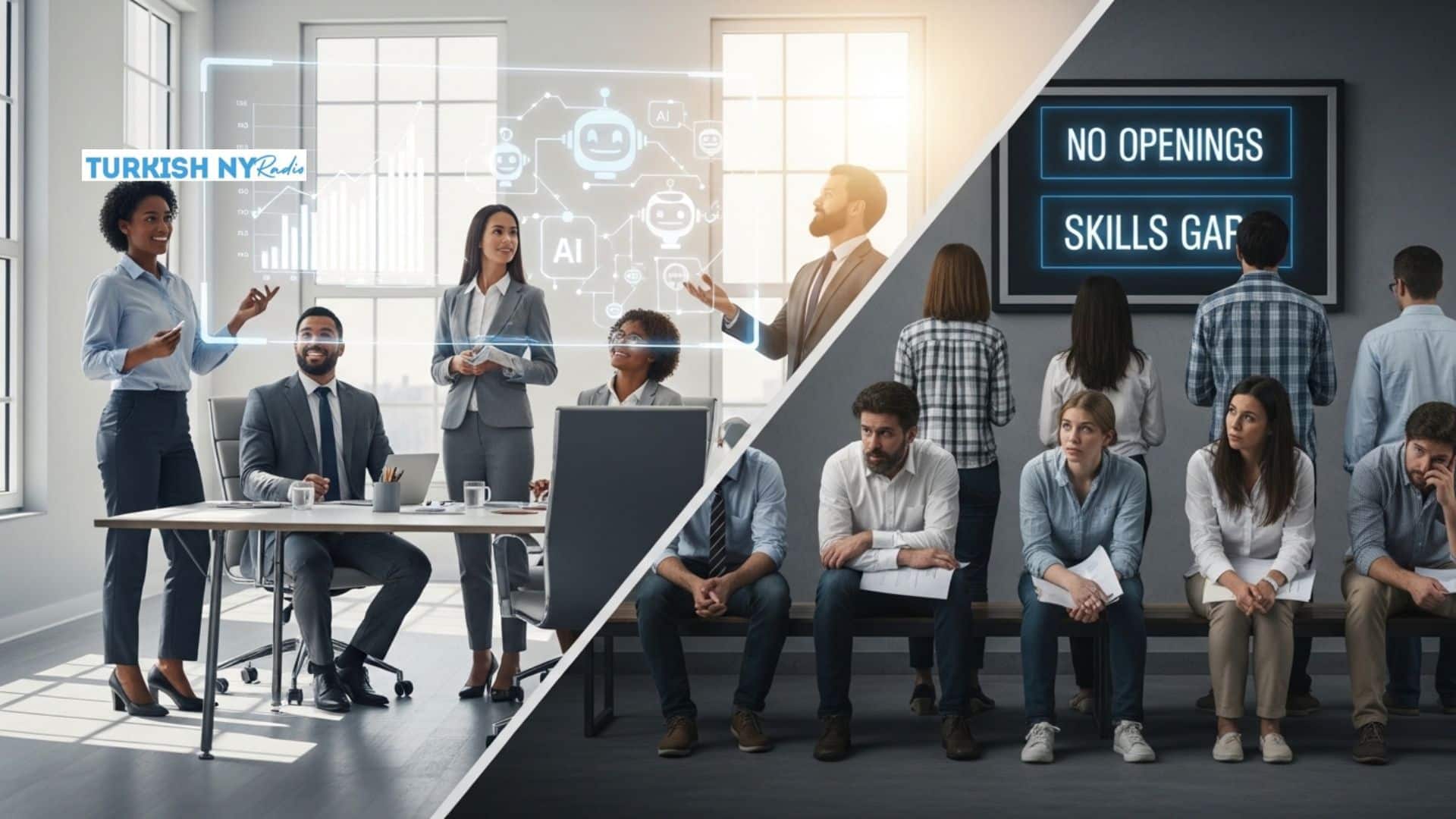
There appears to be a noticeable disconnect between what companies expect of AI and what the labor market bears on the ground, especially in 2026.


C-level executives are overwhelmingly predicting productivity or growth from AI, but workers are worried that the job gains have already dwindled and their fears widen. This phenomenon is what some are calling the “AI jobs gap”; where executive optimism clashes with employment reality.
Current Reality
A 2023 Workday survey shows 98% of CEOs expect immediate AI benefits; whereas, U.S. Bureau of Labor Statistics (BLS) reports show no tech-driven hiring surge as March 2026 recorded about 178,000 added jobs overall, mainly in health care and construction with information technology payrolls virtually unchanged.
In essence, leaders are bullish on AI, but labor trends argue that the degree of change has been just been stagnant so far. AI is cast in boardrooms as a breakthrough. Throughout the corporate world, business leaders routinely say AI/ML will “multiply human potential” and stimulate growth.
In 2024, Global CEO Survey by PwC found that 70% of CEOs believe generative AI will change how their company creates value and 39% expected to increase headcount by 5% or more.
Executives view AI as a catalyst for productivity; 39% of global CEOs value productivity the most as an AI advantage.
Industry analysts had believed that within 2-3 years, AI will “redefine” between 50-55% of U.S. jobs. This means leadership expects AI in some form to change many roles; implying augmentation of work rather than causing straight layoffs.
However, the reality of this AI jobs gap is different if we are to go by what workers and labor statisticians report.
New studies point to early signs of employment strain, particularly for younger and routine workers. AI has reduced a net 16,000 U.S. jobs monthly from mid-2025 to early 2026, according to an analysis by Goldman Sachs.
Specifically, Goldman’s model estimates AI substitution (automating tasks) eliminated 25,000 jobs/month, while augmentation added only 9,000.
That indicates a non-negligible short-term job-loss impact. This is also supported by McKinsey research showing that 51% of surveyed companies suggest generative AI has reduced their demand for entry-level jobs.
Accordingly, data also shows an increase in youth unemployment. The rate for 23-27 year old college grads had increased from 3.25% in 2019 to 4.59% in 2025 and specialized payroll data point to a decrease of early career jobs by about 16% in AI-exposed fields.
Put simply, new graduates and Gen-Z workers who hold many relatively low-skilled white-collar jobs are in a bind. Experts note that without the on-the-job experience that insulates older workers, entry-level employees are most vulnerable to displacement.
| Report / Source (Year) | C-Suite Expectations / Findings | Actual Employment Reality |
| Workday CEO Survey (2023) | 98% of CEOs expect AI/ML to provide immediate business benefits. | Only 14% of employees report net-positive AI outcomes due to rework. |
| PwC CEO Survey (2024) | 70% of CEOs see generative AI reshaping value creation; 39% plan to grow headcount by 5%+. | Goldman: AI caused –16,000 net U.S. jobs/month (Aug ’25-Mar ’26). |
| McKinsey (Org Blog) (Apr 2026) | 51% of firms say GenAI lowers demand for entry-level roles. | Entry-level fields saw 16% drop in jobs; youth unemployment rising. |
| BCG Report (2026) | 50-55% of U.S. jobs will be reshaped by AI (tasks changed, not eliminated). | Partial automation (–25k jobs) vs creation (+9k jobs). |
| PwC AI Barometer (Jun 2025) | AI-using industries see 3× faster revenue/employee growth; 2× wage growth. | Workers with AI skills earn 56% more. (Contrast: inequality risk, but positive for skilled.) |
| ILO (UN) (May 2025) | (global analysis of AI exposure). | 25% of global jobs have some AI exposure; most will be transformed (not eliminated). |
CEO Surveys vs. Hiring Data
A Workday/FT Longitude study found that almost all (98%) CEOs believe AI/ML will provide immediate value. Similarly, PwC’s 2024 CEO survey finds that three in four executives are eager to shift resources into AI.
But the real hiring trends are far more cautious, exposing the actual AI jobs gap. Data released by the U.S. Bureau of Labor Statistics stated that March 2026 added 178,000 jobs led by health care (+76k) and construction (+26k); not tech or AI sectors.
Little changed in the technology space, despite the hype. Even in tech, tons of companies are cautiously grinding through cloud/AI headcount.
In short , executives have not seen results in headcount growth like they’ve expected. The difference between the expected number of new hires and the actual number being hired is the AI jobs gap.
Effect on Young and Entry-Level Workers
Gen Z and early-career workers consistently bear the brunt of AI-driven change. Experts note that younger workers are the ones who absorb the most displacement.
Many of the entry-level roles are very automatable (data entry, customer service & administrative tasks, for example), and businesses are slashing a lot of these positions.
This is supported by McKinsey’s labor analysis, which finds that 51% of organizations claim generative AI has decreased their need for entry-level hires already.
This rise of youth joblessness and AI jobs gap is shown by the widening difference in unemployment rates between employees under 30, and those who are older.
Additionally, Goldman states that each 1% increase in AI exposure causes the wage gap at entry-level between younger workers and seniors to expand by about 3.3 percentage points.
By contrast, veterans in specialized or managerial roles remain relatively insulated; their tasks often involve judgment or leadership which AI cannot easily replace.
New opportunities for Gen Z may open up over time, just as the tech shocks of the past created new jobs down the road but that long-run creation lag means that today’s young workers are stuck longer in transition.
Productivity, Wages, and the AI Skills Premium
If the “optimists” are indeed correct about AI raising productivity, why is there no evidence in wages and output? Why is there an increasing AI jobs gap?
Several studies confirm notable gains where AI is seen. As an illustration, the Global AI Jobs Barometer from PwC states that revenue per employee in sectors with high exposure to AI is growing at 3× the rate compared to low-AI industries.
Wage is rising more rapidly too, as workers in AI-intensive sectors have reportedly seen an increased pay rise twice as much as other peers in the market.
Notably, AI skill workers (data science, prompt engineering etc) receive a substantial premium of 56% more in wages than their peers without the relevant skills.
This means that companies appreciate employees who know how to operate AI, and such roles are in need.
Yet this productivity upside is not uniform. Many regular jobs observe low wage effects, and some laborers feel left behind.
Also, many of the productivity gains disappear into an “AI tax” that stays hidden. According to employees, AI tools save 1-7 hours weekly on average, but almost four in ten of those hours are spent on redoing, correcting and verification of AI outputs.
By some estimates, only 14 percent of users report positive net results every time they use AI. This means, the perceived productivity doesn’t equal to more output or improved payroll for many workers.
So while macro-stats (revenue and average wages) are rising in AI-leading sectors, many individual employees experience extra review work and modest gains.
Workers’ Perspective: Anxiety and Skill Mismatch
Widely cited worker anxiety is confirmed by employee sentiment surveys. According to a Mercer study conducted in February 2026, 53% of workers actually think that new technologies (e.g., AI) will put their job security at risk.
However, actual AI use by staff is far limited as only about a quarter of them make use of AI regularly. This gap of high concern but low hands-on engagement reveals uneven readiness.
Ironically, younger workers (25-34) end up doing the bulk of correcting AI mistakes despite greater familiarity with the tools.
According to Workday, much of the AI rework is done by m employees aged 25-34. When it comes to job descriptions, 89% of companies reported they have not changed their requirements to reflect AI competencies.
Simply put, most workers are feeling unprepared or under-supported. Leadership pledges to upskill often do not match the action: 66% of business leaders say training is a priority, but only 37% of overworked staff report receiving it.
This also amplifies the AI jobs gap. Executives rave about AI’s potential, while employees are left facing job insecurity and missed training opportunities.
Global and Institutional Analyses
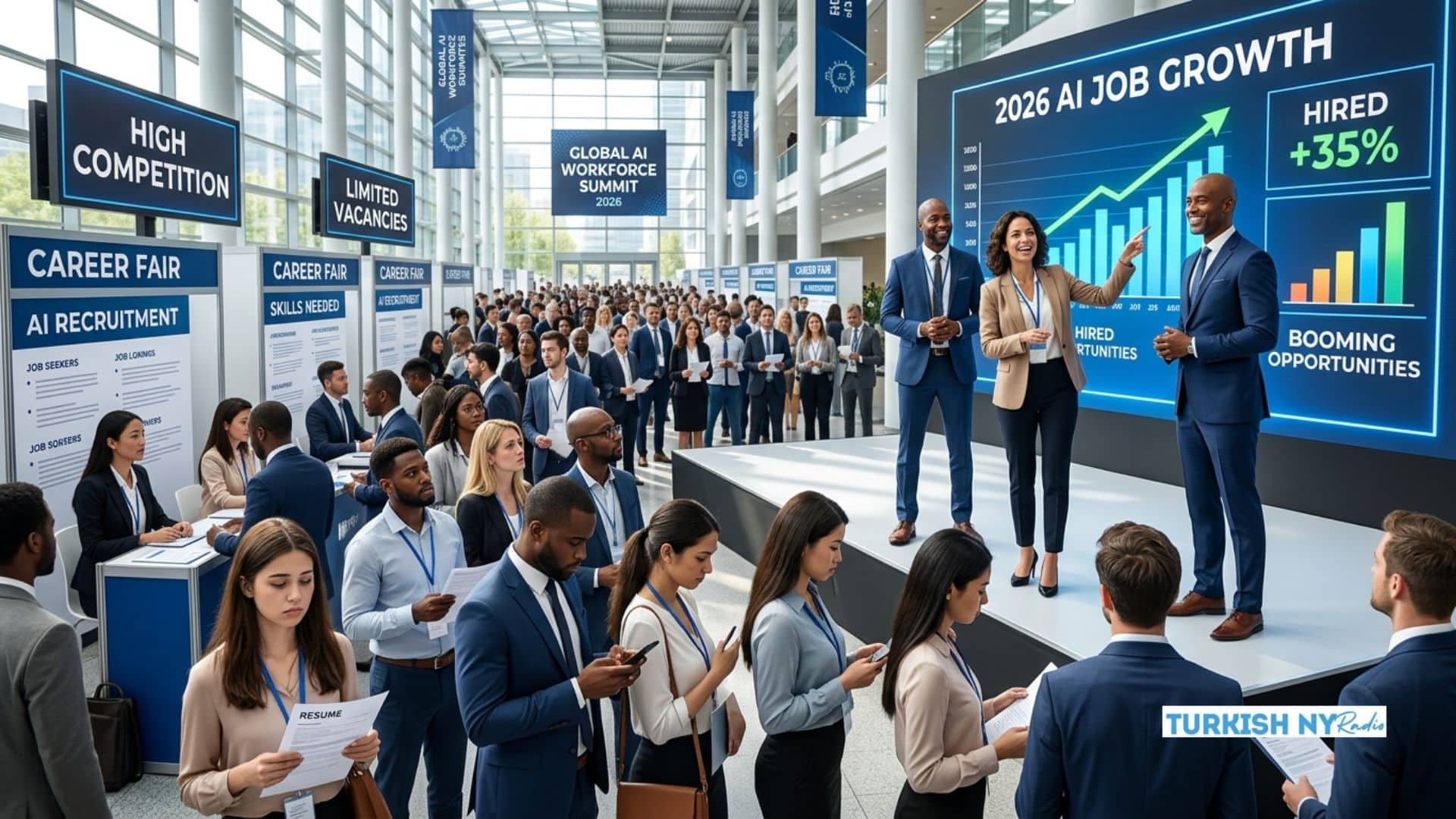
Globally, more studies expose these mixed signals. It has been estimated by an ILO report in May 2025 that globally, about 25% of jobs are potentially exposed to generative AI.
The report however, stresses that most jobs will be transformed rather than eliminated because the human factor remains a need. Also, a review of previous periods of AI adoption (OECD 2024) found no conclusive evidence that jobs as a whole have been lost so far to AI. In fact, exposure to AI is associated with slight job growth in some sectors.
OECD recognizes that higher-education and higher-income workers have benefited from AI, saying it could deepen existing inequities if left unchecked.
This implies that AI may wipe out some jobs, but it will also generate a new set of roles that did not exist before.
Yet that long-term creation is taking time and as a result, there are short-term AI job gaps.
AI Closing the Gap in Jobs
What explains this disconnect? Experts point to several factors.
First, there are timing and transition lags. New industries and occupations frequently take years to absorb displaced workers. The creation of new roles (AI trainers, data annotators, compliance specialists etc.) is still ramping up and the “creative destruction” process is already under way.
Meanwhile, firms have been slow to build in strategic roles around AI (e.g. roles such as AI-ethicists or upskilling staff) and fast to trim the routine positions.
Second, the mismatch of skills creates an even bigger gap. Data shows that employers are looking for workers with AI skills and skillsets but many of the current workforce do not possess those skills.
Firms are uneasy because AI-fluent employees are in short supply, and there may be unfilled vacancies even in high-tech.
Many executives say they struggle to hire AI talent, even as entry-level roles are vacant. According to the McKinsey workforce report, “heavy users” of AI frequently those with sought after capabilities are more likely to resign (51% intend to leave). Such a loss of talent contradicts any growth promise.
The third is infrastructure and process constraints. A study from Workday suggests that most organizations are using 2015-era job structures while using 2025 AI tools.
If processes and roles do not change, AI can only add steps (Reviewing outputs) instead of fully automating workflows.
Many organization leaders acknowledge a wide gap between the performance of AI models and the extent to which their employees can trust those results, forcing staff to validate what they see, in turn causing slow adoption.
Finally, psychological factors matter. With their concentrations on job loss rather than longer-term benefits, workers tend to be much more worried about the risks.
Anxiety about AI displacement has increased, with a more recent 2026 Gallup survey indicating that Americans are increasingly worried about being displaced by AI as its usage expands.
When combined with economic uncertainty (inflation, layoffs, etc.), even optimistic corporate messaging may not fully convince employees.
Conclusion
The AI jobs gap arises because high-level strategies and ground-level execution are out of sync.
Big AI gains are in the sights of executives, who promise reinvestment; but companies have not yet translated that into broad-based hiring or upskilling.
This leads to slower job growth and increased worker anxiety even as productivity and capital gains increase.
Closing the gap means businesses investing their AI “savings” in workers via training and job redesign and policymakers should facilitate transitions (e.g. reskilling programs), so the promised benefits from AI need to land on many more workers.
As this story continues into 2026, the path is both constructed and still not made. Bridging the AI jobs gap means aligning C-suite vision with employee experience, one where technology helps employees accelerate rather than fall behind in ways that absolutely impact workforce performance.
Glossary
C-Suite: The highest-level executives of a company ( CEO, CFO, CTO… )
Generative AI: A type of artificial intelligence (such as ChatGPT) that can generate content (text, code, images) based on prompts.
AI Augmentation vs Substitution: Augmentation means AI tools assist human beings to work faster or better (making jobs different and not lost). Substitution means AI replaces human tasks completely.
Upskilling: Educating workers to improve so they can have jobs at different or higher levels.
Frequently Asked Questions About AI Jobs Gap
What is the AI jobs gap?
AI jobs gap describes the difference between how corporate leaders think AI will impact jobs (growth, efficiency, new positions) and what labor market data really shows. From surveys and reports, execs are bullish on AI but most workers find their jobs not growing at all, or performance redefined.
Will AI take jobs, or create them?
Studies indicate both. AI has replaced many routine jobs through automation and it also brings alternative career paths. Goldman Sachs recently has estimated that AI substitution cut 25,000 jobs/month, whereas augmentation added 9,000 for example. For the most part, balance relies on industry and timing.
Who is impacted by AI in the workforce?
The greater burden of this AI jobs gap is currently on younger and entry-level workers. According to reports from Goldman Sachs and consulting company McKinsey, Gen Z workers in routine clerical jobs are losing the edge. At the same time, tech-savvy workers with AI expertise are increasingly relevant, and getting higher pay for their skills.
Is there an increase in AI talent being hired by companies?
Yes and no. Research shows many companies are focused on training AI-specific workers, but they are often not making large increases in overall headcount. PwC finds 39% of CEOs intending major recruitment in 2024, yet the actual tech hiring overall has been limited.
How can workers adapt to AI changes?
Upskilling is the key. Workers who gain AI-related skills (data analysis, prompt engineering, digital literacy) can access better-paying jobs. Companies and governments should also provide training.