
• Home
  • About Us
  • Terms and Conditions
  • Privacy Policy
  • Disclaimer
  • Contact
27 January Tuesday, 2026
  • tr Türkçe
  • en English
TurkishNY Radio
No Result
View All Result
  • Home
  • Cryptocurrency
  • Business
  • Economy
  • Home
  • Cryptocurrency
  • Business
  • Economy
No Result
View All Result
  • tr Türkçe
  • en English
TurkishNY Radio
No Result
View All Result
Bitcoin Bitcoin (BTC) $95,261.57 ↓ -0.05%
Ethereum Ethereum (ETH) $3,288.55 ↓ -0.06%
Tether USDt Tether USDt (USDT) $1.00 ↓ 0.00%
BNB BNB (BNB) $936.88 ↑ 0.81%
XRP XRP (XRP) $2.06 ↓ -0.16%
Solana Solana (SOL) $143.94 ↑ 1.52%
USDC USDC (USDC) $1.00 ↑ 0.01%
TRON TRON (TRX) $0.31 ↑ 0.69%
Dogecoin Dogecoin (DOGE) $0.14 ↓ -1.31%
Cardano Cardano (ADA) $0.40 ↑ 1.28%
Bitcoin Cash Bitcoin Cash (BCH) $592.58 ↑ 0.05%
Monero Monero (XMR) $626.65 ↓ -8.54%
Chainlink Chainlink (LINK) $13.72 ↑ 0.24%
UNUS SED LEO UNUS SED LEO (LEO) $9.06 ↑ 1.81%
Hyperliquid Hyperliquid (HYPE) $24.83 ↑ 0.87%
Stellar Stellar (XLM) $0.23 ↓ -0.45%
Sui Sui (SUI) $1.79 ↑ 1.00%
Zcash Zcash (ZEC) $405.35 ↑ 0.15%
Ethena USDe Ethena USDe (USDe) $1.00 ↑ 0.01%
Avalanche Avalanche (AVAX) $13.56 ↓ -1.36%
Litecoin Litecoin (LTC) $74.59 ↑ 3.87%
Dai Dai (DAI) $1.00 ↑ 0.01%
Hedera Hedera (HBAR) $0.12 ↑ 1.10%
Shiba Inu Shiba Inu (SHIB) $0.00 ↑ 1.59%
Canton Canton (CC) $0.13 ↓ -4.54%
World Liberty Financial World Liberty Financial (WLFI) $0.17 ↑ 1.92%
Toncoin Toncoin (TON) $1.71 ↓ -0.15%
Cronos Cronos (CRO) $0.10 ↑ 1.09%
PayPal USD PayPal USD (PYUSD) $1.00 ↓ -0.02%
Polkadot Polkadot (DOT) $2.13 ↑ 1.14%
World Liberty Financial USD World Liberty Financial USD (USD1) $1.00 ↓ -0.02%
Uniswap Uniswap (UNI) $5.35 ↑ 1.09%
Mantle Mantle (MNT) $0.95 ↑ 0.75%
Bittensor Bittensor (TAO) $275.98 ↓ -0.05%
Aave Aave (AAVE) $175.26 ↑ 2.58%
Bitget Token Bitget Token (BGB) $3.78 ↑ 0.56%
Pepe Pepe (PEPE) $0.00 ↑ 0.89%
OKB OKB (OKB) $114.57 ↑ 0.43%
Internet Computer Internet Computer (ICP) $4.12 ↓ -6.23%
NEAR Protocol NEAR Protocol (NEAR) $1.74 ↑ 1.23%
Ethereum Classic Ethereum Classic (ETC) $12.84 ↑ 2.02%
MemeCore MemeCore (M) $1.58 ↓ -3.37%
Tether Gold Tether Gold (XAUt) $4,594.44 ↑ 0.05%
Aster Aster (ASTER) $0.72 ↑ 1.46%
PAX Gold PAX Gold (PAXG) $4,608.64 ↓ -0.01%
Ethena Ethena (ENA) $0.22 ↓ -0.72%
Pi Pi (PI) $0.21 ↑ 0.51%
Global Dollar Global Dollar (USDG) $1.00 ↓ 0.00%
Polygon (prev. MATIC) Polygon (prev. MATIC) (POL) $0.15 ↓ -1.49%
Worldcoin Worldcoin (WLD) $0.56 ↓ -0.49%
KuCoin Token KuCoin Token (KCS) $11.43 ↓ -0.40%
Sky Sky (SKY) $0.06 ↑ 6.41%
Aptos Aptos (APT) $1.82 ↑ 1.68%
MYX Finance MYX Finance (MYX) $5.42 ↓ -1.28%
Ripple USD Ripple USD (RLUSD) $1.00 ↓ -0.03%
Cosmos Cosmos (ATOM) $2.53 ↑ 2.55%
Arbitrum Arbitrum (ARB) $0.21 ↑ 1.87%
Ondo Ondo (ONDO) $0.39 ↑ 2.39%
Kaspa Kaspa (KAS) $0.04 ↓ -1.67%
GateToken GateToken (GT) $10.39 ↑ 0.40%
Render Render (RENDER) $2.29 ↑ 4.64%
Algorand Algorand (ALGO) $0.13 ↑ 3.22%
Filecoin Filecoin (FIL) $1.52 ↓ -0.86%
OFFICIAL TRUMP OFFICIAL TRUMP (TRUMP) $5.38 ↑ 0.89%
Midnight Midnight (NIGHT) $0.06 ↓ -1.51%
Pump.fun Pump.fun (PUMP) $0.00 ↑ 2.40%
Dash Dash (DASH) $82.13 ↓ -12.23%
VeChain VeChain (VET) $0.01 ↑ 3.78%
Quant Quant (QNT) $80.61 ↑ 9.51%
USDD USDD (USDD) $1.00 ↓ -0.01%
Story Story (IP) $2.71 ↑ 8.86%
Bonk Bonk (BONK) $0.00 ↑ 1.69%
Flare Flare (FLR) $0.01 ↓ -0.44%
XDC Network XDC Network (XDC) $0.04 ↓ -0.86%
Sei Sei (SEI) $0.12 ↓ -0.18%
Pudgy Penguins Pudgy Penguins (PENGU) $0.01 ↑ 1.88%
PancakeSwap PancakeSwap (CAKE) $2.12 ↑ 4.44%
Jupiter Jupiter (JUP) $0.22 ↑ 2.98%
Stacks Stacks (STX) $0.37 ↑ 1.60%
Optimism Optimism (OP) $0.34 ↑ 1.48%
Tezos Tezos (XTZ) $0.62 ↑ 6.97%
Virtuals Protocol Virtuals Protocol (VIRTUAL) $0.98 ↓ -0.27%
Artificial Superintelligence Alliance Artificial Superintelligence Alliance (FET) $0.28 ↑ 2.33%
Nexo Nexo (NEXO) $0.99 ↑ 2.86%
Curve DAO Token Curve DAO Token (CRV) $0.44 ↑ 2.45%
Chiliz Chiliz (CHZ) $0.06 ↓ -1.33%
United Stables United Stables (U) $1.00 ↑ 0.01%
Immutable Immutable (IMX) $0.29 ↑ 7.58%
Injective Injective (INJ) $5.40 ↑ 4.75%
SPX6900 SPX6900 (SPX) $0.57 ↑ 1.57%
ether.fi ether.fi (ETHFI) $0.75 ↑ 1.08%
Lido DAO Lido DAO (LDO) $0.61 ↓ -0.98%
Aerodrome Finance Aerodrome Finance (AERO) $0.56 ↑ 0.70%
Celestia Celestia (TIA) $0.59 ↑ 5.79%
Morpho Morpho (MORPHO) $1.34 ↓ -2.60%
First Digital USD First Digital USD (FDUSD) $1.00 ↑ 0.04%
TrueUSD TrueUSD (TUSD) $1.00 ↓ -0.04%
FLOKI FLOKI (FLOKI) $0.00 ↑ 2.67%
DoubleZero DoubleZero (2Z) $0.14 ↑ 10.97%
The Graph The Graph (GRT) $0.04 ↑ 7.19%
Home Cryptocurrency

South Korea Investigates $47.7M Seized Bitcoin Theft in Suspected Phishing Case

Victoria James by Victoria James
23 January 2026
in Cryptocurrency, Economy, News
Reading Time: 5 mins read
0
Seized Bitcoin theft

South Korea Investigates $47.7M Seized Bitcoin Theft in Suspected Phishing Case

This article was first published on TurkishNY Radio.

South Korean prosecutors are investigating an incident that sounds almost too simple for the size of the money involved $47.7 million worth of seized Bitcoin reportedly went missing during what should have been a routine inspection of confiscated assets.


Table of Contents

Toggle
    • YOU MAY BE INTERESTED
    • Why Asset Tokenization Is Advancing Slowly but Strategically
    • US Government Bitcoin Reserve Faces New Custody Questions
  • A Routine Check Turns Into a Major Security Incident
  • How Phishing Breaks Custody, Even for Eeized Bitcoin
  • The Bigger Issue: Governments Now Hold Crypto Like Evidence, Not Like Capital
  • Crypto Phishing is Down, But the Risk Never Disappeared
  • Conclusion
    • Summary
  • FAQs
    • What happened in South Korea’s missing crypto case?
    • How could phishing lead to stolen Bitcoin?
    • Can stolen Bitcoin be recovered?
    • Are phishing attacks still common in crypto?
  • Glossary of Key Terms
      • Sources

YOU MAY BE INTERESTED

Asset tokenization

Why Asset Tokenization Is Advancing Slowly but Strategically

27 January 2026
US Government Bitcoin Reserve Faces New Custody Questions

US Government Bitcoin Reserve Faces New Custody Questions

27 January 2026

According to local reports referenced by international coverage, officials at the Gwangju District Prosecutors’ Office discovered the missing holdings while checking stored financial assets, triggering an internal probe into how the funds disappeared and where they went next.

What makes the story uncomfortable is not only the amount, estimated at around 70 billion won, but the suspected cause.

A phishing-style compromise is being blamed, with reporting indicating that access details may have been exposed after an employee interacted with a fraudulent website, allowing attackers to take control of the funds.

A Routine Check Turns Into a Major Security Incident

The theft came to light during a standard review process, the kind of housekeeping that is supposed to confirm everything is still where it should be.

Instead, prosecutors realized a large amount of seized Bitcoin was no longer accessible, and the office moved to track the circumstances behind the loss.

A prosecution official speaking to Korean media described the response as urgent but limited in detail, saying

“We are taking measures to recover quickly,” while adding, “It is difficult to explain the quantity and amount in detail.”

That lack of specifics is not unusual in an active investigation, but it also highlights a growing reality in crypto enforcement: governments are accumulating meaningful token balances through seizures, yet the public often has no visibility into the custody standards used to protect them.
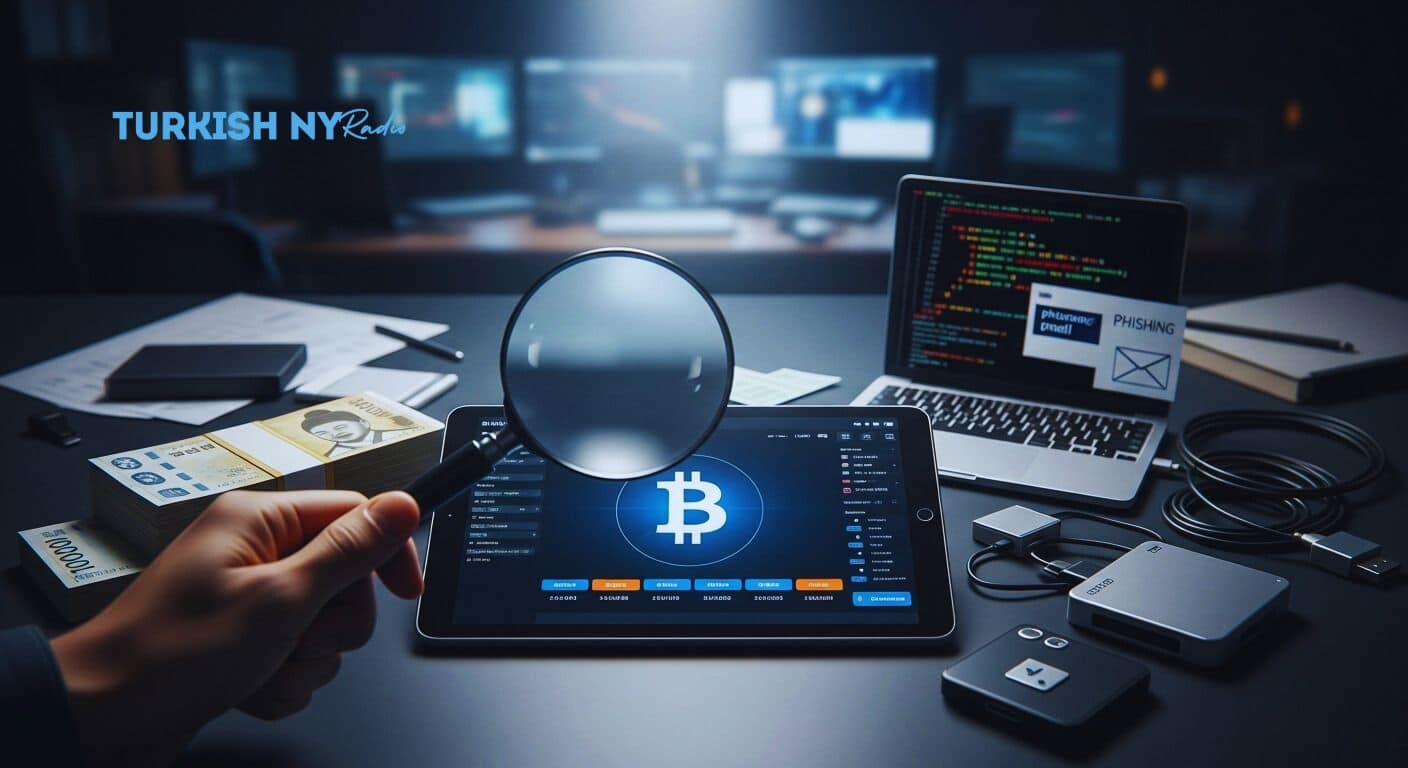
crypto phishing attack
South Korea Investigates $47.7M Seized Bitcoin Theft in Suspected Phishing Case

How Phishing Breaks Custody, Even for Eeized Bitcoin

Phishing works because it targets behavior, not hardware.

ADVERTISEMENT

The attacker does not need to brute-force encryption if a victim is tricked into giving away access, clicking the wrong link, or entering credentials into a convincing fake page.

In crypto, that often means exposing private keys, seed phrases, or authentication details that open the door to irreversible transfers.

The reporting around this case suggests the breach may have involved leaked access information, potentially tied to how credentials were stored and handled during the inspection process.

This is the nightmare scenario for any custodian, because once seized Bitcoin moves on-chain, recovery becomes less about “reversing” anything and more about tracing, flagging, and hoping it lands somewhere cooperative.

The Bigger Issue: Governments Now Hold Crypto Like Evidence, Not Like Capital

Law enforcement agencies worldwide have been seizing large crypto pools, which creates a strange new responsibility.

In traditional finance, seized cash can be locked in a vault and tracked through controlled access. Crypto does not work that way. Control lives in keys, and key management is either disciplined or it is fragile.

The prosecutors’ office reportedly declined to confirm the exact amount lost or when the seized Bitcoin was originally confiscated, citing the ongoing investigation.
At the same time, international coverage noted that many agencies do not disclose custody setups, meaning outsiders cannot tell whether assets are stored in multisig wallets, hardware devices, or other arrangements that reduce single-point failure.

That silence matters because custody design is the difference between “an incident” and “a catastrophe.”
South Korea Investigates $47.7M Seized Bitcoin Theft in Suspected Phishing Case
Source X

Crypto Phishing is Down, But the Risk Never Disappeared

This case lands during a period when phishing losses have reportedly declined across the broader market.

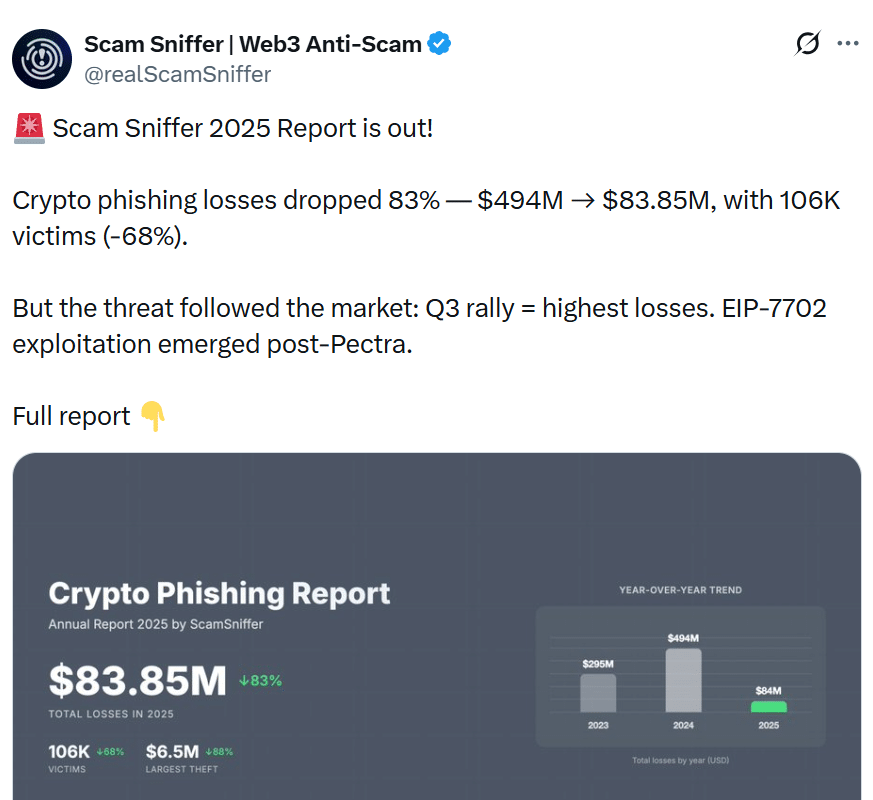
A security report published in early January found that crypto phishing losses fell from $494 million to $83.85 million in 2025, with victim counts dropping to roughly 106,000.

On X, the account behind that research summed it up bluntly

“Crypto phishing losses dropped 83% $494M → $83.85M, with 106K victims (-68%). But the threat followed the market: Q3 rally = highest losses.”

That line matters because it hints at the real pattern. Phishing does not vanish. It waits for activity, distraction, and momentum, then it feeds off volume.

So even if overall losses are down, a single incident involving seized Bitcoin can still blow past many annual stats, purely because the holdings are larger and the stakes are political.

Conclusion

The alleged loss of $47.7 million in seized Bitcoin is more than an embarrassing headline. It is a custody stress test for governments as crypto becomes a standard part of criminal proceedings, asset recovery, and financial enforcement.

If the investigation confirms phishing as the root cause, the takeaway will be painfully simple: in crypto, the weakest link is often not code, but process.

And when official agencies are holding assets worth tens of billions of won, “process” needs to be treated like a security system, not paperwork.


Summary

South Korea is looking into how nearly $47.7 million in seized Bitcoin vanished during what should have been a routine check. Early signs point to a phishing-related mistake, possibly involving compromised access details.

Beyond the missing funds, the case raises bigger questions about how government agencies store and protect crypto assets, and whether their internal processes are strong enough to handle digital holdings worth tens of millions of dollars.

FAQs

What happened in South Korea’s missing crypto case?

Prosecutors are investigating after roughly $47.7 million worth of Bitcoin reportedly disappeared during an inspection of seized assets.

How could phishing lead to stolen Bitcoin?

Phishing can trick a user into exposing sensitive access details through fake websites or messages, enabling attackers to move funds.

Can stolen Bitcoin be recovered?

Recovery is difficult because transfers are final, but investigators can trace wallets and track where funds move on-chain.

Are phishing attacks still common in crypto?

Yes. Even with declines in total losses, phishing remains one of the most persistent threats in the market.

Glossary of Key Terms

Phishing
A social engineering method that tricks victims into revealing sensitive information, often through fake websites or messages.

Private Key
A secret cryptographic code that controls access to crypto funds. Anyone who has it can move assets.

Seizure (Crypto Asset Seizure)
When authorities confiscate digital assets as part of an investigation, treating them as criminal proceeds or evidence.

On-chain Tracking
Monitoring blockchain transactions to follow where funds move, often used in investigations and compliance.

Custody
The systems and procedures used to store and secure crypto assets, including key management, approvals, and access controls.

Sources

cointelegraph

Bitget

X

Tags: Bitcoin seized assetscrypto phishing attackgovernment crypto custodySeized Bitcoin theft
Previous Post

Coinbase Forms Quantum Advisory Board to Strengthen Crypto Security

Next Post

Russian Stablecoin A7A5 Processed $100B Despite Sanctions, Elliptic Finds

Victoria James

Victoria James

I offer insightful, well-researched, and engaging news coverage writing. Helping readers cut through the noise with ideas about market movements, blockchain technologies, regulatory developments, and more.

SIMILAR NEWS

Asset tokenization
Cryptocurrency

Why Asset Tokenization Is Advancing Slowly but Strategically

27 January 2026
US Government Bitcoin Reserve Faces New Custody Questions
en

US Government Bitcoin Reserve Faces New Custody Questions

27 January 2026
UK crypto laws
World

FCA Consultation Signals Major Step Forward for UK Crypto Regulation

27 January 2026

Leave a Reply Cancel reply

Your email address will not be published. Required fields are marked *

Search

No Result
View All Result
DMCA
PROTECTED

Categories

  • Business
  • Cryptocurrency
  • Economy
  • en
  • News
  • Politics
  • World

Recent Posts

  • Why Asset Tokenization Is Advancing Slowly but Strategically
  • US Government Bitcoin Reserve Faces New Custody Questions
  • FCA Consultation Signals Major Step Forward for UK Crypto Regulation
  • How to Buy Meme Coins? APEMARS Becomes the Next 100x Meme Coin – Free Crypto Model Draws Attention Away From $PI and $FLOKI
  • Early-Stage Crypto Opportunities for 15,000% ROI: Why Some Investors See APEMARS as the Next 100x Crypto After Floki and SPX6900 Gains

Site Navigation

  • Home
  • About Us
  • Terms and Conditions
  • Privacy Policy
  • Disclaimer
  • Contact

TurkishNY Radio

Banner 1
Banner 2
No Result
View All Result
  • Home
  • Cryptocurrency
  • Business
  • Economy
  • tr Türkçe
  • en English

  • English