This article was first published on TurkishNY Radio.
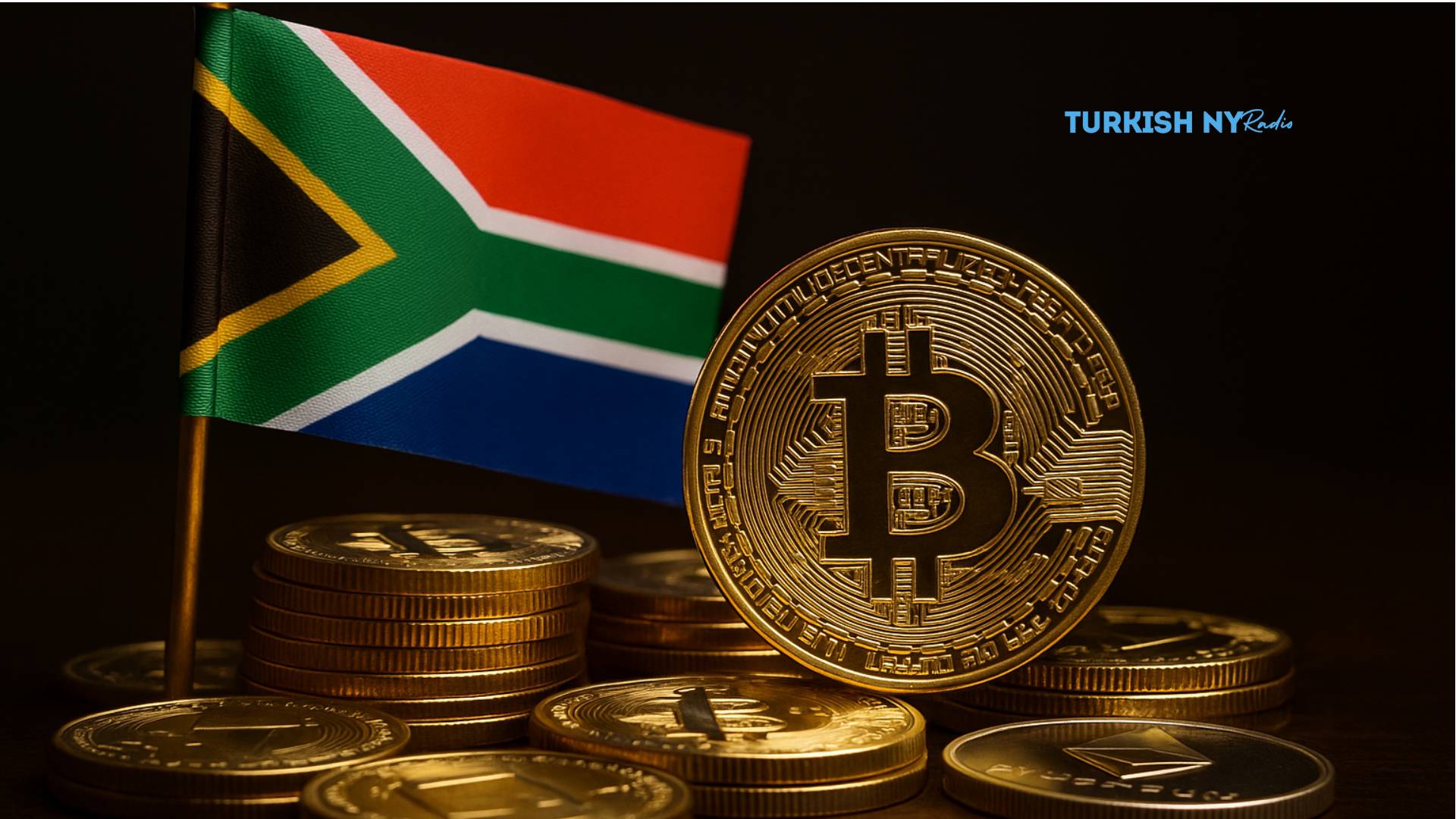
South Africa’s central bank has moved crypto out of the novelty corner and into the risk section of its books. In its latest Financial Stability Review, the South African Reserve Bank (SARB) classifies cryptocurrencies and, in particular, United States dollar-pegged stablecoins as a new threat to the country’s financial system, arguing that rapid adoption is outpacing an incomplete regulatory framework.


The message is not that crypto must disappear. It is that a growing slice of money-like activity is now happening in tokens that sit partly outside domestic rules, and that this mix of speed, scale, and opacity can turn into a real problem if something breaks.
Stablecoins Move To Center Stage In South Africa
For several years, the story in South African crypto trading revolved around volatile assets such as Bitcoin, Ether, XRP, and Solana. That picture has started to shift. SARB notes a structural change since 2022, with dollar pegged stablecoins now overtaking unbacked coins as the preferred trading pairs on local platforms, largely because their prices are easier for households and traders to stomach.
The scale is no longer marginal. Recent figures suggest that three major domestic platforms now serve about 7.8 million registered users, with client assets of roughly 25.3 billion rand, equal to about 1.5 billion dollars at recent exchange rates. Globally, the stablecoin market has crossed 300 billion dollars in total capitalization in 2025, a sharp jump from around 200 billion dollars at the start of the year.
In practical terms, many South Africans now treat stablecoins as a digital dollar balance. Traders park profits in them between positions, freelancers receive cross border payments in them, and savers use them informally to hedge against local currency swings.

Borderless Tokens Versus Old Style Exchange Controls
The central bank’s biggest concern is how easily digital assets ignore borders. Crypto transfers clear within minutes, with no traditional bank in the loop. SARB warns that this borderless design can allow users to sidestep South Africa’s long-standing exchange control regulations, which were built for a world of bank wires, paperwork, and clear reporting lines, not for peer-to-peer token transfers.
If significant flows move offshore through stablecoins without appearing in standard balance of payments data, authorities may misread pressures on the rand, underestimate the risk of sudden capital flight, or react too late when external conditions tighten. That is why the central bank stresses that crypto is not only about price bubbles. It is also about visibility of money moving through the system.
What The Crypto Risk Indicators Are Telling Regulators
Behind the headlines, SARB now tracks a set of indicators that will feel familiar to market analysts but are being reframed as financial stability gauges. These include:
The number of registered and active crypto users on local platforms and how quickly that base is growing.
The rand and dollar value of assets held in custody by domestic exchanges.
The share of trading volume that uses stablecoins rather than volatile assets.
Global stablecoin circulation and daily transaction volume, which increasingly looks like a parallel dollar settlement layer.
On the market side, policymakers also watch classic crypto indicators such as Bitcoin dominance, funding rates on major exchanges, and the sensitivity of crypto prices to macroeconomic news, including interest rate decisions and inflation surprises.
These signals help regulators judge whether risk is building in a way that could spill back into the banking system, for example through sudden forced selling, liquidity squeezes, or pressure on local funding markets.

When user numbers rise sharply without stronger supervision, or when stablecoin volumes grow far faster than the real economy, SARB interprets this as a possible build up of systemic risk. In simple terms, more of the country’s transactional life would be running through foreign currency tokens, backed by offshore reserves, and only partially visible to domestic supervisors.
Regulation Is Coming, But Timing Is Critical
SARB is now working with the National Treasury on rules that would bring cross-border crypto asset transactions into the formal reporting framework and amend exchange control regulations so that digital assets clearly fall within their legal scope. At the same time, earlier steps already classify crypto as a regulated financial product, which means service providers require licenses and must follow conduct standards.
The central bank presents these efforts as a race against time. If regulation does not keep pace with adoption, the risk is that authorities will face a large, complex market with only partial data and limited tools, very much like driving at night with weak headlights.
Global bodies, including European and international watchdogs, have issued similar warnings on stablecoins, noting that although the current market size looks modest next to bank balance sheets, their role in trading and payments is already systemically important.
Conclusion: A Test Case For Emerging Markets
South Africa has quietly become a test case for how an emerging economy can handle high retail crypto adoption without losing control of capital flows or financial stability. Citizens and businesses see clear benefits in digital assets, especially dollar-linked stablecoins that make cross-border payments faster and provide a shield against local currency volatility.
How the country balances these goals over the next few years will matter far beyond its own borders. If South Africa succeeds in building a transparent, risk based framework that allows responsible innovation while closing dangerous gaps, it may offer a template for other African and emerging markets that are wrestling with the same stablecoin puzzle. This article is for information only and should not be taken as investment advice.
Frequently Asked Questions
Why is South Africa’s central bank worried about stablecoins now?
Because stablecoin use has grown very quickly, overtaking traditional crypto pairs on local exchanges, while the legal framework for cross border flows and global stablecoins is still incomplete. That combination of speed and regulatory gaps can create blind spots in the financial system.
Are South Africans banned from using crypto or stablecoins?
No. The central bank is not calling for a ban. Crypto is treated as a financial product and service providers can be licensed. Regulators are focusing on better oversight of cross border flows, market conduct, and reserves behind stablecoins, not on shutting the market down.
Glossary Of Key Terms
Financial stability
The condition in which the financial system can withstand shocks and continue to provide services such as payments, lending, and savings without severe disruption.
Exchange control regulations
Rules that govern how money moves into and out of a country, including limits, reporting requirements, and approvals for certain cross border transactions.
Bitcoin dominance
A market indicator that shows what share of the total crypto market capitalization belongs to Bitcoin. A high dominance figure suggests that Bitcoin still sets the tone for the wider market.
Funding rate
A periodic payment between traders in perpetual futures markets. Positive rates usually mean long positions are paying short positions, which can signal bullish positioning and leverage.
Systemic risk
The risk that stress in one market or institution spreads widely enough to disrupt the broader financial system and the real economy, rather than remaining contained in a single corner of the market