The Solana upgrade 2025, centered on the ambitious Alpenglow proposal, has sparked wide discussion in the crypto community.
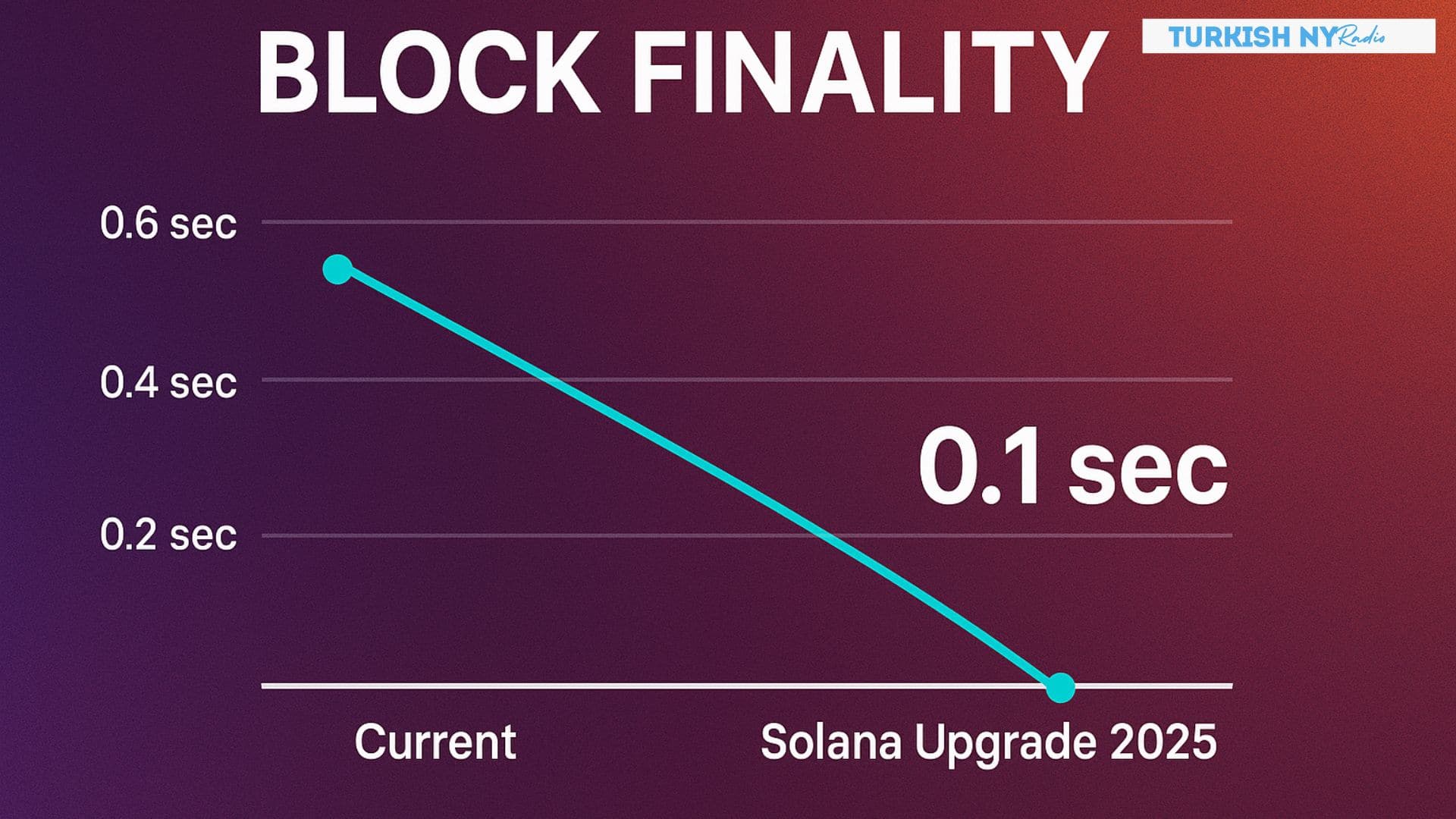
This governance vote could reduce block finality from 12.8 seconds to as low as 100–150 milliseconds. If approved, the upgrade will bring Solana closer to Web2 responsiveness, reshaping its competitive edge among blockchains.


What the Solana Upgrade 2025 Means
The Alpenglow proposal (SIMD‑0326) represents a radical shift in Solana’s consensus mechanism. Instead of TowerBFT, it introduces a new framework with Votor for off‑chain voting and Rotor for data propagation. The Solana upgrade 2025 aims to simplify consensus while enhancing speed and resilience.
According to Solana Labs developers, “Alpenglow has the potential to cut finality times to under 200ms while maintaining validator security and decentralization.” This positions Solana as one of the fastest major blockchains.
Economic Impact: Validator Admission Ticket
One major change in the Solana upgrade 2025 is the Validator Admission Ticket (VAT) system. Validators will pay a 1.6 SOL fee per epoch, which gets burned. This replaces on‑chain voting costs, potentially reducing validator expenses by about 20%. However, some critics argue this model may discourage smaller validators from participating.
“BREAKING: @Anza_xyz has started the Solana community governance process for SIMD 326, Alpenglow, the most significant consensus upgrade …”
This confirms that the governance process is now live. X.com
“We’re making progress with implementing Solana’s new consensus protocol Alpenglow. We also just started the governance process for Alpenglow: …”
Reinforces the official confirmation of governance kickoff. formerly Twitter
Fault Tolerance and Network Resilience
The Solana upgrade 2025 emphasizes stability with its “20+20” model. Even if 20% of validators act maliciously and another 20% fail to respond, the network remains live. This fault tolerance could make Solana more resilient during network stress or unexpected outages.
Price Update
As of today, Solana (SOL) trades around $181, showing modest gains in anticipation of the Solana upgrade 2025 vote. Analysts suggest successful passage could fuel further upward momentum.
| Date | SOL Price (USD) | 24h Change |
|---|---|---|
| Aug 15, 2025 | $181 | -5.87% |
| Aug 14, 2025 | $174 | -1.8% |
| Aug 13, 2025 | $177 | +0.9% |
Community Perspectives
Supporters see the Solana upgrade 2025 as a breakthrough. Faster block finality could unlock real‑time financial applications, gaming, and high‑frequency DeFi trading. Validators may also benefit from simplified consensus logic.
Critics, however, caution against rapid implementation. Concerns include off‑chain voting complexities, integration with systems like Jito auctions, and risks tied to deployment without thorough testing.
Governance Timeline
The governance vote spans across Epochs 840 to 842, following months of community discussion. For the Solana upgrade 2025 to pass, it requires two‑thirds approval with a minimum quorum of 33%, including abstentions.
Conclusion
The Solana upgrade 2025 could transform Solana into a real‑time blockchain platform. By cutting block finality to sub‑second levels, it promises speed, efficiency, and resilience. Still, the outcome depends on validator confidence and careful rollout. Whether Alpenglow passes or not, it highlights Solana’s commitment to pushing the boundaries of blockchain performance.
Also read Hong Kong Crypto
Summary
The Solana upgrade 2025 introduces the Alpenglow proposal (SIMD‑0326), aiming to reduce block finality from 12.8 seconds to just 100–150 milliseconds. The upgrade includes the Validator Admission Ticket system, fault tolerance improvements, and simplified consensus. While Solana trades at $178 amid optimism, opinions remain divided. Supporters highlight speed and resilience, while critics point to validator costs and deployment risks. The governance vote across Epochs 840–842 will decide whether Solana moves into a new era of real‑time performance.
FAQs
Q1: What is the Solana upgrade 2025?
The Solana upgrade 2025 is the Alpenglow proposal, designed to cut block finality to under 200ms and overhaul Solana’s consensus system.
Q2: How will it affect validators?
Validators will pay a 1.6 SOL admission fee per epoch under the new Validator Admission Ticket model, replacing on‑chain voting costs.
Q3: What is block finality?
Block finality is the time it takes for a transaction to become irreversible and confirmed on the blockchain.
Q4: What are the risks of the Solana upgrade 2025?
Risks include higher costs for smaller validators, integration challenges, and deployment risks if testing is insufficient.
Q5: When is the governance vote happening?
The vote runs across Epochs 840 to 842, with a two‑thirds majority and 33% quorum required for approval.
Glossary
Block Finality: The point at which a transaction is permanently recorded on the blockchain.


Validator: A participant that secures the network by validating transactions and producing blocks.
Epoch: A fixed period in Solana’s governance system used for staking and voting cycles.
TowerBFT: Solana’s current consensus algorithm before Alpenglow.
Validator Admission Ticket (VAT): A proposed fee model requiring validators to pay 1.6 SOL per epoch.