The U.S. Securities and Exchange Commission (SEC) has triggered a major shift in digital asset markets. With the recent approval of crypto ETF listing standards, exchanges can now list certain products without going through lengthy, case-by-case approval.
The move promises efficiency and growth, but it has also sparked an intense debate inside the Commission itself.


SEC Listing Standards: A Fast-Track for Crypto ETFs
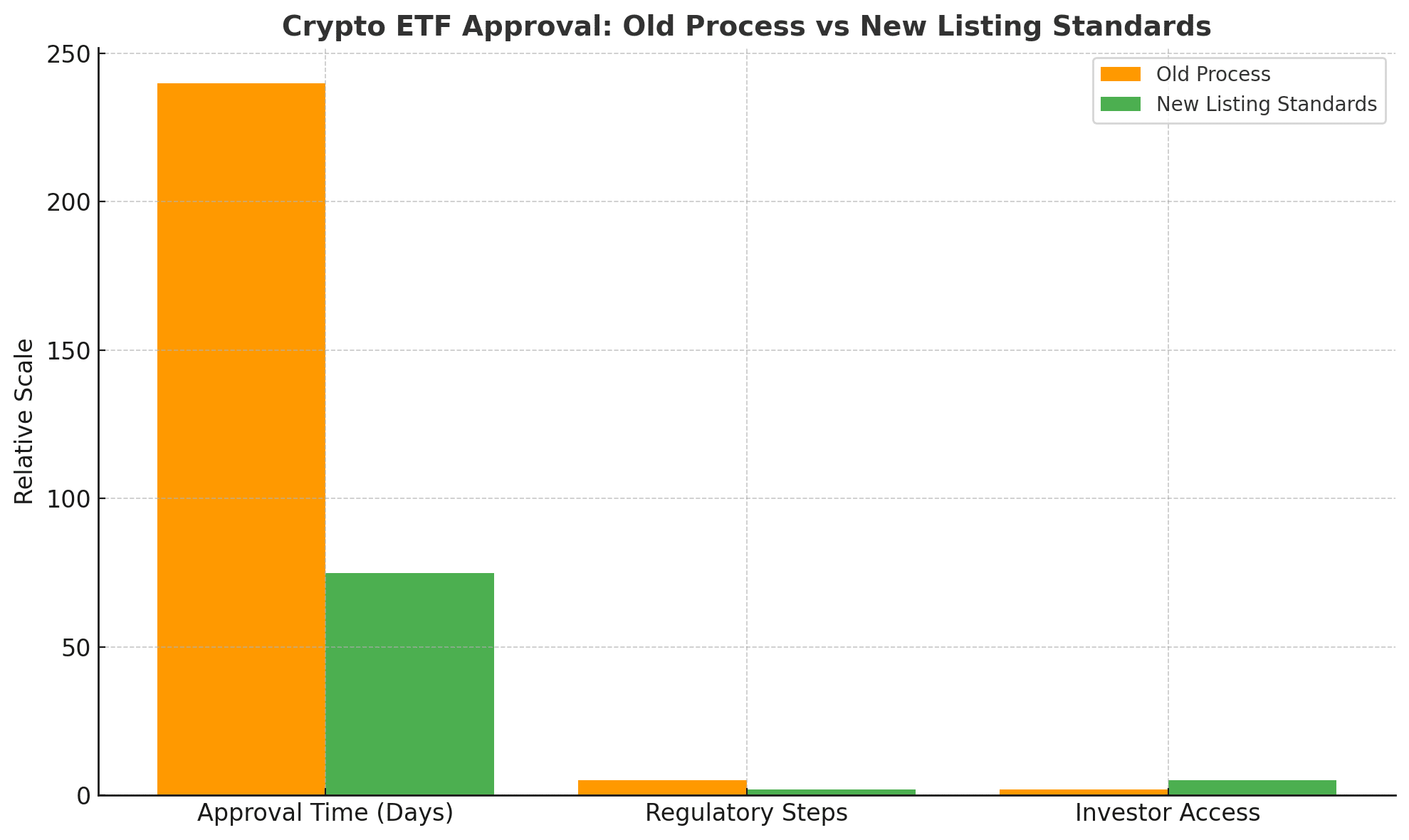
The decision allows exchanges to adopt generic listing standards for commodity-based trust shares that include cryptocurrencies. In practice, this means that products meeting predefined criteria, such as having related futures traded on regulated markets for at least six months, can be listed without individual SEC approval.
Supporters argue this step modernizes outdated processes. Commissioner Hester Peirce endorsed the new approach, saying it “reduces unnecessary bottlenecks while ensuring rules remain clear and transparent.”


By eliminating delays that once stretched up to 240 days, the SEC has potentially cut waiting times to about 75 days for certain funds.
The new standards also align with growing institutional demand. Data shows that spot Bitcoin and Ethereum ETFs have already attracted billions in assets under management. Analysts expect that additional tokens, such as Solana or XRP, could now find an easier pathway into the regulated ETF market.
Commissioner Crenshaw’s Warning on Investor Protection
Not everyone within the SEC is convinced. Commissioner Caroline Crenshaw issued a stark warning, cautioning that looser standards may unleash a wave of products without thorough oversight. In her statement, she argued, “By delegating review to generic standards, we risk passing the buck on investor protection.”
Crenshaw’s concerns highlight the potential for less liquid or poorly vetted digital assets to reach mainstream markets. Critics fear that without deeper scrutiny, investors could face higher risks of manipulation, volatility, or outright failure in the event of weak project fundamentals.
Altcoin ETFs: A New Era of Accessibility
Despite internal disagreements, the broader market sees opportunity. With reduced barriers, altcoin ETFs are expected to emerge faster, potentially driving liquidity and adoption for tokens beyond Bitcoin and Ethereum. Reports suggest that Solana’s strong developer activity and high transaction capacity make it a likely candidate.
Traders on social media are already reacting. One well-known analyst wrote on X, “This opens the door for real diversification. Expect Solana and XRP ETFs within months, not years.” Community discussions also reflect excitement over institutional access to assets previously limited to retail markets.
The new pathway also mirrors how traditional commodities, such as gold, gained traction through ETFs. By making tokens accessible in brokerage accounts, more investors can participate without directly managing wallets or private keys.
Market Impact and the Road Ahead
Industry observers believe the SEC’s decision marks a turning point. According to analysts, faster ETF approvals could lead to a “super-cycle” of institutional inflows, with billions entering the market through regulated channels. This could strengthen adoption and reduce reliance on offshore exchanges.
However, the balance between innovation and protection remains fragile. If weaker projects exploit the standards, the result could be harmful both to investors and the SEC’s credibility. The Commission must ensure that generic rules remain adaptable, transparent, and enforceable.
Conclusion
The approval of crypto ETF listing standards is both a milestone and a challenge. It creates new opportunities for altcoins to enter regulated markets while raising questions about investor safety.
With Commissioners divided, the debate reflects a broader tension in digital finance: how to foster growth without compromising protection. The outcome will likely shape the trajectory of cryptocurrency integration into traditional markets for years to come.
“This article is for informational purposes only and does not constitute financial advice. Readers should conduct their own research before making investment decisions.”
Frequently Asked Questions about crypto ETF listing
1. What are crypto ETF listing standards?
They are predefined SEC rules allowing certain crypto ETFs to be listed without individual approval.
2. Which tokens could benefit from the new standards?
Besides Bitcoin and Ethereum, altcoins like Solana and XRP may see faster ETF launches.
3. Why did some SEC commissioners oppose the move?
Concerns center on investor protection and the risk of unvetted assets entering markets.
4. How might these rules impact investors?
They could offer greater access to crypto ETFs, but may also expose investors to new risks.
Glossary of Key Terms
ETF (Exchange-Traded Fund): A fund traded on stock exchanges that holds assets like stocks or crypto.
SEC: The U.S. Securities and Exchange Commission, which regulates securities markets.
Altcoin: Any cryptocurrency other than Bitcoin.
Tokenomics: The economic structure behind a digital asset, including supply and incentives.
MiCA: European regulatory framework for digital assets, requiring transparency in tokenomics.
Investor Protection: Safeguards to ensure fairness and reduce risk of fraud or manipulation.