
The SecondFi ADA hack has raised new questions inside the Cardano ecosystem after Charles Hoskinson said Emurgo does not know the identity of the white hat hacker who moved 129 million ADA from vulnerable wallets.
The transfer was worth about $18.5 million. It came after SecondFi, a Cardano wallet generator formerly known as Yoroi Wallet, suffered a flaw in its key-generation software.


Hoskinson discussed the matter on June 25 during his X Spaces session, “The Bingo Hall.” He cited secondhand information from a contributor named Jer, who had attended a meeting between Cardano governance body Intersect and SecondFi’s developers.
SecondFi ADA Hack Centers on Unknown White Hat Wallet Move
According to Hoskinson, a member of the Emurgo team said the white hat hacker was not known to Emurgo. The same comment also said the person was not affiliated with Emurgo. The SecondFi ADA hack now leaves users watching both the recovery process and the platform’s public response.
The incident did not break the Cardano protocol. Intersect and Hoskinson have both stressed that the issue sat at the wallet application layer. Still, the damage has affected confidence across the ecosystem.
SecondFi’s software flaw allowed external attackers to drain around 16 million ADA. That amount was worth about $2.4 million. The funds came from 374 addresses across four draining events.
A separate 129 million ADA movement became the center of the identity dispute. SecondFi described that transfer as an emergency rescue operation. The funds were sent to an independent, qualified third-party custodian for the benefit of affected addresses.
Hoskinson Says Hacker Identity Is Unknown
Hoskinson’s comments placed attention on Emurgo’s role. Emurgo built the platform, but the firm was described as not knowing the identity of the white hat hacker.
That point matters because the 129 million ADA transfer was not part of the attacker drain. It was presented as a protective move. However, the identity of the person behind the rescue transfer remains unclear.
The SecondFi ADA hack has therefore become more than a wallet security issue. It has also become a transparency issue for users who want to know who controlled the emergency movement of funds.
Wallet Flaw Stayed Outside Cardano Protocol
The reported weakness came from SecondFi’s key-generation software. It did not come from Cardano’s base protocol. That distinction is important for users and developers.
A blockchain protocol can remain intact while wallet software still exposes users to risk. In this case, the application layer became the problem. The SecondFi ADA hack shows how wallet infrastructure can affect trust even when the chain itself remains secure.
SecondFi was one of the largest Cardano wallet generators. That position made the incident more sensitive for the wider community.
SecondFi Plans Asset Return
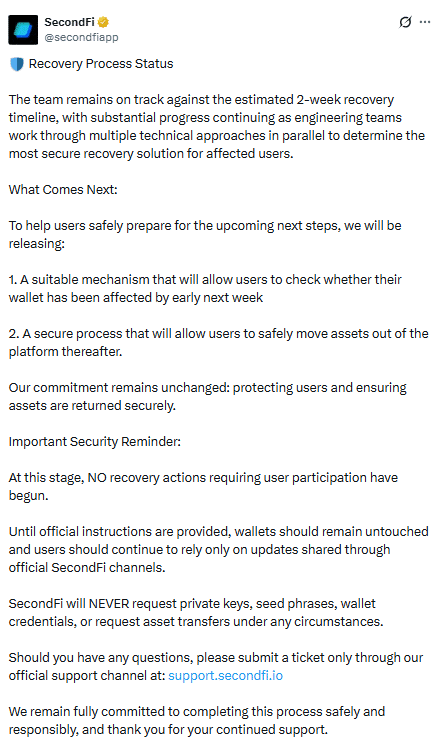
SecondFi took a final balance snapshot on June 26. The platform said it plans to return lost user assets within two weeks. It also warned that the timeline is not guaranteed.
The team told users not to move funds to new wallets during the process. It said independent action outside official guidance could create more risk. That warning suggests the recovery process remains active and sensitive.
Cybersecurity firm SlowMist estimated that total exposure could exceed $20 million. That figure includes the broader risk tied to the vulnerable wallets and related fund movements.
ADA Price Falls as Market Reacts
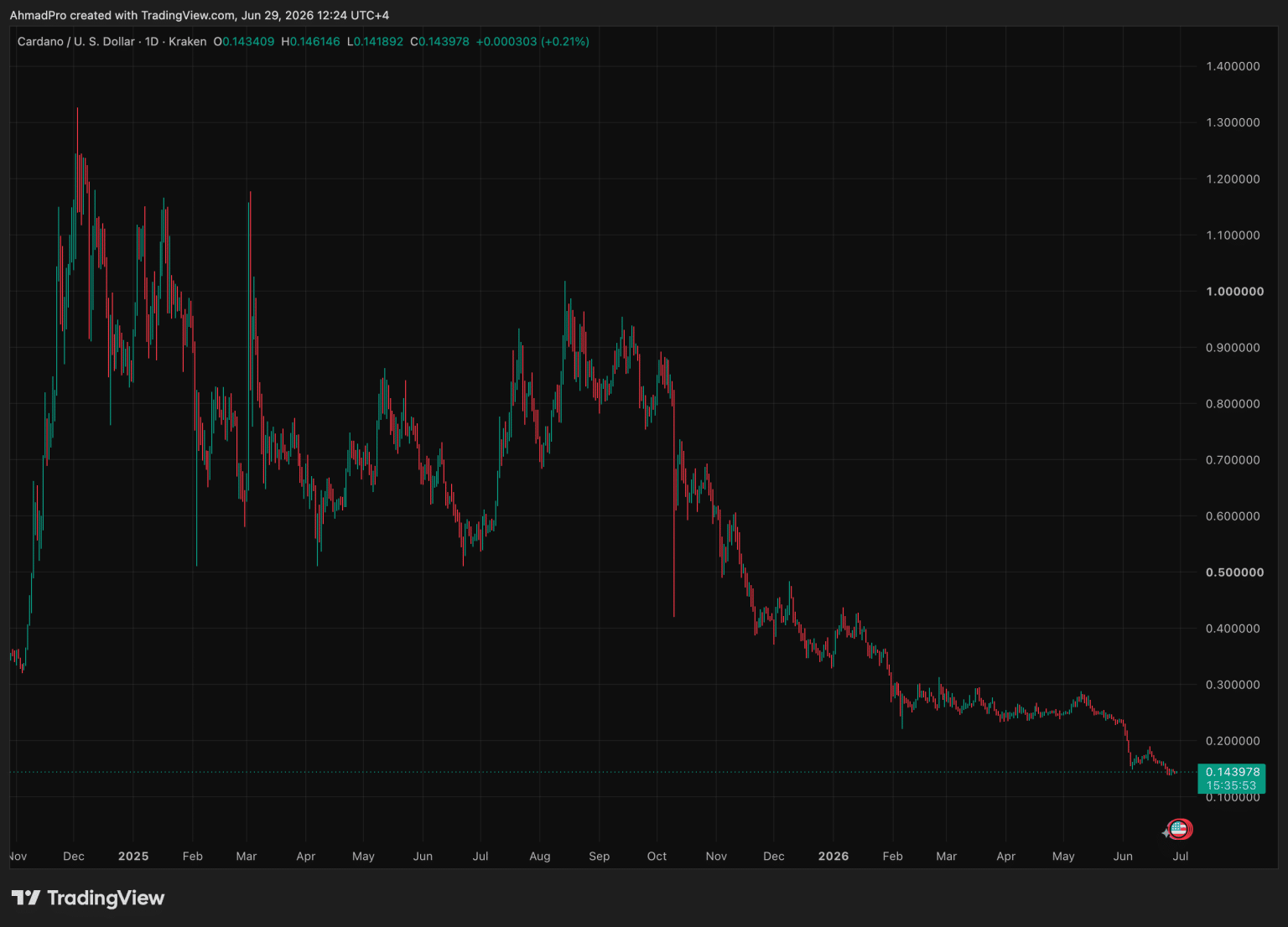
ADA has fallen 21% over the past two weeks. It is trading near $0.145, based on the supplied market data. That level is close to multi-year lows and about 95% below its all-time high.
The decline shows that the market is pricing in reputational pressure. The SecondFi ADA hack did not damage Cardano’s protocol. Yet it still added pressure to ADA during a weak technical setup.
The token is trading below its 50-day EMA at $0.1904. It is also below its 100-day EMA at $0.2248 and its 200-day EMA at $0.3006.
Technical Levels Remain Weak
ADA’s RSI is at 29. That places it near oversold territory. The MACD has turned slightly positive, which may show fading bearish momentum.
However, that does not confirm a trend reversal. Key support sits near $0.140. A structural low is near $0.1382.
A daily close below $0.1451 could expose that lower zone. On the upside, resistance sits near $0.1726 to $0.1737. That area includes the broken descending trendline and the 23.6% Fibonacci level.
Further resistance sits near the 50-day EMA at $0.1904. The 38.2% Fibonacci retracement is near $0.1957.
Derivatives Data Shows Bearish Positioning
CoinGlass data shows a long-to-short ratio of 0.72. That is the lowest reading in more than a month. Funding rates are also negative at minus 0.0055%.
That means short traders are paying long traders. It can be a mild contrarian signal. Still, weak spot price action keeps risk elevated.
Conclusion
The SecondFi ADA hack has exposed a difficult mix of wallet security risk, unclear custody details, and weak market sentiment. The Cardano protocol was not breached, but user confidence has still been tested.
SecondFi now faces pressure to return assets, explain the emergency transfer, and rebuild trust. Until then, ADA traders are likely to watch both recovery updates and key support levels.
Frequently Asked Questions About SecondFi ADA Hack
1. What is the SecondFi ADA hack?
It is a wallet security incident involving vulnerable SecondFi wallets and the movement of large amounts of ADA.
2. Was the Cardano protocol hacked?
No. The issue was reported at the wallet application layer, not the Cardano protocol layer.
3. How much ADA was moved by the white hat hacker?
About 129 million ADA, worth roughly $18.5 million, was moved from vulnerable wallets.
4. What happens next for affected users?
SecondFi said it plans to return lost user assets after a balance snapshot, but the timeline is not guaranteed.