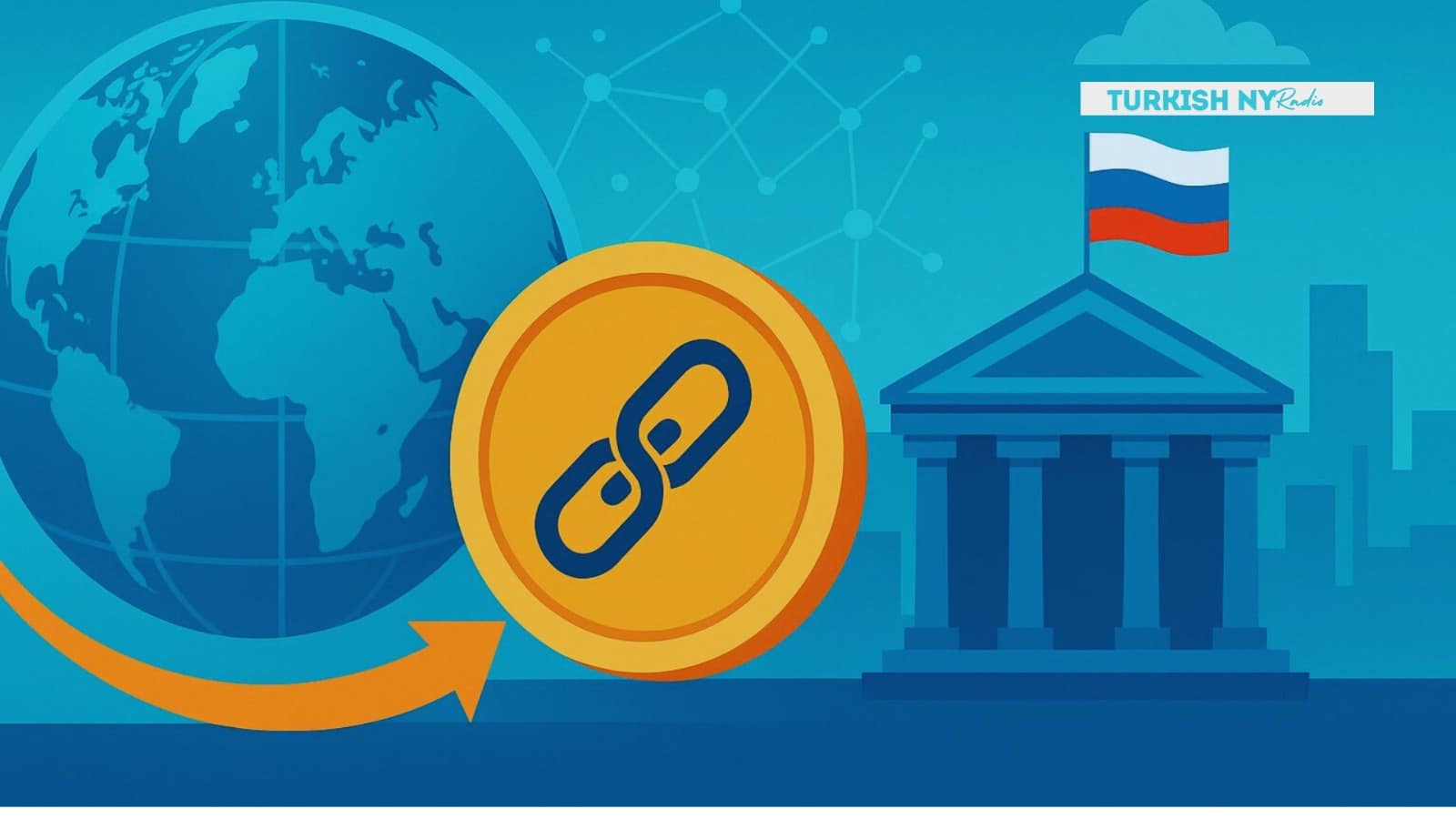
Imagine a world where investors in New York or Dubai could buy shares in Gazprom or Sberbank not through traditional brokers or cross-border accounts, but by tokenizing those shares on a blockchain. That’s exactly the vision Russia’s central bank is now exploring.
The Bank of Russia is seriously considering turning domestic shares into digital tokens, enabling foreigners to own fractions of Russian companies via digital infrastructure.

It’s a bold idea, part sanctions workaround, part financial modernization, and it could upend how capital moves in and out of Russia.
In this article, we’ll dive into what this proposal means, what challenges it faces, and whether it could become a real channel for global investment.
Tokenization: From Concept to Strategy
Tokenization isn’t new in theory but applying it to national stock markets is an ambitious step. By converting shares into digital tokens, you create a blockchain record where each token is tied to ownership rights, dividends, or voting.
In this case, Russia’s central bank is considering tokenization of domestic shares so foreign buyers can purchase them via digital platforms, skipping some of the friction or restrictions in traditional cross‐border investments.
Vladimir Chistyukhin, First Deputy Governor of the Bank of Russia, addressed this at a side event in a financial forum, describing tokenization of Russian stocks as a “feasible option.” But he emphasized that execution requires both technical infrastructure and international partners. “In this area, foreign partners will play an important role,” he said, referring to entities interested in tokenizing Russian assets for overseas trading.
The Why: Sanctions, Frozen Shares & Capital Drought
Why would Russia do this now? The context is critical. Western sanctions, blocked foreign accounts, and capital flight have gnawed at Russia’s ability to attract outside funds. Many foreign investors’ accounts are frozen or restricted.
A tokenization solution could, in theory, bypass some of those hurdles by granting a digital access point into Russian equities.
Also, tokenization enables fractional ownership: foreign buyers wouldn’t have to purchase entire shares; they could buy micro-units. This lowers entry barriers and potentially increases liquidity.
Analysts suggest it could help revive interest in Russian markets, especially among smaller foreign investors curious about access.
Some critics, however, question whether tokenization alone is sufficient to overcome broader regulatory, legal, and sanction obstacles.
Roadblocks and Risks in the Tokenization Path
Regulatory and Legal Uncertainty
Even if tokenization is technically feasible, legal frameworks must be clarified. How would ownership disputes be adjudicated across jurisdictions?
Would token holders abroad have enforceable shareholder rights in Russian courts? Russia has experimented with digital financial assets (DFAs) and “foreign digital rights” rules but many unanswered questions remain.
Sanctions and Trust Barriers
One cannot ignore the elephant: sanctions. Western governments may still restrict flows of digital tokens tied to Russian assets. Even if transactions occur, counterparties might refuse to accept or clear them.
The trust deficit is real, especially with concerns over asset seizure or legal expropriation.
Infrastructure & Technology Gaps
Russia will need capable blockchain platforms, secure custody infrastructure, reliable token exchanges, and cross‐border linkages.
Chistyukhin pointed out that execution hinges on having strong technical and platform solutions. Without robust systems, tokenization remains speculative.
Low Uptake So Far
Even new tools like “In” accounts made to guarantee withdrawals for foreign investors have seen almost no demand. This suggests that bold announcements alone won’t break decades of investment skepticism.
What It Means, If It Works
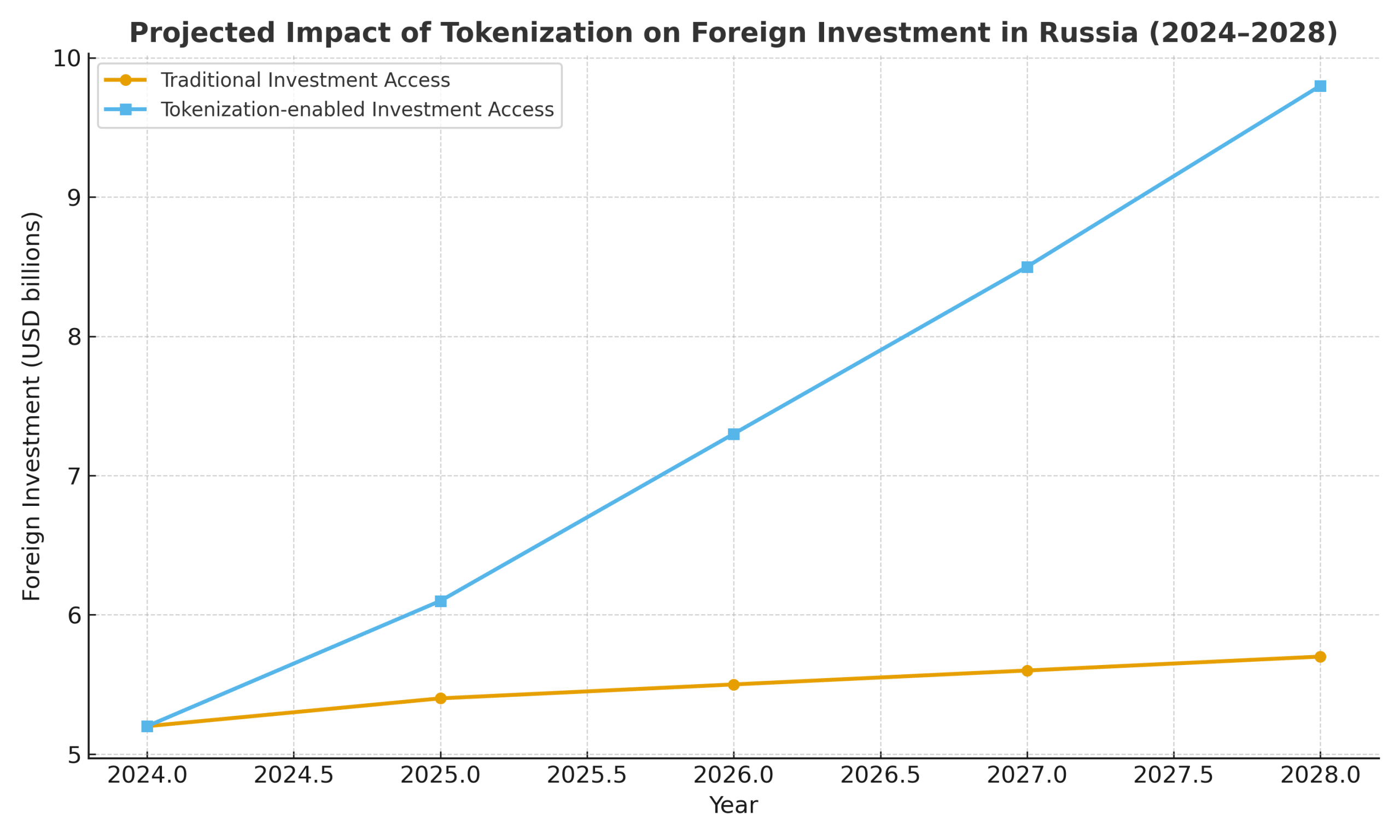
If tokenization takes off, foreign investors could gain new access to Russian equities perhaps seeing a gradual reopening of capital channels. It might boost liquidity, reduce the steep “Russian discount,” and send a message that Russia is modernizing its financial system.
For Russia, it would be symbolic: blockchain adoption for core financial infrastructure, a bridge between traditional capital markets and digital innovations. It could also help Moscow bypass some traditional banking barriers imposed by sanctions.
Yet success would depend on coordination: regulatory alignment, international cooperation, legal clarity, and credible safeguards.
Conclusion
Russia’s central bank is flirting with a bold idea: tokenization of domestic shares to allow foreigners to invest in Russian companies.
It’s not a done deal. But it’s a signal: that in a world constrained by sanctions and capital controls, states are seeking digital workarounds.
Whether tokenization becomes a functional bridge or a theoretical footnote depends on execution, trust, and legal architecture. For now, we watch closely.
For more news, visit our platform.
FAQs about Tokinization
Q1: What exactly is tokenization?
Tokenization is converting real assets (like shares) into digital tokens on a blockchain, where each token represents ownership, rights, or value.
Q2: Would tokenization bypass sanctions?
Not automatically. It might provide alternative channels, but tokens can still be blocked or regulated if counterparties refuse or sanctions regimes intercept them.
Q3: Can token holders abroad enforce shareholder rights?
That is a major hurdle. Courts, legal jurisdiction, governance, and contractual backing would need to be clearly defined for enforcement.
Q4: When could this take effect?
No timeline is confirmed. As of now, it’s under evaluation; implementation would require regulatory, technical, and international cooperation.
Glossary of Key Terms
-
Tokenization: Conversion of assets into digital tokens on a blockchain, representing ownership or rights.
-
Digital Financial Assets (DFAs): A Russian legal term for assets represented digitally, often under regulation.
-
Fractional Ownership: Allowing ownership in small units (fractions) rather than full shares.
-
Sanctions: Restrictions imposed by governments that limit economic transactions with certain states or entities.
-
Custody / Custodian: Services or institutions that hold and safeguard digital or real assets on behalf of owners.