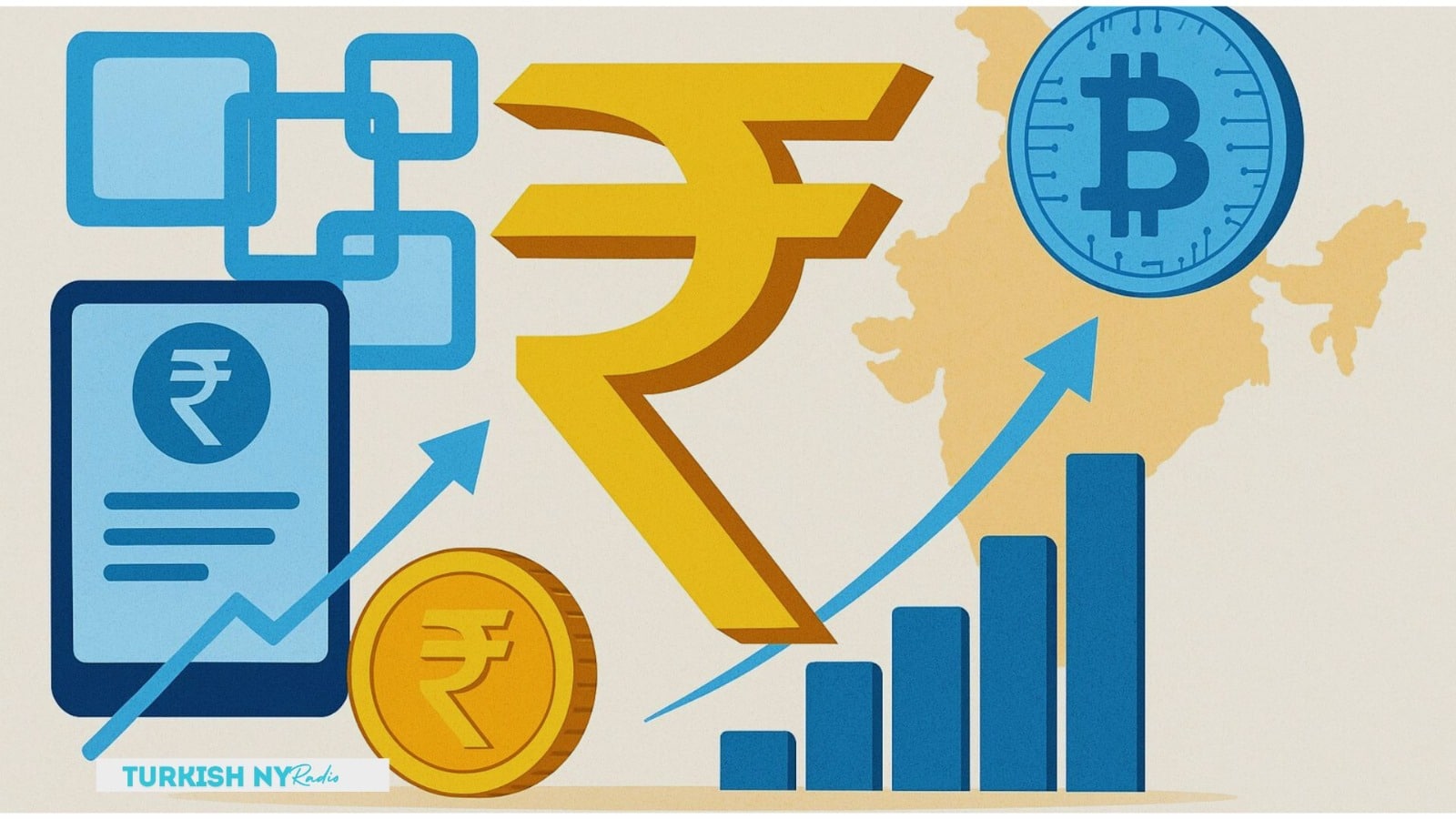
Union Minister Piyush Goyal revealed that India will roll out a sovereign RBI-backed digital currency, a move that could redefine how 1.4 billion citizens transact daily.
“We’ll be coming out with a digital currency backed by the Reserve Bank of India, just like normal currency,” Goyal said during a policy roundtable in Doha, as reported.


The government’s decision underscores India’s dual strategy: embracing blockchain innovation while keeping a tight rein on unbacked crypto assets like Bitcoin and Dogecoin.
Blockchain at the Heart of India’s Payment Revolution
The RBI-backed digital currency aims to harness blockchain’s security and transparency, enabling instant, traceable, and tamper-proof transactions.
According to CoinDesk, the initiative mirrors successful central bank digital currency (CBDC) pilots in China and the EU.
Financial analyst Radhika Menon told Reuters, “This move is India’s bridge between innovation and monetary control. It ensures digital inclusion while keeping speculative risks out.”
Why India Is Turning Away from Unbacked Crypto
While India has stopped short of banning cryptocurrencies, the government has made its stance clear, speculative, unbacked crypto tokens are not aligned with its financial priorities.
Minister Goyal emphasized that unbacked crypto lacks intrinsic value, stating: “Unlike our RBI digital currency, these private coins have no government guarantee or real asset base.”


Currently, India imposes a 30% tax on crypto gains and 1% TDS on transactions exceeding ₹10,000. These measures are designed to discourage unregulated crypto speculation while guiding investors toward the safer alternative, the RBI-backed digital currency.
A Step Toward Financial Transparency and Inclusion
India’s digital rupee is expected to drive financial inclusion by bringing millions of unbanked citizens into the digital economy.
By reducing reliance on cash, the RBI aims to save billions in printing costs and curb money laundering through traceable transactions.
Economist Dr. Sameer Bansal commented on X:
“The RBI-backed digital currency is not just about tech it’s about trust. It’s India’s digital evolution, done responsibly.”
How RBI Digital Currency Differs from Crypto
Unlike volatile, market-driven cryptocurrencies, the RBI-backed digital currency will have a fixed value pegged to the Indian rupee, fully supported by the central bank’s reserves.
This makes it a stable, government-guaranteed digital tender suitable for daily use, from retail payments to cross-border settlements.
India’s CBDC pilot, currently in testing with select banks, has already recorded successful wholesale transactions in interbank transfers.

Conclusion
India’s RBI-backed digital currency represents more than a technological upgrade; it’s a strategic shift toward a regulated, transparent, and inclusive digital economy.
By embracing blockchain while rejecting unbacked crypto volatility, India positions itself as a global leader in responsible digital finance.
As Minister Goyal summarized: “This is the future of money backed by trust, powered by technology.”
For more news, visit our platform.
FAQs about
1. What is the RBI-backed digital currency?
It’s India’s official central bank digital currency (CBDC), guaranteed by the Reserve Bank of India and equivalent in value to the rupee.
2. How does it differ from cryptocurrencies?
Unlike crypto, it’s state-backed, stable, and regulated — not subject to market speculation.
3. Will unbacked crypto be banned in India?
Not banned, but heavily taxed to discourage usage and protect investors.
4. When will the RBI digital currency launch?
The government hasn’t given a fixed date, but pilot tests are already underway.
Glossary
-
RBI-Backed Digital Currency: A sovereign, blockchain-based version of the Indian rupee.
-
Unbacked Crypto: Cryptocurrencies not supported by assets or government backing.
-
CBDC: Central Bank Digital Currency digital legal tender issued by a central bank.
-
TDS: Tax Deducted at Source, applied to crypto transactions in India.