
Polymarket is expanding its prediction market business in the United States. The company plans to add perpetual futures to its platform. This move takes Polymarket beyond event-based contracts and into leveraged trading across crypto, stocks, and commodities.
The company opened a waitlist for early access to the new product. Users may eventually trade assets such as Bitcoin, Nvidia, and gold with leverage. This marks a major shift in the prediction market model that helped Polymarket build its user base.


Polymarket became known for contracts linked to elections, sports, and global events. Those contracts ended when the event was resolved. Perpetual futures are different because they do not expire.
Polymarket Grows Prediction Market Model With Perpetual Futures
Polymarket built its platform around real-world outcomes. Users placed trades on events with clear endings. That structure made the company one of the best-known names in the prediction market sector.
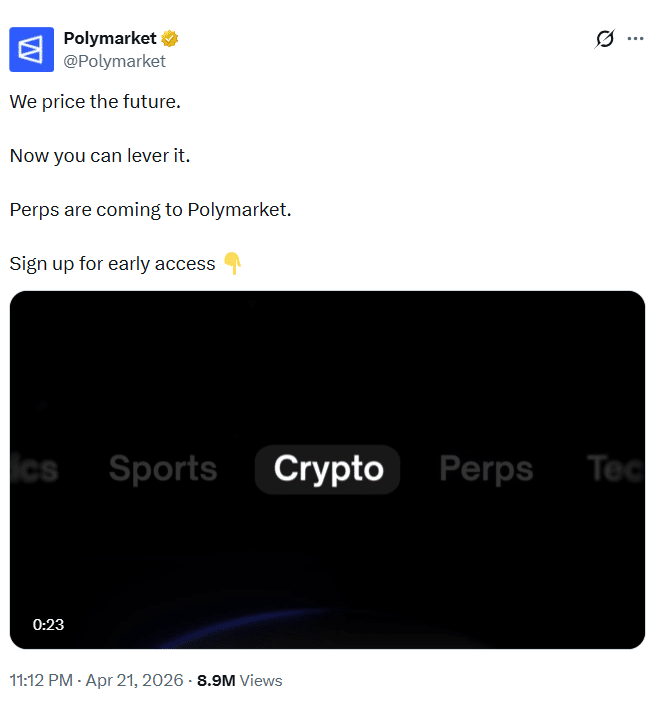
Now the company wants to grow beyond that format. Perpetual futures let users trade price direction instead of event results. This opens the platform to a wider group of traders.
The new product will let users take leveraged positions on major assets. That means traders can increase exposure with borrowed capital. It also means risk becomes much higher.
This change gives Polymarket access to a much larger trading category. Event contracts attract one type of user. Leveraged products attract each other. The new offering could help the prediction market platform increase trading activity.
U.S. Rollout Follows Regulatory Progress
The expansion follows Polymarket’s approval to operate as a designated contract market in the United States. That status gives the company a regulated path for listing derivative products. It also helps Polymarket expand while staying inside federal compliance rules.
Still, many details remain unclear. The company has not fully explained how the perpetual futures product will work under existing rules. It also has not shared full information on fees, funding rates, or the final list of supported assets.
Competition Builds Across Trading Platforms
Polymarket is entering a crowded space. Crypto-native derivatives exchanges already offer perpetual futures. Traditional brokerages and exchanges also serve active traders.
At the same time, other firms are moving closer to the prediction market space. Kalshi is exploring similar expansion. CME Group has also signaled interest in event-style contracts. These moves show that prediction markets and broader trading platforms are starting to overlap.
Perpetual Futures Market Keeps Growing
Interest in perpetual futures has increased across crypto markets. Traders like these products because they support round-the-clock trading. They also allow long-term exposure without a fixed end date.
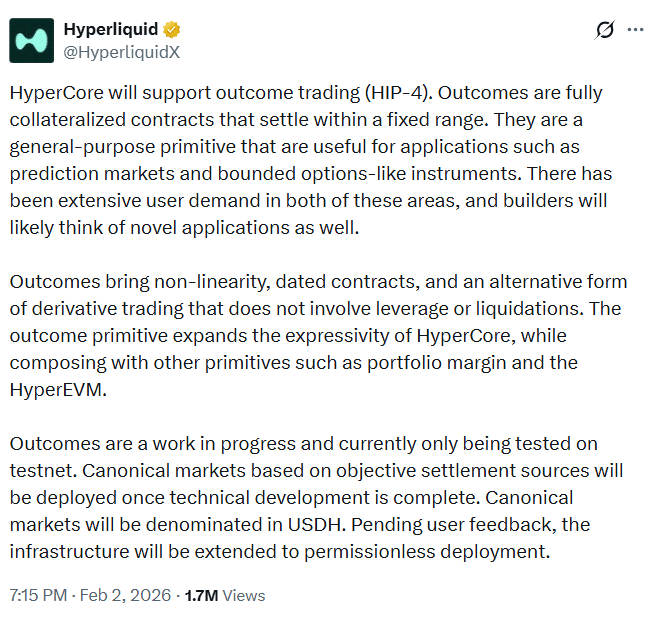
This demand has helped large derivatives platforms grow fast. Hyperliquid is one example. Strong trading volumes across that market show why Polymarket wants to expand in this direction.
Product Details Are Still Missing
The launch is still in a pre-release phase. Users can only register for early access. They cannot yet trade the product openly.
Important information is still missing. Polymarket has not said whether token rewards will be part of the launch. It also has not confirmed the full list of markets or how the contracts will be structured. These details will matter if the company wants to compete at scale.
Legal Pressure Still Surrounds the Sector
The broader legal backdrop remains difficult. Prediction markets continue to face pressure from regulators and state authorities. Recent lawsuits against other firms show that the sector is still under close watch.
That matters for Polymarket as well. Federal approval may help the company move forward. But state-level legal disputes could still create problems for the wider prediction market industry. Regulatory clarity will remain a major factor for growth.
Why This Shift Matters
This expansion is more than a product launch. It changes how Polymarket positions itself. The company is moving from outcome-based contracts into open-ended financial trading.
That shift could bring new users and higher volumes. It could also expose the platform to more competition and more scrutiny. The prediction market brand gives Polymarket strong visibility, but success in derivatives will depend on execution.
Conclusion
Polymarket is taking its prediction market strategy into a new phase with perpetual futures. The company wants to move beyond binary contracts and offer continuous leveraged trading. The opportunity is large, but so are the risks.
Appendix Glossary of Key Terms
Perpetual futures: Derivatives contracts that do not expire and allow continuous trading exposure.
Leverage: Borrowed capital used to increase the size of a trading position.
Event contract: A market tied to a specific outcome, such as an election or sports result.
Derivatives: Financial instruments whose value is linked to an underlying asset or benchmark.
DCM: A Designated Contract Market regulated to offer approved derivatives products in the U.S.
Funding rate: A periodic payment between long and short traders in perpetual futures markets.
Liquidity: The ability to buy or sell an asset quickly without major price disruption.
Frequently Asked Questions About Prediction Market
1- What is Polymarket adding?
Polymarket is adding perpetual futures for leveraged trading.
2- Why is this important?
It moves the platform beyond standard prediction market contracts.
3- Are perpetual futures the same as event contracts?
No. Perpetual futures do not expire, while event contracts end after results are known.
4- Is the product live now?
No. It is still in the waitlist and early access phase.