
The Polkadot staking upgrade is sparking heated debate in the blockchain world as the system sets to undertake one of its most important improvements yet. The change, which moves financial accountability to validators and minimizes risk for nominations, is a watershed moment in the chain’s Nominated Proof-of-Stake (NPoS) paradigm. As the discussion among stakeholders continues, many are wondering if the Polkadot staking upgrade will eventually make staking safer and more affordable for millions of DOT owners.
A New Era of Validator Responsibility
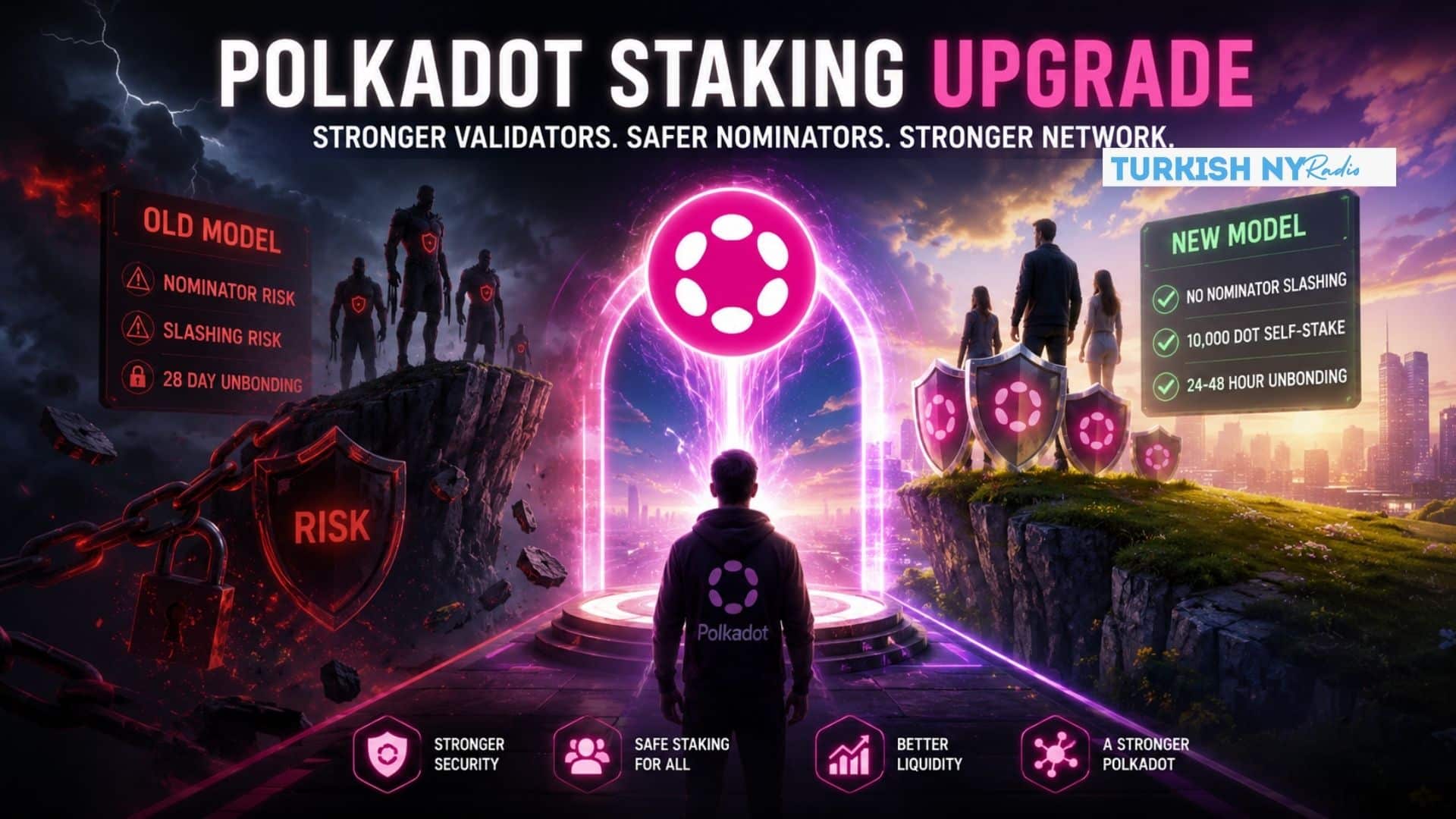
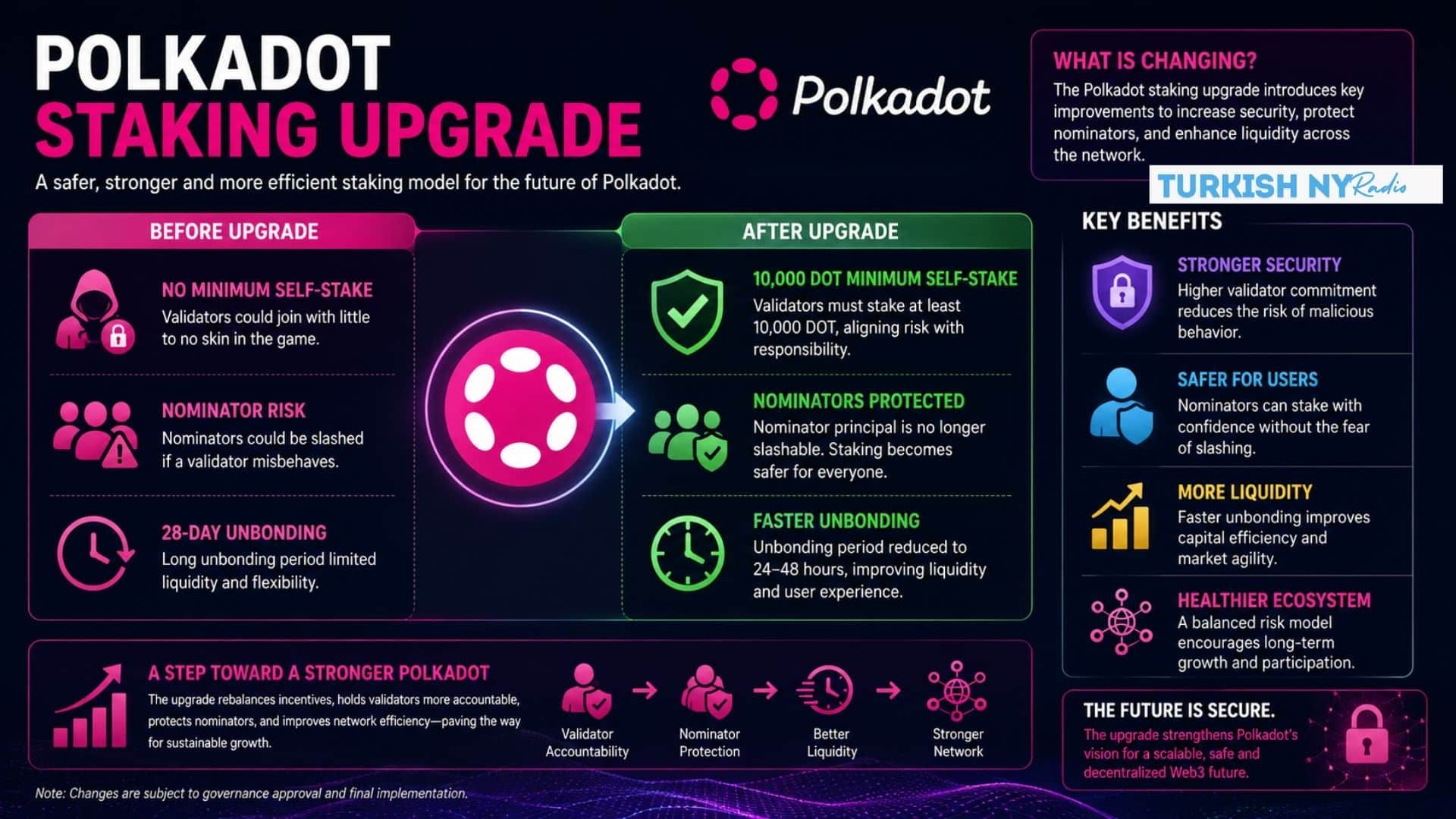
The next Polkadot staking upgrade suggests requiring a minimum self-stake of 10,000 DOT for all validation agents. This rule requires validator operators to pledge their own assets, thereby making them financially responsible for every network misconduct.


A core architect involved with the discussions commented:
“This upgrade aligns economic risk with network responsibility. Validators who run the infrastructure should bear the majority of the financial exposure.”
The Polkadot staking upgrade is intended to improve security by deterring unethical or insufficiently collateralized node owners. Validating companies who fail to fulfill the minimal requirements may be separated from the active list, ensuring that only well-capitalized businesses survive.
Nominators to Become ‘Unsplashable’
One of the most anticipated outcomes of the Polkadot staking upgrade is the significant reduction of nominator risk. Currently, nominators can be financially penalized when a validator they support is slashed. Under the new model, nominators’ staked principal would no longer be slashable, offering a safer, more user-friendly staking experience.
An ecosystem analyst noted:
“By eliminating nominator slashing, Polkadot is shifting toward a validator-first risk model. Everyday users will finally be able to stake without fear.”
The Polkadot staking upgrade intends to encourage more participation by making staking accessible to users who previously avoided it due to fear of losing funds.
Faster Unbonding and Improved Liquidity
Another key component of the Polkadot staking upgrade is a dramatic reduction in the unbonding period, from the current 28 days to potentially as little as 24–48 hours. This change enhances liquidity for DOT holders by allowing quicker access to their assets.
For market participants and active traders, this is a critical improvement. Increased liquidity also strengthens the network’s economic mobility, further aligning with the goals of the Polkadot staking upgrade.
A More Sustainable Staking Economy
In summary, the Polkadot staking upgrade is expected to rebalance incentives, encourage more responsible validator behavior, protect nominators, and modernize liquidity mechanics. As the proposal moves through governance discussions, it is already being recognized as one of the most impactful reforms since Polkadot’s launch.
Conclusion
The Polkadot staking upgrade signifies an essential change in how threat, incentive, reward, and responsibility are allocated throughout the entire network. Polkadot is aiming towards a more reliable and accessible anchoring paradigm by demanding more oversight from validators, protecting the nominees, and increasing volatility. It needs to be seen if these adjustments will result in stability over the long term, but the Polkadot staking upgrade is widely seen as an ambitious step ahead for the environment as a whole.
Summary
The Polkadot staking upgrade includes significant enhancements designed to improve network protection and user satisfaction. The change mandates a 10,000 DOT self-stake threshold for validation agents, removes cutting risks for nominations, and greatly reduces the unbonding duration. By moving economic responsibility to validators as well as making staking safer for regular users, the Polkadot staking upgrade is poised to be an important turning point for the system’s NPoS architecture and sustainable ecological expansion.
Glossary of Key Terms
NPoS (Nominated Proof-of-Stake): Is Polkadot’s agreement model in which nominations support validators based on their stake.
Slashing: A sanction for validation misconduct that results in the loss of committed coins.
Self-Stake: The amount of DOT a validator personally bonds to their node.
Unbonding Period: The time required to withdraw staked tokens.
Validator Set: The group of active validators producing blocks for the network.
FAQs for Polkadot Staking Upgrade
1. What exactly is the purpose of the Polkadot staking upgrade?
To enhance security, safeguard nominators, and hold validators accountable.
2. Can nominations still be reduced following the upgrade?
No, the Nominator Principal will cease to be slashable under the new scheme.
3. What exactly happens if a validator fails to achieve the 10,000 DOT requisite?
They may be excluded from the active verifier set until they meet compliance requirements.
4. How will the separation phase evolve?
It might be reduced from 28 days to as few as 24-48 hours.
5. Whenever does the update take effect?
It is contingent on community leadership approval as well as execution deadlines.