



This article was first published on TurkishNY Radio.
On January 5 at CES 2026 in Las Vegas, Nvidia founder and CEO Jensen Huang said AI computing demand for training and inference is “going through the roof.” Nvidia paired that warning with the launch of Rubin, its next platform that the company says is in full production, built to lower the cost of running AI at scale.


Bitcoin mining is not a GPU business, but it is an infrastructure business. Miners, AI labs, cloud providers, and hosting firms increasingly compete for the same scarce inputs, especially grid connections, megawatts, and cooling.
Rubin Is an Efficiency Message, With Numbers Attached
In its CES release, Nvidia described Rubin as a six-chip platform designed as one coordinated system. The company said Rubin can reduce inference token cost by up to 10x compared with the prior Blackwell platform, and it can train mixture-of-experts models with 4x fewer GPUs.
Huang said Rubin arrives as AI demand rises rapidly, so efficiency gains become the only realistic way to keep scaling without breaking budgets.
How This Filters Into Bitcoin Mining Economics
Mining profits still come down to revenue per unit of hash rate minus power and operating costs, with network difficulty constantly adjusting. AI does not change the protocol, but it can tighten the cost side of the equation in power-constrained regions.
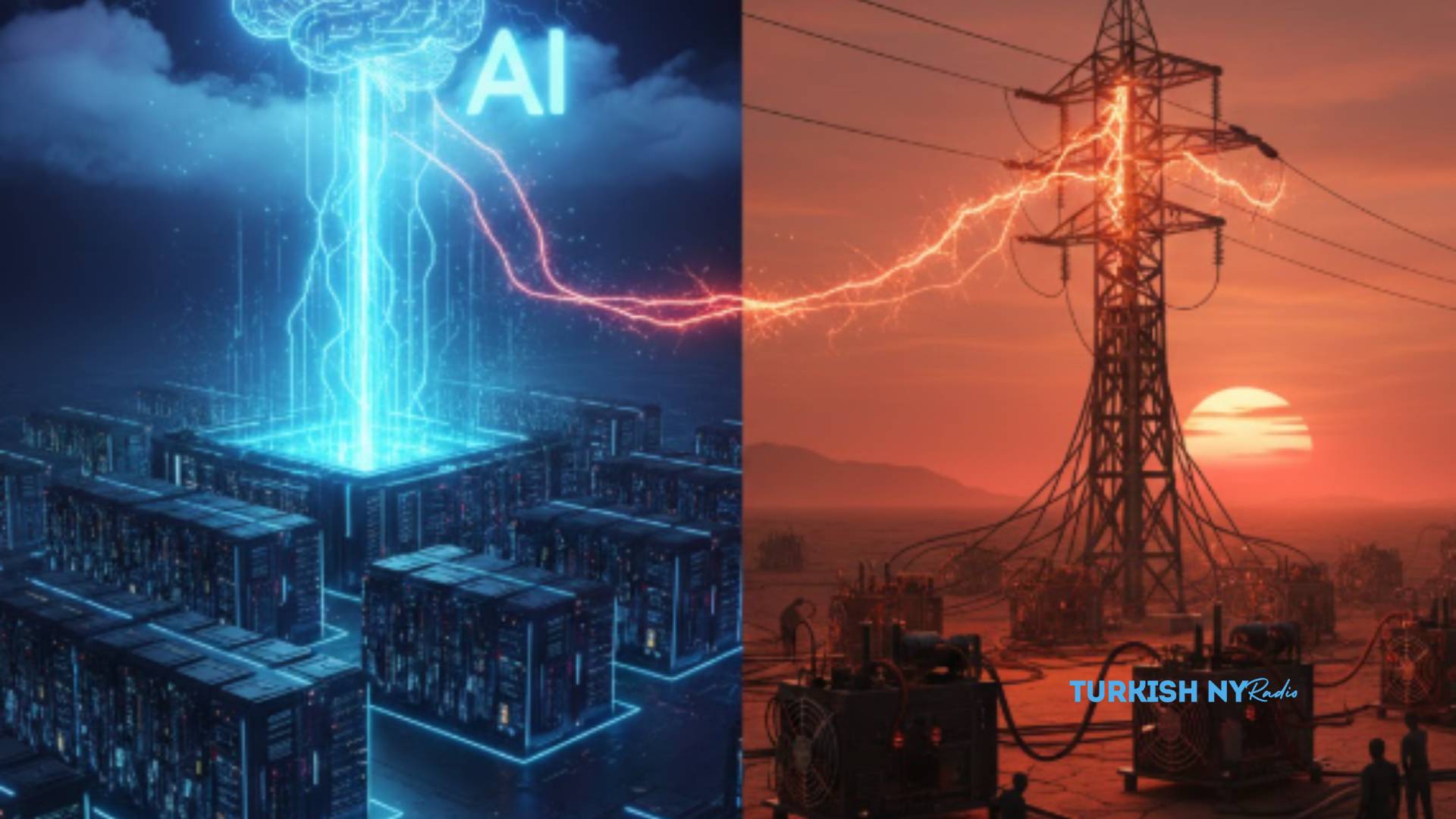
When AI buyers pursue long contracts for capacity, local markets can reprice. That can show up as higher hosting rates, fewer available sites, and longer waits for grid upgrades. Miners with low, fixed electricity rates and strong load flexibility can remain competitive, while miners exposed to spot pricing or fragile infrastructure can see margins compress faster than expected.


Three indicators capture most of the story. Power pricing and contract structure remain the first checkpoint, because a small move in cents per kWh can change outcomes quickly. Hashprice is the next signal, because it reflects mining revenue per unit of hash rate. Balance-sheet discipline is the third, because heavy capex cycles punish operators that expand without liquidity when markets turn.
Energy Scrutiny Is Likely to Rise Too
Huang framed the moment as a modernization wave for computing, and public debate often lumps energy-hungry compute together. That matters for crypto because Bitcoin mining stays visible.
Miners that can document energy sourcing, demonstrate curtailment, and communicate clearly with local stakeholders tend to be better positioned when permitting and policy questions arrive.
Conclusion
Nvidia’s CES message points to a tighter world for power and data-center capacity, driven by AI systems that keep growing. Crypto’s exposure is indirect but real, because mining depends on cheap, dependable electricity and buildable sites, and those inputs are becoming more competitive.
The miners most likely to perform well in 2026 are the ones that protect margins, keep expansion disciplined, and stay flexible with infrastructure strategy.
FAQs
What did Nvidia announce that matters for crypto?
Nvidia introduced the Rubin platform and said AI demand is rising quickly, and while Bitcoin mining does not run on these GPUs, the AI buildout competes with mining for power and facility capacity.
Does higher AI demand automatically hurt miners?
Higher AI demand does not automatically reduce miner profitability, but it can raise input costs in certain regions, so the impact depends on electricity pricing, uptime, and exposure to volatile rates.
Will miners switch from Bitcoin to AI?
Some miners may diversify where their sites and interconnects can support premium compute tenants, but many operators will remain mining-focused and treat diversification as a hedge rather than a replacement.
Glossary of Key Terms
Inference token cost: The effective cost of generating AI output tokens during model serving, shaped by hardware efficiency and system design.
Mixture-of-experts (MoE): A model approach that routes tasks across specialized sub-models, often improving performance while increasing infrastructure demands.
Hashprice: A commonly used estimate of mining revenue per unit of hash rate, used as a quick gauge of miner margin conditions.
Source