

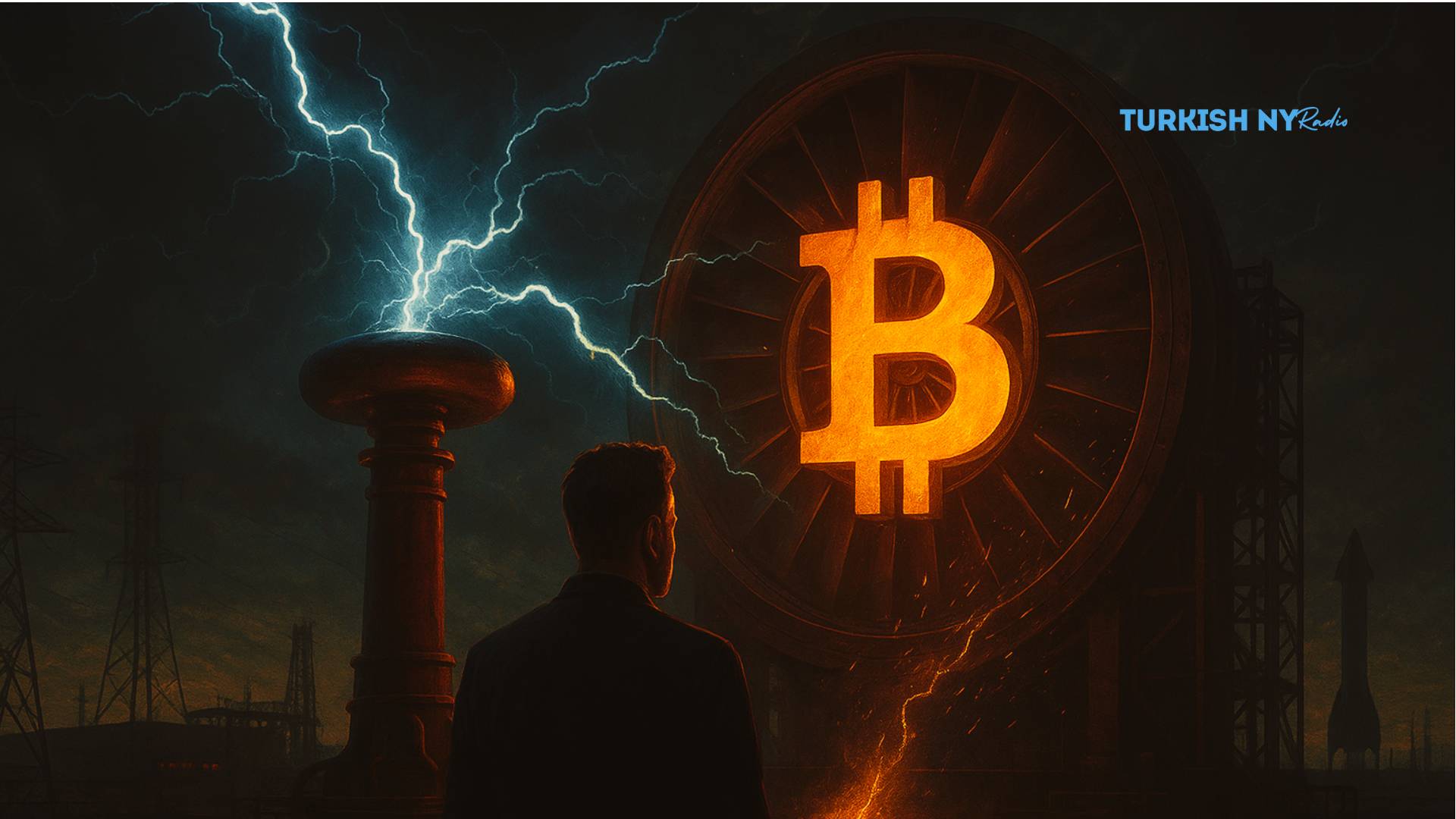
Elon Musk is at it again. In a recent exchange on social media, he said something that sounds simple but cuts deep: “Bitcoin is based on energy … it is impossible to fake energy.” In that remark lies both a poetic metaphor and a provocation to rethink how value is grounded in the digital age.
Why this matters: it marks a sharp pivot from his earlier skepticism about Bitcoin’s energy footprint. He’s now casting Bitcoin as a counterpoint to fiat, something rooted, he argues, in immutable physical costs.


From Printing Press to Power Plant: The Energy Argument
At its core, this is a bet on proof-of-work. Bitcoin mining demands electricity, hardware cycles, and real physical inputs. That cost becomes a guardrail against arbitrary issuance. Musk leaned into that: “you can issue fake fiat currency … but it is impossible to fake energy.”
What he’s pushing is this: fiat is backed by political will and trust. It can be expanded, devalued, manipulated. By contrast, energy, and the physical resource behind mining, is harder to distort. That lends Bitcoin a claim to a more defensible anchor.
But the metaphor isn’t perfect. Energy sources differ wildly in cost, renewability, and carbon footprint. Advances in mining hardware or regulatory shifts can warp that cost base. So Musk’s framing is a provocation, not final truth.
Backstory: Musk’s Relationship with Bitcoin
This moment is all the more striking considering Musk’s history with crypto. In 2021, he famously called Bitcoin’s energy usage “insane” and withdrew Tesla’s support for BTC payments. Now he seems to come full circle, or at least to a fresh stance.
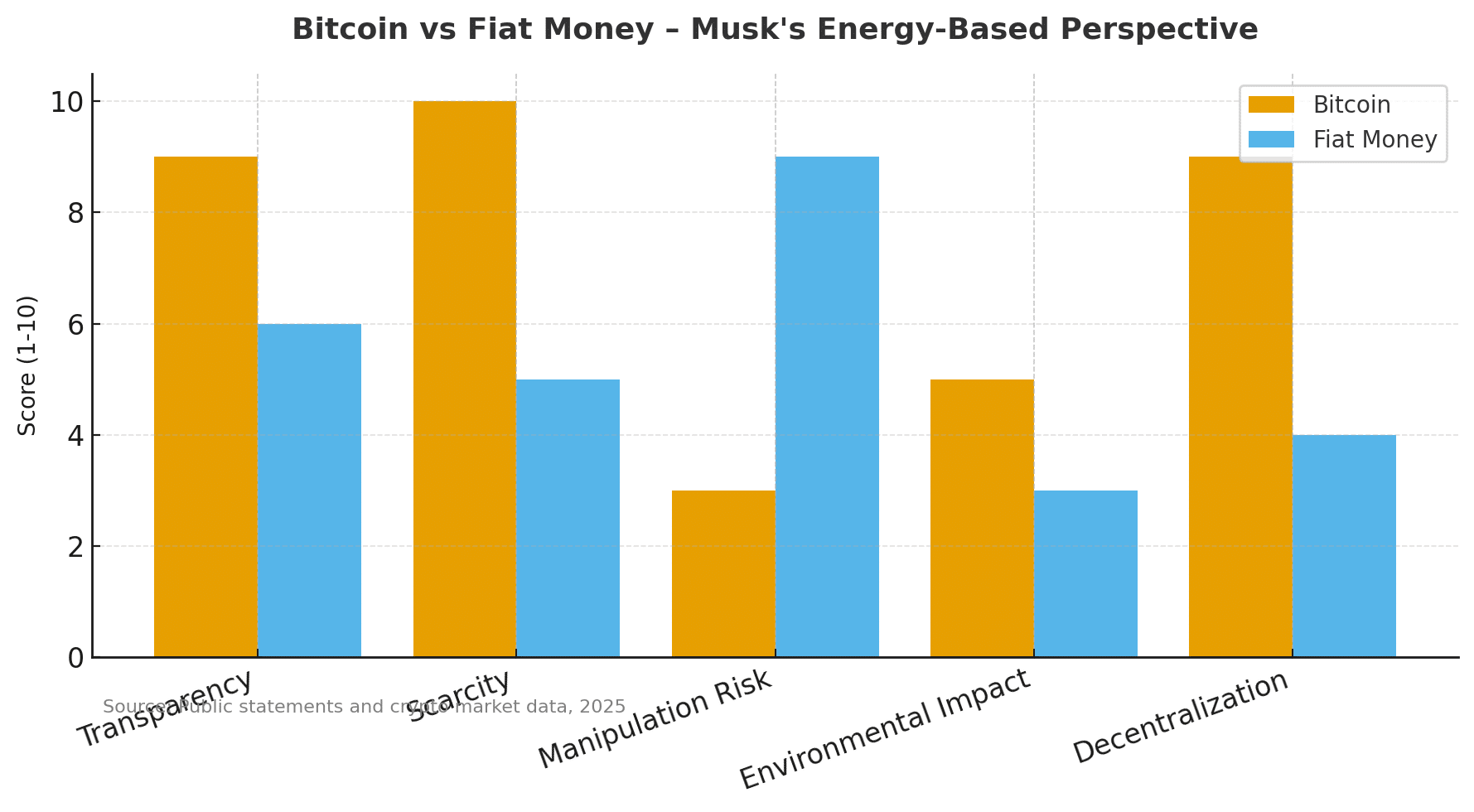
His renewed interest may owe something to macro currents: rising government debt, AI arms race expenditures, fears of currency debasement. In his response thread, Musk replied to a user who argued that governments must print money to fund AI escalations. Musk’s counter: energy, unlike money, cannot be faked.
How This Shapes Crypto’s Narrative
1. Rhetorical Reframing
Musk isn’t just rejoining the Bitcoin conversation. He’s reshaping it. He gives the narrative weight: Bitcoin isn’t just code or speculative asset. It’s tied to nature’s rules.
2. Regulatory Ripples
If Bitcoin is recast as energy-backed, regulators might start thinking of it more like a commodity or energy derivative than a currency. That has implications for oversight, taxation, and legal classification.
3. Investor Signal
For those who viewed Musk’s criticism as a risk, this is a soft reassurance. But this isn’t a promise. It’s a philosophical return, not necessarily a backing of every protocol choice.
4. Sustainability Spotlight
Musk’s pivot also forces mining’s energy practices back into view. His framing demands cleaner, more efficient power. If energy is the grounds of value, then green energy matters more than ever.


Conclusion
Elon Musk’s “impossible to fake energy” line jolts the crypto discourse. He frames Bitcoin not just as code, not just as money, but as a system anchored by physics.
That claim doesn’t resolve the complexities, it surfaces them. Energy isn’t uniform. Technology evolves. Governance matters. But in a time when trust is brittle, grounding value in nature’s rules has narrative power. Whether it holds in practice is what the next chapter will test.
Frequently Asked Questions
Q: What does Musk mean by “Bitcoin is based on energy”?
He means that Bitcoin’s security and issuance are tied to energy consumption through mining. That cost, in his view, grounds it in something real and unforgeable.
Q: Can energy really anchor value?
Not fully. Energy cost is a component, not the whole story. Utility, adoption, scarcity, and consensus governance also drive value.
Q: Does this change Bitcoin’s environmental debate?
It deepens it. Musk’s framing elevates energy practices to matters of legitimacy, not just sustainability, but the very validity of what “value” means.
Q: Is Musk fully backing Bitcoin now?
It is too soon to say. The tone suggests renewed interest, not total commitment. But the rhetoric matters: he is paying attention again.
Glossary of Key Terms
Proof-of-Work
Consensus mechanism requiring energy expenditure (electricity, computing) to validate blocks and secure a blockchain.
Hashrate
The total computational power dedicated to mining; higher hashrate suggests stronger security and more competition.
Cost per Bitcoin Mined
Total energy + hardware + operational cost divided by number of bitcoins mined, a real measure of miner economics.
Fiat Currency
Government-issued money not backed by a physical commodity, but by authority, regulation, and public trust.
Debasement
The erosion of value in currency by increasing its supply, often through monetary expansion by central banks.