![Sun [New]](https://s2.coinmarketcap.com/static/img/coins/64x64/10529.png)

![BitTorrent [New]](https://s2.coinmarketcap.com/static/img/coins/64x64/16086.png)


This article was first published on TurkishNY Radio.
The Marshall Islands has introduced a new way for citizens to receive universal basic income (UBI), using blockchain technology to deliver dollar-based payments directly to mobile phones.


The move is aimed at solving a long-standing problem how to move money efficiently across a country made up of more than a thousand islands.
Instead of relying solely on physical U.S. dollar notes, eligible residents can now receive UBI payments digitally through the Lomalo mobile app.
The system uses blockchain wallets provided by Crossmint and runs on the Stellar network, which allows funds to move quickly and at low cost between users.
Officials involved in the rollout say the goal is practical, not experimental. The focus is on improving access to money in areas where traditional banking and cash logistics often fall short.


Marshall Islands Blockchain UBI Solves Cash Access Issues
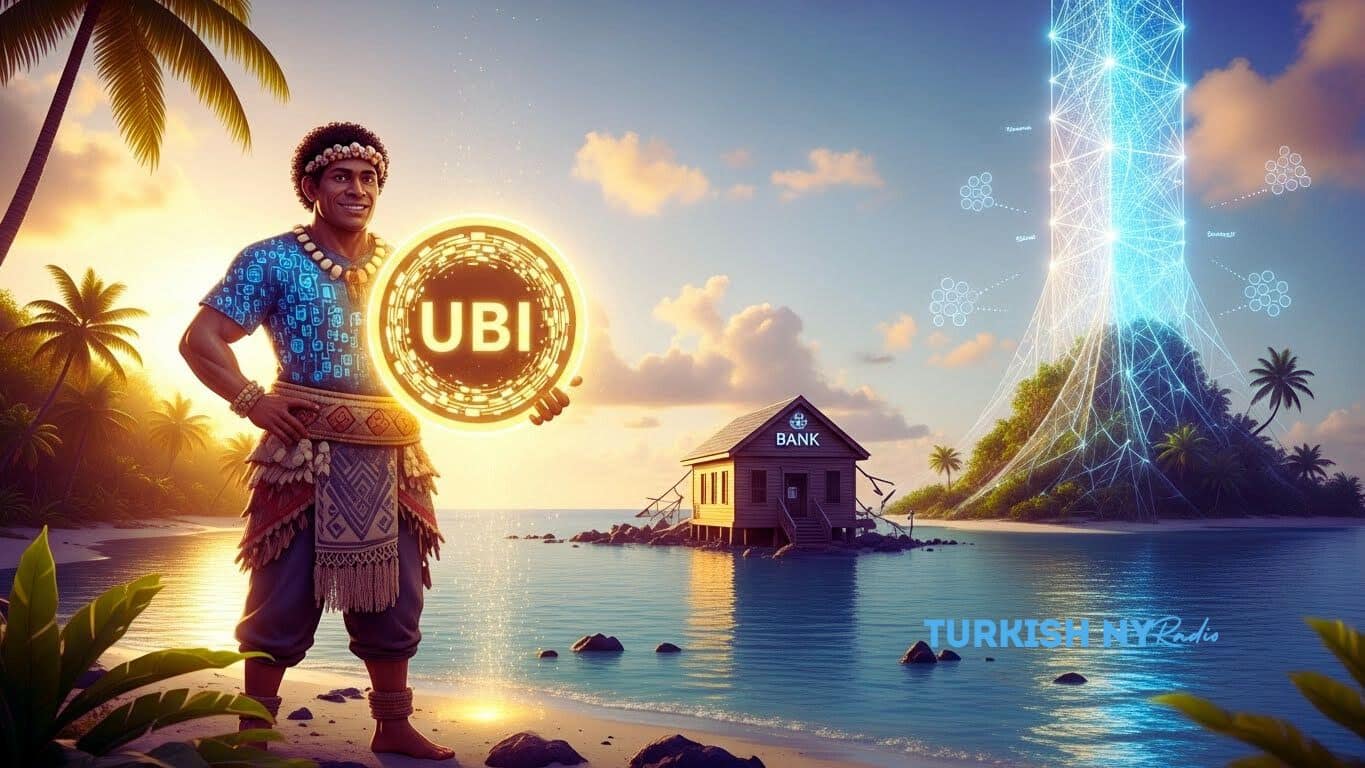
For many people in the Marshall Islands, accessing cash has never been straightforward. Physical dollars often arrive by boat, ATMs can run out without warning, and residents on remote atolls may travel long distances just to withdraw money.
Government representatives explained that
‘cash availability should not depend on weather conditions, shipping delays, or whether a machine has been restocked.’
These issues have affected everyday spending, small businesses, and the timely distribution of public benefits.
By offering a digital alternative, the government hopes to reduce these pressures while keeping the country’s existing dollar-based system intact.
How the Digital UBI System Works in Practice
Under the new system, UBI payments are deposited into a digital wallet inside the Lomalo app. Each wallet is powered by Crossmint and allows users to store funds, send money to others instantly, or make payments where accepted.
Transactions are processed on the Stellar blockchain, which is widely used for payment-focused applications due to its low transaction fees and fast settlement. This setup allows money to move between islands almost instantly, even when traditional banking infrastructure is limited.
Technical reports from the Stellar Development Foundation show that the network is designed to handle frequent, low-value transactions, making it suitable for public benefit distribution.
Understanding USDM1 and Its Role
The digital payments are issued in the form of USDM1, a dollar-denominated digital instrument created by the Marshall Islands government. USDM1 is backed one-to-one by short-term U.S. Treasury securities and represents a sovereign obligation rather than a private stablecoin.
Officials clarified that
‘USDM1 does not replace the U.S. dollar and does not introduce a new currency.’
The instrument operates under New York law, with reserves held by regulated U.S. trust entities, according to official disclosures.
This structure allows digital dollars to circulate domestically without changing monetary policy or adding exposure to unregulated assets.
Reducing Reliance on Fragile Banking Channels
Like many Pacific Island nations, the Marshall Islands has been affected by the steady loss of correspondent banking relationships. Over the past decade, many global banks have reduced their exposure to smaller markets, increasing costs and limiting access to international payment rails.
As a result, the country relies heavily on a small number of external banking partners. Officials believe that distributing UBI on-chain can ease domestic liquidity shortages and lower the hidden costs created by cash scarcity.
The program, known as ENRA, is funded through the Compact Trust Fund. Public financial records show the fund surpassed $1.3 billion in assets in 2025, providing a stable source of funding for social programs.
Public Response Across Social Platforms
Online discussions suggest the initiative has drawn attention for its practical design rather than speculative appeal. On Reddit forums such as CryptoCurrency and Blockchain, users highlighted the focus on real-world payment issues and the decision to avoid price-linked incentives.
On X, policy analysts described the rollout as ‘a clear example of blockchain being used as infrastructure, not as a trading product.’ Several posts noted the importance of legal backing and treasury reserves in maintaining trust.
A Practical Test of Digital Public Payments
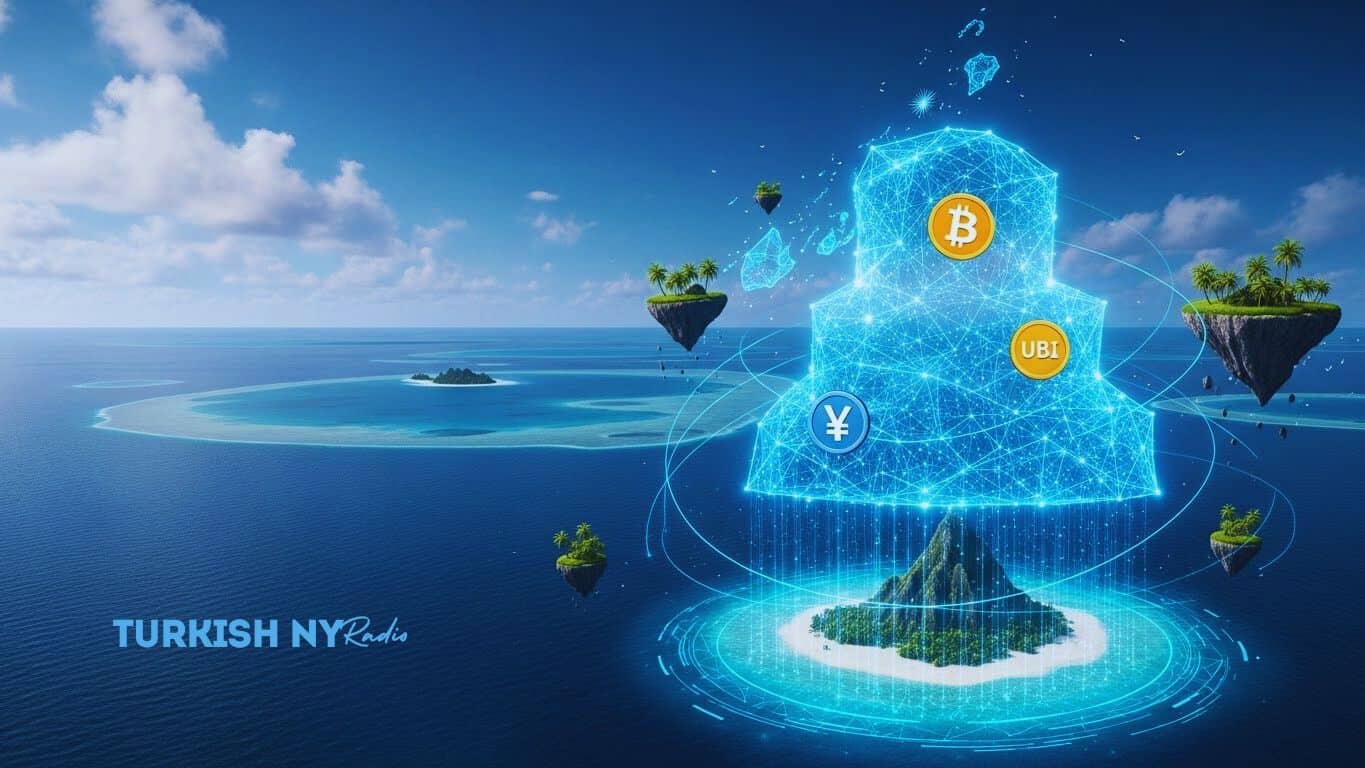
The Marshall Islands’ approach reflects a broader shift toward tokenized public finance, where governments use digital rails to improve efficiency without changing existing legal systems.
Reports from institutions such as the World Bank indicate growing interest in similar models for welfare payments and bond issuance.
For the Marshall Islands, success will depend on adoption, reliability, and cost savings. If the system performs as intended, it could offer a reference point for other small, geographically dispersed economies facing similar challenges.
Summary
The Marshall Islands has rolled out a new way for people to receive universal basic income, using blockchain technology to make dollar payments easier to access across its many remote islands.
Through the Lomalo mobile app, residents can receive and send digital dollars instantly using secure wallets powered by Crossmint and the Stellar network.
The payments are issued in USDM1, a government-backed digital dollar supported by U.S. Treasury assets.
Officials say the system helps reduce cash shortages, cuts everyday transaction costs, and improves how public payments reach citizens without changing the country’s long-standing use of the U.S. dollar.
Glossary of Key Terms
1. Universal Basic Income (UBI)
A government program that provides regular financial payments to eligible citizens to support basic living costs, regardless of employment status or income level.
2. Blockchain-Based Payments
A method of transferring money using a distributed digital ledger that records transactions securely and transparently, reducing reliance on banks or physical cash movement.
3. Marshall Islands Blockchain UBI
A national initiative using blockchain technology to distribute UBI as digital dollars, designed to improve payment access across the country’s geographically dispersed islands.
4. Stellar Blockchain
A payment-focused blockchain network built for fast, low-cost transactions, commonly used for cross-border and public payment systems rather than speculative trading activity.
5. Crossmint Wallet
A digital wallet infrastructure that allows users to receive, store, and send blockchain-based assets through user-friendly mobile applications, without complex technical setup.
6. USDM1 Token
A government-issued digital instrument backed one-to-one by short-term U.S. Treasury securities, representing a sovereign obligation rather than a privately issued stablecoin.
7. Tokenized Dollars
Digital representations of U.S. dollar value issued on a blockchain, designed to mirror traditional dollars while enabling faster electronic transfers and improved accessibility.
8. Correspondent Banking
A system where local banks rely on foreign partner banks to process international payments, often creating delays, higher costs, and access challenges for smaller economies.
FAQs About Marshall Islands blockchain UBI
1. What is the Marshall Islands blockchain UBI program?
It lets eligible citizens receive universal basic income as digital dollars on their phones, making payments faster and reducing the need to rely on cash deliveries.
2. How are UBI payments sent and valued?
Payments are issued in USDM1, a government-backed digital dollar tied to U.S. Treasuries, so the value stays stable and is not meant for trading or speculation.
3. Is the blockchain UBI system safe to use?
Yes. The system uses regulated custodians, treasury-backed reserves, and secure blockchain records to protect funds while keeping the country’s existing dollar system unchanged.
4. What do people need to use it, and what comes next?
Users need a smartphone and the Lomalo app. Support is provided locally, and future updates focus on reliability, wider use, and merchant acceptance.