This article was first published on TurkishNYR.
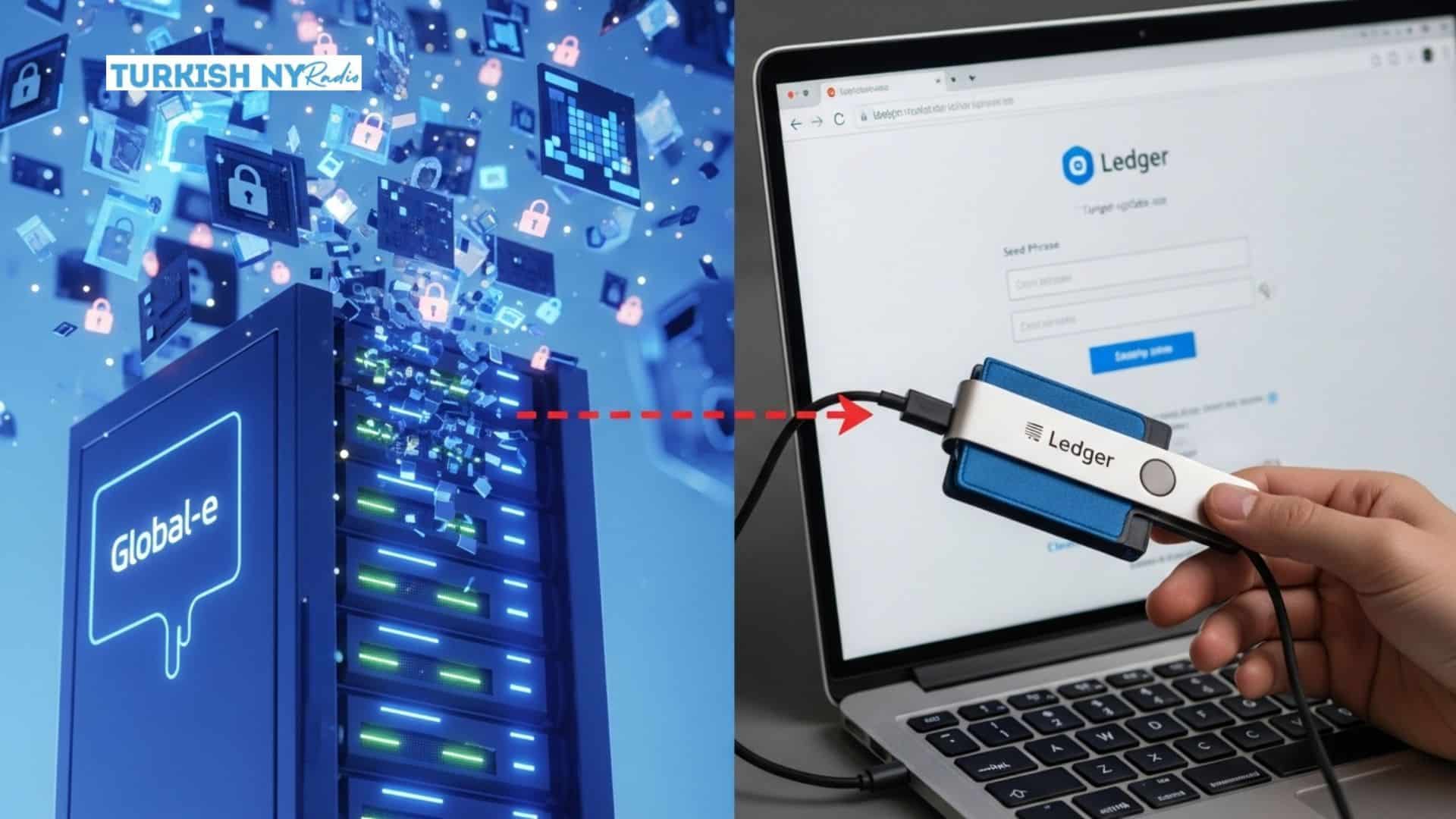
In January 2026, a third-party data breach at Global-e, the e-commerce payment partner for Ledger’s online shop, exposed customer contact and order details and immediately triggered a wave of Ledger phishing scam attempts.


Global-e provides checkout and fulfillment for a range of brands, and hackers were able to get into its cloud systems that held shopper data from multiple merchants.
While Ledger’s internal hardware, software and crypto infrastructure were not breached, the leaked purchase data (names, addresses, email/phone) provided scammers with real-world context to create phishing lures targeting people who had used Ledger
Hours after the breach announcement, a large number of customers reported that they got sent emails with fake messages about ‘Urgent Security Updates’, accompanied by their real order particulars, as a way to trick them out of their secret recovery phrase.
Global-e Breach Details
On Jan 4, 2026, Ledger reported that an “unauthorized party” had accessed the systems of its payment processor Global-e. Ledger said the breach did not affect Ledger’s own systems but only order details processed by Global-e.
Global-e verified that it observed abnormal behavior in a cloud-based order database and immediately worked to contain the incident. According to official notifications, the leaked data included customer names, mailing addresses, email addresses and phone numbers for orders of products made on Ledger.com via Global-e.
However, no financial information or crypto secrets were compromised: not payment card details, account passwords and usernames, private keys or the 24-word recovery phrases could be touched by the hackers.
In other words, Ledger devices and crypto wallets were not directly at risk, but the contact and order data leaked created an effective weapon in the scammers’ arsenal.

Global-e said it had isolated the affected systems and informed customers and regulators about the breach. Ledger has since hired forensic experts to look into the breach and collaborated with Global-e to assist in informing those who might have been affected.
The Ledger Support team, and subsequently cybersecurity experts, quickly cautioned that customers should be on the lookout for phishing as attackers who obtained the information would likely try to use it to impersonate either Ledger or Global-e.
The official notification from Global-e warned to “remain vigilant to any suspicious or unsolicited communications” and further cautioned that neither Global-e nor its associated brands will ever demand information via text, a phone call or an unsolicited link.


How Scammers Exploit Leaked Data
When a vendor like Global-e is breached, attackers can use the real purchase details to create phishing messages that appear legitimate. The average user may reason that, as this email includes their Ledger order details, it must be real, but in this case, the scammers already have the proof points.
Security analysts say the leaked data solves two social-engineering problems for attackers.
The first is credibility. Messages that mention users’ names and real order information feel legitimate. The exposed data usually features these very “proof points”.
The next is Urgency and Pretext. Attackers can cite victim’s purchase context as a pretext to justify making contact with them, e.g. delivery problem, account confirmation or security update needed.
Ledger’s phishing guidance states that these attackers often urge victims to take reckless actions, such as entering their recovery phrase on a fake site.
Indeed, hours after the breach, users were complaining that they were being flooded with phishing emails, SMS texts and even letters. The scammers impersonated Ledger or Global-e customer service, saying there was an issue with the order or account.
Some scams mimicked official messaging, with emails from fake addresses posing as global-e. com, urgent account notifications or courier delivery issues.
These messages were designed to scare recipients into clicking links or calling fake support, which would solicit their secret recovery phrase.
How to Protect Yourself from Ledger Phishing Scams
To be safe, users should consider any unsolicited “security” message to be dangerous until proven otherwise. Ledger and security experts advise the following:
- Do not share recovery phrase. Ledger explicitly cautions to never reveal the 24 words and would never request them through email, phone, QR code or any other websites. Recovery phrase (seed phrase) is the key to users funds and real support will never ask for it.
- Verify sender details. Global-e’s official notices were sent from [email protected]. Be suspicious of an email or SMS that says it is from Ledger or Global-e, but comes from a different domain. Often there are phishing links hiding behind realistic-looking URLs, so always confirm authenticity.
- Be wary of urgent requests. Scammers start by flattering the user’s trust using their real name and real order details and then put in fear and urgency. Any communication that says users must “verify,” or “claim,” or ‘secure” something urgently is to be suspected.
- Use official Ledger tools. If users get anything that resembles a physical Ledger device, or just unexpected mail, they can confirm it’s not a counterfeit using the Ledger genuine check in the Ledger Live app. Don’t scan QR codes from untrusted sources (”quishing”). Attackers have mailed letters with QR codes that lead to fake Ledger websites requesting recovery phrases.
- Limit shared personal information. After leaks like this, it should be assumed that even if user’s data wasn’t leaked, owning a Ledger wallet also makes one a target. Don’t share crypto holdings or any wallet details on social media. The less the attackers know, the more difficult it is for them to guess.
- Confirm via official channels. If in doubt check on Ledger’s official site or speak to their support team directly (whether that’s through the Ledger Live app or a verified social profile). The public Ledger keeps up-to-date scam alerts and examples of phishing emails on its site.
By following these precautions, users can defeat Ledger phishing attacks even when attackers have their order information.
Conclusion
Ledger phishing scam attacks have soared following the Global-e data breach. The January 2026 breach revealed the contact and order information of thousands of users, and scammers soon used that real data to pull off convincing phishing campaigns
It should be noted that the incident did not involve any impact on Ledger’s hardware or software, nor its users’ cryptocurrencies; only names and contact details were stolen, according to Ledger.
The biggest risk is that attackers could impersonate Ledger or one of its partners and come armed with credible “proof points” regarding the breach to convince users to enter their 24-word recovery phrase, or download malware.
Security experts stress that users should approach any unsolicited “urgent” communication from Ledger as untrusted by default. By following best practices like verifying the sender, not clicking on unsolicited links, etc, users can safeguard their crypto against these targeted Ledger phishing scams. Vigilance and common sense is the best defense against this latest wave of attacks.
Glossary
Ledger (company): A French company that manufactures hardware crypto wallets (such as Nano X, Nano S and so on). Ledger devices are used to keep private keys offline, safely.
Hardware Wallet: A physical wallet designed to securely store cryptocurrency private keys.
Phishing: A scam in which attackers pose as an organization that a user trusts (e.g, Ledger) and fool victims into providing sensitive information (like passwords or recovery phrases) or to clicking on malicious links.
Recovery Phrase: Known as a “seed phrase,” this is a collection of 12-24 words that serve as a backup for a cryptocurrency wallet. It is the master password for users’ crypto.
Third-Party Data Breach: A security breach involving a vendor or service provider (not the company) that has been hacked and had data it maintains on behalf of the company compromised.
E-commerce Merchant of Record: A vendor that processes sale transactions on behalf of a retailer. Global-e served as the merchant of record for certain Ledger.com purchases.
Frequently Asked Questions About Ledger Phishing Scams
What is Global-e and how did its breach impact Ledger?
Global-e is an e-commerce platform and payment processor that Ledger used to check out from its own online store. Global-e was hacked in Jan 2026, and attackers copied order details from the company’s cloud systems. As Global-e operated as the “merchant of record” for certain Ledger orders, the breach allowed the attackers to access those order records. In short, customer contacts and orders from Ledger. com sales had been leaked, although Ledger’s own systems remained secure.
What kind of personal information was exposed in the Global-e breach?
According to Ledger and Global-e the breach contained names of customers, postal addresses, email addresses, phone numbers, and order details (order numbers, products purchased, amount paid).
Are users’ crypto assets and devices safe after this vulnerability?
Yes. Ledger verified that no cryptocurrency or private keys were accessed.
How can one avoid falling for these Ledger phishing schemes?
Stay vigilant. Never, ever type your 24-word recovery phrase into any website or give it to anyone as Ledger will never ask for it. Always verify unexpected messages. Don’t click on links or scan QR codes from unsolicited emails or letters. As a rule of thumb, consider any “security alert” from Ledger to be untrustworthy unless the authenticity has been verified.
References
Brightdefense
Theregister
Bleepingcomputer
Bitpinas
Certik
Duocircle