This article was first published on TurkishNY Radio.
In recent weeks, there has been a noticeable increase in discussion regarding a possible Bank of Japan rate hike as authorities have become more transparent about Japan’s evolving economic situation. The central bank is indicating that the circumstances for a policy change may finally be coming together as wage negotiations improve and inflation settles into a more stable level.


Investors are examining every statement made by officials as markets consider the prospect of a Bank of Japan rate hike in December to determine how close the nation is to a long-awaited shift away from nearly zero interest rates.
Subtle Indications Point to a Potential Change
Several authorities have stated in a number of recent statements that they are keeping a closer eye on important economic indicators than they did previously. Their cautious words have encouraged analysts to assume that a Bank of Japan rate hike is longer a distant prospect, but a feasible consideration.
Also read: Japan Economy Contracts Sharply as Consumers and Companies Cut Back
One policymaker noted, “We need to see whether recent wage and price movements can persist. Our decisions must be based on a clear and sustainable path.” Comments like these have added to the sense that a Bank of Japan rate hike is on the table, even if the final decision is far from settled.
Yen Weakness Continues to Be a Major Problem
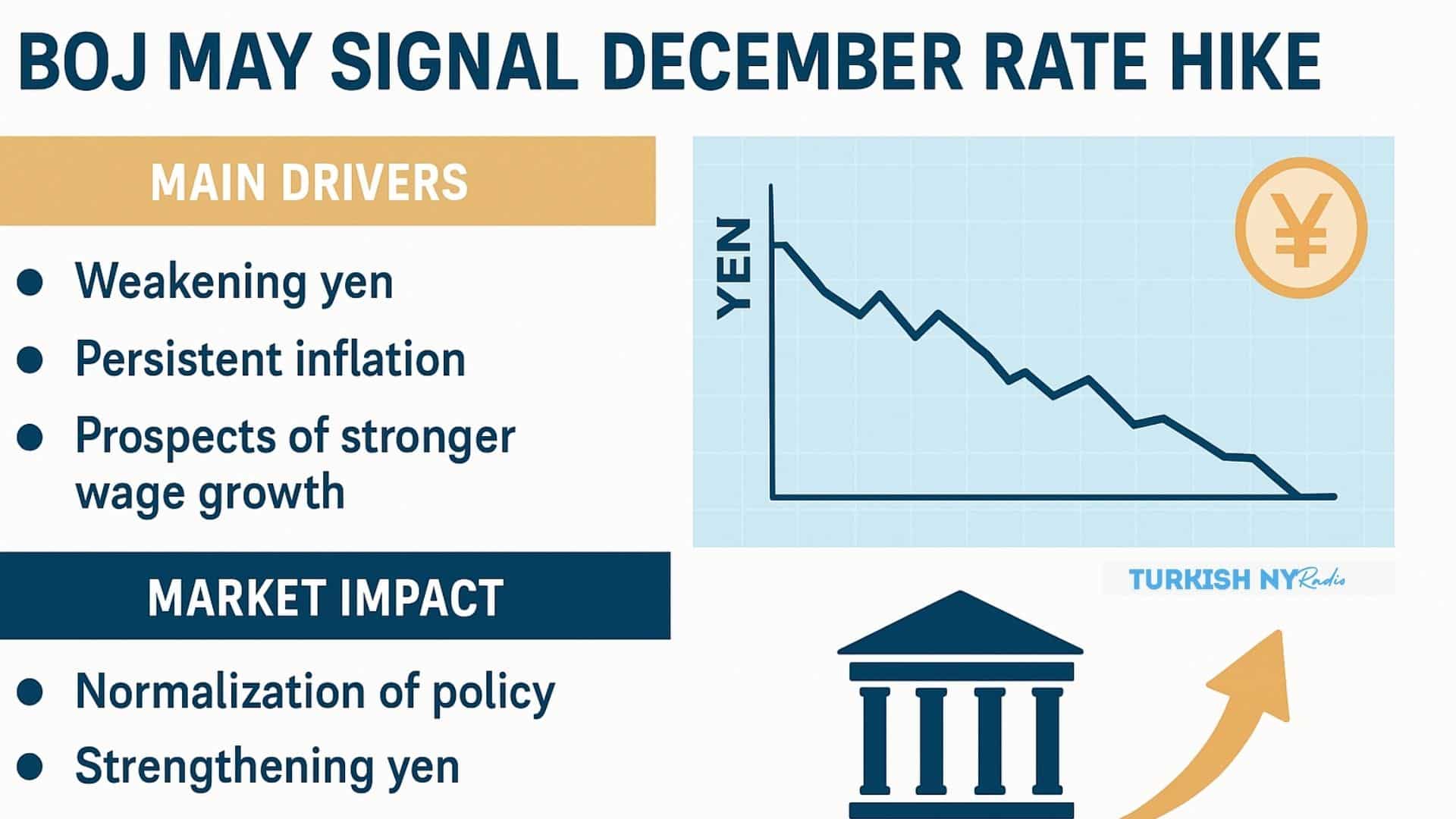
The rate-hike debate has also advanced due to the yen’s ongoing drop. Import expenses increase as the currency depreciates, impacting everything from food prices to energy. A Bank of Japan rate increase, according to economists, might lessen some of such pressures by reducing the difference in interest rates between Japan and other major economies.
A Tokyo-based strategist explained, “The yen’s weakness is becoming more difficult to overlook. A modest rate adjustment would send a signal that the central bank is paying attention to the broader economic impact.” This factor alone has kept the possibility of a Bank of Japan rate hike in focus.
Economic Data Provides Motivating Impact
Several indicators have shown sustained, although modest, development, despite the fact that Japan’s revival of the economy has not been completely seamless. Strong corporate earnings and more active labor negotiations have contributed to wage rise for several quarters. In contrast, inflation has been staying above the goal, something Japan has never been able to do.
These trends have strengthened the case for a Bank of Japan rate hike, even if policymakers remain cautious. Analysts say the central bank wants more confirmation that these improvements can last, but the tone of recent discussions suggests that the idea of raising rates is no longer viewed as premature.
Market Reaction Is Not Limited to Japan
In anticipation of a possible change, financial markets have begun to make minor changes. Currency positions are being reconsidered, bond yield expectations are being adjusted, and traders are getting ready for the potential impact of a Bank of Japan interest rate increase, even a small one, on international capital flows.
International institutions are watching just as closely. Japan’s interest-rate policy has long been a major piece of the global financial puzzle. As expectations grow around a Bank of Japan rate hike, markets from Asia to Europe are preparing for potential ripple effects.
Conclusion
The probability of a Bank of Japan rate hike seems higher than it has been in recent years as the December meeting draws near. With stronger inflation trends and rising wages, policymakers appear more optimistic and believe the economy can sustain a gradual transition to more traditional monetary policy.
The public’s changing attitude indicates that the longstanding era of very low rate may be tested earlier rather than later, even though one’s final choice will depend on future data releases. The debate represents a significant shift in Japan’s economic strategy, regardless of whether the Bank of Japan raises interest rates this year.
Also read: BOJ Sounds Alarm on Japan’s Overheating Stock Market
Glossary of Key Terms
Inflation: A rise in overall prices for goods and services across the economy.
Monetary Policy: The tools and actions a central bank uses to control money supply and interest rates.


Yield: The return an investor earns on a bond or another financial asset.
Currency Intervention: Steps taken by a central authority to influence the value of a currency.
Labor Negotiations: Discussions between employers and workers on wages and working conditions.