BlackRock tokenization constitutes part of the firm’s long-term strategy and highlights its commitment to combining traditional finance with blockchain technology.
The company conducts its operations at a massive scale; it manages $13.5 trillion in assets and has about $104 billion of crypto loaded up between its funds and other business lines and sees a role for itself to transform asset management into something that’s more accessible, dynamic, and efficient.


Its CEO, Larry Fink, has a vision for the future, and that is that we see ETFs, bonds, and real estate fully tokenized so that you have a more transparent, efficient, and also accessible financial system.
“Innovation is key for us, as well as simplifying and democratizing our products.”
Howard Surloff, head of BlackRock blockchain unit, said in a statement.
BlackRock Tokenization Efforts Are Gaining Momentum
These are the key forces driving BlackRock’s push in tokenization:
Scaling up digital ETFs and liquidity products
The BUIDL cash liquidity product is already live at BlackRock with $2.8B in commitments. It connects fiat instruments to blockchain rails.
Strategic positioning for real-world assets
With reports that there is a potential $2 trillion market for tokenizing ETFs alone, the company sees BlackRock tokenization as a lever to tokenize other asset classes more generally.
Regulatory and technological readiness
Firm-wide teams are building in-house infrastructure for issuing and storing digital asset securities, its own identity service, and compliance. The roadmap for tokenization at BlackRock is directly linked to how fast regulation evolves.
Institutional reappraisal of crypto allocations
And once-skeptical holdouts in the legacy financial world are now re-evaluating digital assets. With BlackRock tokenization, there is an ability to provide access to Bitcoin and tokenized assets in jurisdictions all under existing regulations.
Also Read: BlackRock Just Got the Green Light for Crypto—But Why Retail Investors Are Left Out
Challenges and headwinds ahead
Despite momentum, obstacles remain:
Liquidity and secondary market depth
Thin trading volumes still plague many tokenized assets. For BlackRock tokenization products to be attractive, they are going to need strong market depth, which can prevent large bid-ask spreads.
Unclear regulatory categorization
Meanwhile, tokenized ETFs and securities could be determined to be derivatives or securities depending on jurisdiction, making for complex issuance around the world.
Identity, custody, and interoperability
KYC/AML, etc., including custody solutions and cross-chain standards, are a prerequisite. Without them, BlackRock tokenization could bog down in the pilot stages.
Implications for Bitcoin and digital markets
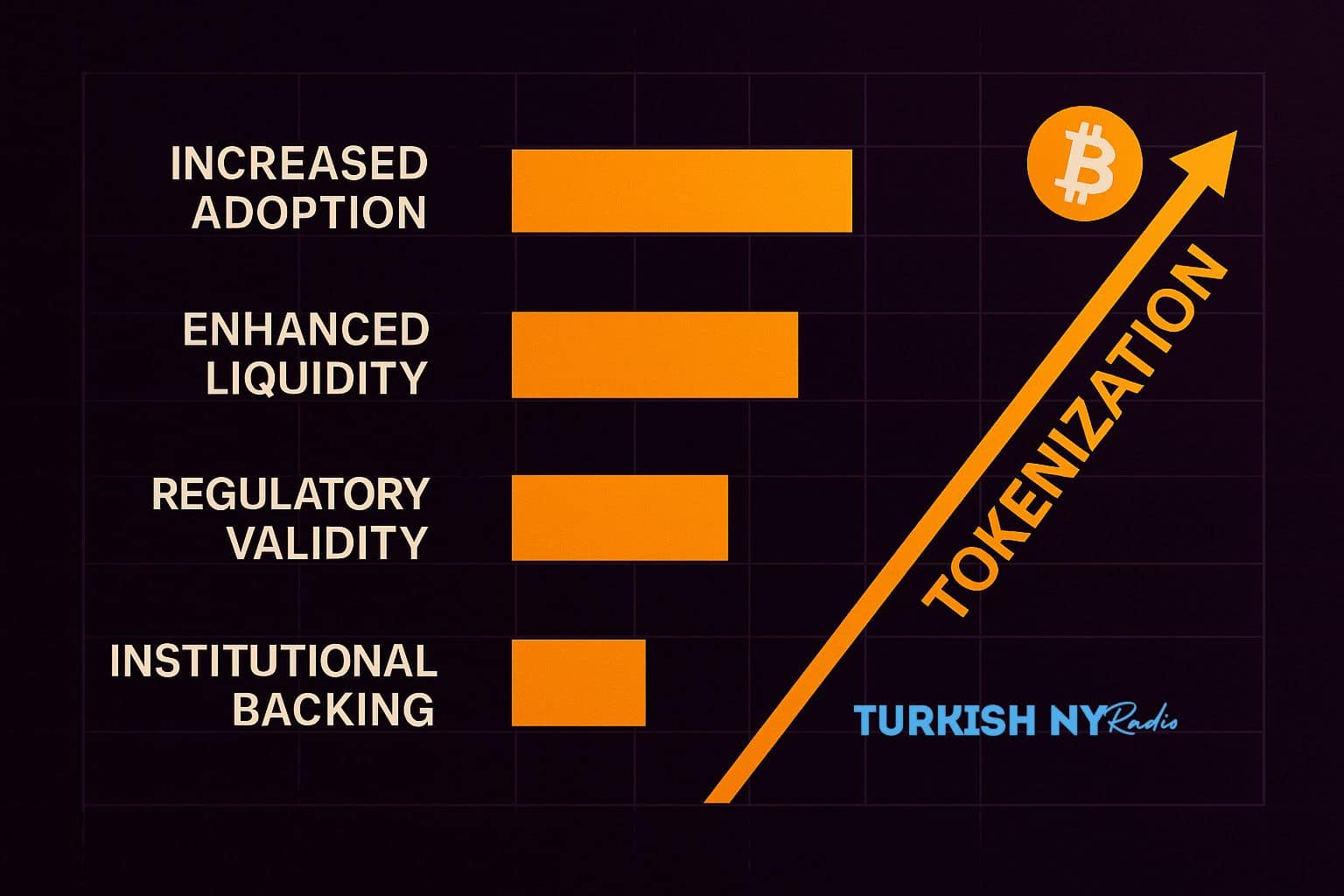
BlackRock tokenization provides another axis of influence for Bitcoin:
Enhanced institutional flows
With more products tokenized, Bitcoin could also benefit as the underlying collateral on which a melody is based.
Mainstream adoption through regulated channels
BlackRock tokenization tack may bring crypto exposure to institutional portfolios through familiar guardrails.
Stronger narrative alignment
The more Bitcoin becomes part of the financial infrastructure through tokenization, it makes the case not as an asset but as a future market’s foundational layer.
Also Read: Mercado Bitcoin Leads $200M Tokenized Real Assets Shift on XRPL
Outlook
BlackRock tokenization is about to become the keystone of its digital evolution. As the company grows its investment in infrastructure and works with regulators, tokenization could change what it means to own, trade, and access assets on a global basis.
At the same time, Bitcoin stands to gain and may emerge even more formidable, not simply as an investment but as a future-building component of next-generation finance.
More crypto news on BlackRock tokenization, expert analysis, and price forecasts is available now on our crypto news platform
Summary
Larry Fink, BlackRock CEO, describes tokenization as the global financial system’s next great evolution, with all assets from ETFs to real estate being tokenized and going on-chain.
BlackRock, which already leads the way with $13.5 trillion under management and $104 billion of crypto assets through its BUIDL fund ($2.8 billion in size).
With Bitcoin hovering around $112,833 for the month of November, it appears that the firm’s shift to tokenization represents a new chapter in digital asset investment and institutional blockchain application.
Glossary of Key Terms
1. Tokenization
The ability to turn real-world assets (like stocks, bonds, or real estate) into digital tokens on a blockchain, which allows for simpler trading, tracking, and ownership in fractional amounts.
2. Blockchain


A digital, decentralized ledger that records transactions across numerous computers in such a way that the network maintains an open and transparent history of changes to the ledger.
3. Digital Assets
Digital financial instruments or assets, such as cryptocurrencies, tokenized securities, and investment vehicles based on blockchain, like tokenized funds or ETFs.
4. ETFs (Exchange-Traded Funds)
Investment funds that mirror the performance of certain assets or market indexes and can be bought and sold on stock exchanges. ETFs can be broken down into digitalized units on blockchain (tokenized).
5. BlackRock Tokenization
Strategic initiative by BlackRock that seeks to digitize conventional assets and bring greater efficacy, transparency, and access to investing for both institutional investors and individuals.
6. Real-World Assets (RWAs)
Physical or legacy financial assets such as real estate, bonds, and commodities that are tokenized on a blockchain to create smart contracts that link physical value to digital ecosystems.
7. Fractional Ownership
Investment model via tokenization that allows many investors to own small fractions of big assets, fracturing both access and liquidity.
8. KYC (Know Your Customer)
The know your customer due diligence investors undergo to identify bad actors and avoid fraud or money laundering, which is vital for tokenized and blockchain financial systems.
Frequently Asked Questions About BlackRock Tokenization
1. What is BlackRock tokenization strategy?
BlackRock’s tokenization approach comprises transforming ETFs, bonds, and real estate (traditional assets) into digital tokens to improve transparency, liquidity, and accessibility throughout the global markets.
2. What does BlackRock tokenization mean for investors?
Connecting traditional finance with the blockchain industry, it allows faster transaction settlement, fractional ownership, and lower barriers to entry for these products, hinting at institutional access into new digital assets.
3. Is the tokenization system safe and regulatory-wise?
Yes. Security: BlackRock’s tokenization system is built on robust regulations, with the application of blockchain transparency, KYC process, and encryption standards to ensure information security, investor protection, and market integrity.
4. Any upcoming news about the tokenization from BlackRock?
BlackRock is planning to widen the scope of tokenization across international ETFs and private markets further in the future by incorporating blockchain infrastructure for scalable asset management through mainstream institutional use.