
This article was first published on TurkishNYR.
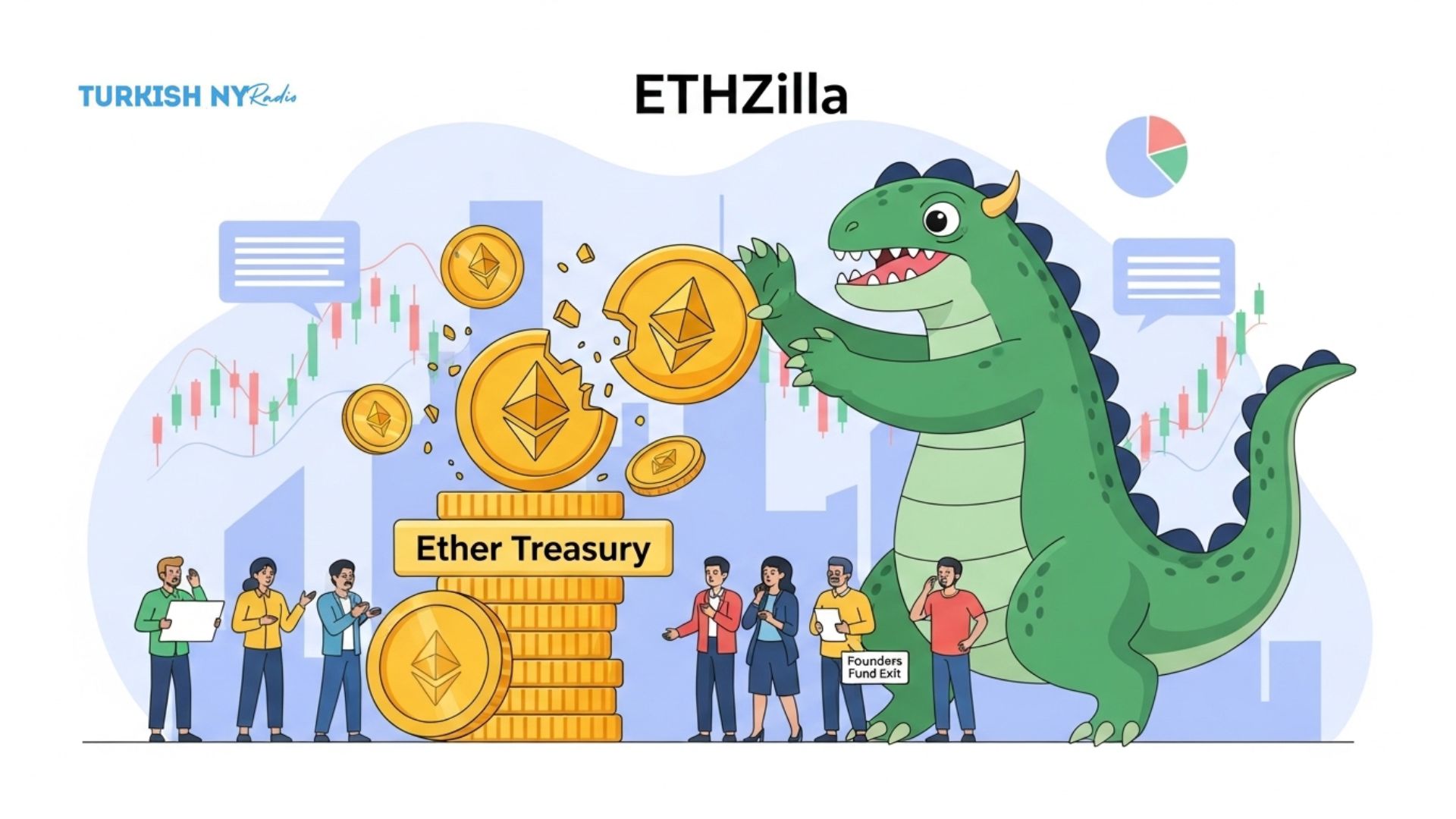
Peter Thiel Founders Fund recently shocked the crypto world by exiting its entire position in ETHZilla, an Ethereum-focused corporate treasury vehicle. This is a backtrack from what had seemed like a good Ether treasury strategy, i.e. using the balance sheet of a company as a stand-in for holding large quantities of ETH.


SEC filings in February 2026 revealed that entities linked to Thiel had sold down a disclosed 7.5% stake in ETHZilla to nothing by the end of 2025.
ETHZilla’s Aggressive Ether Treasury Strategy
ETHZilla started out as 180 Life Sciences, a biotech company. In July 2025, it made an abrupt turnaround, pulling together roughly $425 million in order to open up a dedicated Ether treasury strategy.
The company rebranded to ETHZilla and started accumulating ETH on its balance sheet. Two months later, it turned to investors, seeking another $350 million through convertible bonds.
This funding spree allowed ETHZilla to accumulate over 100k ETH at its peak (approximately $300M-$350M, at mid-2025 prices). The idea was simple: treat ETH like “digital equity”; secure cash, buy ETH and generate yield m through staking or lending in DeFi; giving shareholders leveraged exposure to Ethereum’s growth.
However, this was fundamentally an aggressive strategy. Unlike other Bitcoin treasury models who mostly just “buy and hold” BTC, Ether treasury strategy had extra steps to stake ETH, run validators or deploy it in decentralized finance protocols, to earn additional return.
These efforts add technical and operational complexity. Furthermore, using convertible debt to buy ETH meant that ETHZilla’s balance sheet was very highly leveraged. Leverage expands potential profit in a bull market, but on the downside this would also lead to great losses if ETH’s price continues to drop.
ETHZilla’s plan was to serve as a publicly traded proxy for ETH. Instead of directly purchasing ETH, investors could purchase fractional shares of ETHZilla.
But a strategy of building an Ether treasury also made the company’s health dependent on volatile crypto markets and its own debt levels.

Debt-Fueled ETH Selling and Financial Distress
By late 2025, crypto markets had stopped booming. With Ether prices falling from their 2025 highs, ETHZilla was under increasing pressure. In December 2025, the firm sold off 24,291 ETH (then worth $74.5 million) to meet debt obligations.
This sale cut its holdings ragged by one report leaving about 69,800 ETH on the books. Selling ETH to cover debt was a cold moment for the company. For a company built around long-term ETH accumulation, the forced sell exposed one flaw: leverage and volatility can force an asset sale at an inopportune moment.
In effect, ETHZilla’s debt-induced model created a self-destructive loop, declining prices caused debt which caused the sale of ETH at lower prices and continued devaluation.
Shortly afterwards, SEC filings showed that Peter Thiel Founders Fund had reduced its ETHZilla position to zero by the end of 2025. In an amendment to a passive investment report (Schedule 13G), entities owned by Thiel disclosed owning no shares in ETHZilla. The filing provides no discussion of motives, but the timing is telling. The Founders Fund exit followed closely on ETHZilla’s mandatory ETH sale. This has led many analysts to interpret the moves as a sign that even well-capitalized backers were wary of ETHZilla’s exposure to prices under stress.
Peter Thiel Founders Fund’s Exit and What It Means
The full divestment by Thiel’s fund was a glaring turnaround from its prior stance. When Peter Thiel Founders Fund revealed a 7.5% stake in ETHZilla back in August 2025, it was viewed by market observers as a huge endorsement of Ethereum-based treasury models like how Michael Saylor’s early support legitimized Bitcoin treasury strategies.
However, in February 2026, Thiel’s declaration of zero ownership drove home another message that the strategy had become riskier than expected.
A Schedule 13G amendment, the form that alerts when dropping below a reporting threshold, doesn’t specify reasons. The ETHZilla stock had tanked from its peaks in mid-2025 as ETH fell, and the company’s equity was under stress from its convertible debt.
Peter Thiel Founders Fund’s exit was viewed as cautionary to the market at large, that piling up Ether with borrowed money can unwind fast in a bear market.
Also important to mention is Founders Fund’s conventional approach. It typically supports high-growth tech companies, not highly leveraged assets. An equity vehicle like ETHZilla may have not aligned seamlessly with Founders Fund’s preferences, according to analysts. In short, Thiel’s departure confirmed that even crypto-savvy investors wanted less exposure to that particular ETH play.
Bitcoin vs. Ether: Simpler vs. Complex Treasury Models
The ETHZilla case shows why Ether treasury strategies differ so sharply from those focused on Bitcoin. Bitcoin treasury companies like MicroStrategy, for example, typically take a simple hold and accumulate approach, with low yield activities.
Ethereum, however, is both a cryptocurrency and the fuel for an entire smart-contract ecosystem. The companies holding ETH are often those that seek staking rewards or other DeFi income. These approaches can enhance returns in a rally, but also carry risks not found in a straightforward Bitcoin strategy.
Here’s a comparison of typical treasury features:
| Feature | Bitcoin Treasury Strategy | Ether Treasury Strategy |
| Volatility | High but only as a store-of-value asset | Often higher volatility (ETH’s value also tracks network activity and upgrades) |
| Earning Yield | Minimal (mostly hold-only) | Actively staked or deployed in DeFi to earn interest/yield |
| Risk Factors | Mainly price risk | Smart contract risk, slashing penalties, validator downtime, liquidity lock-ups, counterparty risk |
| Narrative & Simplicity | “Digital gold” narrative, scarcity-based | Complex utility narrative (gas fees, network upgrades, competition), more moving parts |
| Funding Structure | Equity or debt to buy BTC | Often heavy convertible debt or leverage to buy ETH |
| Example | MicroStrategy (BTC holding) | ETHZilla (ETH holding) |
Unlike Bitcoin strategies, which are predominantly price appreciation, Ether strategies seek yield through staking or lending. But those yields come at a cost of complexity. Moreover, ETH treasury models are typically highly leveraged as was ETHZilla with its convertible bonds, significantly increasing the risk of forced liquidation in a downturn.
In comparison, models around Bitcoin’s store-of-value are simpler. By contrast, an Ether treasury strategy introduces layers which can translate into greater potential returns and greater potential hazards.
What Experts Are Saying: The Dangers of Leveraged Ether Treasury Models
Financial analysts warned that the risk increases when digital asset treasury companies (DATs) step into volatile altcoins. For example, Moody’s analyst Cristiano Ventricelli warned that DATs extending to more exotic and/or less liquid cryptocurrencies face much higher risk. The ETHZilla story spells this out.
During a downturn, high volatility and leverage can trigger swift sell-offs. Even holding large sums in ETH can be liquidated rapidly, as is the case when debts are due.
Key risks analysts are pointing to include:
Volatility and Leverage: A leveraged position in Ether will make a small price drop more devastating than losing equity. ETHZilla’s sale of ETH to repay debt exposed how leverage converted a long-term hold into forced liquidation.
Smart Contract / Staking Risks: When chasing staking rewards or DeFi yields, funds are at risk to code bugs, and network penalties. ETHZilla was at risk of being slashed (losing ETH for validator downtime) and had to lock up coins to earn rewards.
Liquidity Lockups: ETH or capital deployed in protocols isn’t always immediately liquid. Under stress, a firm may need to unstake or unwind DeFi positions, with the added complication of time-lags in accessing desired liquidity.
Counterparty and Governance Risk: There is counterparty risk by using third-party protocols. Furthermore, shareholders rely upon management’s conclusions concerning staking and yields. Raising capital becomes costly in downturns, which can tighten equity.
Wall Street research had estimated that a $1B ETH treasury could throw off tens of millions annually, but caveats were complexity and execution risk. To summarize, Ether treasury strategies can earn high returns in good times but have structural vulnerabilities when markets sour.
What This Means for Investors
For both institutional and retail investors, the ETHZilla saga is a note of caution. However, Ether treasury strategies are not failing everywhere, but they need strong risk returns. Certain ETH treasury firms still keep buying up ETH, wagering on future network expansion. Some others, like ETHZilla, cashed chips off the table ahead of time.
Importantly, today’s investors have other options to gain exposure to ETH without a corporate wrapper. Regulated spot Ethereum ETFs, direct staking services and crypto derivatives give investors ETH exposure without the additional level of a company’s balance sheet. These vehicles sidestep a lot of the governance and operational risks that come with a separate firm’s treasury.
In this context, Founders Fund’s action makes sense. The venture firm normally invests in high-growth tech businesses, not highly leveraged balance sheets. By avoiding the Ether treasury, Thiel’s fund is implicitly prioritizing cleaner, more straightforward exposure to crypto.
Conclusion
Ether treasury strategy approaches could fall short under stress. The case of ETHZilla raising hundreds of millions to hold ETH, then selling off a large portion of it to pay off debts shows how quick volatility and leverage can turn a bullish bet into a loss-making scramble.
Investors should understand that holding ETH through an equity vehicle adds the risk of management decisions, governance, funding costs, beyond just crypto market risk. Those drawn to Ethereum’s growth may prefer direct avenues such as ETFs or staking platforms, which separate crypto price risk from corporate finance risk.
In short, the Peter Thiel Founders Fund exit from ETHZilla serves as a warning that Ether treasury strategies bring risks; they provide potential upside but also hidden downside.
Glossary
Ether (ETH): The native cryptocurrency of the Ethereum network. ETH is utilized to pay transaction fees and engage in decentralized finance protocols.
Ethereum: A blockchain platform that allows decentralized apps (dApps) and smart contracts. ETH (Ether) is its currency.
ETHZilla: A public company that switched to an Ether treasury strategy in 2025, allocating raised capital to invest in ETH and DeFi.
Digital Asset Treasury (DAT): The company that holds cryptocurrencies in their balance sheet or treasury, usually a public listed company aiming to obtain crypto returns. One such company focusing on ETH was ETHZilla.
Staking: Involves locking up cryptocurrency (such as ETH) to help run a blockchain (e.g. transaction validation) in return for rewards.
Schedule 13G: U.S. Securities and Exchange Commission filing for passive investors who own more than 5% of a publicly traded company.
Frequently Asked Questions About Peter Thiel Founders Fund Exit from ETHZilla
What is ETHZilla?
ETHZilla (NASDAQ: ETHZ) is a publicly traded company (formerly 180 Life Sciences) that in 2025 changed to an Ether treasury strategy. It raised hundreds of millions to purchase and retain ETH on its balance sheet itself, in order to earn returns through staking and DeFi.
Why did Thiel’s Founders Fund divest its ETHZilla positions?
SEC filings and reports show Founders Fund fully exited 7.5% by end of 2025. The firm gave no official reason, but commentators link the sale to ETHZilla financial distress and also Ethereum’s drop. In a nutshell, the leveraged Ether treasury strategy proved too risky given falling markets.
What are the differences between Ether treasury strategies and Bitcoin treasury strategies?
The companies on the Bitcoin treasury list usually purchase BTC as a long-term store-of-value. Ether strategies, by comparison, often stake ETH or lend it for yield and work through smart contracts. Ether also fuels a sprawling platform with evolving features. This also means that Ether treasuries are exposed to additional risks Bitcoin-only treasuries don’t have such as smart contract bugs, staking penalties and liquidity lock-ups.
What are the alternatives to gain Ethereum exposure?
Regulated Ethereum ETFs, staking-as-a-service and crypto lending platforms are all available for today’s investors to get exposure to ETH. These paths are typically easier and clearer than betting on a company’s ETH stack, avoiding the governance and debt risks of an equity wrapper.