This article was first published on TurkishNYR.
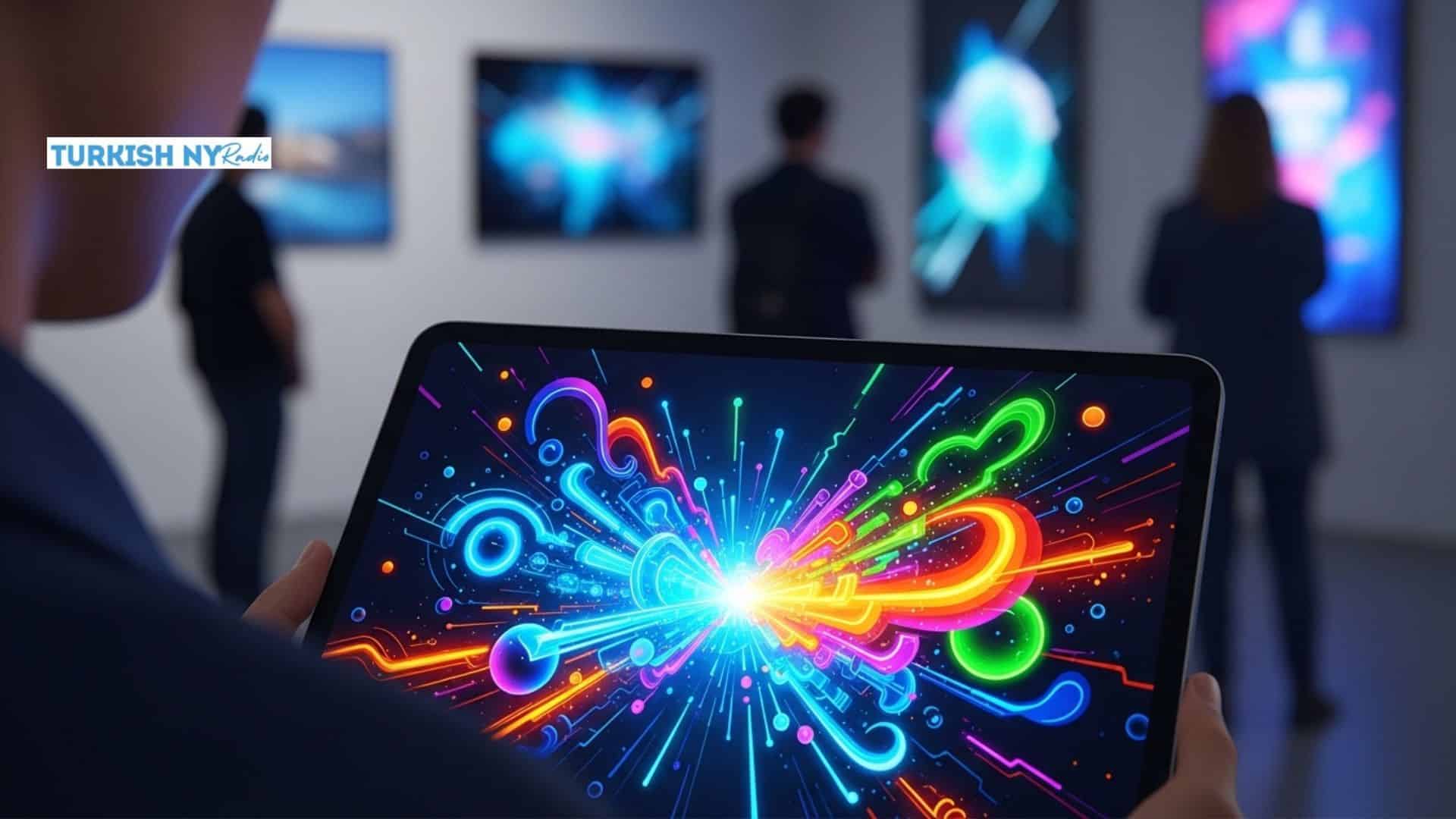
The New Revolution of Digital Arts is happening in 2026. Artists and developers are making live, evolving art on the blockchain using artificial intelligence and smart contracts.

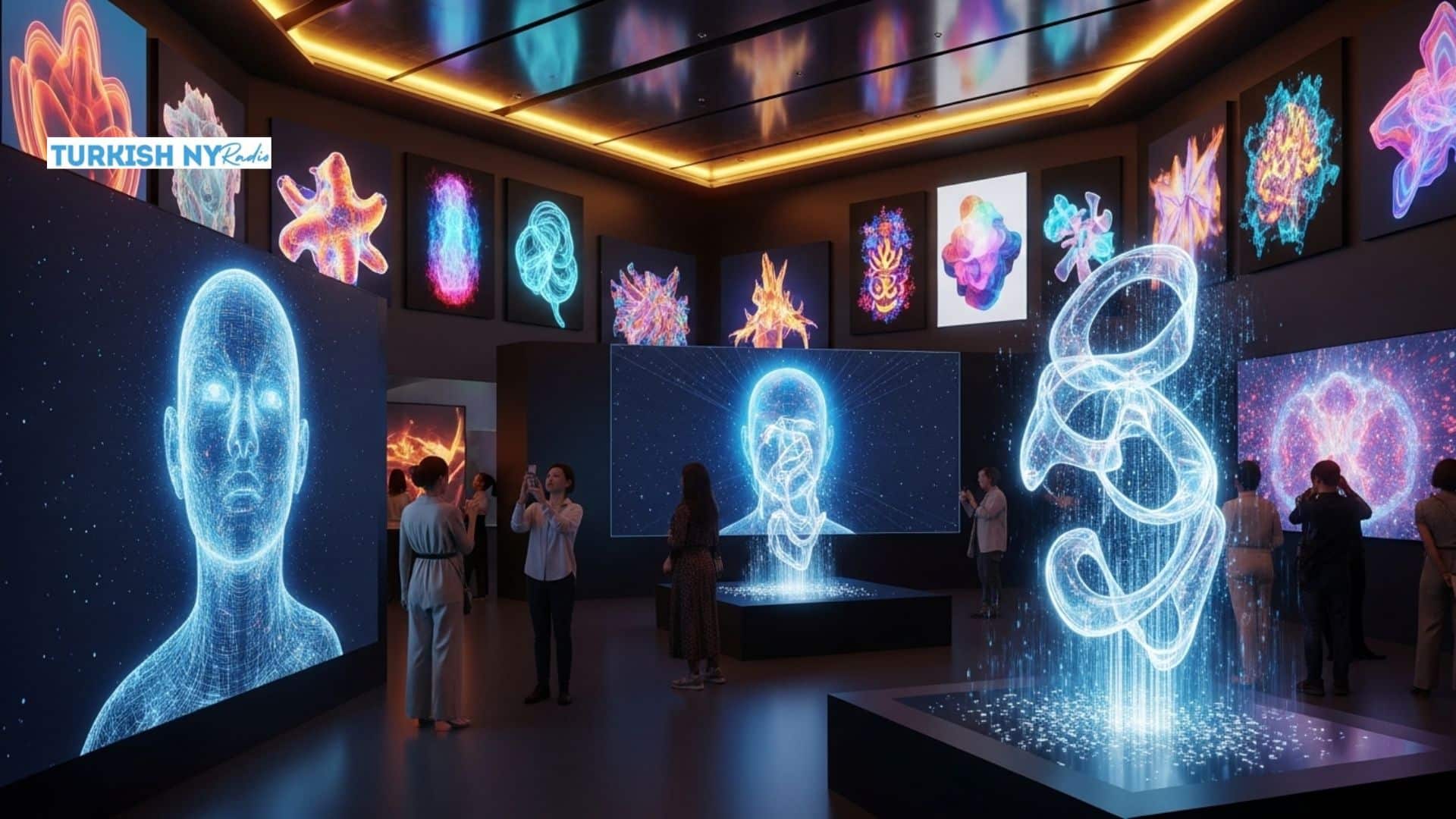
Rather than static images, these new NFT experiences evolve over time; respond to real-world data or even interact with their owners.
The Rise of AI-Generated NFT Art
The idea of AI-Generated NFTs merges cutting edge AI artistry with blockchain ownership. Essentially, artists rely on these AI tools such as generative adversarial networks (GANs or diffusion models) to create an original (image or animation) and mint as NFT.
Early experiments (like Robbie Barrat’s AI nudes in 2019 or Refik Anadol’s data sculptures) have blossomed into a mainstream trend.
Global sales of AI-generated NFT art were estimated to have increased from $10million in 2020 to $500million in 2024; supporting the overall digital art market.
As reports put it, the NFT market is estimated to grow by $84.13 billion between 2025-2029 (CAGR 30%), mainly due to digital art demand. Within this growth, AI art is one segment that particularly shines.
The level of interest is seen in major auction houses starting to hold dedicated AI art sales e.g. Christie’s 2025 “Augmented Intelligence” sale sold 28 lots (mostly AI works) for $728K.
Generational change has also worked to AI arts advantage. According to reports, Christie’s noted that nearly half of its AI art bidders were Millennials or Gen Z.
Nicole Sales Giles, vice president of digital sales at Christie’s said: “AI in art is becoming more widely accepted because AI…is permeating more of our daily lives. For Gen-Z and millennial collectors, this familiarity translates into a greater appreciation for the technology behind the art”.
Basically, younger collectors consider the AI process itself as part of the art’s value.
AI-Generated NFT Artworks: How Is It Created?
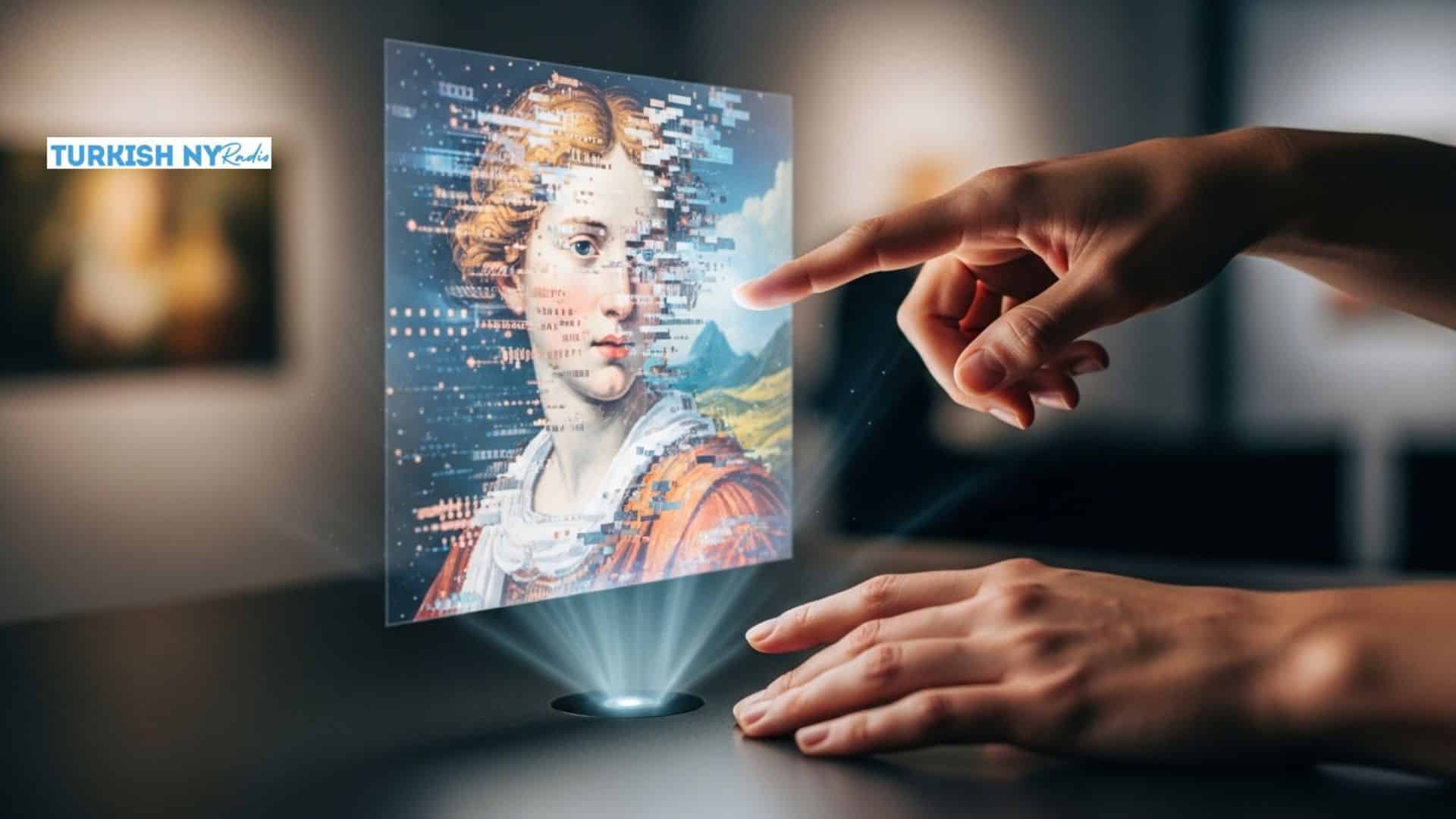
AI-generated NFT artworks begin with algorithms, not paintbrushes. Artists usually generate visuals by feeding AI frameworks (like OpenAI DALL·E or Meta Llama). They write prompts or training data, let the AI model “dream up” images, then select or refine the results.
This final image/animation is then minted on a blockchain (Ethereum, Solana etc.) as an NFT. These tokens embed metadata (the artwork file or link) and typically also a portion of smart contract code for royalties and ownership.
AI art has the ability to contain dynamic behavior unlike traditional NFTs. For instance, some projects utilize AI routines to adjust the image over time. Some leave it up to the collectors to dictate what is produced (prompts, style parameters). The beauty is that the AI NFTs merge creator and tool where you are creating a system but the AI itself works as your collaborator.
What Are Dynamic NFTs?
Dynamic NFTs (dNFT) are tokens whose metadata or appearance can be altered post-mining. A dynamic NFT, according to Coinbase, is one that “has code in its smart contract” enabling its information (like image, attributes or stats) to update based on outside events.
So rather than a static jpeg, a dNFT may change based on time, actions of the user, or real world data feeds (“oracles”).
For example, picture an NFT avatar that changes outfit depending on the weather or a digital pet NFT which matures as you interact with it. These are dynamic NFTs.
From a technical perspective, this requires connecting the NFT’s smart contract to data sources or game logic. The contract detects a trigger (e.g. rainy weather, user level-up) it updates the metadata of that token and changes the displayed image accordingly.
One trending approach is the fusion of generative AI and dynamic logic. The case for SuperRare’s newly launched “Liquid Editions” platform. These are generative works which are tied to live data feeds from the markets; in other words, it literally adapts as a trade is executed.
For instance, in the SuperRare example, the visual state (color or pattern) of the NFT changes in real time according to on-chain price and liquidity signals.
Collectors even have different “lens” NFTs that provide a new way of viewing the base asset and adjust based on market data. Thus, it creates a living art object to co-evolve with the crypto economy.
Market Trends and Statistics
Recent datasets show how fast AI and dynamic NFT art are moving lately.
Sales Growth: As mentioned above, studies show that AI generated NFT sales had jumped from $10 million to $500 million in four years. This increase drove overall digital art volumes in 2024 and was instrumental to total NFT market activity.
Market Size: Reports in the industry project an explosive growth. For example, Technavio predicts the NFT market will grow by $84B between 2025-2029 (a 30% CAGR), fueled by digital art demand and major-brand interest.
Collector Behavior: Survey data suggest a change to digital among collectors. Reports found digital art now makes up 13% of high-net-worth collectors’ portfolios by 2025 (up from 3% in 2024). While that stat covers all NFTs, it stresses the renewed collector confidence in blockchain-based art, a confidence that AI art leverages, especially among tech-savvy buyers.
Platforms and Projects: New marketplaces cater to AI art. OpenSea and Rarible list thousands of AI-generated collections, and specialized platforms (like Alethea AI or Async Art) focus on dynamic; programmable pieces. SuperRare’s Liquid Editions and Art Blocks’ on-chain generative series also signal institutional support for AI-driven creativity.
It has therefore become evident that AI-Generated NFT Art and dynamic NFTs go beyond curiosities; they are leading the future of digital art.
Platforms and Projects Driving Innovation
Some platforms really show the union of AI and dynamic tech:
SuperRare (Liquid Editions): As stated above; SuperRares Liquid Editions allows artists to incorporate real-time data into their art. The on-chain generative format enables any actions from the collectors to visibly transform the artwork.
Art Blocks: As an early maker of generative work; Art Blocks runs curated drops of code-minted NFTs. Although not always AI-based, many Art Blocks projects use algorithms to produce unique art on mint. Their recent offline exhibits (e.g. Marfa 2026) show institutional backing for code-driven art.
Async Art (Asynchronous Art): As an early mover in the dynamic NFTs category, Async splits artworks into layers that owners can control. For instance, an “AI NFT” on Async could consist of one neural network-generated layer and a second layer that a collector can animate with on-chain selections. The continued existence (and funding) of Async Art is a sign that interest in programmable NFTs is still alive.
Other Startup and Tools: Numerous AI art generators (Midjourney, Stable Diffusion, etc.) have NFT minting partnerships. New projects like “AI NFT Generators” on Solana are marketing entire tools for creating and selling generative NFTs. Additionally; artists are collaborating with AI (e.g. Swedish collective Botto, or independent creators like Refik Anadol and Holly Herndon) to produce works that live on-chain.
The ecosystem is maturing overall. Marketplaces have added some utility (royalties, tokenomics) and big players are beginning to dabble with AI curation.
Expert Analysis
Leading voices in art and tech see AI-generated dynamic NFTs as a natural evolution. Pioneer in AI media art, Refik Anadol, says he considers AI to be “the experience of a new medium for creativity,” while stating the NFTs will provide the global distribution channels.
Nicole Sales Giles from Christie’s emphasizes how younger buyers look at the AI process as meaningful rather than a gimmick. Which implies that AI art can attract audiences outside of the target market for conventional painting and static digital art.
From a technical point of view, artists can now leverage on-chain data like price and depth as input into their work.
This melding of financial and aesthetic data is new in art history, essentially, art that feels the market.
However, analysts caution on sustainability. NFTs blew up and crashed in a way that suggests that if AI-generated NFTs are to last, they must offer real utility beyond creating new things.
The indicators are encouraging: artists are associating NFTs with bonuses (studio visits, unlockable content); and galleries are exhibiting AI artworks.
Ultimately; long-term value will depend on community engagement and integration with the broader culture, not just simple algorithmic novelty.
Legal and Intellectual Property Considerations
With the fusion of art and technology through AI-generated NFTs; legal questions arise. Copyright law for AI-generated content is unsettled: ownership of AIs outputs has not yet been clearly established in most jurisdictions.
In the case of NFTs; this means that the owner of a token may not own the copyright or any right in respect of an underlying image. What happens currently is that buyers usually receive an ownership token and display rights; but the artist or platform retains fundamental IP unless otherwise stated.
Moreover, the dynamics aspect raises data issues. If an NFT changes based on external data (e.g. weather or API feeds), service outages or oracle failures could affect the work.
Sellers also warn collectors that there is something known as “link rot” where the off-chain data could disappear, thus breaking the art.
Regulators are beginning to pay attention. The Copyright Office and USPTO released their own guidance on AI in the U.S. at the end of 2024; but more tangible rules have yet to appear.
Meanwhile, the EU Parliament has moved to ensure transparency in AI systems but has yet to pass any laws regarding NFTs. As of 2026; it has created a grey area for collectors: although NFTs are authenticated on-chain, their creative content and updates to it remain legally dark. As a buyer and creator, pay attention to license and smart contract terms.
Conclusion
AI-Generated NFTs are one of a kind among digital art right now. In 2026, the convergence of generative AI and blockchain is producing dynamic artworks that adapt, respond, and live on.
Market data shows growth in sales of AI-generated art, a new generation of platforms are developing that allow even real-time data to interact with the artwork.
These technologies are also being adopted by not only young collectors but traditional institutions as well.
Moving forward, AI-Generated NFTs promise richer experiences: art that learns from its audience, tokenized pieces of real-world assets; and new forms of cultural expression.
However, legal and technical challenges (IP rights, data reliability) must be addressed. For now; creators and collectors navigating this space should stay informed and use reputable platforms and contracts.
The most successful projects will blend technology with genuine artistic vision and utility.
Glossary
Non-fungible-token (NFT): A unique digital token on a blockchain representing ownership of a specific digital item (art, music, etc.).
AI-Generated Art: Artwork created with artificial intelligence algorithms (e.g., neural networks). In NFTs; this means the art was produced by an AI model as part of the creative process.
Dynamic NFT (dNFT): A type of NFT whose content can evolve over time. The smart contract contains code that passes data which could enable updates (e.g., swap images or update attributes); based on external data or events.
Smart Contract: Self-executing code residing on a blockchain that defines rules (e.g. royalty payments, NFT updates).
Oracle: A system that supplies external data to a blockchain.
Generative AI: A group of AI algorithms (for example, GANs or diffusion models) capable of producing new content (images, music and text), which have been previously trained on large datasets.
Frequently Asked Questions About AI-generated NFTs
What are AI-generated NFTs?
These are digital artworks created (in full or in part) by artificial intelligence algorithms, which are then minted on a blockchain in the form of NFTs. Artists, for example, can create a painting based on a text prompt via an AI image model, and then mint that image with an NFT. These tokens serve as proof of ownership of the artwork created by AI.
How do dynamic NFTs work?
Dynamic NFTs (dNFTs) encode smart contract logic that lets their metadata, i.e., artwork image/attributes get enriched or updated based on external conditions. T
Why are young collectors interested in AI-generated NFT art?
Young collectors (Millennials + Gen Z) have lived in a digital & tech world since childhood and are comfortable with AI. They find the creation process itself meaningful.
Are AI-generated NFT artworks considered valuable?
Value varies. Some AI NFT pieces have sold for tens of thousands or more (especially by popular artists or through auctions) but some are still very cheap. Market trends indicate increasing demand; but like all art, value depends on rarity, creator reputation, and collector interest.
References
Disclaimer: The content of this article is for general information only, not investment or legal advice. The market forecast and sales figures are subject to change; those numbers are based on the reports available at that point in time. As always, do your own due diligence when it comes to your finances.