
This article was first published on TurkishNY Radio.
The discussion over digital currencies in the United States has advanced significantly as politicians move forward with the Florida Stablecoin Regulation, the suggested structure for overseeing payment stablecoins at the state level. The project is widely regarded as one of most strongly ambitious state initiatives to set regulations for stablecoin sellers and safeguard customers in the fast changing crypto industry.


Supporters claim that Florida’s stablecoin regulation could establish the United States as a leader in monetary innovation while also assuring candor and transparency in the digital asset industry. As global authorities aggressively focus on stablecoins, Florida’s decision demonstrates a growing realization that precise standards are required for long-term crypto acceptance.
Florida is moving toward organized stablecoin management
The suggested Florida Stablecoin Regulation Act received full support in the state Senate and still needs final signatures before it can become law. If enacted, it would result in one of the first complete governing structures for stablecoins at the institutional level in the USA.
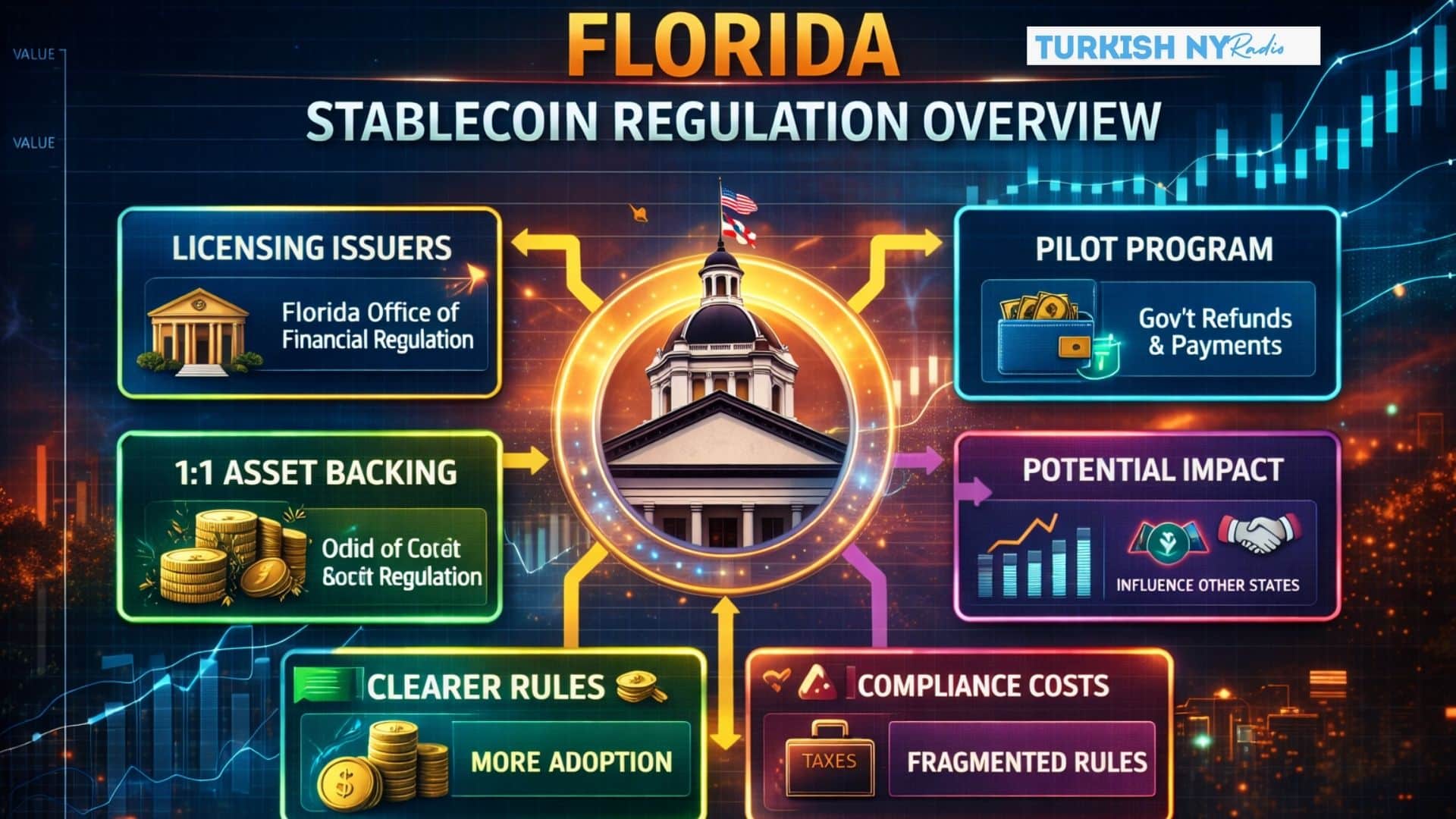
The plan requires stablecoin issuers functioning in Florida to secure necessary authorization from the state’s financial regulators. Companies will also have to keep visible reserve backing to guarantee that their internet-based tokens are completely redeemable.


Legislators that support Florida Stablecoin Regulation think that these rules will boost trust across stablecoins while fostering sustainable development in distributed payment techniques.
Reserve Requirements and Compliance Measures
Another important aspect of Florida Stablecoin Regulation is the need that stablecoins have a 1:1 reserve ratio with permitted assets including cash or cash equivalents. This regulation is intended to prevent liquidity problems and guarantee that holders can exchange their tokens without danger.
Financial regulators were to be given the authority to audit holders of stablecoin and examine reserve documents. Supporters argue that this control is critical in preserving trust in virtual currencies that are thought to have a steady value.
State authorities feel that Florida stablecoin regulation might serve as an instructional guide for other jurisdictions looking to manage stablecoins while enabling the technology to grow.
Regulators Emphasize Technological Opportunity
Throughout legislative negotiations, politicians underlined that the purpose of Florida Stablecoin Regulation is not to limit crypto innovation, but rather to establish a fair environment that protects companies as well as users.
One state lawmaker involved in the bill noted:
“This legislation ensures that stablecoin providers operate responsibly while allowing Florida to remain competitive in the digital finance industry.”
Supporters argue that clear rules under Florida Stablecoin Regulation could attract fintech companies and blockchain startups to the state, strengthening its reputation as a hub for financial technology.
Prospective complications for the cryptocurrency ecosystem
In accordance with consultants, the Florida Stablecoin Regulation could potentially have far-reaching consequences for the digital asset ecosystem in the United States. With federal lawmakers presently debating national currency initiatives, statewide efforts could potentially play a key role in determining regulatory standards.
If the measure is effective, observers believe it will encourage other countries to follow like. This prospect has prompted many observers to see Florida Stablecoin Regulation as an initial test case for how computerized wealth governance may work in the US.
Conclusion
The development of Florida Stablecoin Regulation represents a significant turning point in the ongoing fight to integrate virtual currencies into traditional banking environments. By creating explicit license standards, reserve restrictions, and supervision systems, Florida hopes to achieve a balance among innovation and customer security.
As governments around the world look for ways to regulate digital assets, the success or failure of Florida stablecoin regulation will probably affect how other nations and territories approach stablecoin governance in the coming years.
Summary
The suggested Florida Stablecoin Regulation Act is one of the first state-level campaigns in the USA to establish a legal framework for stablecoins. To safeguard customers and ensure financial stability, the measure requires issuer license, strong resource backing, and regulatory control. Supporters think the proposal would boost confidence in online currencies while bringing financial innovation to Florida. If effectively implemented, the framework has the potential to have an effect on other states and shape future cryptocurrency policy in the United States.
Glossary of Key Terms
Stablecoin: A cryptocurrency that maintains its value by being guaranteed by resources such as fiat cash or assets.
Reserve Backing: Refers to assets kept by an issuer to guarantee the selling price of a stablecoin and assure its redeemability.
Licensing: Official license from financial regulators that enables businesses to lawfully issue or maintain financial services.
Blockchain: Is an autonomous file system that records payments safely and openly.
Crypto Regulation: The government’s regulations governing the usage, trading, and issue of virtual currency.
FAQs for Florida Stablecoin Regulation
1. What is actually Florida Stablecoin Regulation?
It is a suggested regulatory framework to regulate stablecoin issuers working in the Commonwealth of Florida.
2. What is the reason is this rule necessary?
The law is intended to safeguard loyal customers, maintain stablecoin transparency, and foster trust in digital file markets.
3. What kind of hardware do stablecoin holders face?
The issuer would be required to obtain permits, and maintain 1:1 deposit backing, and follow financial control and auditing procedures.
4. Does it likely to have an impact on other governments?
Absolutely; researchers believe that if Florida’s regulatory system is successful, several other states may follow suit.
5. Just how will this influence the digital currency business model?
It may improve clarity in regulation, foster innovation, and entice fintech businesses to Florida.