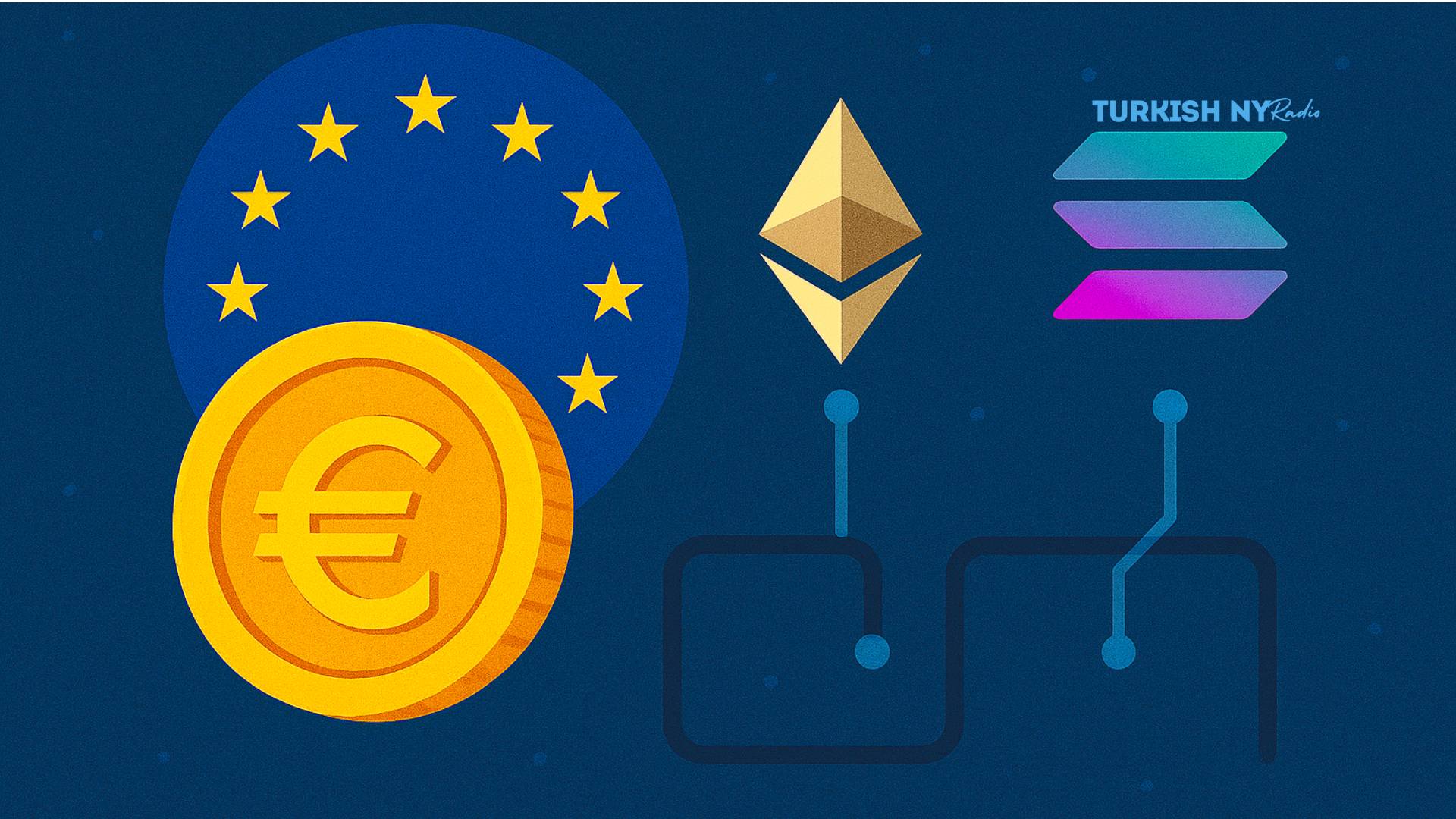
The European Union is expediting its preparations for a digital euro in response to rising pressure from the United States, which recently approved comprehensive stablecoin legislation.
Policymakers are now considering adopting public blockchains like Ethereum or Solana to host the initiative, which might boost the euro’s worldwide competitiveness in the digital era.


A shift driven by the momentum of US stablecoins
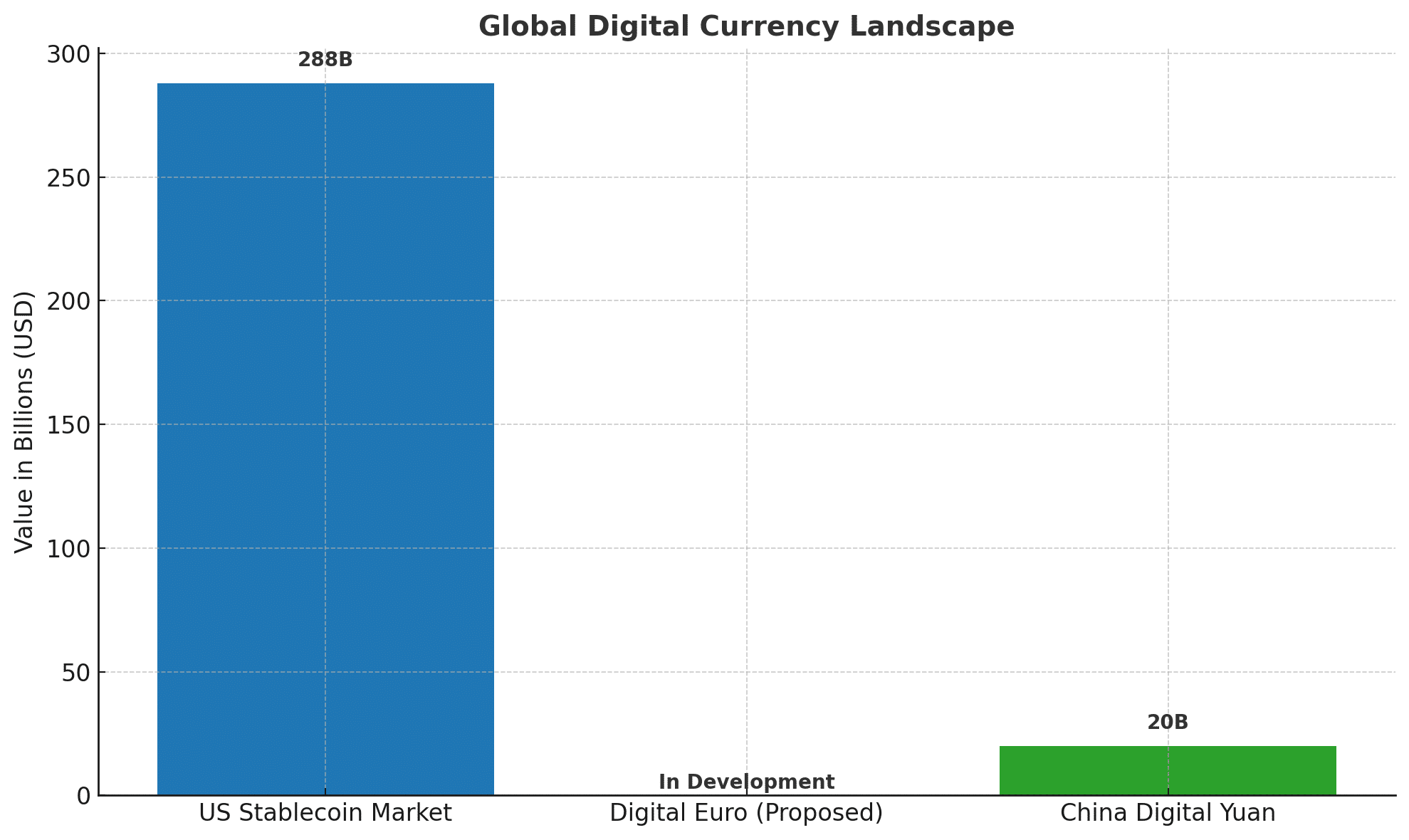
The US Genius Act, approved earlier this summer, established a legal framework for stablecoin issuers and cemented America’s dominance in the $288 billion stablecoin industry. For European policymakers, the measure generated serious concerns about the euro’s future in digital banking.
According to Piero Cipollone, a member of the central bank board, “If the euro does not find its footing in the digital era, Europe risks being overshadowed by dollar-backed stablecoins.” His speech emphasizes the project’s political importance, with the digital euro increasingly viewed as an instrument of financial sovereignty rather than simply a payments innovation.
Why Are Ethereum and Solana in Play?
In an unexpected change from previous plans for closed, permissioned networks, EU officials are investigating whether the digital euro may be managed on public blockchains. Ethereum and Solana are at the top of the list, with vast ecosystems and demonstrated scalability.
Supporters claim that launching on public infrastructure would allow the digital euro immediate compatibility with wallets, exchanges, and decentralized apps. It would also democratize access for individuals and companies, going beyond the scope of private settlement systems.
Critics, however, warn that public chains provide privacy trade-offs. Every transaction on Ethereum or Solana is transparent, raising worries about monitoring if a central bank digital currency is used on these platforms. Policymakers must balance the benefits of transparency with the inherent necessity for user confidentiality.
Strategic Sovereignty in a Changing Marketplace
Europe’s financial executives see the digital euro as critical to the euro’s continued relevance in an increasingly digitizing economy. With physical currency use declining and stablecoins gaining hold throughout the world, the euro’s digital equivalent might serve as the continent’s monetary foundation for decades to come.
An observer acquainted with the ECB’s internal deliberations highlighted that the argument is not only about technology. “This is about strategic independence. The United States now has a regulatory advantage, and Europe must respond if it wants the euro to remain strong in a multipolar world.
Preparation Phase and Global Comparisons
Since 2021, the European Central Bank has been undertaking research and pilot initiatives in anticipation of a deployment. The present step entails assessing both centralized and decentralized technology approaches. A final decision is expected following more discussions and parliamentary approval.
In contrast, China’s digital yuan was created on a private ledger, reflecting a control-oriented rather than open-ended attitude. If the EU picks Ethereum or Solana, it will represent a significant departure from China’s strategy, indicating that Europe values compatibility and market integration above restricted access.


Conclusion
The issue over how to create the digital euro is more than just a technological choice; it is about Europe’s financial destiny. Whether hosted on Ethereum, Solana, or another platform, the initiative is a reaction to global competition and an attempt to maintain monetary sovereignty.
For the time being, Europe’s route is still being mapped out, but the decision might determine the euro’s role in digital banking for the next generation.
FAQs
Q1: What is the digital euro?
The digital euro is a proposed central bank digital currency designed to complement physical cash in the Eurozone.
Q2: Why is the EU considering Ethereum or Solana?
Public blockchains offer interoperability, global reach, and integration with existing digital ecosystems.
Q3: What challenges does the digital euro face?
Privacy concerns, technical scalability, and the need for regulatory alignment are major challenges.
Q4: When could the digital euro launch?
The project is in its preparation phase, with potential pilot rollouts expected later this decade.
Glossary of Key Terms
Stablecoin: A cryptocurrency pegged to a stable asset such as the U.S. dollar or euro.
Ethereum: A decentralized blockchain known for its smart contracts and large developer ecosystem.
Solana: A high-speed blockchain optimized for scalability and low transaction costs.
CBDC (Central Bank Digital Currency): A digital form of fiat money issued by a central bank.
Genius Act: Recent U.S. legislation creating federal standards for stablecoin issuers.
Sources/References