
This article was first published on TurkishNY Radio.
The value of publicly traded digital-asset treasury companies (DATs) in North America suffered steep losses in 2025, due mostly to declining crypto valuations. Dat-stock prices down 43 percent on average this year.


With the price of Bitcoin (BTC) vacillating between US$90,000 and US$93,800 throughout December 2025, the disconnect between an emerging cryptocurrency juggernaut and imploding corporate treasuries is jaw dropping.
Why Bitcoin Exposure on Corporate Balance Sheets Mattered
Companies that get this designation, such as Digital Asset Treasuries, raise money through equity or convertible debt and then use the funds to buy cryptocurrencies such as Bitcoin.
That model gave investors indirect exposure to crypto, without the headache of guarding it, directories with passwords and the like. On an initial note, many DAT stocks initially traded at premiums to their net-asset value (NAV), which was in part attributable to the upwards crypto trend and a frothy investment sentiment.
But when the crypto markets turned around, the pressure on DAT equity was intense. With no asset base generating conventional earnings, these companies must all meet thefixed obligationssuch as interest or dividend payments on their debt or preferred stock.
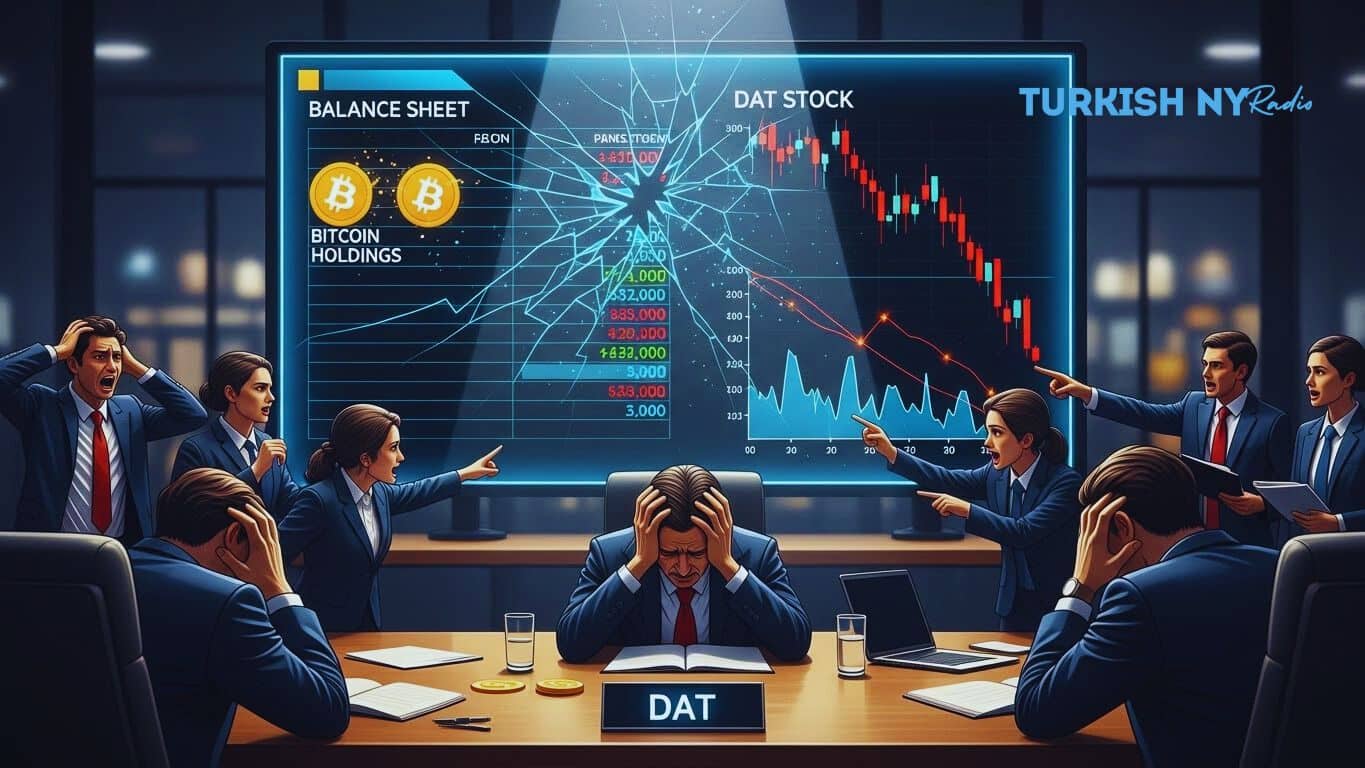
DAT Performance vs. Bitcoin Performance (2025)
| Metric | BTC (approx.) | Median DAT-stock performance | Observation |
| Price | US$ 92,000 – US$ 93,800 | −43 % year-to-date | DAT stocks underperform despite steady BTC price |
| NAV-premium / discount | Based on crypto reserves | Majority trading at discounts | Equity value lags underlying crypto holdings |
| Liquidity & capital inflow | N/A | Significantly weakened; fresh capital scarce | Reduced investor appetite for risky treasury-based crypto exposure |
Key takeaway: While Bitcoin holds value near US$92,000–US$94,000, the DAT equity market suffered a sharp collapse. Many treasury-backed firms now trade well below the value of their crypto reserves a reversal from the premium valuations seen earlier in 2025.
Why the DAT Companies Are Such Easy Prey
3.1 Structure of DATs The weakness points of DATs are mainly reflected on the follow aspects (a) Lack of heterogeneity of source devices.
Crypto holdings do not generate steady income. Even as token prices decline, dividend or debt-service payments persist.
Numerous DATs borrowed by issuing debt and borrowing through convertible instruments to purchase cryptos. As long as prices rise, that leverage works wonders, handing them exposure to a rapidly appreciating asset without having to pay for it outright.
The smaller DATs, some that invested in smaller or more volatile digital assets than Bitcoin have been hit the hardest. Risk had been augmented on the downside by a speculative token exposure.
A recent academic model for a treasury-backed crypto firm contends that mere token appreciation isn’t sufficient to survive in the long run without diversifying (for example, by leveraging holdings to create operating revenue through crypto infrastructure services).
More for Crypto Investors and Markets at Large
DAT valuations could impact market-level dynamics as the data declines:
Challenges are now also coming from investors, as many of the treasuries’ brethren trade at deep discounts and confidence in corporate-balance-sheet exposure to crypto is fading. New capital inflows into DATs are drying up.
Forced liquidations, or the selling pressure they generate from distressed DATs, could contribute to downward price pressure on overall cryptocurrencies and, in turn, Bitcoin.
Among investors, there might also be an increased attraction to direct crypto ownership or regulated crypto ETFs, in preference to corporate-treasury proxies.

Early 2025 Economic Outlook for Bitcoins and DATs
Bitcoin has continued to fare relatively well, maintaining a value somewhere in the US$90,000–US$94,000 range as at December 2025.
However, the DAT model seems weak under weight of volatile markets, debt sensitivities and depleted investor appetite. Companies that can not produce positive cash flows or restructure the balance sheet might be at risk of liquidation.
For treasury-based crypto companies to survive in the long term, they could potentially follow new revenue models like payment-rail infrastructures or token-agnostic fee-based services as alternatives to price appreciation of their tokens.
Summary
The median stock price for digital asset treasury companies in North America declined 43% in 2025.
Corporate balance-sheet exposure to Bitcoin was not enough to shield valuations, even though BTC was trading above $92,000–$94,000.
Crypto purchases bought with debt added pressure as token prices softened.
Many DAT stocks are today trading for less than the value of their Bitcoins.
Firms holding volatile, smaller-denomination tokens will be open to a greater risk of liquidation and a lack of investor confidence.
Glossary of Key Terms
Digital Asset Treasury (DAT)
A publicly traded corporation that deploys corporate capital to buy crypto-assets as a store of value and treasury reserve in place of traditional fiat currencies, all in order to hedge against inflation.
Corporate Bitcoin Exposure on Balance Sheets
An approach in which a firm buys Bitcoin to hold on its balance sheet. The holdings of corporate accounts rise and fall with the price of Bitcoin.
Net-Asset Value (NAV)
The total value in a company’s holdings of crypto minus any liabilities. If a stock trades for less than its NAV, the market is pricing the firm at less than that higher number.
Leverage / Debt Financing
Borrowing or issuing of securities to enter into a cryptocurrency transaction. It enhances returns in bull markets, but exacerbates losses when prices decline.


Volatility
Big, quick swings in price of crypto assets like Bitcoin. Higher volatility will be riskier for DALF firms that base their income or value on token price increases.
Capital Inflows
Money is coming into DAT stocks via equity placements or debt deals. A fall in inflows can mean a lack of confidence in the market and illiquidity.
Liquidation Risk
The risk that a company could become compelled to sell their Bitcoins — frequently at a loss — in order to pay debts or stay operating.
Indirect Crypto Exposure
The opportunity for investors to profit from the movement of crypto prices, without necessarily having to own bitcoin directly.
FAQs About Bitcoin Exposure on Corporate Balance Sheets
What is a digital asset treasury company?
Digital asset treasury businesses may hold digital currencies like Bitcoin on their balance sheets to provide indirect exposure, but performance is largely tied to the state of the crypto markets.
Why is DAT stock price falling when Bitcoin is strong?
Stocks fall in part because debt servicing, cash flow weakness and cuts to asset values overshadow the benefits of holding Bitcoin exposure on corporate balance sheets.
Are investors getting anything out of DATs?
They provide regulated stock market access to exposure to Bitcoin on company balance sheets, a easy investment bet and potential upside when crypto prices go up over time.
What risks should you consider before investing in DAT stocks?
Unstable Bitcoin visibility on the balance sheet, less liquidity, increased leverage and potential forced asset sales also add to financial uncertainty and long-term investability.