This article was first published on TurkishNYR.
Cross-border e-commerce is exploding due to retailers increasingly selling to customers worldwide. Analysts say global online sales could hit $11.7 trillion by 2030. However, transferring money across borders today is slow, expensive and isolated.


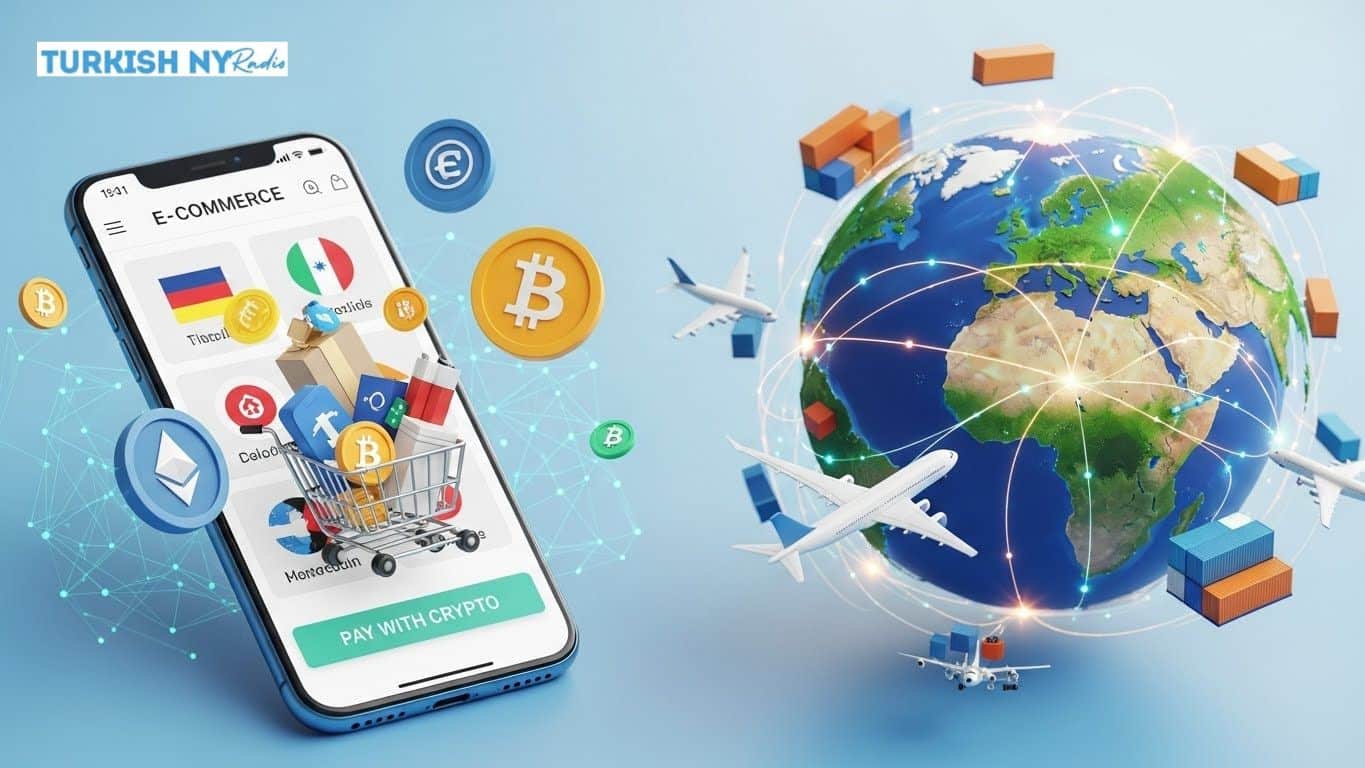
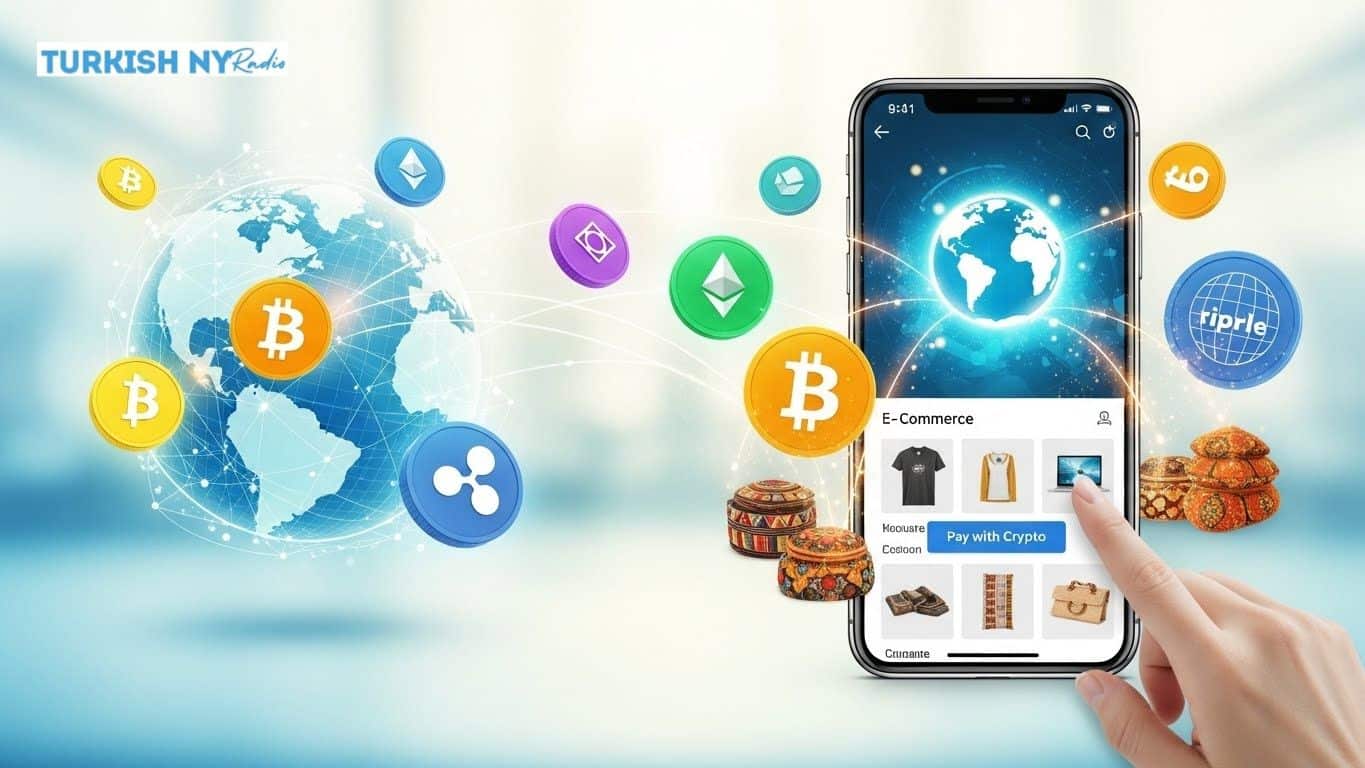
The emergence of crypto in cross-border e-commerce has become a new lucrative territory nowadays. The use of digital assets enables merchants to receive payments from literally anywhere in the world without waiting for intermediaries.
More than 15,000 businesses worldwide (2,300 in the U.S.) accepted crypto payments in 2024, only for the number to continue climbing as major processors like PayPal, Stripe, and Visa offer crypto settlement.
This interconnectivity drives cross-border e-commerce growth by increasing the speed and reducing costs.
Global Surge in Cross-Border E-Commerce
Cross-border online sales are rising rapidly. Global e-commerce turnover is estimated to increase from $7.7 trillion in 2025 to $11.7 trillion by 2030. A lot of this stems from consumers and companies spending across borders.
To put that into perspective, the size of business-to-consumer (B2C) cross-border sales was roughly $785 billion in 2021 and could reach nearly $7.9 trillion by 2030. This growth is equally unprecedented, and it calls for payment systems that are at par in scale and complexity.
Legacy cross-border payments, like banks and card networks, can’t keep pace. With the corresponding banks as intermediaries, sending payments abroad may require 1-5 business days and charge fees from different sources, restricted to business hours.
Card payments (Visa, Mastercard) come with FX conversions and 3-5% fees as well. These old rails are also not instantaneous, and moreover they’re opaque. Merchants often don’t know if a payment has cleared as it makes its way into their account.

Crypto payments, by contrast, can clear in minutes or seconds, at any time of day. Speed and availability (operations around the clock) are two of the key advantages of international trade.
Cross-border e-commerce also suffered from high friction due to chargebacks and fraud. Chargebacks can be initiated by the customer, increasing the risk to the merchant. Crypto transactions on the blockchain are final; no chargebacks, which gives sellers more confidence that funds will not be clawed back.
In other words, digital currencies solve a lot of problems for world online trade: speed, cost, transparency and availability.
Crypto Integration in E-Commerce Platforms
Cryptocurrency options are being added to popular digital payment services as payment networks modernize. Merchants can add in crypto payment via gateways that manage the conversion and compliance.
For instance, Shopify and Magento retailers often use gateways such as BitPay or Coinbase Commerce to receive Bitcoin, Ether or stablecoins that can then be settled into local currency fast.
Big tech and retail players are also on board. Tesla, Microsoft, Starbucks, and luxury brands were all accepting crypto in some markets in 2025.
At the banking and payments level, it’s nothing short of significant. Credit-card networks Visa and Mastercard are embracing crypto. Visa is already testing USD Coin (USDC) for cross-border payments, while Mastercard lets some transactions occur over their rails. PayPal and Square (Block) allow merchants to receive crypto financing (converted to fiat at sale).
Non-traditional players are also dipping their toes in collective stablecoin networks, from Revolut to Robinhood. This ecosystem evolution means that a consumer in one country can pay in crypto and the value reach a seller anywhere far faster than it otherwise would.
There are still relatively few places with cryptocurrency as an accepted form of payment. Less than 1% of global e-commerce transactions in 2024 were conducted using crypto, according to figures. But merchants consider it a niche in the making.
A survey linked with Deloitte found that 85% of merchants think allowing the option for crypto payments draws new customers. This is why almost 75% of U.S. merchants intend to begin accepting crypto in the next two years (even if only 5-10% did so last year).
Advantages of Crypto for Cross-Border Payment
There are so many reasons why experts love cross-border crypto e-commerce. Crypto payments eliminate middlemen, which leads to huge savings. Traditional international transfers can carry fees and markups of 5-10%, whereas stablecoin payments have been shown to reduce these costs by up to 80%.
Settlements are near instant, vastly improving cash flow. And because blockchain documents every payment, merchants are promised more transparency and less risk of fraud.
Significantly, crypto payments expand market access. Those in countries with flimsy banking systems or currency controls can shop online by settling up in crypto. Now that anyone with an internet connection can participate in decentralized finance, there’s no need for a bank account, experts add. E-commerce is open to underbanked areas.
For cross-border sellers, taking crypto represents a way to reach emerging markets and diaspora communities where crypto adoption is also highest.


To summarize these points, consider the comparison below:
| Payment Feature | Traditional Cross-Border Payment | Crypto (Stablecoins) |
| Settlement Time | 1-5 days via banks or card networks | Minutes (real-time, 24/7) |
| Transaction Fees | High (2-7%) including FX spreads and intermediaries | Low (often <1-2%; minimal intermediaries) |
| Foreign Exchange | Multiple FX conversions and delays | None for USD-stablecoins (pegged to fiat |
| Availability | Limited (business hours, cutoff times) | Always on (weekends/holidays) |
| Chargebacks | Allowed (fraud risk | None (irreversible blockchain payments) |
| Transparency | Low (opaque routing, manual tracking) | High (verifiable public ledger) |
| Accessibility | Requires bank accounts, credit history | Open to anyone with a crypto wallet |
| Merchant Adoption Level | Universal (dominant) | Growing (15k+ e-commerce sites globally) |
| Cross-Border Volume Share | 97% (traditional) | 3% (crypto/stablecoins) |
As exhibited in this table, cryptocurrency (particularly stablecoins) resolves a number of deficiencies inherent to traditional cross border payments. The result: speeded-up checkouts, reduced costs and more dependable international purchases for online merchants.
Experts Thoughts on Crypto E-Commerce and Regulation
The are promises and perils of crypto in cross-border e-commerce, according to industry experts and analysts. More generally, Alina Zabrodskaya emphasizes the advantage for cash flow:
“Crypto lets global businesses settle payments securely in minutes instead of days, freeing up cash flow and boosting growth.”
This is supported by market data. McKinsey makes the observation that in just four years, volumes in stablecoins have grown an order of magnitude, and at this trajectory could outpace traditional money transfers within 10 years.
A recent study commissioned by Visa found that stablecoins are now moving more value than Visa and Mastercard together. Financial institutions are preparing as well. Banks and payment companies are developing capabilities for tokenized money, the paper says.
Even central banks are offering digital currencies (CBDCs), to complement crypto payments and help make cross-border trade more efficient.
At the same time, experts warn on volatility and regulation. Retailers often shy away from Bitcoin when it comes to cross-border sales with its price swings and prefer stablecoins like USDC. A lot of luxury brands immediately convert the Bitcoin they receive back into dollars to seize on value.
And uncertainty in regulation lingers as an issue. Analysts point out that unclear cross-border crypto rules leave some merchants wary. But officials are starting to define frameworks.
The Financial Stability Board is coordinating a response on global standards for cross-border crypto, and several countries already permit stablecoins under regulated conditions.
Beyond that, analysts say in those markets where banking is scarce, those flows become highly dependent on crypto remittances and stablecoin remittances already make up about 2-3% of global cross-border volume.
If 20 percent of cross-border flows are made in stablecoins (a future projection), the payment landscape will be revolutionized. E-commerce experts believe that as infrastructure (including Layer-2 networks and payment gateways) evolves, adoption will skyrocket.
In fact, experts believe that cross-border crypto e-commerce isn’t niche experimentation anymore; it’s become an integral part of global trade.
What is Next for Crypto and E-Commerce across the Globe
With trends as they are now, crypto in cross-border e-commerce appears set to increase further. Analysts predict stablecoin circulation will hit $2 trillion in 2028, helping businesses with global trade and remittances.
Consumer demand will also follow as crypto becomes more mainstream. Early adopters (especially digital-native companies) for international sales consider crypto as competitive advantage.
But in the long term, crypto payments could probably end up being more of a supplement than an alternative to existing methods. Legacy rails retain some ubiquity and consumer protections that aren’t going to disappear overnight.
The future of cross-border e-commerce will probably be multi-rail: merchants offering cards, bank transfers and crypto side by side.
As a recent industry analysis states, the interplay of increasing cross-border e-commerce markets and maturing Bitcoin payment infrastructure yields great potential for retailers to sell to global customers.
In fact, crypto-accepting businesses that have in place good risk management measures can expect to gain market share within the fast-evolving international e-commerce universe.
Conclusion
Crypto in cross-border e-commerce is revolutionizing international online trade by making payments quicker, cheaper and more inclusive. Crypto payments settle in minutes instead of days and reduce transaction costs by 80%.
Decentralized Crypto options are being taken up by millions of consumers and thousands of vendors, and the Global stablecoin transfers already rival legacy networks.
While the current market share is single-digit, industry experts believe that as technology and regulation develop, it will increase significantly. To sum up, it can be confidently said that cryptocurrency (and stablecoins in particular) will be a new essential tool for international e-commerce and will support traditional payment methods with speed, security and international reach.
Glossary
Cryptocurrency: A form of money that exists only as code, with transactions and settlements recorded on a digital ledger; it relies on technology called cryptography. Transactions are stored on a distributed ledger (blockchain). Classic examples are Bitcoin (BTC), Ethereum (ETH) and stablecoins like USDT or USDC.
Blockchain: A distributed digital ledger that records transactions across multiple computers. Each “block” of crypto transactions is then linked to a chain, which helps ensure the authenticity and security.
Stablecoin: A cryptocurrency that is designed to have a stable value by being pegged to a fiat currency (e.g., USD Coin, which is pegged to the U.S. dollar). They offer the benefits of crypto while lowering volatility.
Cross-Border E-Commerce: The act of purchasing and selling products or services online that cross international borders. It’s about payments back and forth of different countries.
Payment Gateway: A provider that accepts and relays online transactions (eg, credit card or crypto) for merchants. Crypto payment gateways are services that let websites accept, process and convert cryptocurrency into the currency of a choice.
Central Bank Digital Currency (CBDC): A nation’s fiat currency in a digital format, maintained and regulated by the country’s central bank. But unlike cryptocurrencies, CBDCs are centralized although they may harness similar blockchain-like technology.
Chargeback: The return of a payment, often when a buyer makes an unsuccessful claim for credit card payment. Transactions using cryptos on a blockchain are permanent — chargebacks don’t exist.
Frequently Asked Questions About Crypto in Cross-Border Payments
What is crypto in cross-border e-commerce?
It refers to the use of cryptocurrencies (such as Bitcoin, Ethereum and stablecoins) to pay for goods and services sold in international online commerce.
Advantages of using crypto for international e-commerce.
Crypto makes it possible for merchants to accept payment from any country immediately, and usually at a much lower fee. Merchants get to save on the forex charges, not to mention bank delays.
Is there a role for stablecoins in cross-border e-commerce?
Yes. Stablecoins (cryptocurrencies pegged to fiat such as USD) are becoming more popular in cross-border e-commerce, as it marries blockchain efficiency with value stability. They strip out the volatility of traditional cryptos and allow merchants to send or receive digital dollars or euros directly.
What is the problem of crypto in cross-border payment?
The primary roadblocks are price volatility (for non-stablecoin crypto), regulatory uncertainty, and infrastructure maturity. Rules differ by country, though global organizations are shaping frameworks. Also, not all people know about wallets so there will be some learning curve.
Will crypto take over from normal payments?
Experts think crypto will supplement, not replace, existing systems. In fact, the traditional system is still praised and as a consumer protection. But cryptocurrency introduces a new, more efficient choice for cross-border sales.
References
Edgardunn
Cryptoprocessing
Bvnk
Technewstt
Inpay
Cex
Mckinsey