Americans changed how they shop in 2025. People shifted to faster checkout paths and flexible payment tools as digital habits grew stronger. These changes shaped U.S. E-Commerce trends and now guide how analysts study online spending.
Now, these days, retail trade is closely related to technology, highly efficient supply chains or processes and systems of validation supported by the blockchain network.


Digital trust also plays a major role in these patterns. Buyers feel more comfortable sharing data when platforms remain clear and secure. Companies use this data to study search interest, timing, and price behavior.
Many businesses also test blockchain tools to record loyalty rewards and verify shipments, which helps lower fraud risk and improves the flow at checkout.
Mobile Screens Lead the Shopping Journey
Mobile devices now sit at the center of the shopping flow. A report by Insider Intelligence found that the majority of online purchases in the U.S. are initiated on smartphones. In this digital age, people use mobile apps not only for price comparison but also for monitoring delivery, reading reviews, and finally making a purchase.
The transition towards mobile shopping is among the most significant U.S. E-Commerce trends as it influences retailers’ platform designs.
Mobile payment adoption also increased. With the growth of tap-to-pay options, buyers expect checkout to take only a few seconds. Crypto developers follow these patterns because mobile wallets often link to digital assets.
Public chain explorers show rising wallet activity during peak retail seasons. This gives analysts fresh ways to study networks that process fast transactions.
AI Tools Reshape Product Discovery
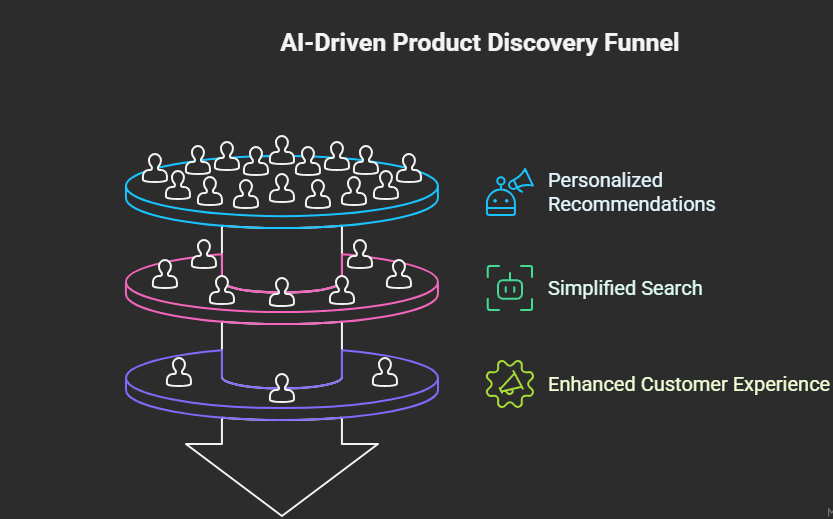
Product discovery changed sharply in 2025 as artificial intelligence took a larger role. Search engines and retail platforms use AI to analyze browsing behavior and buying history. They also examine price cycles and broader US online retail statistics to inform recommendations. These tools help buyers find items faster and reduce the time spent checking multiple pages.
This shift also influences developers who build data-driven systems. They build models that can quickly react to trends, e.g., seasonal hikes or geographic shifts in demand.
According to a McKinsey & Company report, over 70% of retailers today use AI solutions to provide better customer service. This supports the idea that U.S. E-Commerce trends now depend heavily on machine learning systems.
AI tools also simplify the search for complex items such as electronics or financial products. These systems point out risk factors or make comparisons according to reputable sources. Therefore, the buyers who might have got confused with so many options earlier now find it easy to reach decisions.
Social Platforms Turn Content Into Checkout
Social platforms take a major part in the shopping habits of 2025. The buyers are ushered straight to the checkout pages through short videos, live product demonstrations, and influencer reviews.
A considerable amount of purchases already occurs within the same app in which the content is displayed. This is a way to speed up the buying process by reducing the friction.
Social commerce is in line with US online retail statistics since these platforms generate a huge volume during the seasons. Analysts track engagement spikes to understand consumer interest. Crypto communities contribute as well.
Many developers use token-based access or digital badges to reward engagement during social events. This connects retail behavior with blockchain-based systems that track participation without storing personal information.
Influencers also guide product awareness. Content provided by retailers is a trust booster since consumers opt for short and sincere testimonials rather than long marketing campaigns. In fact, this strategy aids retailers in attracting the younger generation who are very active on mobile platforms.
Payment Flexibility Changes Buyer Expectations
Consumers are opting for more involvement in the payment process of goods. The year 2025 recorded a high demand for digital wallets, split payment methods, and stablecoin transactions.
These tools make spending more manageable during periods of economic uncertainty. They also reduce waiting times because digital transactions settle faster than older banking methods.
The Federal Reserve continues to report steady increases in digital payment adoption. This shift affects U.S. E-Commerce trends because platforms with flexible payment tools attract more traffic.
Blockchain networks support this trend by offering real-time settlement. Stablecoins help international buyers participate in U.S. sales without converting currency through traditional banking systems.
Developers now design systems that reduce fees and increase confirmation speed. These improvements matter because slow payments often lead to abandoned carts. As more buyers demand instant processing, blockchain networks offer strong alternatives.
Delivery Expectations Reshape the Retail Race
By the year 2025, fast delivery became the norm. A lot of consumers consider same or next-day delivery as a standard for almost all products. To not disappoint these customers, merchants are putting their money into automatic storage and better transportation systems.
Reports from Digital Commerce 360 confirm that logistics systems form a significant part of US online retail statistics. The data show that delivery speed now directly affects brand loyalty.
Blockchain tools support this shift by tracking shipments through public records. This reduces the chance of lost items or delays. Every movement of a package can be recorded in a time-stamped entry. This helps both retailers and buyers view delivery updates without relying on multiple tracking systems.
Return Policies Influence Buying Decisions
Return policies hold more weight today than in past years. Buyers avoid platforms that create slow or unclear return processes. Many retailers improved their policies to attract and retain customers.
Studies by the National Retail Federation show that the volume of returns rises alongside total online sales. This forces companies to adjust how they manage inventory and customer communication.
Blockchain-based verification plays a valuable role here. A purchase recorded on a public network provides proof of transaction without revealing sensitive details. This helps verify return claims quickly and reduces fraud. Analysts view this as a significant development in U.S. E-Commerce trends because it connects payment systems with after-purchase services.
Sustainability Gains Influence Across Online Markets
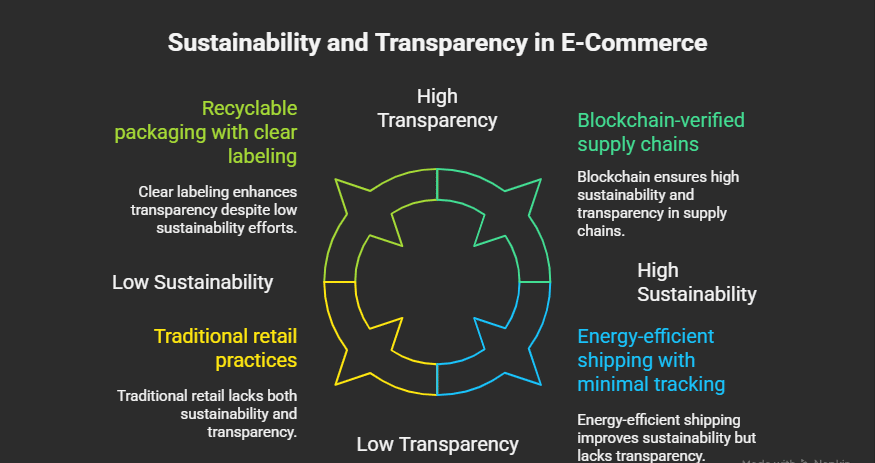
Sustainability in 2025 influences greater part of the purchasing decisions. A significant number of customers investigate if the businesses apply recyclable packing or eco-friendly transport methods.
Statista’s studies confirm that the green-minded behavior keeps evolving to become a more decisive factor in the U.S. E-Commerce trends. Consumers are demanding to be informed about the origin of products and the logistics involved in the supply chain.
Blockchain networks offer strong tools for these checks. Public data can verify sourcing methods, shipping paths, and material types. This builds trust because the information cannot be edited once recorded. Developers design carbon tracking tools that show buyers the environmental cost of each purchase.
Crypto Communities Shape Retail Conversations
Crypto communities help shape discussions about future retail systems. Many analysts talk about fast chains such as Solana and how they may support new payment tools. Solana block explorers offer high throughput, appealing to developers building apps that must handle heavy transaction loads.
These networks also highlight the impact of blockchain activity on retail cycles. Market observers track price movements during sales events and compare them with US online retail statistics. This helps explain how digital systems may blend with mainstream retail in the coming years.
A Look at What Comes Next
The future of American shopping centers is speed, clarity, and trust. Blockchain networks may improve supply chains and identity systems. AI will support discovery, risk checks, and price tracking. Social networks will still combine content with transactions.
The e-commerce analysts have already anticipated that the U.S. online shopping trends will remain strong as long as customers continue to consider the convenience and secure payment methods as their top priorities.
Conclusion
Americans have now adopted a shopping behavior that portrays speed, trust, and digital comfort. Buyers move through checkout flows with ease, expect fast delivery, and use payment tools that fit their daily needs. New systems built on AI and blockchain help support this shift by making shopping clearer and more secure.
The improvement of these tools will make the U.S. E-Commerce trends continue to influence the ways of browsing, comparing, and purchasing products across the nation.
Follow us on Twitter and LinkedIn, and join our Telegram channel for more news.
Glossary of Key Terms
Blockchain: A digital public ledger maintains the data blocks in a connected way.
Stablecoin: A type of cryptocurrency whose price will not fluctuate and remains stable.
Digital Wallet: A system that keeps the information of payments and assets.
Smart Contract: An automated program that runs on a blockchain and is inherited.
Supply Chain Tracking: Watching goods traverse from the source to the final customer.
AI Discovery: The machine learning-based tools that help to find products.
Social Commerce: Shopping done via social media platforms and through their content.
Throughput: The maximum number of transactions a network is capable of handling in a second.
Carbon Tracking: The measure of how much impact one has on the environment at that very moment.
Token Reward System: Digital assets or tokens represent the rewards that are being distributed.
FAQs About U.S. E-Commerce Trends
1. How much do Americans spend online each year?
The U.S. Census Bureau statistics give evidence of steady annual increase with the increase of online shoppers.
2. Mobile gadgets, in particular, are the leading cause of online shopping?
Mobile apps offer simple navigation, fast checkout, and real-time updates.
3. How does blockchain improve online shopping?
Blockchain provides clear records, fast settlement, and stronger verification.
4. Why do analysts study social commerce?
Social content influences quick buying decisions and reveals buyer interest patterns.
5. What drives most impulse purchases online today?
Most of the unplanned buying decisions were initiated by short clips, on-the-spot price cuts, and swift mobile payments. Together, these factors form a very user-friendly way to act upon the buyer’s interest without even moving away from the webpage.