

This Article Was First Published on TurkishNY Radio.
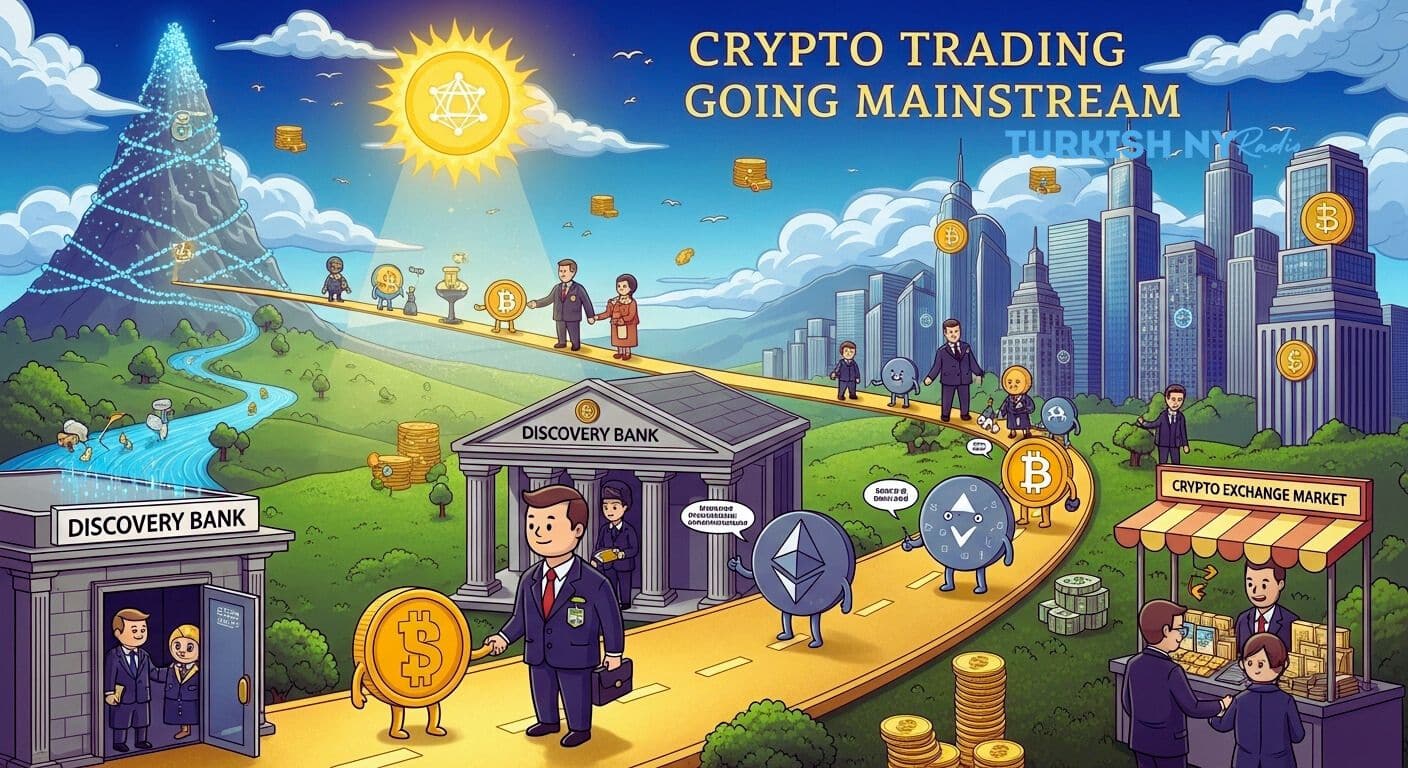
The South African Discovery Bank has taken a bold step towards incorporating the functionality of inserting crypto trading within the banking app.


To be developed in collaboration with the crypto platform Luno, the software will enable bank clients to trade with the token directly and coordinate conventional banking with digital-asset investments.
That should signal that South African retail customers connected to crypto trading will not have to rely on trade at branded startups.
As per practical considerations, consumers would be able to view their crypto trading balances next to other deposits and investment accounts. They will be able to conduct transfers of bank accounts to Luno wallets without fees.
Further, consumers will have access to more than 50 different tokens to trade crypto, including main assets such as Bitcoin and Ethereum. Therefore, the bitcoin price is approximately $90,000–$96,000, and the ether price borders $3,019. The timing is perfect given the change in institutional and retail momentum.
How Crypto Trading Access Expands Through Banks
There are long-term implications involved in mainstream banking taking up crypto trading:
Reduced barrier to entry: Lots of South African users who might have thought trading crypto was complicated will now have access to it through an interface they are already familiar with their bank.
More retail flows: As users of banking apps are exposed to Bitcoin price action and Ethereum trading charts in their everyday app, interest in crypto trading could expand.
Institutional signaling: When a Wall Street giant approves of buying and selling cryptos, it validates the notion that crypto is not just speculative but is available; it may also affect institutional signals.
Liquidity and demand implications: With Bitcoin price floating around a six-month low near $90K and Ethereum price near $3K, new access channels could change retail dynamics. Latest figures reveal downward pressure on Bitcoin price alongside outflows by institutions.
Alongside these access changes, the announcement could prompt banks in other emerging markets to look more closely at such embedded crypto-trading features that could help widen geographic demand.
Regulatory Insights & Adoption Metrics
The regulatory backdrop is evolving as the class of mainstream crypto trading options debuts. To date, South Africa’s Financial Sector Conduct Authority (FSCA) has one of the world’s first crypto-asset-response (or regulatory compliance) frameworks that recognizes crypto-assets even for those controlled from within foreign jurisdictions.
Many platforms that provide crypto-asset services are licensed and are under the purview of anti-money-laundering (AML) regulations.
Adoption numbers support the trend: “1 in 10 people have cryptocurrency investments” in South Africa, according to Discovery’s leadership. U.S.-listed spot bitcoin ETFs have seen outflows of more than $1 billion over the past few weeks, and this indicates a readjustment to demand profiles.
The Direct Bank-App to Crypto Exchange Trading link may give us a small bump in the volume of retail data points; the number of deposit-wallet linkages, the volume of deposits transferred, and wallet values could become new adoption KPIs as Ethereum price and Bitcoin price now reflect broader macro and regulatory stress.
These sentiment charts are snapshots of market psychology; the way they are acting shows how investor mood has been shifting Bitcoin price sank through major supports, and Ethereum price ventured into the $3K landscape, leaving investors feeling a bit defensive.
The embedded crypto trading offering could help rebuild trust by minimizing friction and embedding crypto trading within trusted banking ecosystems.

Final Thoughts
Discovery Bank’s in-app crypto trading integration changes the perception of digital assets from a stand-alone exchange activity to a normal banking service.
Its launch comes at a particularly crucial time, with the price of bitcoin testing new levels of support and Ethereum’s price under pressure.
As adoption metrics and regulatory frameworks solidify, the bank-app channel potentially speeds up the next wave of retail activity in crypto trading, one that redefines how mainstream consumers interact with the digital asset space.
Summary
The news that Discovery Bank has added crypto trading to its mobile app is a significant one for the financial services industry of South Africa.
By working with Luno, the bank is allowing customers to easily and securely buy, hold, and sell cryptocurrency through the standard Nedbank banking system. The action reduces barriers to entry, increases user accessibility, and corresponds with regulators’ scrutiny.
How market sentiment, on-chain trends, and firm influxes are shaping the impact of this new channel on broader crypto adoption.
Glossary of Key Terms
Crypto Trading
The act of buying, selling, or swapping digital currencies like Bitcoin and Ether through regulated exchanges or integrated banking applications that have built-in access to cryptocurrency.
Bitcoin (BTC)


The world’s largest and most used cryptocurrency, created as a digital currency that would function outside of a centralized authority. Its price fluctuations can impact broader market sentiment and institutional investment orders.
Ethereum (ETH)
A top blockchain network for smart contracts and dApps. Its native token, ether, is also employed to pay for transactions and network fees, as well as a range of digital-asset investment strategies.
Luno
A worldwide digital currency platform offered for wallet holdings, trading facilities, and regulatory-compliant infrastructure. Here it fuels Discovery Bank’s integrated crypto trading capability.
FSCA (Financial Sector Conduct Authority)
South Africa’s market conduct regulator. It categorizes cryptocurrencies as financial products, thus imposing compliance requirements on licensed industry operators.
TRUST Alert
Discovery Bank’s fraud-detection targeting system gathers real-time behavioral data to identify unconventional behavior and detect unusual activity in an effort to assist users in digital, banking, and crypto transactions.
Digital Asset
Any value created or represented in digital form and stored on a blockchain, such as virtual currency (e.g., cryptocurrency), tokens, or other forms of value transfer using distributed ledger technology not limited to a particular technology standard. Digital assets can be exchanged, transferred, or held as a form of investment.
On-Chain Data
Data that is immutably written to a blockchain, for example, transaction volume, wallet usage, or network utilization. Analysts use it to assess market trends and trading patterns.
Frequently Asked Questions About crypto trading
What options are available for Discovery Bank’s offering of crypto trading?
The feature, which is built in, allows customers to purchase and sell digital assets as well as keep track of their portfolio holdings with the Discovery Bank app aimed at simplifying access to Bitcoin, Ethereum, and more than 50 other cryptocurrencies supported.
Does Discovery Bank charge me for moving money to and from Luno?
The product sees Discovery Bank offering unlimited, free instant payments to bank accounts (and linked Luno wallets), making the process of moving money for crypto transactions frictionlessfor users.
How safe is the in-app crypto trading?
Security is enhanced with Discovery’s TRUST Alert, Luno’s global security standards,, and local compliance with South African regulations, ensuring secure transactions, personal data, and wallet activity.
If there are any technical problems with crypto trading, they happen.
Should that not work, a user can also go to Discovery Bank for support and banking-app-related questions, as well as Luno.com’s support section for trading and more clear troubleshooting instructions for finding solutions.