Credit Markets Take Center Stage
Crypto analysts have turned their attention to a sector now that could soon dominate the headlines: digital credit markets. Unlike the speculative surges seen in meme tokens or short-lived DeFi trends, this emerging space is tied to one of the oldest functions in finance, lending and borrowing.


With blockchain technology now offering transparency and tokenization, many believe the next wave of growth is set to come from crypto credit.
Hunter Horsley, chief executive of a leading asset manager, wrote on X, “Credit is going to be crypto’s next big story. The infrastructure is finally in place to support parabolic growth.”
His view reflects the rising consensus that lending protocols, tokenized loans, and institutional credit structures could reshape the industry. This bold statement has pushed the crypto credit markets discussion into the spotlight, sparking debates on scale, regulation, and timing.
Institutional Demand Builds Momentum
Institutional players are already circling the space. With regulators warming to tokenization and structured credit products, more traditional firms are exploring blockchain-powered lending.
This demand is fueling optimism for long-term growth. Tokenized credit, which allows loans to be collateralized by digital assets or stablecoins, has the potential to unlock trillions in capital.
Analyst Marcus Grant noted, “We’re seeing serious interest from institutions that previously ignored crypto. Credit is familiar to them, it’s what they do every day.


Now they can bring that model on-chain with better transparency.” Such adoption highlights why crypto credit markets are being watched so closely by traders and policymakers alike.
Technology and Ecosystem Growth
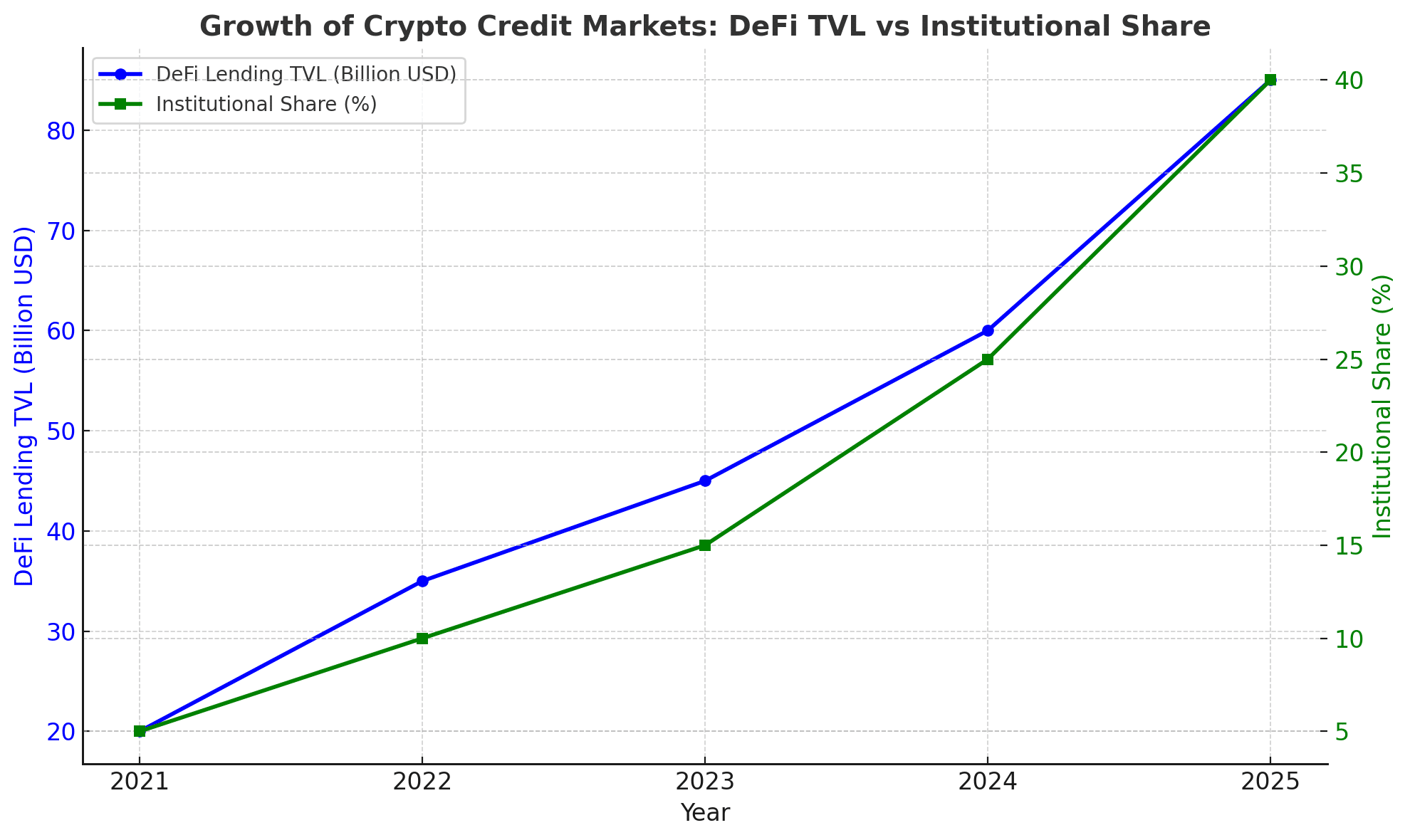
On-chain credit is not just a financial experiment, it’s backed by measurable growth. Lending platforms are reporting higher daily active users, increasing total value locked (TVL), and more innovative products designed to support both collateralized and under-collateralized loans. This is a dramatic shift from the speculative-only projects of the past.
Key indicators support the trend. Rising TVL signals greater user trust, while the integration of decentralized identity systems is laying the groundwork for more secure credit scoring.
Smart contracts, audited code, and oracle networks are also improving risk management. Together, these developments suggest that crypto credit markets are maturing in ways that can attract both institutional and retail participants.
Risks and Regulation Remain Critical
As promising as the story appears, the risks are just as real. Unsecured lending in the past has led to collapses that shook confidence in the sector. Regulators are now sharpening their focus, insisting that credit products follow clear compliance frameworks.
Economist Sarah Mitchell warned, “Growth in crypto credit must not repeat the mistakes of 2022. Risk management, regulation, and accountability have to come first.” Her comments highlight the delicate balance between innovation and oversight.
Still, the overall outlook remains optimistic, with experts pointing out that regulated environments may actually strengthen long-term confidence in crypto credit markets.
Conclusion
The excitement around credit is more than hype. With institutions joining in, technology advancing, and regulation gradually catching up, the foundation for explosive growth is in place.
Lending and borrowing are essential in every financial system, and blockchain may offer the most transparent, global, and efficient way to scale them. For investors, the message is clear: the crypto credit markets could soon drive the next major chapter in digital finance.
FAQs about crypto credit markets
What are crypto credit markets?
They are blockchain-based systems that enable lending and borrowing using cryptocurrencies, stablecoins, or tokenized assets.
Why are experts saying crypto credit could go parabolic?
Because lending is a fundamental part of finance, and tokenization opens the door to massive institutional and retail adoption.
What risks are tied to crypto credit markets?
Default risks, liquidity issues, and regulatory challenges remain key obstacles to long-term stability.
How do credit markets impact crypto investors?
They provide new ways to earn yield, access capital, and participate in a growing sector that could reshape the financial landscape.
Glossary
Tokenized Credit: Loans issued on blockchain using digital tokens as collateral or debt instruments.
Total Value Locked (TVL): The total assets locked in decentralized finance platforms, reflecting ecosystem trust.
Smart Contracts: Self-executing blockchain code that automates lending and borrowing agreements.
Collateralized Loan: A loan backed by assets, reducing default risk for lenders.
Oracle Network: A system that feeds real-world data into smart contracts, critical for pricing and risk models.
Decentralized Identity (DID): Blockchain-based identity systems used to assess creditworthiness securely.