
Coinbase has moved into the center of a growing Washington fight over crypto rewards, bank deposits, and the next phase of U.S. digital asset rules. The debate is no longer only about whether stablecoins should be regulated. It is about who gets to offer income-like benefits to users, and under what legal structure. Banks pushed lawmakers to stop crypto platforms from paying passive rewards on stablecoins. Coinbase, however, may have found a path that keeps rewards alive by tying them to activity, DeFi strategies, and platform use instead of simple deposit-style interest.
Stablecoin Yield Becomes the Center of the CLARITY Act Fight
The latest Senate version of the CLARITY Act takes direct aim at stablecoin yield. Section 404 would restrict crypto firms from paying interest or yield on stablecoin balances when those rewards look like bank deposit interest. That language matters because it tries to draw a line between idle holdings and real platform activity.


For banks, the concern is easy to understand. If a user can hold USDC on a crypto exchange and earn around 3.5%, that can look more attractive than a basic savings account. Banks argue that crypto firms should not offer bank-like returns without bank-like rules, capital duties, and consumer protections.
Crypto firms see it differently. They argue that stablecoins are not bank deposits, and rewards can come from reserve revenue sharing, payment use, trading activity, or on-chain products. That is where the legal battle gets messy.
Coinbase Looks Toward Activity-Based Rewards
Coinbase’s possible answer sits in the gap between passive income and active participation. The company has backed Ethena through an open-market ENA purchase and signaled a broader partnership that includes USDC integration. Ethena’s model is built around crypto-native yield strategies, including delta-neutral trades that seek returns from market structure rather than normal bank lending.
That does not make the model risk-free. It simply changes the source of return. Instead of a user earning stablecoin yield just by sitting on a balance, a platform could connect funds to trading, payments, or other qualified activity. In plain English, the rule may block “park money and earn,” but leave room for “use money and earn.”
That distinction could become the most important detail in the bill. Coinbase CEO Brian Armstrong appeared to support the compromise language after months of tension, writing, “Mark it up.” Coinbase’s chief legal officer Paul Grewal also said the language “preserves activity-based rewards tied to real participation on crypto platforms and networks.”

Why Banks Are Fighting So Hard
Banks are not only protecting an old model. They are protecting cheap deposits, which are the fuel behind lending. When banks pay low rates on deposits and lend money at higher rates, the difference supports profit margins. If stablecoin yield products force banks to raise rates, earnings pressure could follow.
JPMorgan CEO Jamie Dimon made that concern plain when he said banks “will not accept” a version of the bill that allows crypto firms to pay deposit-like rewards without comparable safeguards. His criticism shows how far the issue has moved from niche crypto policy into mainstream finance.
The fight is also political. Lawmakers want clear crypto rules, but they do not want to weaken community banks or create a shadow banking system. At the same time, blocking every form of stablecoin yield could make U.S. crypto platforms less competitive against offshore markets.
What This Means for Crypto Investors
For investors, the key signal is not only the ENA price reaction or Coinbase’s stock movement. The larger signal is regulatory design. If Congress allows activity-based rewards, crypto platforms may rebuild products around payments, trading, staking, DeFi routing, loyalty programs, and tokenized money markets.
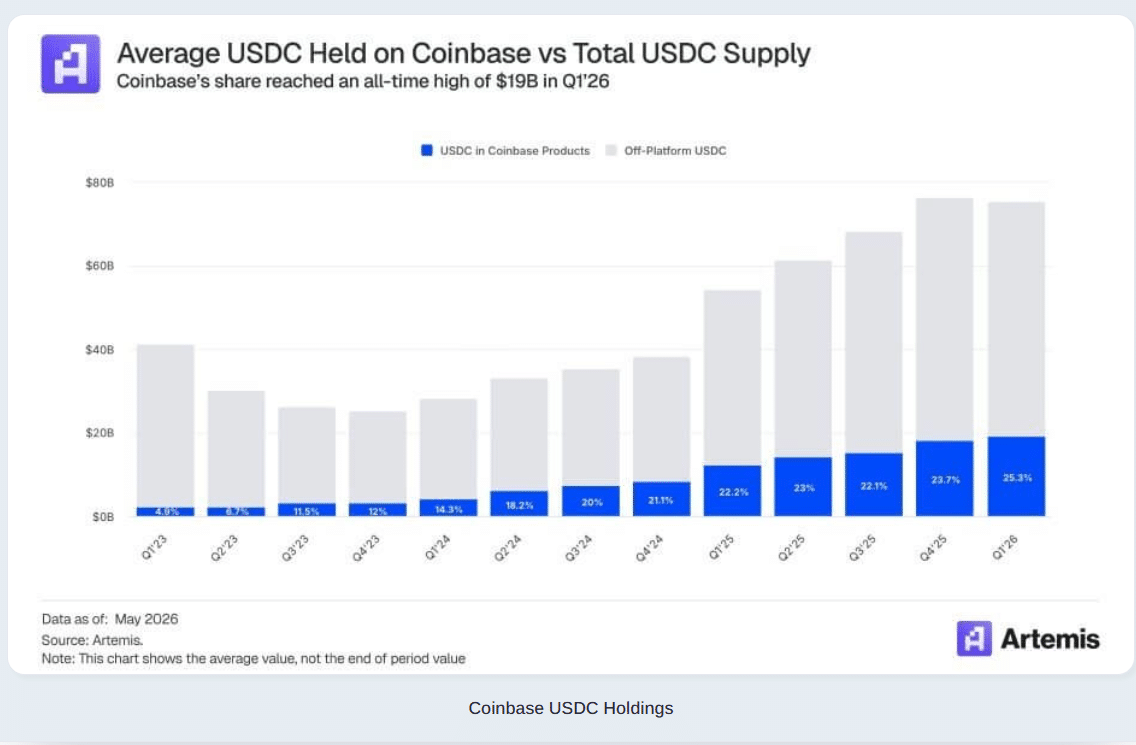
USDC also remains central. Coinbase has a large commercial interest in USDC rewards, while Circle’s stablecoin scale gives the issue added market weight. If stablecoin yield survives in a narrower form, exchanges could protect a valuable revenue line while staying inside the new rules.
Still, investors should watch the wording carefully. Regulators may later define activity-based rewards more tightly. The Treasury, CFTC, and SEC could decide whether duration, balance size, transaction type, and user behavior determine what is legal. That means today’s workaround may still face another test.
Conclusion
The stablecoin yield debate has become a stress test for U.S. crypto policy. Banks want Congress to stop crypto firms from offering deposit-like returns. Coinbase wants room to reward users through real platform use and on-chain activity. The CLARITY Act may not settle every question, but it shows where the market is heading. The future of stablecoin yield may belong less to idle balances and more to products that can prove users are doing something, not just holding dollars on-chain.
Frequently Asked Questions
What is the CLARITY Act?
It is a U.S. digital asset bill designed to set clearer rules for crypto markets, stablecoins, exchanges, and regulators.
Why are banks against stablecoin rewards?
Banks fear high crypto rewards could pull deposits away from savings accounts and pressure lending margins.
How could Coinbase avoid the restriction?
Coinbase may structure rewards around activity-based products rather than passive stablecoin holdings.
Glossary of Key Terms
Stablecoin: A crypto token designed to track a fiat currency, usually $1.
USDC: A dollar-backed stablecoin widely used in crypto trading, payments, and exchange products.
Delta-neutral strategy: A trading method that tries to reduce price risk by balancing long and short positions.
Activity-based rewards: Incentives linked to real platform use, such as payments, trading, or network participation.
Sources
Disclaimer: This article is for informational purposes only and should not be treated as financial, legal, or investment advice. Crypto assets carry risk, and readers should verify rules and market data before making decisions.