![Sun [New]](https://s2.coinmarketcap.com/static/img/coins/64x64/10529.png)



Kelp DAO and Aave appear to be moving past nearly a month of pressure after the April 18 exploit. Both protocols have taken recovery steps, including the burning of exploiter-linked rsETH on Arbitrum and plans to resume withdrawals.
The recovery effort reached a key point after 17,132 rsETH connected to the exploiter was burned on Arbitrum. Kelp DAO confirmed that rsETH on Mainnet and Layer 2 networks remains fully backed.


Kelp DAO and Aave Move Toward rsETH Recovery
Aave also supported the process through DeFi United, which raised 137,000 ETH worth about $317 million. The move helped address the shortfall linked to the exploit and supported efforts to restore normal operations.
Kelp DAO has worked with Aave to restore rsETH functionality after the exploit disrupted market confidence. The protocols said the recovery process now includes refilling burned rsETH through Aave Recovery Guardian and Kelp Recovery Safe.
Withdrawals for ETH are expected to resume within 24 hours. The first tranche will be routed through the LayerZero OFT adapter. Other operations, including deposits, redemptions, bridging, and claims, are also expected to resume during the same period.
Exploiter rsETH Burn Marks Major Step
The burning of exploiter-linked rsETH on Arbitrum marked one of the most important recovery actions since the hack. For Kelp DAO, the move helped strengthen rsETH backing and created a clearer path toward reopening core functions.
The burn does not end all concerns. However, it shows that the affected protocols have moved from emergency response to structured recovery. The next phase will depend on whether withdrawals and other services restart without new disruptions.
rsETH Withdrawals Set to Resume
The recovery plan includes a gradual refill of 17,132 rsETH. Kelp said the process will use Aave Recovery Guardian and Kelp Recovery Safe to support the affected backing structure.
The expected withdrawal restart is important for users who were waiting to access ETH. Deposits, redemptions, bridging, and claims are also scheduled to resume as part of the same recovery window.
Security Measures Tightened After Exploit
Security has become a central part of the recovery process. Kelp DAO said it completed a major hardening pass across all LayerZero bridging configurations.
The updated setup requires four independent attestors for verification. Block confirmations have also increased from 42 to 64. L2-to-L2 routes were deprecated as part of the security changes.
Kelp said BailSec audited the new measures. The protocol is also preparing to migrate to Chainlink CCIP to further strengthen cross-chain bridging.
Aave Recovery Effort Supports Stability
Aave played a major role in the recovery through DeFi United. The initiative raised 137,000 ETH to help cover the exploit-related shortfall and restore confidence.
Aave founder and CEO Stani Kulechov said the team was working to build a stronger level of resilience. The statement came as both protocols moved to improve risk controls after the exploit.
Market Conditions Remain Cautious
The recovery around Kelp DAO and Aave has improved operating conditions, but market caution remains. Aave’s total deposits were around $27.8 billion at press time, still below the nearly $45 billion level seen before the hack.
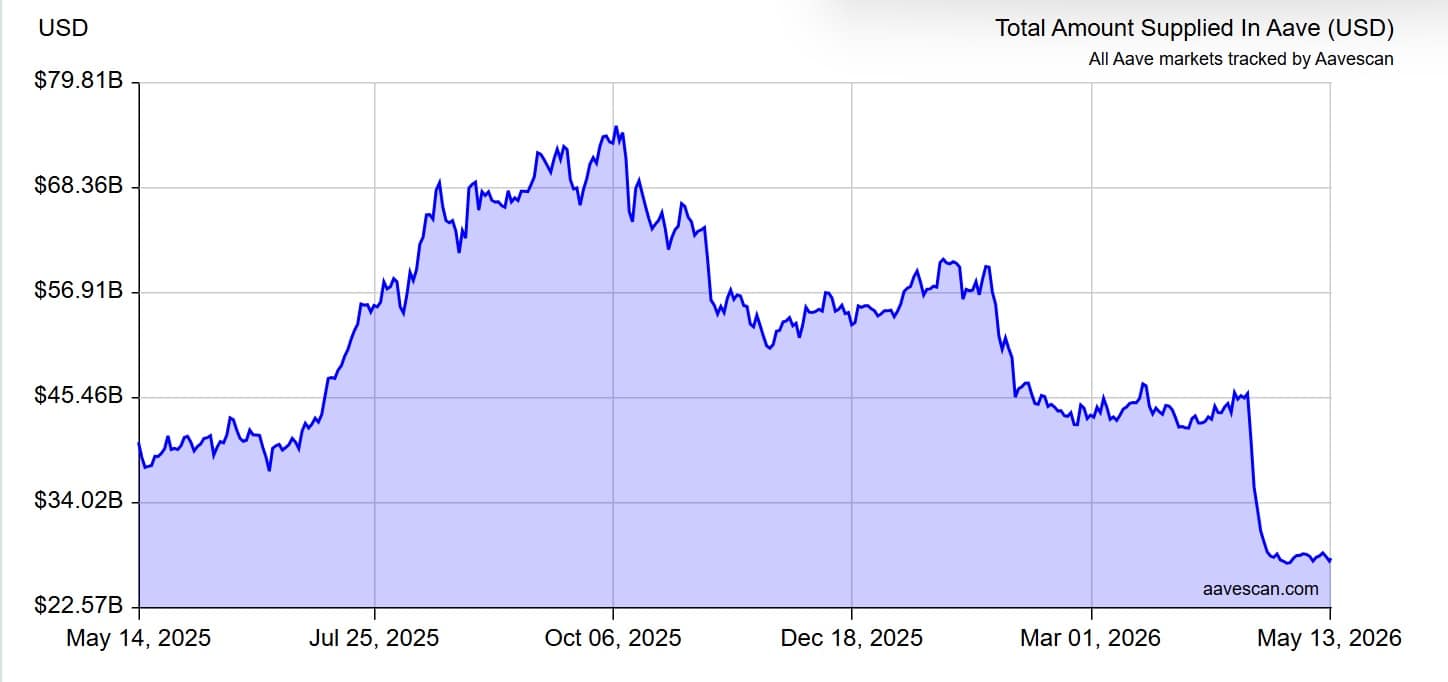
Stablecoin supply on Aave showed some recovery. It rose from a $7.3 billion drop to $8.7 billion, marking an increase of more than $1.4 billion. The data suggests that liquidity is returning, but investor confidence has not fully recovered.
Conclusion
Kelp DAO and Aave have reached a major recovery milestone after burning 17,132 exploiter-linked rsETH on Arbitrum. The move supports rsETH backing and clears the way for withdrawals to resume.

The protocols have also tightened security across bridging systems and prepared further cross-chain protection through CCIP. Still, market activity remains cautious, and full confidence may depend on how smoothly withdrawals, redemptions, and bridging restart.
Appendix Glossary of Key Terms
rsETH: A restaked Ethereum token whose backing and withdrawals were affected by the exploit.
Arbitrum: A Layer 2 network where the exploiter-linked rsETH was burned.
DeFi United: A recovery initiative launched by Aave to help address the exploit-related shortfall.
Aave Recovery Guardian: A recovery mechanism used to support the gradual refill of burned rsETH.
Kelp Recovery Safe: A recovery wallet structure used to help restore rsETH backing.
LayerZero OFT Adapter: A cross-chain tool used to route the first withdrawal tranche.
CCIP: Chainlink’s cross-chain protocol, which Kelp plans to use for stronger bridging security.
Frequently Asked Questions About Kelp DAO
1. What happened after the Kelp exploit?
Aave and Kelp worked to restore operations after the April 18 hack. The exploiter-linked rsETH was later burned on Arbitrum.
2. How much rsETH was burned?
A total of 17,132 rsETH linked to the exploiter was burned.
3. When will withdrawals resume?
Withdrawals for ETH are expected to resume within 24 hours, starting with the first tranche routed through the LayerZero OFT adapter.
4. What security changes were made?
The protocol increased verification requirements to four independent attestors, raised block confirmations from 42 to 64, and deprecated L2-to-L2 routes.
Reference