
This Article Was First Published on TurkishNY Radio.
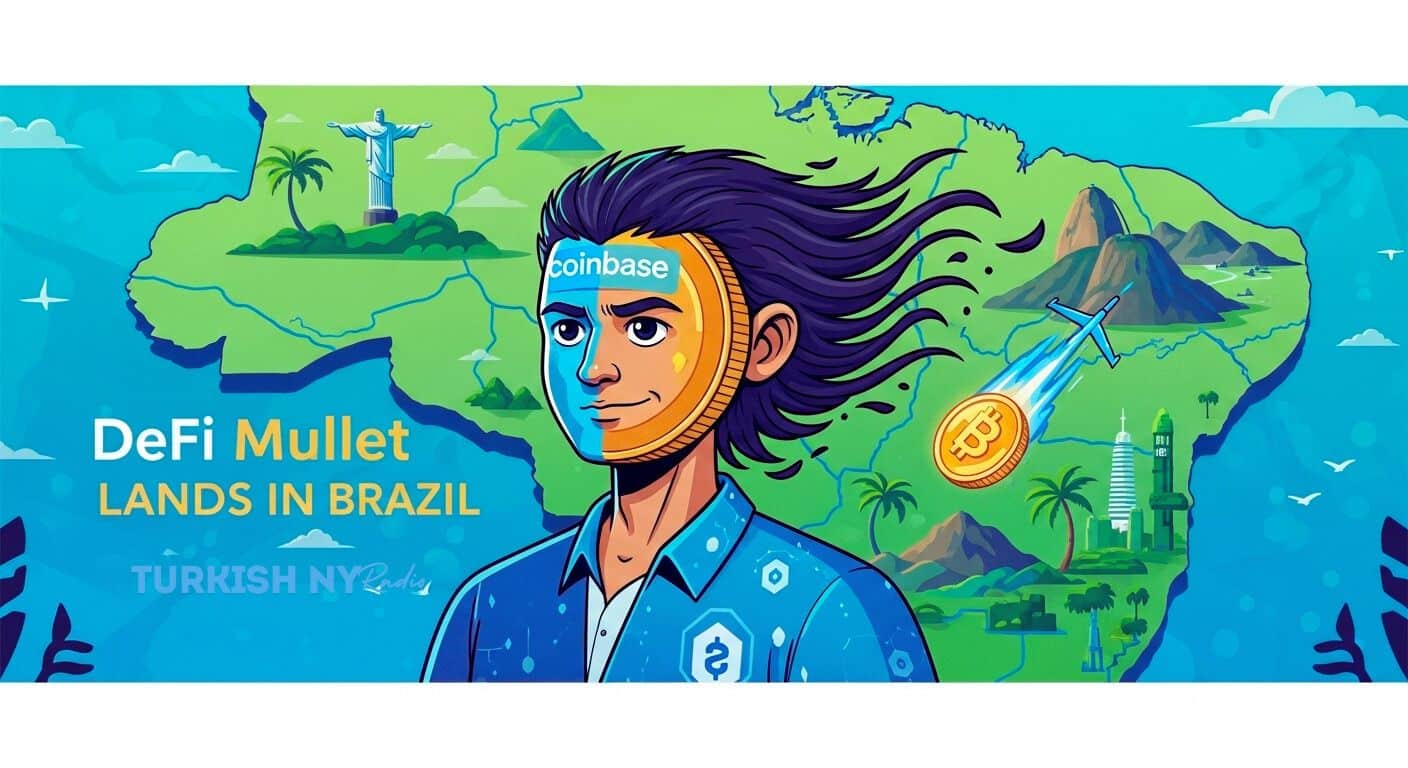
The DeFi Mullet by Coinbase integration is now live in Brazil, offering another layer of decentralized trading tools to one of Latin America’s strongest growth markets.


This move means Brazilian customers can now gain access to over 10,000 tradable tokens on Base’s blockchain, all completed through these trustless liquidity pools and within the trusted Coinbase environment.
This is designed to make on-chain access simpler and further contribute to the global expansion of the Coinbase DeFi Mullet model.
Recent exchanges on Base indicate increased demand across the decentralized markets. The total value locked (TVL) in Base now exceeds $1.3 billion, and daily transactions are exceeding 10M as per public blockchain dashboards.
It puts these numbers into perspective as to why the murmur on crypto forums and analyst discussion about the Coinbase DeFi Mullet launch in Brazil is “mullet’s big.”
How the Coinbase DeFi Mullet Model Functions
The Coinbase DeFi Mullet premise is a reduced, centralized front-end paired with the uncapped strength of permissionless trading.
Users self-custody through an embedded wallet, and smart contract execution sends orders to DEXs like Uniswap and Aerodrome on the Base blockchain.
The system enables instant access to tokens when they arrive on-chain, without having to wait for typical centralized exchange listings.
The DeFi Mullet secures services against malicious assets from third-party security providers but still provides users with widespread access to new tokens. Such an architecture accommodates efficiency and security but does not limit the decentralized aspect of trading.

Brazilian Crypto Industry is Peaking
The market for cryptocurrency in Brazil has experienced huge growth over the last few months.
Brazil is still Latin America’s digital-asset kingpin. R$19 billion when it comes to formal crypto declarations between 2024 and 2025.
With Brazil’s crypto market now tightening up around regulations, new rules see digital-asset firms having to secure licenses and impose tighter risk controls as well as disclose cross-border operations in more detail.
Most covered collar trades are generally interest rate or foreign exchange swaps. The appearance of the Coinbase DeFi Mullet coincides with a time when there has been growing interest in decentralized financial tools, especially among younger demographic groups.
The social mood in Reddit and X is increasingly positive, as users explain that the integration is “a big bridge between centralized UX with on-chain liquidity.” Discussions in the community also focus on Base’s low fees, which typically range between USD 0.01 and USD 0.03 per transaction, costing much less than on the Ethereum mainnet.
Growth of Base Blockchain Will Increase On-Chain Access to Tokens
According to Base data, active addresses, liquidity depth, and ecosystem growth have all experienced constant uptrends.
Stablecoins, like USDC on Base, are now trading around $1 on the network, with top tokens AERO, DEGEN, and BASED seeing an increase in weekly trade volumes by between 8% and 20%, as per open blockchain reports.
The Coinbase DeFi Mullet portfolio takes full advantage of these metrics, providing a seamless entry point for Brazilian traders into the growing Base blockchain ecosystem.
Analysts say that Brazil’s mobile-first population aligns it well for a case of DEX adoption at high speed, especially after the Coinbase DeFi Wallet brings a familiar interface to on-chain goings-on.
Compliance, Risks, and Future Expansion
Brazilian financial authorities keep refining the rules on crypto oversight. Whilst the Coinbase DeFi Wallet relies on non-custodial execution, certain compliance requirements still apply to cross-border transfers of wallet funds.


Market experts warn that the level of token-quality visibility is still limited, as Coinbase does not by hand assess every asset. But having integrations with external security partners can add another layer of protection.
The rise of the Coinbase DeFi Mullet has become a potential blueprint for more nascent markets. Should adoption continue to take off in Brazil, analysts expect the model to be copied into markets where mobile trading or usage of decentralized finance is accelerating.
Conclusion
Coinbase DeFi Wallet Is Live in Brazil and making a Splash. Decentralized trading is now more accessible than ever before.
With native access to tokens on the Base blockchain, streamlined user experiences, and a growing ecosystem, integration further solidifies Brazil as one of the epicenters for contemporary digital-asset activity.
With growing regulatory clarity and on-chain participation, the Coinbase DeFi Wallet will be instrumental in defining the next era of decentralized market adoption throughout developing economies.
Summary
It explores the launch of the Coinbase DeFi Mullet (as well as riffs on money matters there) in Brazil, which now enables local users to tap into over 10,000 on-chain tokens thanks to the Base blockchain.
The integration will facilitate easy decentralized trading, thanks to a user-friendly interface and permissionless liquidity aggregation.
Following Brazil’s burgeoning crypto market regulated expansion, this move cements the country’s foothold in digital finance alongside on-chain accessibility, compliance readiness, and ecosystem development.
Glossary of Key Terms
DEX (Decentralized Exchange)
A trading platform that settles trades through smart contracts in place of intermediaries. It allows instant token access to thousands of tokens on-chain.
Coinbase DeFi Mullet
Hybrid to centralization, familiar interface with decentralized execution. It allows individuals to use DEX liquidity with self-custody and real-time availability of tokens.
Self-Custody Wallet
A digital wallet in which users store and manage their own private keys, rather than entrusting them to an exchange. It definitely gives great control, but a user must be responsible for managing keys.
Token Liquidity
The order book of a token. High liquidity allows for better trading and more precise pricing, particularly on Base-linked decentralized markets.
Smart Contract
Computer code added on to a blockchain that can perform tasks such as exchange, transfer, or stake without intermediaries. The DeFi Mullet’s on-chain execution is made possible by smart contracts.
TVL (Total Value Locked)
A measure of the value locked in DeFi platforms. Higher TVL generally means an ecosystem is stronger, more confident in the security of its base, and having deeper pools to play with.
Compliance Framework
A system of rules around how you can use crypto in a region. All three of these countries have a licensing regime that has the potential to guide how on-chain services function in their jurisdiction.
Frequently Asked Questions About Coinbase DeFi Mullet
What is the Coinbase DeFi Mullet?
The Coinbase DeFi Wallet is a sleek app that hooks into decentralized Base chain trading, giving users self-custody execution that offers access to thousands of tokens.
Are there any extra fees in the DeFi Mullet trading?
Trading users are required to pay base low-cost network fees, which have been frequently subsidized for introductions. Costs are based on token liquidity, and they are in general much cheaper than with normal centralized exchanges.
How safe is DeFi Mullet integration trading?
Users maintain total self-custody, and Coinbase weeds out bad actors using third-party screenings. The regulatory environment in Brazil additionally paves the way for transparency and monitoring of on-chain transactions.
Will there be more features for the DeFi Mullet in Brazil?
Possible future updates could be more advanced token discovery tools, deeper Base ecosystem integration, better wallet options, and localized support as adoption and regulation evolve in different parts of the world.