
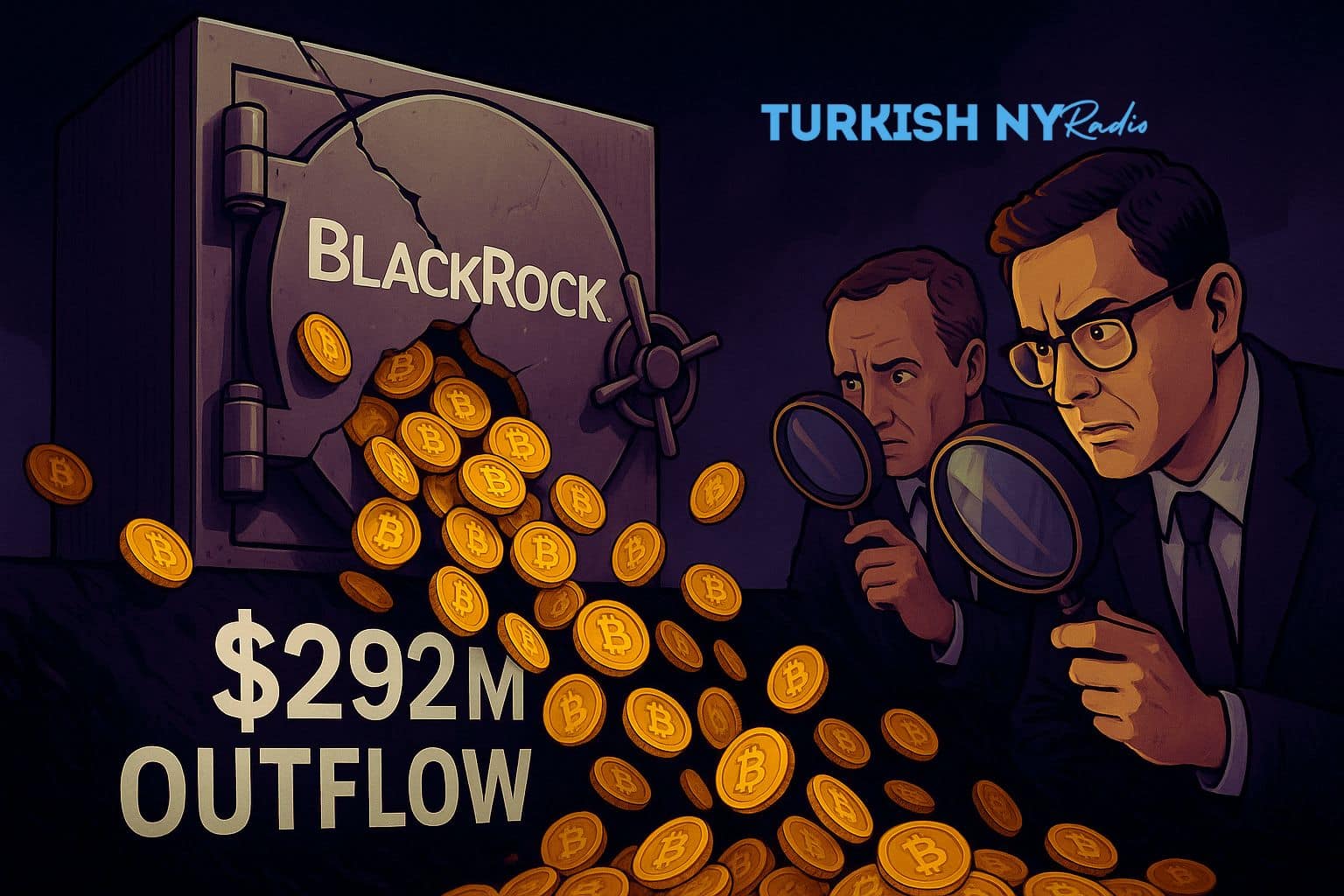
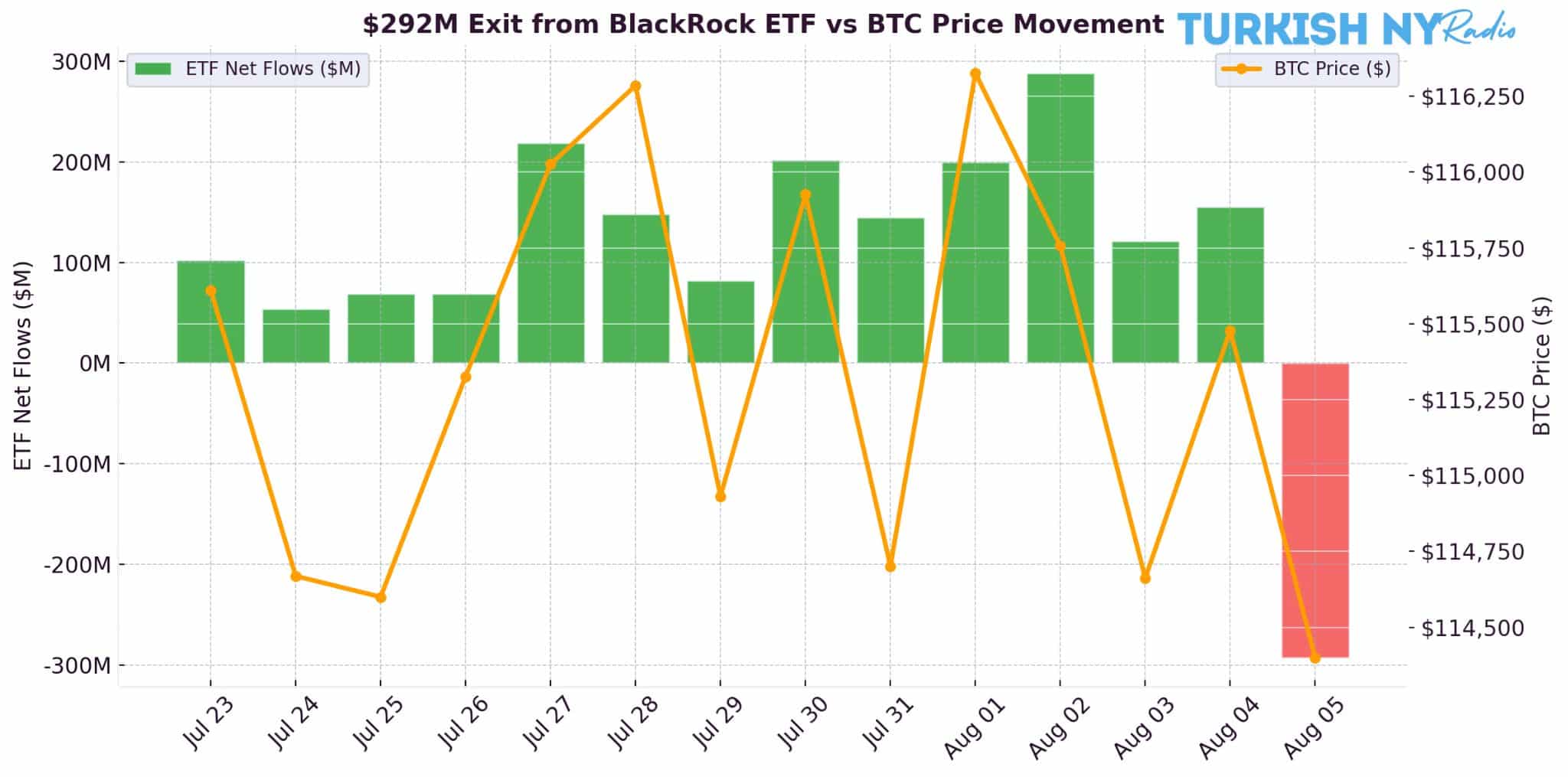
BlackRock’s Bitcoin ETF, iShares Bitcoin Trust (IBIT), experienced a massive $292.5 million outflow on August 4th, 2025, redeeming more than a month-long inflow streak and granting it its biggest daily redemption since last spring.
Bitcoin dipped by 8.5% over the weekend to hit $112,300 but began making up its losses in Monday evening trading at around $115,000 as institutional investors look cautiously at global developments.


Bitcoin ETF Momentum Stalls After Sudden Outflows
It is the third day in a row U.S. spot Bitcoin ETFs have seen combined net outflows. Fidelity’s FBTC lost nearly $40 million, Grayscale saw its GBTC lose about $10 million, Bitwise was the only fund gaining new assets (+$18.7 million), and other products were flat. Friday saw roughly $812 million leave the firm, but Monday’s outflow was comparatively small.

BlackRock Activity Discussed by Reddit Fans
Reddit users noted that BlackRock may be able to rebalance IBIT holdings internally by shifting shares among its own funds in order to handle flows without those movements hitting the market. One comment observed:
They are going out of their way to put IBIT into their Strategic Income Opportunities Fund … and others. But they did, because the ETF issuer business is a weird thing.
Another pointed out:
“Specifically, what I mean is three percent of demand and no supply (the IBIT share of Bitcoin supply is that 3%).”
Bitcoin Price Snapshot: What is BTC Today?
As of August 5, 2025, the price of Bitcoin is at $114.4k–$114.5k, featuring relatively little volatility over the day. Data reveals 24-hour change was flat but volume stable; BTC dominance is around 60.2% of the total crypto market.
ETC Flows: The Bigger Picture
Inflows into U.S.‑listed crypto ETFs hit $12.8 billion in July, making it the largest month on record, with ~$6 bn going into Bitcoin ETFs and $5.4 bn going into Ethereum ETFs as ETH inflows increased 369%. WoW
Hitting a monthly record high near $116,480 by the middle of July as institutional money and public company treasury adoption pushed Bitcoin higher. Even after Monday’s outflow, year-to-date net inflows remain at about $14.
Among them, it now has more than $86 billion in assets under management in various combined ETFs, well ahead of the competition from BlackRock.
Confidence from Institutions, Policy Changes
The Reuters analysis posits that the rally stems from institutional demand based on key legislation in Washington, such as the GENIUS Act, CLARITY Act, and more working towards broad crypto regulation.
Recently, the SEC also gave a regulatory nod to crypto ETFs in the form of approved in‑kind creation and redemption, bringing them on par with commodity ETFs and making them easier for investors to use/process.
Bitcoin Price Forecast: What Analysts Expect
Estimated BTC price outlook beyond today:
| Timeframe | Conservative Target | Bullish Estimate |
| End of H2 2025 | $125,000 | $140,000 |
| Year‑end 2025 | $130,000 | $180,000 |
Markets are watching for renewed inflows, regulatory clarity, and macro shifts such as Fed policy and U.S. debt developments to steer BTC’s trajectory.
Final Thoughts: Blip or Trend?
Monday’s outflows were noticeable, but they are still a drop in the bucket compared with the $6‑8 billion average monthly ETF inflow family. The market has largely been trading on institutional beliefs rather than speculative flits. The narrative of Bitcoin as a strategic asset is further tailwinded by the recent policy updates and corporate support.
More crypto news on Bitcoin ETF, expert analysis, and price forecasts is available now on our crypto news platform
Summary
IBIT, BlackRock’s Bitcoin ETF (BIT), saw its largest outflow in nine weeks as the king of coins slumped back under $113K only to then quickly reverse. Fund Flows: Spot Bitcoin ETF Outflows Keep Coming,
This suggests that the sell-off has barely made a scratch in institutional activity (around $14.4 billion of net inflows since the start of 2021), and it also remains consistent with many Wall Street analysts who have retained their year-end price targets for BTC in a range between $130 and $180K per coin.
Frequently Asked Questions
1. BlackRock cash out $292M from its Bitcoin ETF, but why?
The outflow was probably caused by profit-taking, sentiment change, and a rebalancing strategy after Bitcoin tumbled 8.5% over the weekend and spot ETF inflows lost some momentum.
2. Does this outflow indicate a bearish trend for Bitcoin?
Not necessarily. Although worrying, Bitcoin rallied back from $115K, and the robust long-term institutional inflows indicated continued rooted confidence in BTC.
3. How Does an ETF Outflow Impact Bitcoin’s Price?
Massive outflows from this buffer can inject some selling pressure or fear, but large price effects depend on market liquidity in general and prevailing demand/investor confidence.


4. Are Bitcoin ETFs Still a Safe Bet After This?
Regulated and Transparent: Bitcoin ETFs Apart from volatility, they provide exposure to institutions, and most are still in long-term net inflows mode.
Glossary of Key Terms
1. BlackRock Bitcoin ETF
BlackRock has its own exchange-traded investment fund (ETF) that follows a similar…
2. ETF Outflow
When investors redeem or withdraw funds from an ETF, causing a decrease in the total assets under management. Frequent large outflows are interpreted as a negative sign that investor confidence in the world freestanding water market is waning.
3. Spot Bitcoin ETF
Actual Bitcoin (not futures) that holds a BTC tracking ETF with the same price as the real-time thing. These are funds that track the price of Bitcoin, which means they provide indirect exposure to it through a format regulated (disclosed) to stock exchanges.
4. Institutional Investor
Institutional Investors—Big corporations in the BFSI space that invest huge amounts of money. Trends in what they do, from ETF inflows/outflows, and their actions alone quite often drive market trends as well as investor sentiment.
5. Bitcoin Volatility
Measure of the variation in price of Bitcoin over time. Greater volatility tends to attract speculative day traders, while lower volatility often attracts conservative investors.
6. Net Inflow
Inflows—outflows of total capital entering into an ETF or investment product. Fresh net inflows are reflective of high investor appetite and good market confidence in the asset.
7. Support Level
A level at which Bitcoin has historically been defended against further selling due to aggressive buying interest. This is the level that if broken, then the bears have been in control or a possible reversal.
8. Price Rebound
A rebound of Bitcoin’s price after a large drop. These bounces tend to take place when testing support levels and can possibly be fueled by revived purchasing or bullish sentiment.