
Bitcoin’s latest rally is facing a harder test after U.S. spot Bitcoin funds posted roughly $490 million in net withdrawals across 3 trading days, cooling a market that had only recently regained confidence. The pullback does not prove that institutional demand has disappeared, but it does show that large buyers are becoming more selective as BTC struggles to reclaim the $78,000 area. For traders, the question is not only whether Bitcoin can reach $80,000, but whether the market has enough fresh demand to hold that move once it gets there.
Bitcoin ETF Outflows Put Institutional Demand Under Pressure
Bitcoin ETF outflows have become the clearest short-term signal in the market because spot funds now act like a daily window into institutional appetite. When money enters these products, it often supports the idea that asset managers, advisers and larger investors are adding exposure. When money leaves, the mood changes quickly, even when the wider trend is still positive.


The latest 3-day withdrawal of about $490 million came after a stronger run of inflows earlier in April, including a reported 9-day inflow streak that brought more than $2 billion into spot Bitcoin products. That shift matters because it shows a market moving from steady accumulation to short-term caution. Still, April reportedly ended with about $2.44 billion in total net inflows, which means the late-month weakness should be read as a warning sign, not a full reversal.
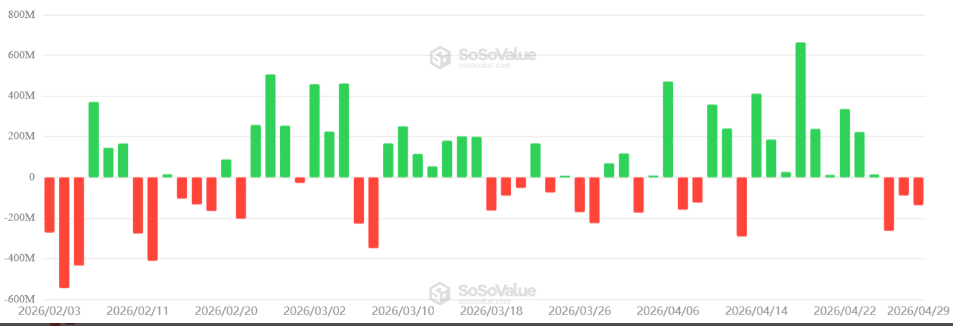
Bitcoin ETF outflows also arrived while BTC was stuck below a key psychological ceiling. The $78,000 to $80,000 zone has become more than a number on a chart. It is where profit-taking, macro fear and slower ETF demand appear to be meeting at the same time.
Why $78,000 Matters for Bitcoin Now
Bitcoin ETF outflows matter more when price action looks tired. BTC has failed to regain the $78,000 level, and that has kept traders focused on nearby support around $75,000. A clean break above $78,000 could bring momentum back, but repeated failures near that level can make short-term buyers nervous.
This is where market structure becomes important. Bitcoin dominance remains high, which suggests capital is still staying closer to BTC than smaller tokens. That is usually a defensive sign in crypto. It means traders may still trust Bitcoin more than altcoins, but they are not rushing aggressively into risk across the board.
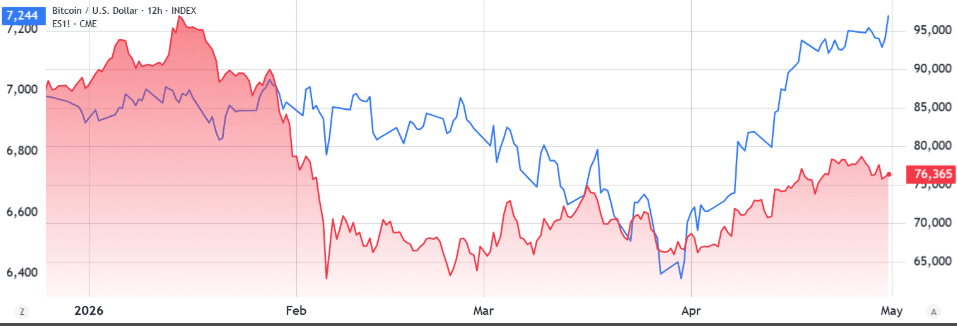
Bitcoin ETF outflows therefore sit at the center of the current debate. If withdrawals continue, BTC may need support from long-term holders, lower exchange reserves or fresh macro relief to keep its range intact. If inflows return, the same market could quickly turn toward $80,000 again.
Macro Pressure Is Also Shaping Crypto Sentiment
The ETF data is not happening in a vacuum. Rising Treasury yields, inflation worries, expensive oil and mixed equity-market signals have made investors more careful with risk assets. When yields rise, investors can earn more from traditional fixed income, which can reduce the need to chase volatile assets like crypto in the short term.
At the same time, inflation can cut both ways. It can hurt risk appetite at first, especially if traders expect tighter policy or higher real-world costs. Over a longer horizon, however, persistent inflation can strengthen the appeal of scarce assets. That is why Bitcoin often trades in a strange middle ground during macro stress. It can fall with risky assets during panic, then later recover as investors look for alternatives to cash and bonds.
Bitcoin ETF outflows show that some investors are trimming exposure for now, but they do not erase the larger case for Bitcoin as a scarce digital asset. The real issue is timing. Markets can believe in a long-term thesis and still take money off the table when charts look stretched.
Key Indicators Crypto Traders Should Watch
Bitcoin ETF outflows are one of the first indicators to monitor, but they should not be viewed alone. ETF flow data shows whether regulated investment vehicles are gaining or losing demand, and that is useful because these products have become a major bridge between traditional finance and crypto.
Price support is the next signal. If BTC holds above $75,000 while withdrawals continue, that would suggest buyers are still active beneath the surface. If it loses that area with rising volume, the market could start pricing in a deeper reset.
Funding rates are also important because they show whether leveraged traders are too crowded on one side. Negative or weak funding can sometimes mean fear is already priced in, while overheated positive funding can signal that too many traders are betting on a quick rally.
Exchange reserves offer another clue. Lower reserves often suggest fewer coins are available for immediate sale, which can support price if demand returns. In contrast, rising exchange balances may point to more selling pressure.
Bitcoin ETF outflows should also be compared with stablecoin supply, trading volume and broader liquidity. If stablecoins are growing but Bitcoin is not breaking higher, traders may be waiting on the sidelines rather than leaving crypto entirely. That kind of dry powder can matter later.
Conclusion
Bitcoin ETF outflows have cooled the mood around BTC, but they have not ended the market’s larger recovery attempt. The $490 million withdrawal streak shows that institutions are becoming more cautious near $78,000, especially with macro conditions still uneven. Yet April’s wider inflow picture remains positive, and Bitcoin continues to hold important support zones.
For now, BTC is in a prove-it phase. A return of ETF inflows could help the market challenge $80,000 again, while continued withdrawals may keep price locked between support and resistance. In plain terms, the rally is not broken, but it needs fresh fuel.
Frequently Asked Questions
What are Bitcoin ETF outflows?
Bitcoin ETF outflows happen when more money leaves spot Bitcoin exchange-traded funds than enters them during a trading period.
Why do ETF outflows affect BTC price?
They can affect sentiment because spot ETFs reflect regulated demand from larger investors, advisers and institutions.
Is Bitcoin’s rally over?
Not necessarily. The latest withdrawals show caution, but wider monthly inflows and key support levels still matter.
What price level is important for BTC now?
The $78,000 to $80,000 range is key resistance, while the $75,000 area is an important support zone.
Glossary of Key Terms
Spot Bitcoin ETF
A regulated fund that tracks Bitcoin’s spot price and gives investors exposure without holding BTC directly.
Net Outflows
The amount of money leaving a fund after subtracting new inflows.
Support Level
A price zone where buyers often step in and slow or stop a decline.
Resistance Level
A price zone where sellers often appear and slow or stop a rally.
Treasury Yield
The return investors earn from U.S. government bonds, often used as a benchmark for risk appetite.
Sources