
The Bitcoin 2026 conference opened at The Venetian on April 27 with a speaker lineup that drew wide attention. Law enforcement officials, DOJ leaders, regulators, politicians, and institutional Bitcoin figures all appeared in the same setting.
The event did more than showcase adoption. It highlighted a growing divide inside the Bitcoin community. For some, the lineup showed how far Bitcoin has come. For others, it showed how closely the asset is now tied to the institutions it once aimed to bypass.


Code, Power, and Control Take Center Stage
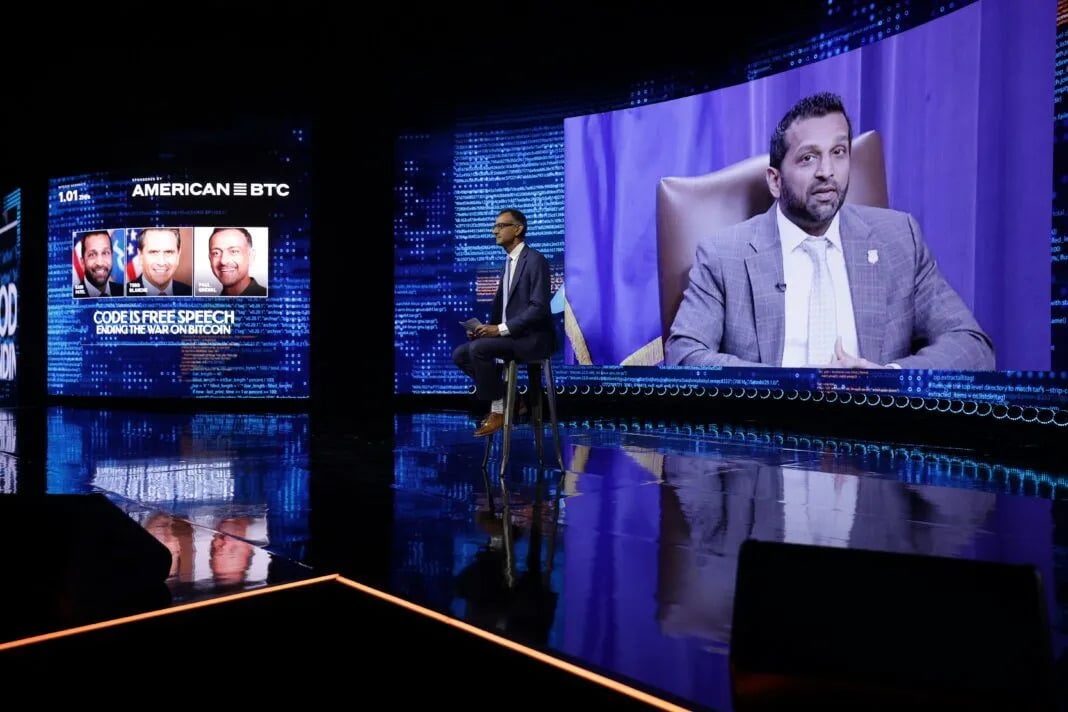
One of the important moments was a conversation on Code is Free Speech: Ending the War on Bitcoin. It was held on the Nakamoto Stage at 10:30 A.M.
Paul Grewal, the chief legal officer of Coinbase, moderated the discussion. Todd Blanche, the acting attorney general, participated in it. Kash Patel, FBI director, attended remotely rather than in person.
It put code, enforcement, and free speech into the focus of the discussion. At the same time, it provided an opportunity for the government to express a more developer-friendly position.
This point could be viewed in the context of another topic discussed at the Bitcoin 2026 conference: adoption is increasing, but so are discussions about who is going to control Bitcoin.
The cryptocurrency became a part of ETFs, custody infrastructure, corporate books, and national policies. This is how other market cycles tried to establish themselves. Bitcoin 2026 conference reflects this trend explicitly.
However, Bitcoin was designed for direct ownership and peer-to-peer settlements. Its community has been favoring self-custody and openness.
Bitcoin 2026 Conference Highlights Enforcement Shift
One of the strongest arguments in favor of the lineup came from enforcement policy. Blanche’s April 2025 Justice Department memo said the DOJ is not a digital asset regulator. It also told prosecutors to move away from regulation by prosecution.
Instead, the department was told to focus on investor harm and criminal misuse. The memo also disbanded the National Cryptocurrency Enforcement Team. That change helped support the tone of the Bitcoin 2026 conference.
Code and Speech Debate Moves to the Forefront
That message touched one of Bitcoin’s oldest principles. The Bitcoin white paper described a peer-to-peer electronic cash system that lets users transact without relying on financial institutions. Because of that, legal treatment of software and code remains a major issue for the community.
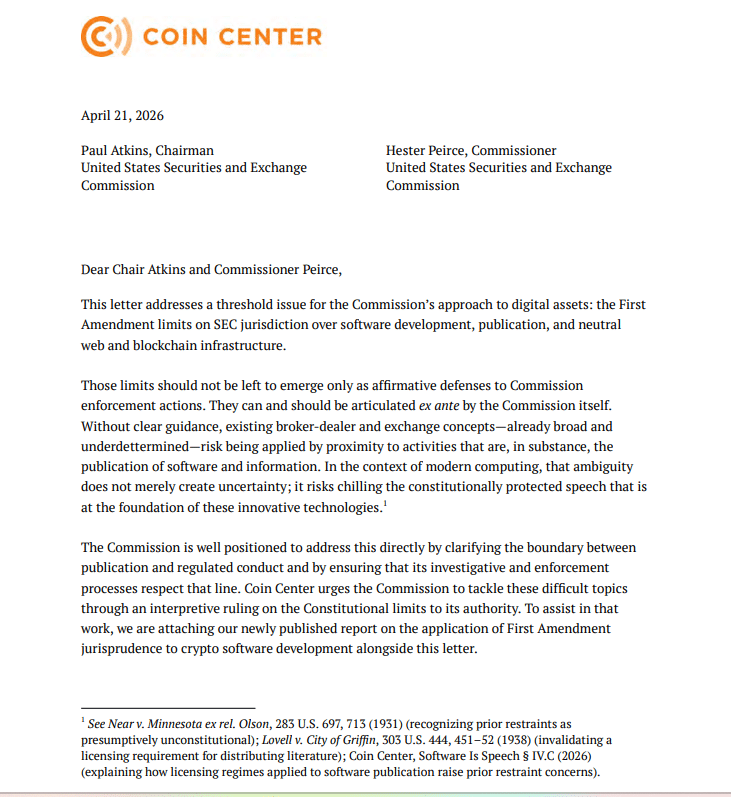
Coin Center reinforced that point in an April 2026 letter to the SEC. The group argued that publishing software and neutral tools should not be treated the same as activities involving custody or client-specific control.
Institutional Adoption Expands Bitcoin’s Reach
The Bitcoin 2026 conference also showed how deeply Bitcoin has entered regulated finance. A 2025 White House order created a U.S. policy for a strategic Bitcoin reserve and a digital asset stockpile.
Institutional data added more context. BlackRock’s iShares Bitcoin Trust ETF held about $62.34 billion in net assets as of April 27, 2026. Coinbase Institutional also listed $300 billion in assets under custody.
Corporate Treasuries Add to the Shift
Public companies have also become a major part of the story. On April 27, Strategy said it bought another 3,273 BTC. That brought its total holdings to 818,334 BTC.
That level of accumulation shows Bitcoin’s growing role as a treasury asset. It also deepens the debate over ownership. More companies now hold large amounts of supply, while many retail users gain exposure through products rather than direct custody.
Self-Custody Remains a Core Concern
Critics of the event focused on more than one panel. Their concern was about the overall picture. When federal officials, ETF infrastructure, corporate treasury firms, and political brands dominate the main stage, some users believe the movement starts to look very different.
This criticism has been building for some time. The self-custody debate around Michael Saylor in 2024 showed how quickly adoption debates can turn into fights over representation. The Bitcoin 2026 conference brought that tension back into view.
Access and Dependence Create Tension
Supporters of institutional growth argue that this shift was always likely. A $1.5 trillion asset was never going to remain defined only by retail users and self-custody advocates. In that view, wider access through ETFs, treasuries, and policy channels is proof of success.
Critics see a tradeoff instead. Easier access can mean fewer users hold their own keys. More custody services can mean less direct settlement. The protocol may remain open, but its public image can still become more centralized.
Politics Adds More Weight to the Debate
Politics has also become harder to separate from Bitcoin’s rise. The identity split grew sharper after BlackRock filed for a Bitcoin ETF in 2024. It deepened further when Donald Trump adopted Bitcoin as part of his official 2024 campaign strategy.
The Bitcoin 2026 conference showed how these forces now overlap. Government officials, enforcement figures, Wall Street-linked firms, and Bitcoin-native voices appeared inside the same event.
Control Becomes the Next Real Test
The bigger question after the event is not only adoption. It is control. Bitcoin can continue to grow through institutions while users still keep self-custody, open-source development, and direct settlement at the center.
But that outcome is not guaranteed. If convenience flows mainly through ETFs, custodians, treasury firms, and political access, then the criticism will likely grow louder. The Bitcoin 2026 conference made that tension impossible to ignore.
Conclusion
The Bitcoin 2026 conference showed that Bitcoin’s biggest public win now comes with a built-in contradiction. Government engagement can reduce legal uncertainty. ETFs and custodians can expand access. Corporate treasuries could strengthen Bitcoin’s role as a reserve asset.
Appendix Glossary of Key Terms
Direct settlement: A type of transfer process where users can transfer Bitcoin to each other directly without any intermediary.
Digital asset custody: A facility which ensures the storage and safekeeping of cryptocurrencies for clients.
Exchange-Traded Fund (ETF): An investment vehicle allowing individuals access to the market via an exchange traded fund.
Strategic Bitcoin Reserve: Government-owned Bitcoin reserves established as a part of official policy.
Developer risk: Legal regulatory risk assumed by software developers in the crypto space.
Frequently Asked Questions About Bitcoin 2026 conference
1- Why did the Bitcoin 2026 conference attract so much attention?
It brought law enforcement, DOJ officials, regulators, politicians, and institutional Bitcoin figures into one public event.
2- Why was the code and free speech session important?
It focused on whether developers of neutral tools should face legal risk, which is a key issue for Bitcoin and open-source software.
3- What policy shift shaped the discussion?
Todd Blanche’s April 2025 DOJ memo said the department is not a digital asset regulator and shifted focus toward criminal misuse and investor harm.
4- How did the event reflect institutional adoption?
The conference highlighted Bitcoin’s place in ETFs, custody platforms, corporate treasuries, and government policy.