
Australia has taken a decisive step toward reshaping its digital asset market with the introduction of a crypto licensing bill.
The proposal would require exchanges and custodians to operate under the same regulatory framework as traditional financial services, holding an Australian Financial Services License (AFSL).


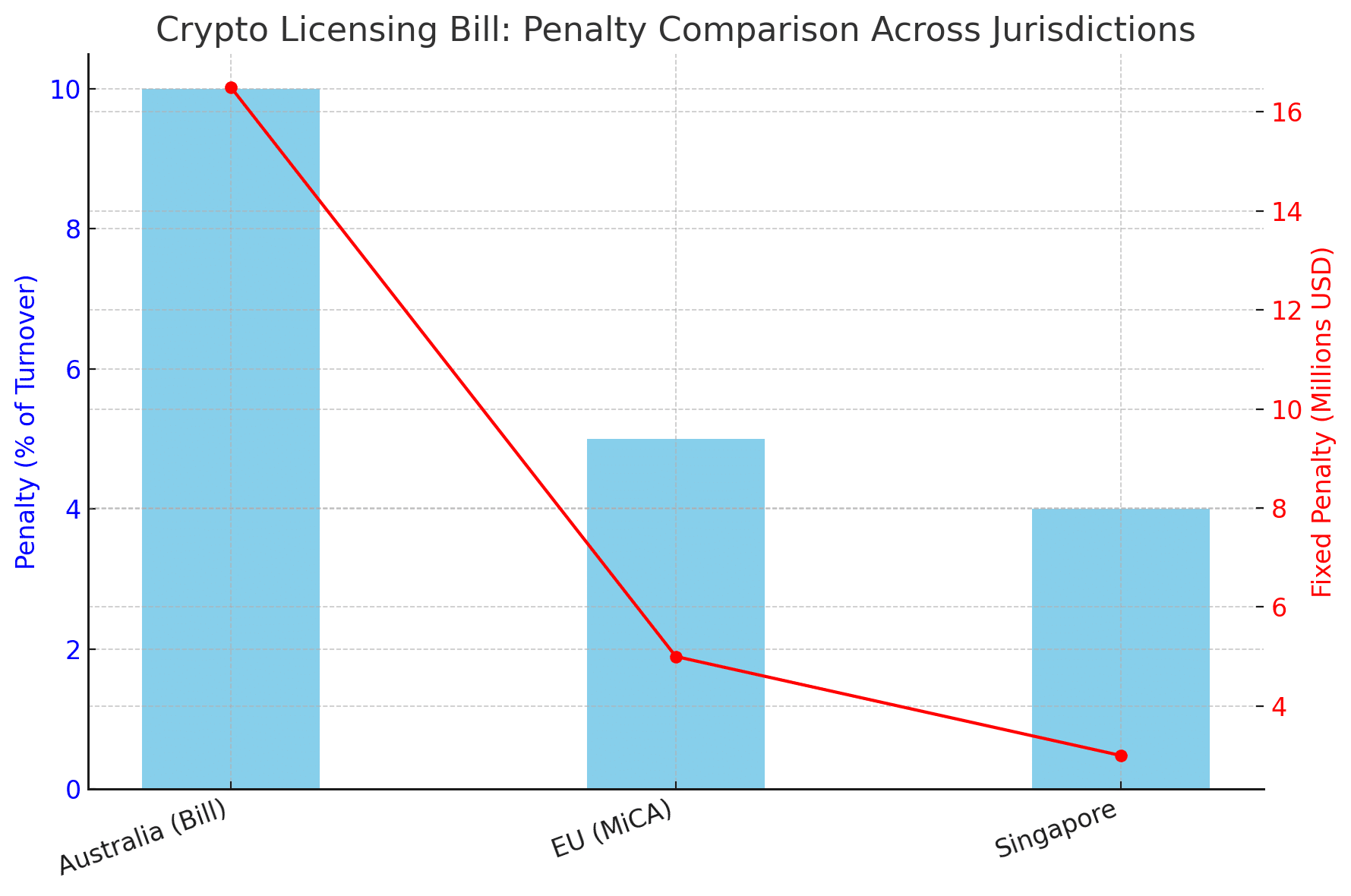
Firms that fail to comply could face fines of up to 10% of their annual turnover, three times any unlawful gains, or A$16.5 million, whichever is higher.
The government says the aim is simple: protect consumers, boost trust, and align the country with international standards.
Yet the crypto licensing bill has sparked debate across the industry, with critics arguing that heavy-handed rules could push innovation offshore.
The Framework Behind the Bill
The crypto licensing bill would integrate exchanges into the Corporations Act by creating two new product categories: “digital asset platforms” and “tokenized custody platforms.”
These classifications ensure that digital businesses are held accountable in the same way as banks and investment firms.
Assistant Treasurer Daniel Mulino defended the proposal, saying it would “legitimise good actors and shut out the bad.”
Supporters believe the bill provides clarity and could attract institutional investors seeking regulated markets. For smaller startups, however, the added compliance burden may prove costly.
Penalties and Carve-Outs
The penalties outlined in the crypto licensing bill are among the harshest in global crypto regulation. Violations could lead to fines that scale with company size, ensuring that both large and small players face meaningful consequences.
Yet regulators also introduced carve-outs. Exchanges handling less than A$5,000 per customer or processing under A$10 million annually would be exempt.
Policymakers argue this exemption shields early-stage innovators from being crushed by compliance. Detractors caution it could allow smaller firms to exploit loopholes.
The inclusion of exemptions shows lawmakers are attempting to strike a balance between fostering innovation and enforcing accountability.
Global Context and Industry Reactions
Internationally, Australia’s crypto licensing bill aligns the country with peers like the European Union, which passed its MiCA framework, and Singapore, where digital asset licenses are already mandatory.
By acting now, Australia positions itself as a serious contender to become a regional hub for regulated crypto finance.
Industry response has been mixed. A regional executive at a global exchange said on X, “Regulation brings trust. Compliance may be costly, but uncertainty is worse.”
Meanwhile, a rival platform noted that enforcement would be the true test, not just the language of the bill. These voices highlight the divide: while many welcome clear rules, others fear the impact on smaller ventures.
Implications for Investors and Adoption
For retail users, the crypto licensing bill promises enhanced protections. Licensed exchanges will need to segregate client assets, disclose risks transparently, and adhere to fair trading practices.
For institutions, regulated structures open the door to capital inflows that were previously locked out due to compliance concerns.
The long-term impact could be profound. Clearer rules may encourage mainstream adoption, but rigid oversight risks driving startups to friendlier jurisdictions. The effectiveness of the bill will hinge on how fairly and consistently it is enforced.
Conclusion
Australia’s crypto licensing bill is more than just a regulatory proposal. It represents a turning point for one of the region’s fastest-growing digital markets.
By embedding crypto under financial law, the government hopes to create trust, curb misconduct, and attract institutional money. The high penalties and exemptions reveal an effort to balance rigor with flexibility.
Whether it ultimately fosters growth or chills innovation will depend on its rollout. What is certain is that the crypto licensing bill has placed Australia firmly on the global stage in the ongoing race to regulate digital finance.


FAQs about the Australia crypto licensing bill
Q1: What is the crypto licensing bill?
It is a proposed Australian law requiring crypto exchanges and custodians to hold a financial services license.
Q2: What penalties does the bill propose?
Firms face fines of 10% of turnover, A$16.5 million, or three times any illicit gains.
Q3: Are there exemptions in the bill?
Yes, smaller platforms with less than A$5,000 per customer or under A$10 million in transactions are exempt.
Q4: How does the bill compare globally?
It aligns Australia with frameworks like Europe’s MiCA and Singapore’s licensing regime.
Glossary
AFSL (Australian Financial Services License): A license allowing firms to provide regulated financial services.
Crypto Licensing Bill: Proposed legislation in Australia requiring licensing for crypto exchanges and custodians.
MiCA (Markets in Crypto-Assets): The European Union’s regulatory framework for crypto assets.
Digital Asset Platform: A regulated exchange offering trading of digital currencies.
Tokenized Custody Platform: A platform providing secure storage of tokenized digital assets.
Turnover: The total revenue generated by a company within a given time period.