
This article was first published on TurkishNY Radio.
Bitcoin has started 2026 with a familiar rhythm: a push higher, a quick loss of steam, and then the whole market watching the next macro catalyst like it is a playoff game.


At around $90,209, Bitcoin is sitting in a zone where traders can argue both sides with a straight face. It had flirted with $95,000 earlier this week, then slid back toward the $89,000 to $91,000 range as risk assets cooled and investors braced for fresh labor data.
That matters for more than Bitcoin itself. When Bitcoin pauses after a run, the market’s attention often drifts toward higher beta trades. That is where the conversation about altcoin season starts creeping back into headlines and group chats, not as a meme, but as a rotation story with measurable fingerprints.
The broader setup right now is a mix of constructive and cautious. On the constructive side, there are signs that ETF-related pressure has been easing after late-2025 outflows, and positioning indicators have been described as stabilizing. On the cautious side, outflows can still hit in waves, and macro data can flip sentiment in a single session.
Signals that altcoin season is warming up
The cleanest high-level tell is market share. Bitcoin’s slice of the total crypto market is hovering around 58%, a level that keeps Bitcoin firmly in the driver’s seat while still leaving room for meaningful rotation if dominance starts to leak lower.
Another widely followed yardstick is the “season index” concept: if 75% of a defined basket of major coins outperforms Bitcoin over the past 90 days, the market is considered to be in that rotation phase. Different indexes use different baskets, but the 75% and 90-day framework is the common backbone.
Those are not magic numbers, but they help separate real breadth from a couple of loud pumps. When a large share of the market is outperforming Bitcoin at the same time, it usually means liquidity is spreading, not just bouncing between a few favorites.
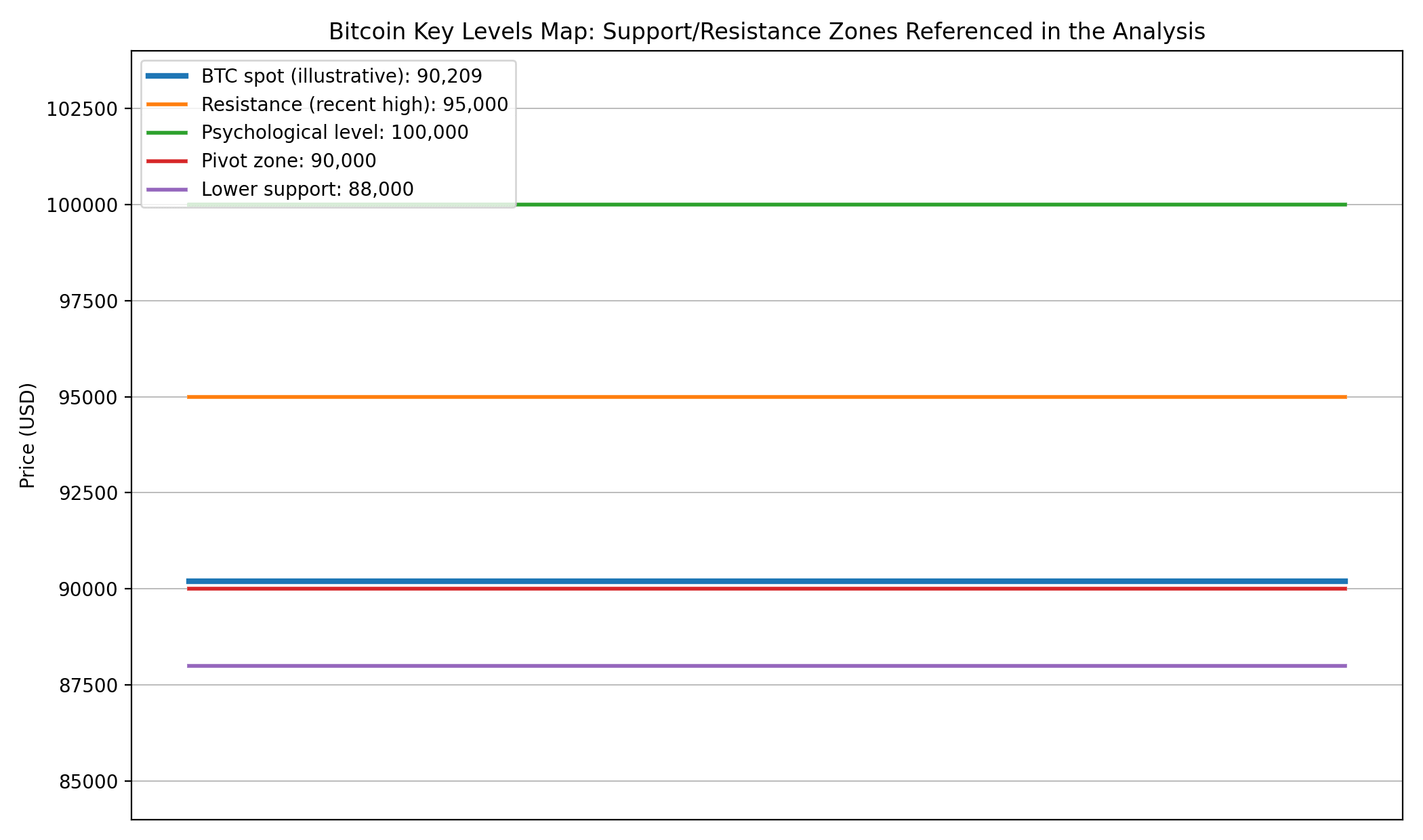
The Bitcoin price map: why $95,000 is a pressure point
Bitcoin’s current structure is easier to understand than people make it. The market recently tested the mid-$90,000s, failed to hold it, and drifted lower. The practical takeaway is that the high-$90,000 area is acting like a ceiling that needs a catalyst to break. Without that catalyst, price tends to chop and retrace, and that is when rotations into majors and select alts become more tempting.
There is also a psychological layer. After a prior record peak above $126,000 in October, Bitcoin is still well below that high, which keeps the market in a tug-of-war between bargain hunters and traders who remember how quickly momentum can fade.
Macro remains the most obvious catalyst. Jobs data, rate expectations, and how risk markets digest them can decide whether Bitcoin reclaims the recent highs or keeps sliding into a deeper consolidation.
Ether and the majors: the “bridge trade” is back on the table
Ether is trading around $3,089, which puts it in a zone where conviction matters. In many cycles, Ether acts like the market’s bridge between Bitcoin-only confidence and broader risk appetite. When capital is rotating but still wants liquidity and depth, Ether is usually one of the first beneficiaries.
The same logic extends to other large caps that institutions and larger traders can actually size into. Solana, around $138.59, and BNB, around $888.09, show that majors remain active, even when the market mood is mixed.
A key piece of context here is flows. Reports this week have pointed to signs that ETF outflows in Bitcoin and Ether products may be bottoming in January, with positioning indicators suggesting that the heavy de-risking phase late in 2025 could be easing. That does not guarantee upside, but it reduces one of the market’s recent headwinds.
Liquidity, dominance, and the rotation engine
When traders talk about altcoin season, they often treat it like a switch. In reality, it behaves more like a slow gear change. The first gear is Bitcoin strength, the second gear is Bitcoin consolidation, and the third gear is declining dominance as profits rotate outward.
With dominance around the high-50% range, it would take sustained relative strength in majors like Ether and a broadening performance across sectors to shift the balance. If dominance starts falling while prices hold or rise, that is typically the healthier version of rotation. If dominance falls because Bitcoin is dumping and everything is bleeding, that is not rotation; it is just stress.

Liquidity also shows up in behavior. When the market is confident, capital starts to spread into themes, not just names. That is why narratives such as scaling infrastructure, tokenization projects, and high-usage networks tend to lead once the rotation starts. The price action becomes less about a single coin and more about whole categories moving together.
Scenarios for the next 4 to 12 weeks
Forecasting crypto is not about pretending certainty exists. It is about outlining the paths the market is most likely to take, then watching which evidence starts stacking up.
In the bullish scenario, Bitcoin reclaims the recent mid-$90,000 area and holds it, with improving risk sentiment after macro data. In that case, Ether tends to strengthen as the market’s first rotation target, and majors like Solana and BNB can follow with higher highs. If that happens alongside a gentle decline in dominance, the odds increase that altcoin season becomes more than a slogan and starts looking like a measurable breadth move.
In the neutral scenario, Bitcoin stays range-bound between roughly the high-$80,000s and mid-$90,000s, with the market reacting to each macro headline but not breaking trend. That usually produces selective leadership: a handful of majors grind higher, some narratives pop briefly, but follow-through is inconsistent. This is the environment where traders overtrade, because it feels like something is about to happen every day, then it does not.
Price targets that fit the evidence, not the fantasy
Based on current levels, Bitcoin is the market’s key reference point. A sustained break above the recent highs near $95,000 would improve the probability of a push back toward the psychological $100,000 area, while a break below the recent lows around the high-$80,000s opens the door to a deeper reset.
For Ether, holding above the low-$3,000 area keeps the structure constructive, while losing it makes the market question whether rotation is real or just wishful thinking. Solana and BNB are more sensitive to risk appetite, so their near-term direction is likely to remain tied to whether Bitcoin can stabilize and whether liquidity is spreading.

If altcoin season extends in a healthy way, the most realistic expectation is not that every coin explodes, but that a wider set of liquid alts begins to outperform Bitcoin over rolling windows. That is exactly what season indexes try to capture, and it is why breadth matters more than a few headline pumps.
The risk most traders ignore when the mood turns euphoric
Rotation phases have a habit of rewarding speed and punishing stubbornness. When altcoin season fades, it often fades in a messy way, because the same leverage and crowding that lifted prices can unwind quickly. That is why the cleanest confirmations are boring ones: dominance drifting lower without chaos, consistent breadth, and improving flow data instead of a single-day burst.
Flows deserve special attention. Recent coverage has highlighted how ETF outflows can reappear and reshape sentiment fast. Even when the longer trend looks constructive, the path can still be choppy enough to shake out impatient positioning.
Conclusion
Crypto is entering 2026 with Bitcoin still commanding the spotlight, but the market’s tone is shifting from pure trend chasing to rotation watching. With Bitcoin near $90,209 and dominance around the high-50% range, the conditions exist for leadership to broaden if macro catalysts cooperate and flow pressure continues to ease.
In that environment, altcoin season is best treated as a diagnostic, not a promise. When breadth expands, dominance slips gradually, and majors like Ether hold key levels, the market has a foundation for a healthier run. When those pieces do not line up, the “season” talk is usually just noise.
FAQs
What is the simplest definition of altcoin season?
It is a market phase where a large share of major cryptocurrencies outperforms Bitcoin over a defined period, commonly measured over 90 days with a 75% threshold in some popular indexes.


Why does Bitcoin dominance matter so much?
Dominance tracks how much of the total crypto market value sits in Bitcoin. When dominance falls while prices hold steady or rise, it often signals capital rotating into other assets rather than fleeing the market.
Which coins usually lead first when rotation begins?
Large, liquid assets often lead early because bigger capital can enter and exit without as much slippage. Ether frequently acts as the first major rotation target before smaller assets catch a bid.
Do ETFs influence crypto price action beyond Bitcoin?
Yes. Flow pressure and sentiment around regulated products can affect broader positioning, especially in Bitcoin and Ether markets, which then impacts risk appetite across majors and beyond.
Is a falling Bitcoin price compatible with altcoin outperformance?
It can happen on a relative basis, but it is usually not the version traders want. The healthier rotation tends to appear when Bitcoin stabilizes and liquidity spreads, rather than when everything is declining together.
Glossary of Key Terms
Bitcoin dominance
A percentage measure of Bitcoin’s share of the total crypto market capitalization, often used to gauge whether capital is concentrating in Bitcoin or rotating elsewhere.
Breadth
A snapshot of how widely a move is shared across the market. Strong breadth means many assets are rising together rather than only a few leaders.
Liquidity
How easily assets can be bought or sold without materially moving price. Higher liquidity typically supports smoother trends and more reliable breakouts.
Net inflows and outflows
The net amount of money entering or leaving a product or market over a period. Persistent outflows can act as a headwind; stabilizing flows can reduce pressure.
Risk-on and risk-off
A shorthand for market mood. Risk-on describes periods when investors prefer growth and speculative assets; risk-off describes periods when capital moves toward safety.