![Sun [New]](https://s2.coinmarketcap.com/static/img/coins/64x64/10529.png)



This article was first published on TurkishNY Radio.
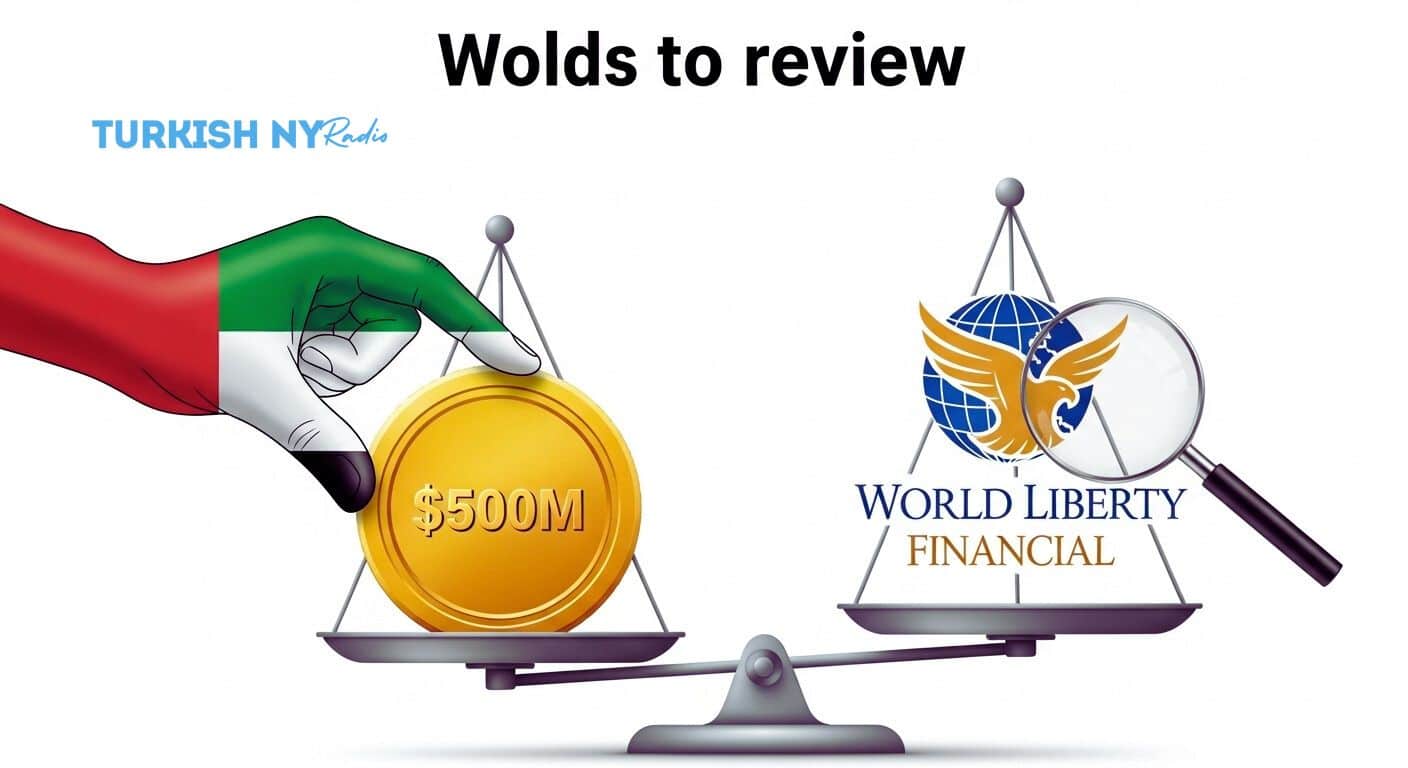
A fresh political dispute has placed World Liberty Financial under national scrutiny after two U.S. senators formally requested a federal review of a reported foreign investment in the crypto-focused firm tied to Donald Trump and his family.


In a Feb. 13 letter to U.S. Treasury Secretary Scott Bessent, Senators Elizabeth Warren and Andy Kim asked the Committee on Foreign Investment in the United States (CFIUS) to determine whether a reported $500 million stake linked to the United Arab Emirates was formally reviewed.
The Senate letter serves as the primary source of the request and outlines the lawmakers’ national security concerns.
World Liberty Financial Faces Oversight Questions
According to the letter, a UAE-backed investment vehicle acquired a substantial interest in World Liberty Financial shortly before Donald Trump’s January inauguration.
The senators wrote that the timing is troubling, particularly because the firm is reportedly connected to a sitting president’s immediate family.
They asked Treasury officials to clarify whether CFIUS was notified of the transaction and whether foreign investors could gain board representation or access to sensitive financial data.
“Foreign ownership of a U.S. financial technology firm tied to a sitting president would be unprecedented,” The senators wrote in their letter.
CFIUS, which operates under the U.S. Department of the Treasury, is tasked with reviewing certain foreign investments in American companies that may raise national security concerns. The lawmakers have requested a formal response by March.

World Liberty Financial and UAE Security Links
Reports have connected the investment to Sheikh Tahnoon bin Zayed Al Nahyan, the UAE’s national security adviser, and his broader investment network, including G42. G42 has previously faced scrutiny in Washington over its international technology partnerships.
While no official CFIUS determination has been announced, the involvement of a foreign state-linked figure in a crypto financial firm has intensified political debate.
The structure of the deal, as described in the Senate letter, raises questions about governance rights and operational oversight within World Liberty Financial.
Donald Trump has publicly stated that his sons manage the business and has denied knowledge of the specific transaction. The White House has also rejected suggestions of improper influence.
Crypto Firms Under Increasing Regulatory Focus
The situation highlights a broader shift in how digital asset companies are viewed by regulators. Blockchain analytics firm Chainalysis has documented how crypto platforms increasingly intersect with cross-border capital flows.
Public blockchain explorers such as Etherscan show that while on-chain transactions are transparent, corporate ownership structures remain governed by traditional filings and oversight bodies.
CFIUS reviews have historically focused on defense, telecommunications, and semiconductor industries. However, fintech and crypto-related platforms now fall within the scope of potential review due to their control over financial infrastructure and user data.
Confirmed Facts and What Remains Unclear
Confirmed:
- A Feb. 13 Senate letter requests a CFIUS review of a reported $500 million UAE-linked investment in World Liberty Financial.
- Lawmakers cited national security and governance concerns.
- Treasury has been given a March deadline to respond.
Unresolved:


- Whether CFIUS was formally notified.
- Whether the transaction has undergone review.
- Whether mitigation measures are under consideration.
As of publication, Treasury officials have not publicly responded.
Broader Implications for Crypto Governance
The scrutiny facing World Liberty Financial signals that crypto firms are increasingly treated as part of national financial infrastructure. If a formal review proceeds, its outcome could influence how future foreign-backed investments in U.S.-based digital asset companies are assessed.
For now, the issue remains under political and regulatory review, with further clarity expected once Treasury responds to the Senate’s inquiry.
Summary
- Two U.S. senators are asking federal regulators to review a reported $500 million UAE-linked investment in World Liberty Financial, a crypto firm connected to Donald Trump’s family.
- Their Feb. 13 letter raises concerns about national security, board influence, and possible access to sensitive financial data.
- The investment is reportedly linked to Sheikh Tahnoon bin Zayed Al Nahyan.
- The Treasury Department must respond by March.
Glossary of Key Terms
1. World Liberty Financial
A U.S.-based crypto and financial technology company reportedly connected to Donald Trump’s family. It’s currently being discussed because of a large foreign investment.
2. CFIUS (Committee on Foreign Investment in the United States)
A U.S. government committee that reviews foreign investments in American companies to make sure they don’t create national security risks.
3. Foreign Direct Investment (FDI)
When a person, company, or government from one country invests directly in a business located in another country, often by buying ownership shares.
4. National Security Review
An official government check to determine whether a business deal could threaten a country’s safety, economic stability, or access to sensitive information.
5. Board Influence
When investors gain the power to help make company decisions, they usually by having a seat on the board of directors or voting on major policies.
6. Sensitive Financial Data
Private financial information, such as user accounts or transaction records, must be protected to prevent misuse or security breaches.
FAQs About World Liberty Financial
1. What is World Liberty Financial, and why is everyone talking about it?
World Liberty Financial is a crypto-focused financial company reportedly linked to Donald Trump’s family. It’s in the spotlight after U.S. senators called for a review of foreign investment.
2. Why are lawmakers concerned about the UAE investment?
Senators are worried that foreign investors could gain board influence or access sensitive financial data, and they want to confirm the deal followed U.S. national security rules.
3. Will this review affect users or how the platform works?
Right now, there’s no indication of changes for users. Payments, services, and platform features continue operating normally while regulators examine ownership and compliance questions.
4. What happens next, and how can people stay informed?
The Treasury Department is expected to respond by March. Any updates will likely come through official government releases or public statements from involved parties.