![Sun [New]](https://s2.coinmarketcap.com/static/img/coins/64x64/10529.png)





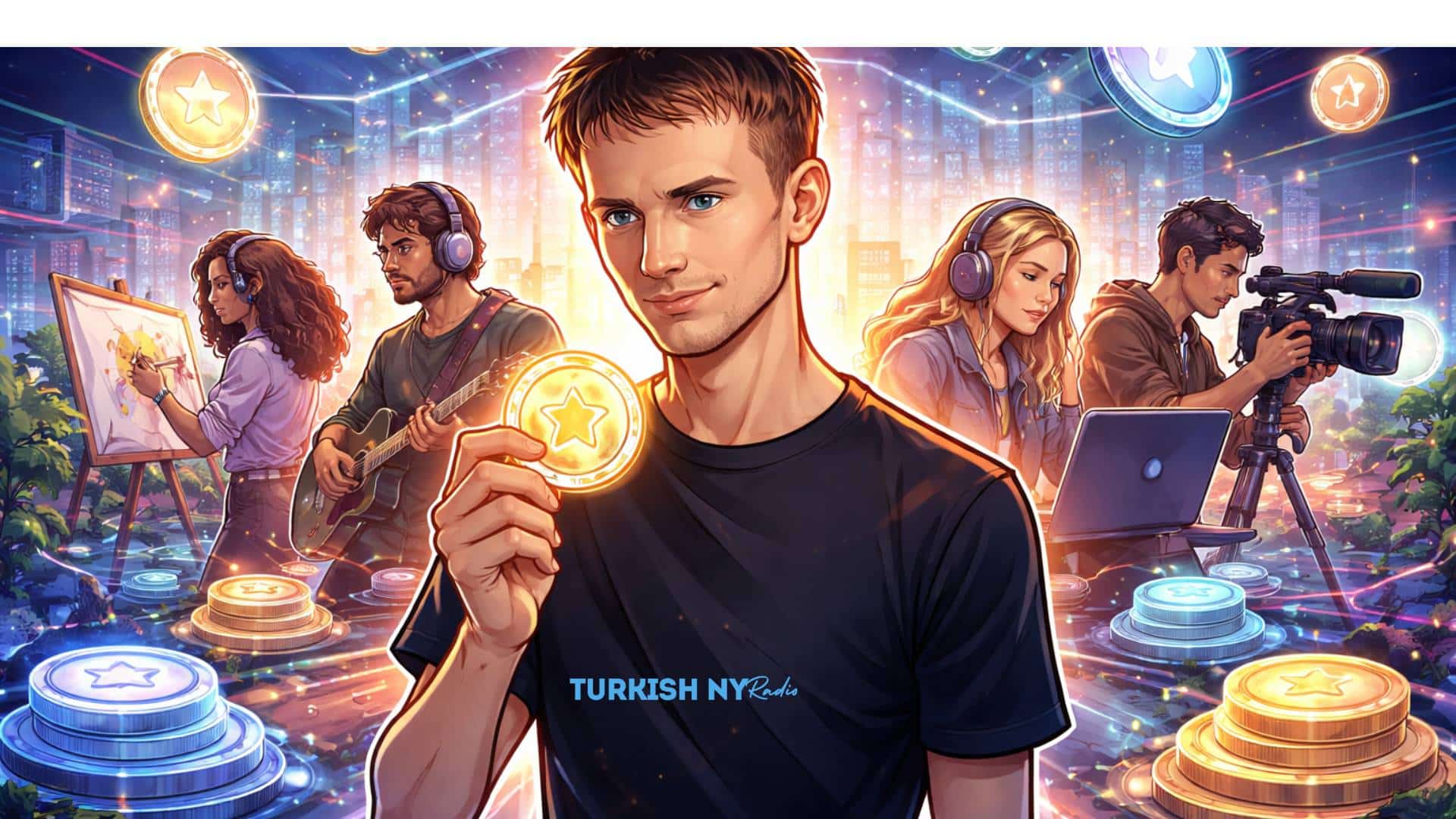
This article was first published on TurkishNY Radio.
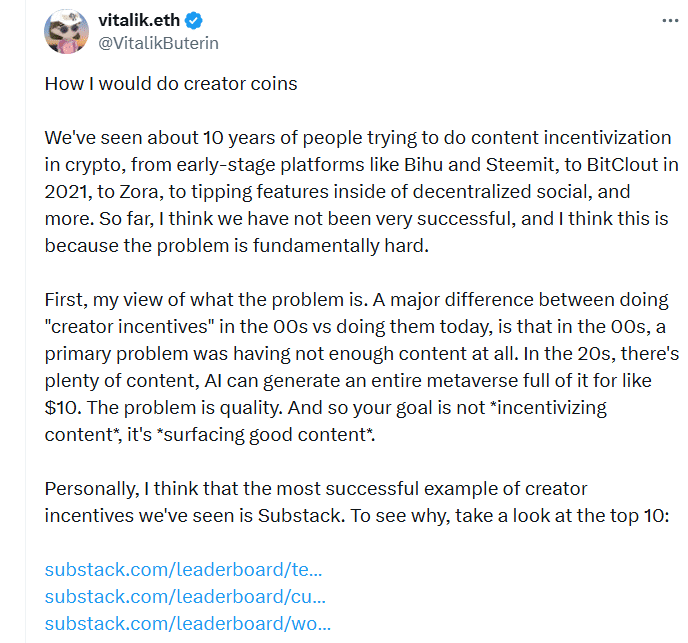
Ethereum co-founder Vitalik Buterin has taken aim at a familiar crypto temptation: turning culture into a scoreboard and hoping the scoreboard produces quality. In a recent social media post, he argued that a decade of experiments has not solved the real problem, which is not generating content but reliably surfacing the best work.


That critique lands at an awkward moment for the internet. Generative AI keeps making content cheaper, faster, and more abundant. The scarce resource is no longer output. It is judgment. Buterin’s answer is not to abandon token incentives; it is to rearrange them so speculation has to chase curation instead of raw attention.
The real bottleneck is discovery, not production
Buterin framed the last 10 years as a long string of attempts to pay people to post. The outcome, in his telling, is predictable: leaderboards get dominated by whoever already has social gravity, while quality struggles to break through.
He also tied this to a broader governance complaint he has raised recently, that many on-chain coordination systems drift into inefficiency and capture when incentives reward the loudest coalition instead of the best decision. In creator markets, that dynamic shows up as pumps around personalities, thin liquidity, and long tails of abandoned tokens once the novelty fades.
A new market design for creator coins
In his post, Buterin described a model where anyone can issue a personal token first, but the token does not become the main event. The main event becomes admission into a selective, non-tokenized creator DAO that acts like a standards body, a brand, and a curator all at once.
He summarized the basic flow plainly: “In this case, what we do is: anyone can become a creator and create a creator coin, and then, if they get admitted to a creator DAO…” The twist is what happens next. Once accepted, a portion of the DAO’s proceeds is directed toward buying back and burning the creator’s token supply, linking value to sustained selection rather than one-time hype.
That is where the market psychology changes. Buterin argued that speculators should not be trapped in “a recursive-speculation attention game backed only by itself,” but instead become predictors of which creators curated groups will actually endorse.
Why buybacks, burns, and curation shift the incentive map
This structure tries to flip the standard feedback loop. If the DAO develops real revenue streams, partnerships, or distribution, then buybacks can serve as a steady demand source that is tied to actual economic output. That is a materially different promise than most creator markets, where value depends on a constant stream of new buyers.
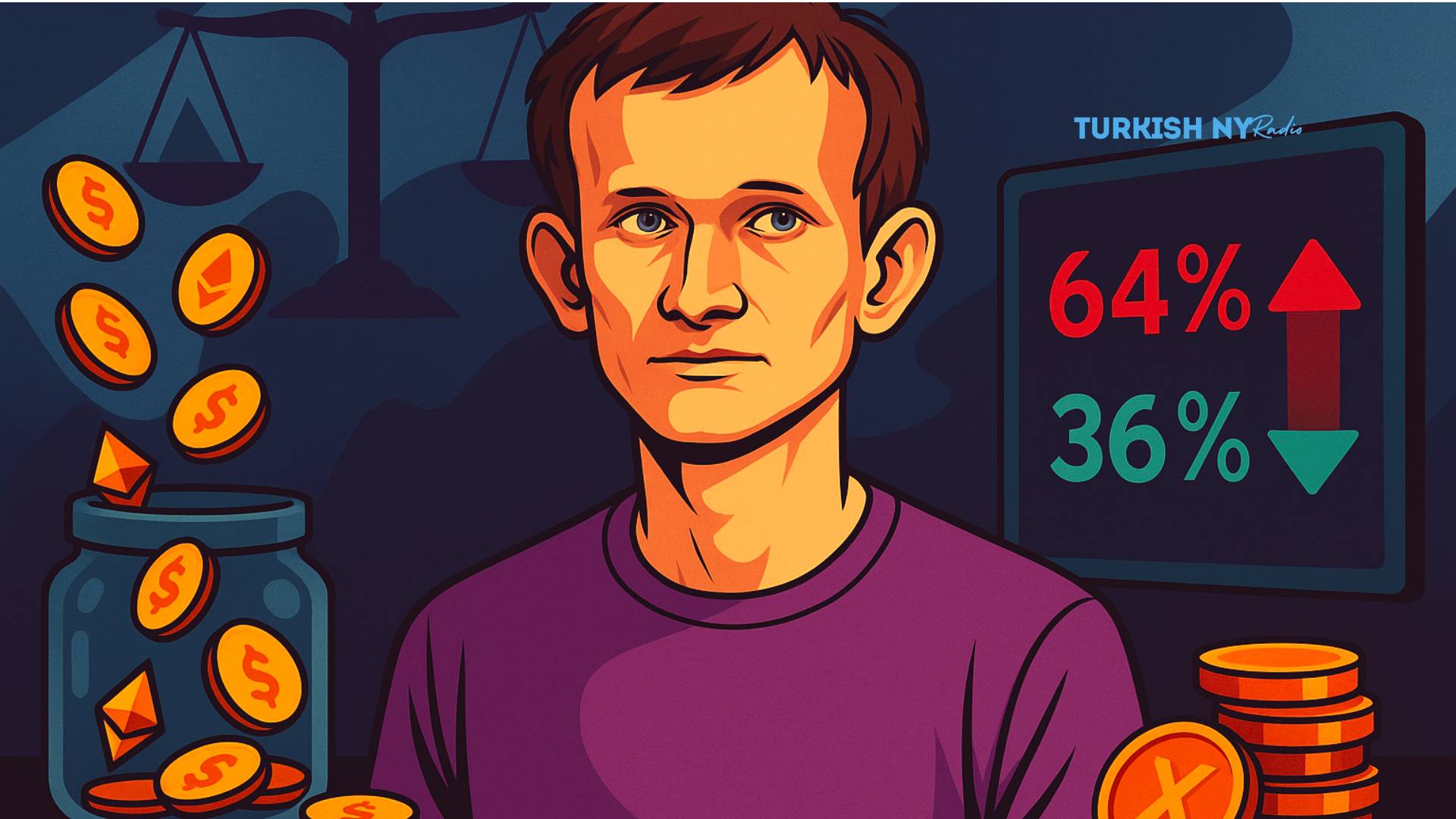
It also leans into an old lesson from social tokens: thin markets can turn cruel fast. If liquidity is shallow, a token can look alive on a chart while being effectively untradeable at scale. A design that pushes attention toward curated admission and ties demand to ongoing proceeds is an attempt to solve that practical weakness.
Risks: capture, theater, and the return of gatekeepers
Buterin’s model openly embraces a form of gatekeeping, just with a crypto wrapper and explicit standards. That can be healthy, but it also invites old problems: insiders choosing friends, opaque criteria, and “brand” becoming an excuse for exclusion. The design also concentrates reputational power inside small committees, which can be efficient until it becomes brittle.
Still, the proposal is a meaningful pivot. It treats curation as a first-class primitive and pushes speculation to bet on judgment, not noise.
Conclusion
Buterin is not asking crypto to “pay creators” again. He is asking it to build institutions that can tell the difference between signal and spam, then wire token incentives around those institutions. If builders copy the idea faithfully, creator coins could evolve from attention chips into market-priced endorsements, where the hard part is not minting a token but earning a place in a curated network.
Frequently Asked Questions
What problem is Buterin trying to solve?
He is targeting the discovery problem, meaning how high-quality content gets found and rewarded in a world flooded with low-cost output.
What is the role of a creator DAO in this design?
It selects creators under clear standards, limits growth to protect brand value, and can route proceeds into token buybacks and burns.
Does this eliminate speculation?
No. It redirects speculation toward predicting curation outcomes rather than chasing pure attention.


How should markets evaluate creator coins under this model?
Markets should focus on liquidity, holder concentration, retention, and verifiable treasury flows that fund buybacks, not just social buzz.
Glossary of key terms
Buyback and burn: A mechanism where a protocol or treasury buys tokens from the market and permanently removes them from circulation, reducing supply.
Curation: The process of selecting, promoting, and supporting content or creators based on quality standards rather than raw popularity.
DAO (Decentralized Autonomous Organization): A coordination structure that uses on-chain tools for governance and treasury management, often vulnerable to capture if incentives are weak.
Liquidity: How easily an asset can be bought or sold without moving the price significantly, usually reflected by depth, spreads, and slippage.
Prediction market: A market where participants trade based on the probability of a future outcome, often used to aggregate beliefs into prices.
References