This article was first published on TurkishNY Radio.
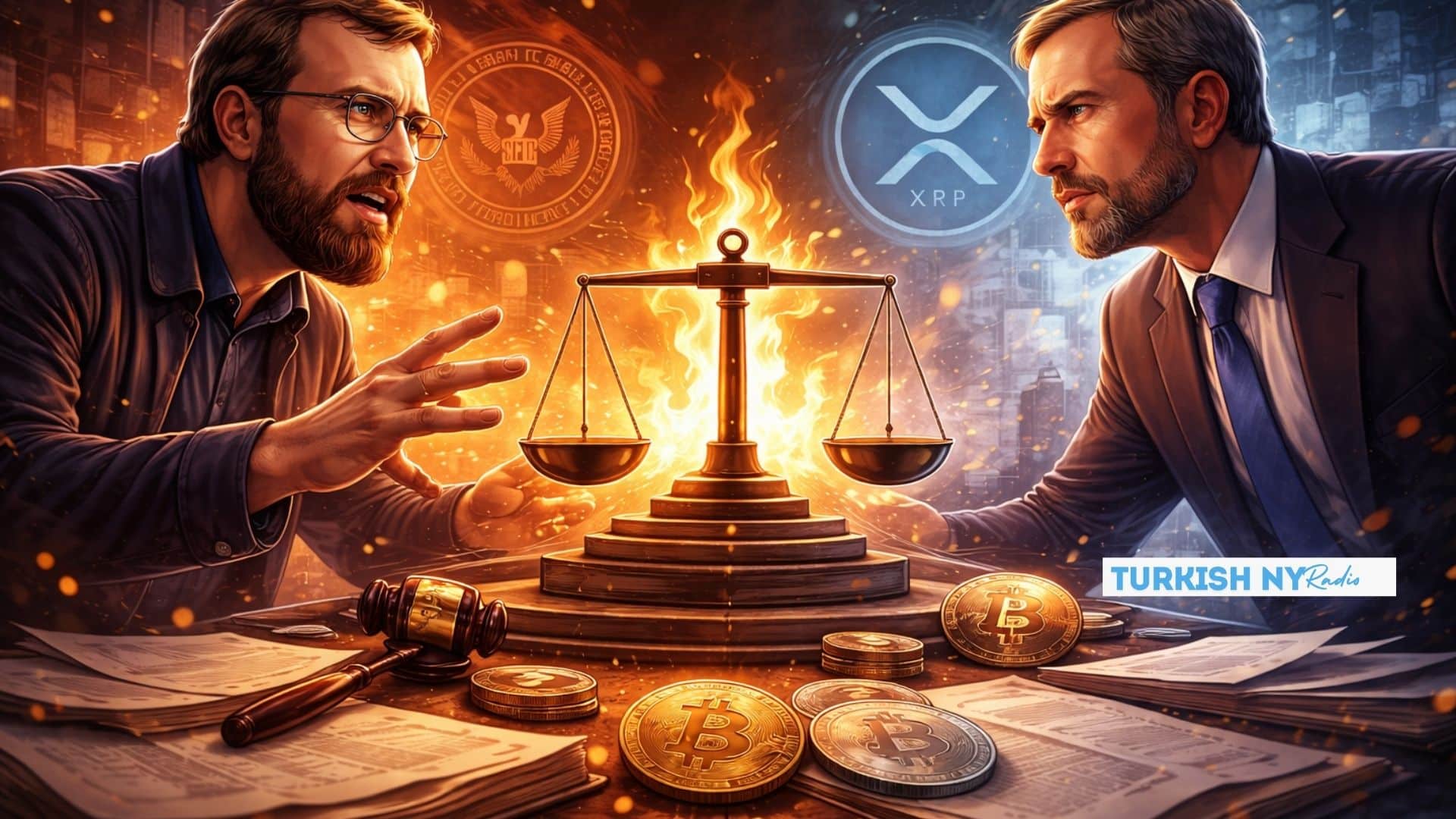
The Hoskinson discussion on the CLARITY Act has increased focus on internal debates in the US crypto sector over how digital currencies should be regulated. Cardano designer Charles Hoskinson recently attacked Brad Garlinghouse, CEO of Ripple, for endorsing the Digital Financial Market Organization CLARITY Act, stating that the measure risks reinforcing, rather than correcting, incorrect regulatory expectations.


The argument exemplifies a larger ideological division about whether accommodation or pushback is the preferable way ahead.


Hoskinson CLARITY Act Objections Focus on Long-Term Impact
According to CryptoBriefing, Hoskinson’s criticism centers on how the proposed legislation allocates regulatory authority. He argues that the Hoskinson vs CLARITY Act issue is not merely about improving oversight, but about the long-term consequences of embedding crypto within existing securities frameworks.
Also read: Washington’s CLARITY Act Puts U.S. Crypto Rules at a Turning Point
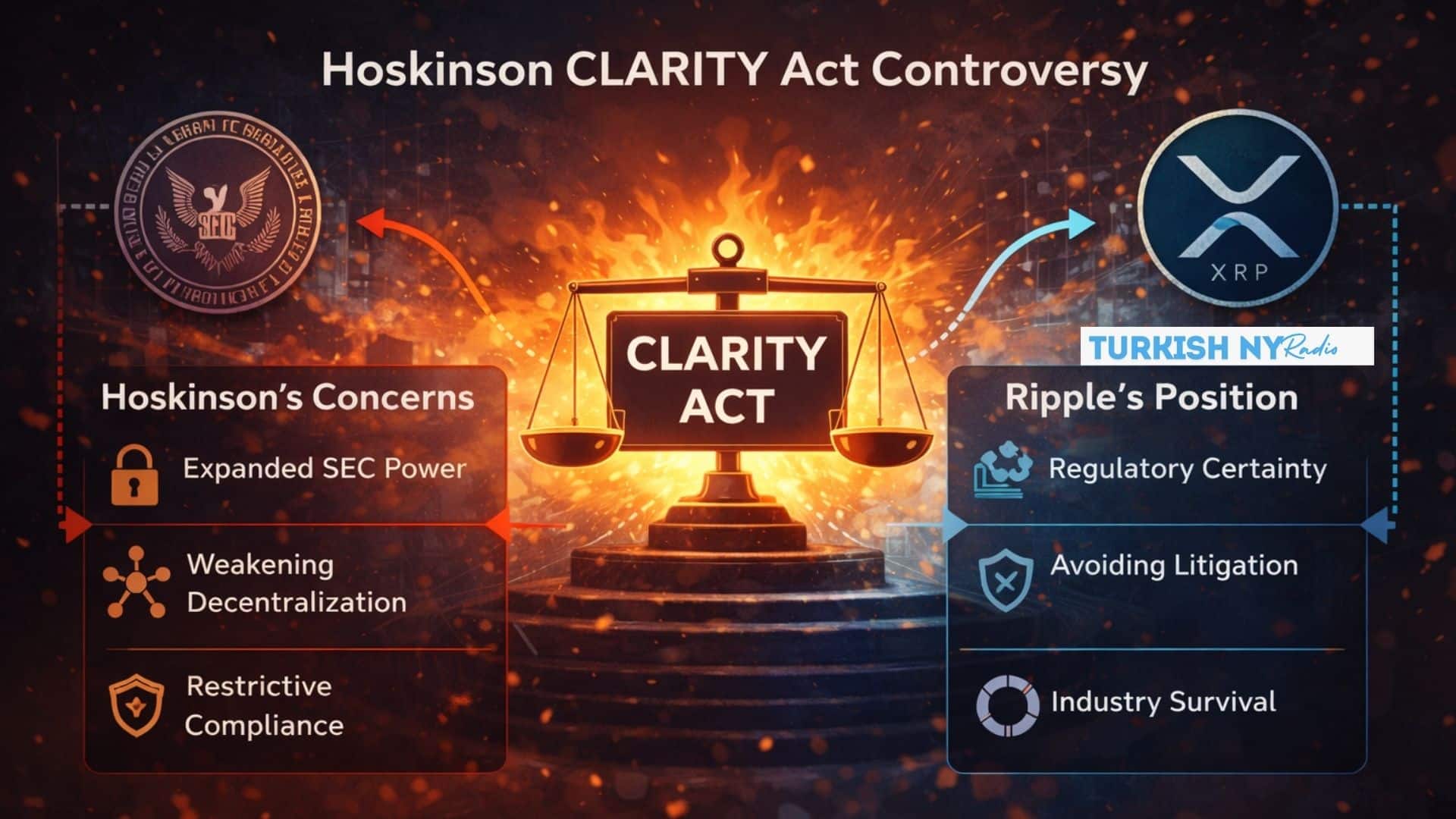
Hoskinson warned that the bill, after numerous amendments, could treat most crypto projects as securities by default, forcing them to seek exemptions rather than offering clear pathways from the start. He expressed concern that once such a structure becomes law, revising it would be extremely difficult.
“Bad laws tend to stay bad laws,” Hoskinson said, emphasizing that rushed legislation often becomes permanent policy.

Ripple’s Support Reveals Strategic Differences
The Hoskinson CLARITY Act dispute intensified after Garlinghouse publicly supported the bill as a practical step toward regulatory certainty. Ripple’s position, as reported by CryptoBriefing, reflects a belief that partial clarity is preferable to the current environment of regulatory enforcement through lawsuits.
Hoskinson refuted this argument, claiming that accepting poor standards in order to get certainty might affect local programmers and open-source projects. He described the issue as a philosophical gap instead of a personal fight, emphasizing that legislative ease should not trump structural justice.
Decentralization Concerns Drive Hoskinson’s Position
At the core of the Hoskinson CLARITY Act criticism is Hoskinson’s concern that the legislation could normalize custodial control and compliance-heavy requirements. He warned that such outcomes may favor large, well-funded entities while discouraging decentralized participation.
Hoskinson stated that his opposition is rooted in preserving crypto’s original design principles, including permissionless access and reduced reliance on centralized intermediaries. From his perspective, the bill risks reshaping crypto to fit traditional financial models rather than acknowledging its differences.
Conclusion
Hoskinson warns the CLARITY Act demonstrates how split the cryptocurrency industry remains as US politicians get closer to passing official market structure regulations. Although some sector executives prefer regulatory stability, others are concerned that compromise would damage decentralization and innovation. As Congress continues to analyze the measure, internal divisions may impact how legislators evaluate business opinions and reservations.
Also read: Why Coinbase Is Concerned About Stablecoin Reward Restrictions in the CLARITY Act
Summary
The Hoskinson CLARITY Act argument demonstrates a significant rift among crypto leaders. Hoskinson claims the law will lock the sector into restricted arrangements that favor regulators and huge corporations, although Ripple sees it as an essential step toward clarity. The decision may influence how US cryptocurrency legislation combines creative thinking, obedience, and democratization.
Glossary of Key Terms
CLARITY Act: Suggested U.S. law that defines supervision of digital files.
SEC: United States equity commission
Market Structure: The legal structure that governs asset classification and trading.
Custodial Wallet: A digital wallet that is managed by another party as opposed to the user.
Decentralization: Is a delegation of management outside of centralized authority.
FAQs for Hoskinson CLARITY Act
1. What exactly represents the Hoskinson CLARITY Act argument about?
It is unclear if this suggested law enhances or hinders cryptocurrency oversight.
2. For what reason would Hoskinson resist the bill?
He argues it contains incorrect conclusions that will be difficult to alter later.
3. Why is it that would Ripple favor the Clarity Act?
Ripple sees this as an advancement forward regulatory clarity in the United States.
4. Would the measure favor major corporations?
Hoskinson believes that requirements for compliance might disadvantage smaller endeavors.
5. Has the bill been finalized?
No, it is still under congressional assessment and argument.