• Home
  • About Us
  • Terms and Conditions
  • Privacy Policy
  • Disclaimer
  • Contact
3 July Friday, 2026
  • tr Türkçe
  • en English
TurkishNY Radio
No Result
View All Result
  • Home
  • Cryptocurrency
  • Business
  • Economy
  • Home
  • Cryptocurrency
  • Business
  • Economy
No Result
View All Result
  • tr Türkçe
  • en English
TurkishNY Radio
No Result
View All Result
Bitcoin Bitcoin (BTC) $62,734.83 ↑ 2.24%
Ethereum Ethereum (ETH) $1,766.16 ↑ 4.01%
Tether USDt Tether USDt (USDT) $1.00 ↑ 0.01%
BNB BNB (BNB) $572.62 ↑ 2.78%
USDC USDC (USDC) $1.00 ↑ 0.02%
XRP XRP (XRP) $1.14 ↑ 5.25%
Solana Solana (SOL) $82.68 ↑ 2.25%
TRON TRON (TRX) $0.32 ↑ 1.37%
Hyperliquid Hyperliquid (HYPE) $70.66 ↑ 6.61%
Dogecoin Dogecoin (DOGE) $0.08 ↑ 5.20%
UNUS SED LEO UNUS SED LEO (LEO) $9.16 ↑ 0.34%
Zcash Zcash (ZEC) $464.21 ↑ 7.07%
Stellar Stellar (XLM) $0.21 ↑ 3.94%
Cardano Cardano (ADA) $0.18 ↑ 12.27%
Monero Monero (XMR) $324.81 ↑ 3.22%
Chainlink Chainlink (LINK) $8.01 ↑ 3.66%
Canton Canton (CC) $0.14 ↑ 0.42%
Dai Dai (DAI) $1.00 ↓ -0.04%
Gram (prev. Toncoin) Gram (prev. Toncoin) (GRAM) $1.71 ↑ 1.80%
Bitcoin Cash Bitcoin Cash (BCH) $228.77 ↑ 3.65%
World Liberty Financial USD World Liberty Financial USD (USD1) $1.00 ↑ 0.04%
Ethena USDe Ethena USDe (USDe) $1.00 ↑ 0.00%
Litecoin Litecoin (LTC) $45.21 ↑ 4.36%
Hedera Hedera (HBAR) $0.07 ↑ 3.32%
Sui Sui (SUI) $0.77 ↑ 5.30%
Global Dollar Global Dollar (USDG) $1.00 ↑ 0.00%
Avalanche Avalanche (AVAX) $6.98 ↑ 3.61%
Cronos Cronos (CRO) $0.06 ↑ 10.80%
PayPal USD PayPal USD (PYUSD) $1.00 ↑ 0.01%
NEAR Protocol NEAR Protocol (NEAR) $2.03 ↑ 5.02%
Shiba Inu Shiba Inu (SHIB) $0.00 ↑ 3.55%
Tether Gold Tether Gold (XAUt) $4,163.80 ↑ 1.30%
Bittensor Bittensor (TAO) $216.75 ↑ 3.23%
Uniswap Uniswap (UNI) $3.27 ↑ 2.08%
MemeCore MemeCore (M) $1.53 ↓ -4.94%
DeXe DeXe (DEXE) $23.26 ↑ 1.30%
PAX Gold PAX Gold (PAXG) $4,168.73 ↑ 1.35%
World Liberty Financial World Liberty Financial (WLFI) $0.06 ↓ -2.12%
Aster Aster (ASTER) $0.65 ↑ 2.80%
OKB OKB (OKB) $80.80 ↓ -0.09%
Ondo Ondo (ONDO) $0.34 ↑ 2.11%
Ripple USD Ripple USD (RLUSD) $1.00 ↑ 0.00%
Worldcoin Worldcoin (WLD) $0.43 ↑ 8.29%
Polkadot Polkadot (DOT) $0.89 ↑ 5.20%
Mantle Mantle (MNT) $0.45 ↑ 2.60%
USDD USDD (USDD) $1.00 ↑ 0.10%
Sky Sky (SKY) $0.06 ↑ 0.48%
Aave Aave (AAVE) $87.35 ↑ 0.64%
Pi Pi (PI) $0.12 ↑ 0.81%
Internet Computer Internet Computer (ICP) $2.25 ↑ 2.64%
Bitget Token Bitget Token (BGB) $1.73 ↑ 2.21%
Ethereum Classic Ethereum Classic (ETC) $7.28 ↑ 2.99%
Pepe Pepe (PEPE) $0.00 ↑ 11.16%
United Stables United Stables (U) $1.00 ↑ 0.01%
Morpho Morpho (MORPHO) $1.97 ↓ -3.87%
KuCoin Token KuCoin Token (KCS) $7.22 ↑ 1.11%
Audiera Audiera (BEAT) $2.82 ↓ -6.65%
Kaspa Kaspa (KAS) $0.03 ↑ 1.63%
Stable Stable (STABLE) $0.04 ↑ 0.46%
Render Render (RENDER) $1.62 ↑ 2.29%
Cosmos Cosmos (ATOM) $1.61 ↑ 3.87%
Quant Quant (QNT) $68.45 ↑ 1.82%
Jupiter Jupiter (JUP) $0.24 ↑ 0.09%
Algorand Algorand (ALGO) $0.09 ↑ 5.52%
Polygon (prev. MATIC) Polygon (prev. MATIC) (POL) $0.07 ↓ -0.23%
JUST JUST (JST) $0.09 ↑ 2.47%
Ethena Ethena (ENA) $0.08 ↑ 4.07%
GateToken GateToken (GT) $6.79 ↑ 2.09%
币安人生 币安人生 (币安人生) $0.68 ↑ 1.09%
Pump.fun Pump.fun (PUMP) $0.00 ↑ 6.71%
Filecoin Filecoin (FIL) $0.81 ↑ 4.56%
Venice Token Venice Token (VVV) $13.44 ↑ 1.63%
Flare Flare (FLR) $0.01 ↑ 4.89%
XDC Network XDC Network (XDC) $0.03 ↑ 1.64%
Midnight Midnight (NIGHT) $0.03 ↑ 4.75%
Lighter Lighter (LIT) $2.18 ↑ 5.99%
Aerodrome Finance Aerodrome Finance (AERO) $0.55 ↑ 10.36%
Aptos Aptos (APT) $0.63 ↑ 4.47%
Arbitrum Arbitrum (ARB) $0.08 ↑ 4.07%
Nexo Nexo (NEXO) $0.77 ↑ 0.20%
TrueUSD TrueUSD (TUSD) $1.00 ↑ 0.00%
Injective Injective (INJ) $4.89 ↑ 6.36%
Dash Dash (DASH) $36.11 ↑ 4.87%
PancakeSwap PancakeSwap (CAKE) $1.40 ↑ 3.15%
EURC EURC (EURC) $1.14 ↑ 0.06%
OFFICIAL TRUMP OFFICIAL TRUMP (TRUMP) $1.80 ↑ 5.23%
Pudgy Penguins Pudgy Penguins (PENGU) $0.01 ↑ 7.64%
Artificial Superintelligence Alliance Artificial Superintelligence Alliance (FET) $0.19 ↑ 2.32%
VeChain VeChain (VET) $0.00 ↑ 2.80%
Bonk Bonk (BONK) $0.00 ↑ 6.66%
SPX6900 SPX6900 (SPX) $0.41 ↑ 11.61%
Virtuals Protocol Virtuals Protocol (VIRTUAL) $0.58 ↑ 4.74%
Jito Jito (JTO) $0.76 ↑ 1.72%
Celestia Celestia (TIA) $0.40 ↑ 9.25%
Sei Sei (SEI) $0.05 ↑ 5.38%
Terra Classic Terra Classic (LUNC) $0.00 ↑ 6.50%
First Digital USD First Digital USD (FDUSD) $1.00 ↑ 0.10%
ether.fi ether.fi (ETHFI) $0.37 ↑ 13.36%
Sun [New] Sun [New] (SUN) $0.02 ↑ 0.45%
Curve DAO Token Curve DAO Token (CRV) $0.21 ↑ 3.83%
Home Cryptocurrency

Why Europe MiCA Regulation Is Changing Crypto Worldwide

Jonathan Swift by Jonathan Swift
4 April 2026
in Cryptocurrency, Economy, News
Reading Time: 4 mins read
0
Why Europe MiCA Regulation Is Changing Crypto Worldwide

Europe has moved faster than most major economies in turning crypto oversight into a real, enforceable rulebook, and that shift is already changing how the industry operates far beyond the bloc. The MiCA regulation is not just another policy document sitting on a shelf.

It is a working framework that gives crypto firms clearer obligations on licensing, disclosures, stablecoins, market conduct, and supervision across the European Union. For exchanges, token issuers, and investors, that matters because the market has long suffered from a simple problem: too much capital chasing innovation in a space where the rules were often blurry until trouble arrived.


Table of Contents

Toggle
    • YOU MAY BE INTERESTED
    • Russia Digital Ruble Launch Set for September 2026 Despite EU Sanctions
    • Binance Mesh Investment Could Reshape Stablecoin Payments Market
  • Why the MiCA regulation matters beyond Europe
  • The global ripple effect is already visible
  • Conclusion
  • Frequently Asked Questions
    • Glossary of Key Terms
      • Sources

YOU MAY BE INTERESTED

Russia digital ruble launch

Russia Digital Ruble Launch Set for September 2026 Despite EU Sanctions

3 July 2026
Binance stablecoin payments

Binance Mesh Investment Could Reshape Stablecoin Payments Market

3 July 2026

Why the MiCA regulation matters beyond Europe

The MiCA regulation entered into force in June 2023, with rules for asset-referenced tokens and e-money tokens applying from 30 June 2024, while the broader framework became applicable from 30 December 2024. In plain terms, Europe did not wait for the market to clean itself up. It built a single framework for crypto-assets and related services that were previously scattered across national approaches, and that gives firms one set of expectations when operating across the EU..

Why Europe MiCA Regulation Is Changing Crypto Worldwide

That timing matters because stablecoins sit close to payments, reserves, and financial stability. Under the MiCA regulation, issuers of asset-referenced tokens and e-money tokens must hold relevant authorization, and the framework is supported by technical standards and supervisory guidance from European authorities.

This is where the law starts to feel less theoretical and more operational. A token issuer now has to think about governance, reserves, conflicts of interest, disclosures, and whether the product design can survive real scrutiny rather than marketing spin.

ADVERTISEMENT

For service providers, the MiCA regulation changes the old patchwork model. Instead of treating Europe as a maze of separate national markets, the framework creates a more harmonized system for crypto-asset service providers. That may raise compliance costs at the start, but it also gives legitimate firms a bigger runway.

In effect, Europe is saying that crypto businesses can scale across borders, but only if they can meet the same baseline rules on authorization, transparency, and supervision. That is a tougher gate, yet a cleaner one.

Another important signal sits in enforcement as ESMA has made clear that reverse solicitation should be interpreted narrowly, meaning firms outside Europe cannot casually pretend that EU clients found them by accident.

The MiCA regulation therefore closes one of the loopholes that often appears when cross-border finance meets light-touch supervision. That may sound technical, but it has a simple market effect: firms that want European users increasingly need a real compliance strategy, not a legal fig leaf.

The global ripple effect is already visible

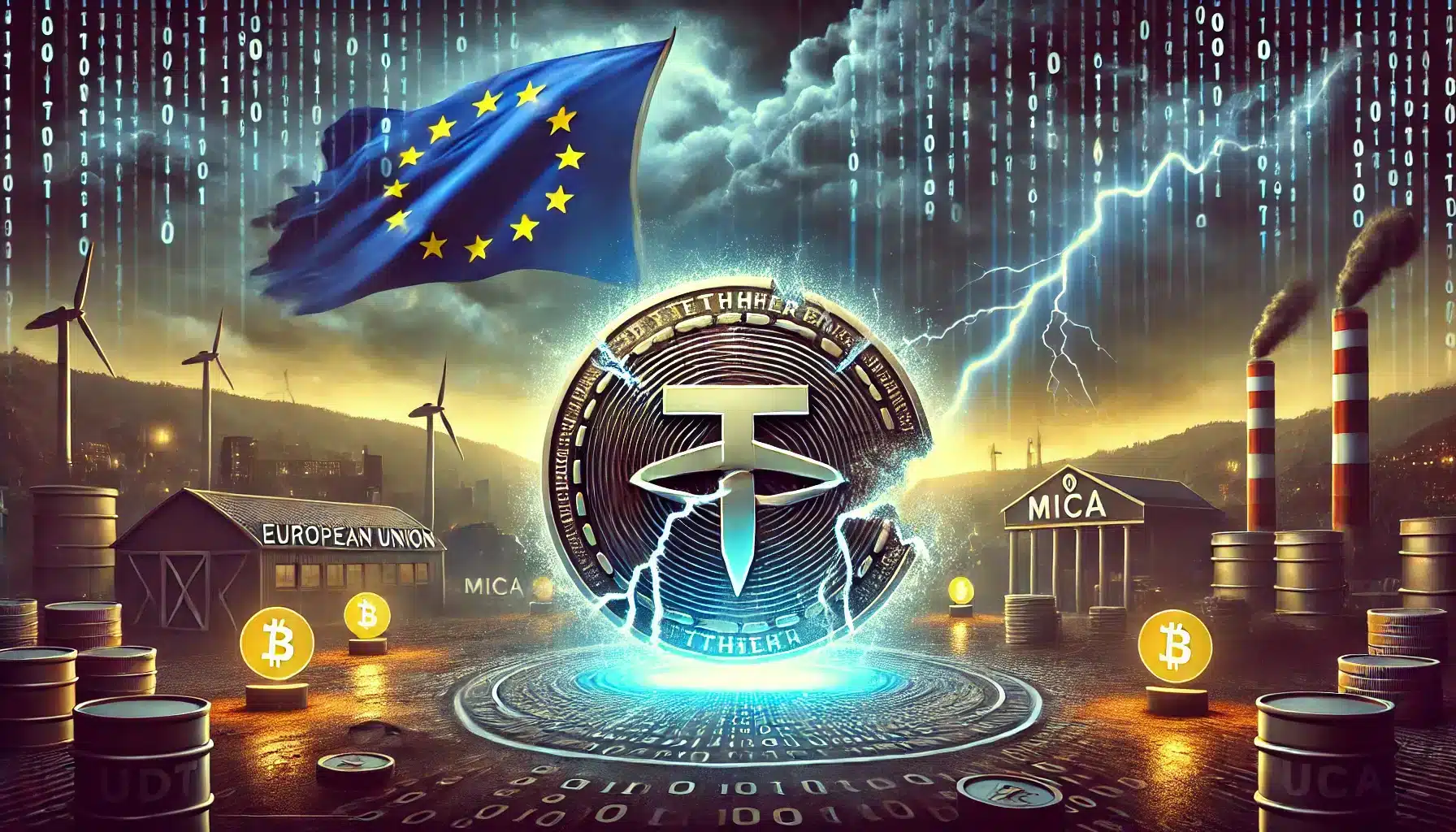
The MiCA regulation is having an international effect because regulators tend to watch the first serious framework that survives contact with the market. Europe has now given them a live case study. The broader global policy direction also points toward consistent implementation of international crypto standards.
Why Europe MiCA Regulation Is Changing Crypto Worldwide

According to the joint IMF and FSB roadmap, which stressed that fragmented regulation creates gaps, especially around globally active tokens and stablecoins. Europe has, in many ways, become the first large jurisdiction to move that idea from principle to practice.

The MiCA regulation is also landing at a moment when other financial hubs are tightening their own approach. In the United Kingdom, the new cryptoasset regime was set in law in February 2026 and is expected to come into force on 25 October 2027, with firms needing authorization and supervision under the national framework.

In Hong Kong, a licensing regime for fiat-referenced stablecoin issuers took effect on 1 August 2025. Singapore had already finalized a stablecoin framework aimed at ensuring a high degree of value stability for regulated stablecoins. None of these systems copy Europe line by line, but the direction is unmistakable. More disclosure, more licensing, more accountability.

That is why the MiCA regulation matters for crypto prices and market structure, even though it is a legal framework rather than a trading catalyst. Regulatory clarity tends to separate serious projects from fragile ones. Exchanges with better controls may gain trust.

Stablecoin issuers with clearer reserves and governance may face fewer doubts. Tokens that rely on vague promises, weak disclosures, or regulatory arbitrage may find the ground shifting under them. In crypto, rules do not kill risk. They often just force it into the open, which is healthier than letting it hide in the wallpaper.

Conclusion

The MiCA regulation is not the end of the global crypto rulemaking debate, but it is one of the clearest starting points the industry has seen. Europe has shown that crypto oversight can move beyond speeches and into a functioning legal structure with dates, obligations, and supervisory teeth.

The global ripple effect is already underway because once one major market builds a serious framework, others rarely stand still for long. For the crypto sector, that means the next phase of growth will likely reward compliance, transparency, and durability more than noise.

Frequently Asked Questions

What is MiCA in crypto?
MiCA is the EU legal framework for crypto-assets and related services that were not already covered by existing financial services law.

When did MiCA start applying?
Stablecoin-related rules started applying on 30 June 2024, while the wider framework applied from 30 December 2024.

Why does MiCA matter outside Europe?
It gives other regulators a tested model for licensing, disclosures, stablecoin oversight, and cross-border supervision.

Glossary of Key Terms

Asset-referenced token: A crypto token that seeks value stability by referencing other assets.

E-money token: A crypto token linked to the value of a single official currency.

CASP: A crypto-asset service provider such as an exchange, custody firm, or trading platform regulated under MiCA.

Reverse solicitation: A narrow exemption where the client initiates contact without being solicited by the provider.

Sources

Finance

European Banking Authority

FCA

ESMA

Disclaimer: This article is for educational and informational purposes only and should not be treated as legal, financial, or investment advice. 
Tags: EuropeMiCAMiCA Regulationstablecoins
ShareTweetSharePinSend
Previous Post

Top Play-to-Earn Tokens Powering Metaverse Growth in 2026

Next Post

Why Token Voting Fails: Inside the Growing DAO Governance Crisis

Jonathan Swift

Jonathan Swift

A crypto journalist with an understanding of blockchain technology. Skilled in simplifying complex topics for diverse audiences, from beginners to experts. Because I believe in words as they are the children of mind.

SIMILAR NEWS

Russia digital ruble launch
Cryptocurrency

Russia Digital Ruble Launch Set for September 2026 Despite EU Sanctions

3 July 2026
Binance stablecoin payments
World

Binance Mesh Investment Could Reshape Stablecoin Payments Market

3 July 2026
How Illinois Crypto Tax Sparks Backlash From CFTC Chair Selig
Economy

How Illinois Crypto Tax Sparks Backlash From CFTC Chair Selig

3 July 2026

Leave a Reply Cancel reply

Your email address will not be published. Required fields are marked *

Search

No Result
View All Result
DMCA
PROTECTED

Categories

  • Business
  • Cryptocurrency
  • Economy
  • en
  • News
  • Politics
  • World

Recent Posts

  • Russia Digital Ruble Launch Set for September 2026 Despite EU Sanctions
  • Binance Mesh Investment Could Reshape Stablecoin Payments Market
  • How Illinois Crypto Tax Sparks Backlash From CFTC Chair Selig
  • Florida Crypto ATM Law Introduces Transaction Limits and Fraud Warnings
  • Crypto Firms Pour $189 Million Into 2026 Midterms, Dwarfing Big Tech Spending
TurkishNY Radio

Site Navigation

  • Home
  • About Us
  • Terms and Conditions
  • Privacy Policy
  • Disclaimer
  • Contact

TurkishNY Radio

Banner 1
Banner 2
No Result
View All Result
  • Home
  • Cryptocurrency
  • Business
  • Economy
  • tr Türkçe
  • en English

  • English