This Article Was First Posted on TurkishNY Radio.
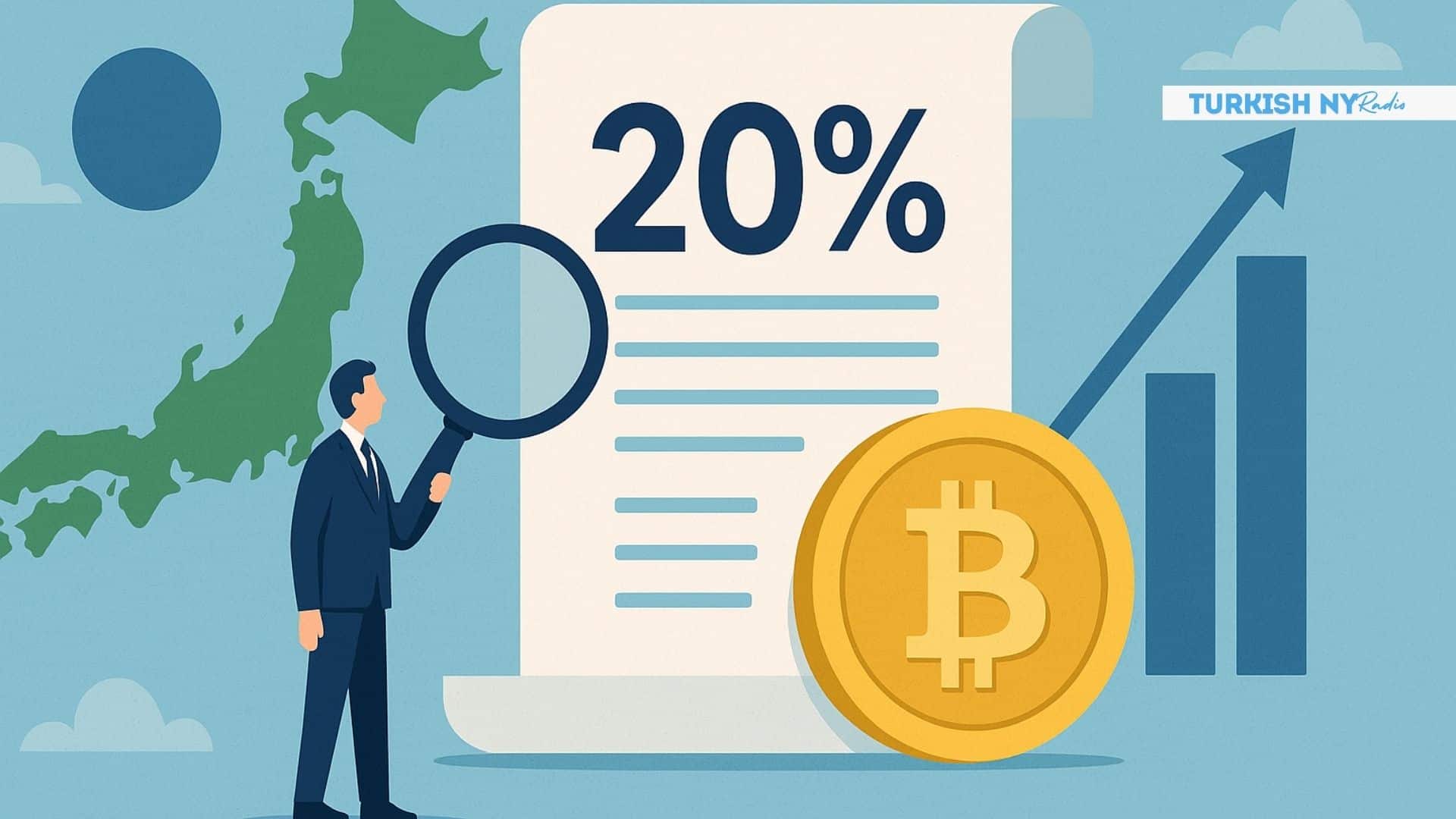
Japan is getting ready to change its bitcoin tax system, which might have an impact on Asian regulatory decisions as well as the country’s digital asset sector. A flat 20% tax rate on eligible cryptocurrencies is introduced by the planned Japan crypto tax reform, bringing them into line with conventional financial goods.


Legislators across Singapore and mainland China are keeping a close eye on Japan’s regulatory modernization efforts, raising concerns about potential changes to investor preferences and regional competition.
Japan’s Financial Law Reclassifies Cryptocurrency
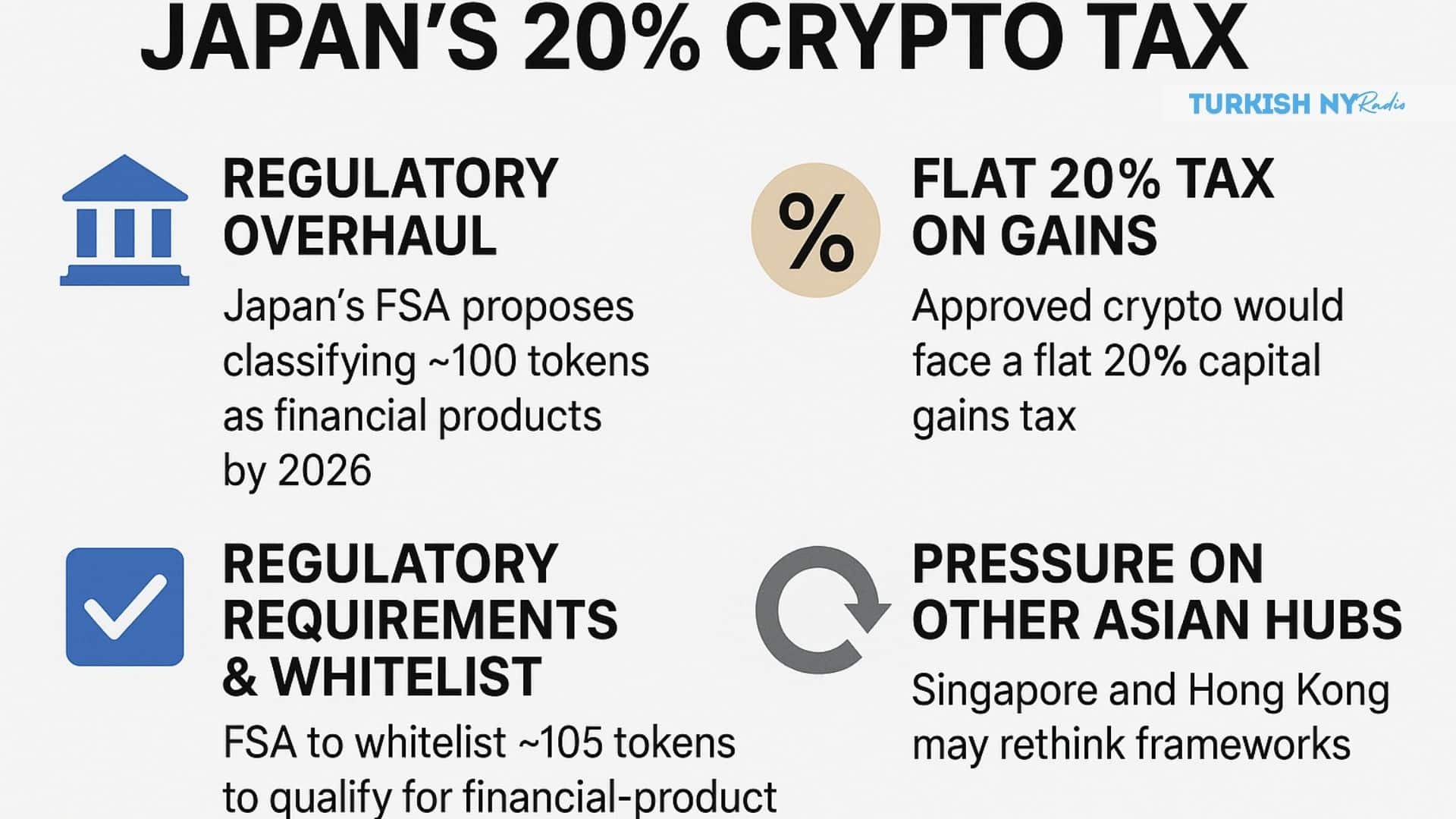
Under the Financial Instruments and Exchange Act, Japan’s crypto tax officials plan to classify authorized cryptocurrencies as financial goods. This reclassification is a key component of Japan’s revised cryptocurrency tax regime and is anticipated to provide the trading and oversight of digital assets with more structure.
Major assets like Bitcoin as well as Ethereum would be subject to more stringent reporting requirements, improved disclosures, and controlled custody standards under the new regulations. “The readjustment aligns digital currency with recognized compliance processes and reduces ambiguities for both individuals and institutions,” said a financial policy researcher.
Authorities hope to increase trust and reduce risk in a developing but unstable sector by incorporating cryptocurrency into the current financial infrastructure.
Also read: Why Japan Banks Bitcoin Could Be the Most Powerful Financial Shift of 2025


A 20% flat tax rate might increase domestic involvement
Currently, Japanese investors can face tax rates as high as 55% on personal cryptocurrency gains. The proposed Japan crypto tax rate of 20% represents a significant reduction intended to simplify tax obligations and improve after-tax returns.
Analysts suggest the new rate could reduce incentives for traders to move assets abroad. One economist noted, “A predictable 20% tax lowers psychological barriers for local investors and gives them a clearer sense of financial planning.”
This change also mirrors Japan crypto tax treatment of stock investments, indicating a broader effort to harmonize digital and traditional markets. The government hopes this consistency will support long-term market stability and encourage more transparent trading behavior.

Whitelist of Eligible Tokens to Shape Market Access
A critical element of the Japan crypto tax reform is the creation of a whitelist, expected to include around 105 permissible cryptocurrencies. Only tokens on this list will qualify for the new tax benefits and regulatory protections.
This approach is intended to reduce exposure to high-risk assets but may also challenge smaller or emerging projects that fall outside the approved list. Institutions such as banks and brokerage firms are expected to expand their involvement in the sector once the whitelist is finalized. Their participation may create additional market depth and expand consumer access to regulated services.
Regional Consequences for Hong Kong and Singapore
Japan’s initiative might have an impact on regulatory discussions across Asia. Japan crypto tax may have an advantage in luring investors and institutional supporters because to the transparent and relatively advantageous structure of the country’s cryptocurrency tax.
According to experts, Singapore and Hong Kong as well can experience pressure to modify their frameworks in order to stay competitive. “The addition of the 20% tax rate and clear classification is likely to motivate lawmakers across Asia to review their own crypto regulations,” said a regional market analyst.
It is anticipated that the suggested modifications will be completed and put into effect in 2026.
Conlusion
A major change in Japan’s approach to managing its digital asset sector is represented by the planned crypto tax reform. Policymakers hope to create a more organized and safe environment for investors by decreasing taxes, creating a whitelist, and incorporating cryptocurrency into the nation’s financial system.
The change has a possibility to impact regional regulatory plans and Japan crypto tax future participation in Asia’s changing digital asset market, notwithstanding ongoing concerns.
Also read: BOJ Sounds Alarm on Japan’s Overheating Stock Market
Glossary of Key Terms
Japan crypto tax – Japan’s proposed 20% tax rate for approved cryptocurrency gains.
Whitelist – A regulated list of cryptocurrencies eligible for favorable tax and trading treatment.
Capital Gains Tax – A tax on profit from selling an asset.
Financial Instruments and Exchange Act (FIEA) – Japan’s main securities regulation framework.
Digital Asset Regulation – Rules governing how cryptocurrencies are traded, reported, and supervised.