
A debate that strikes at the heart of DeFi
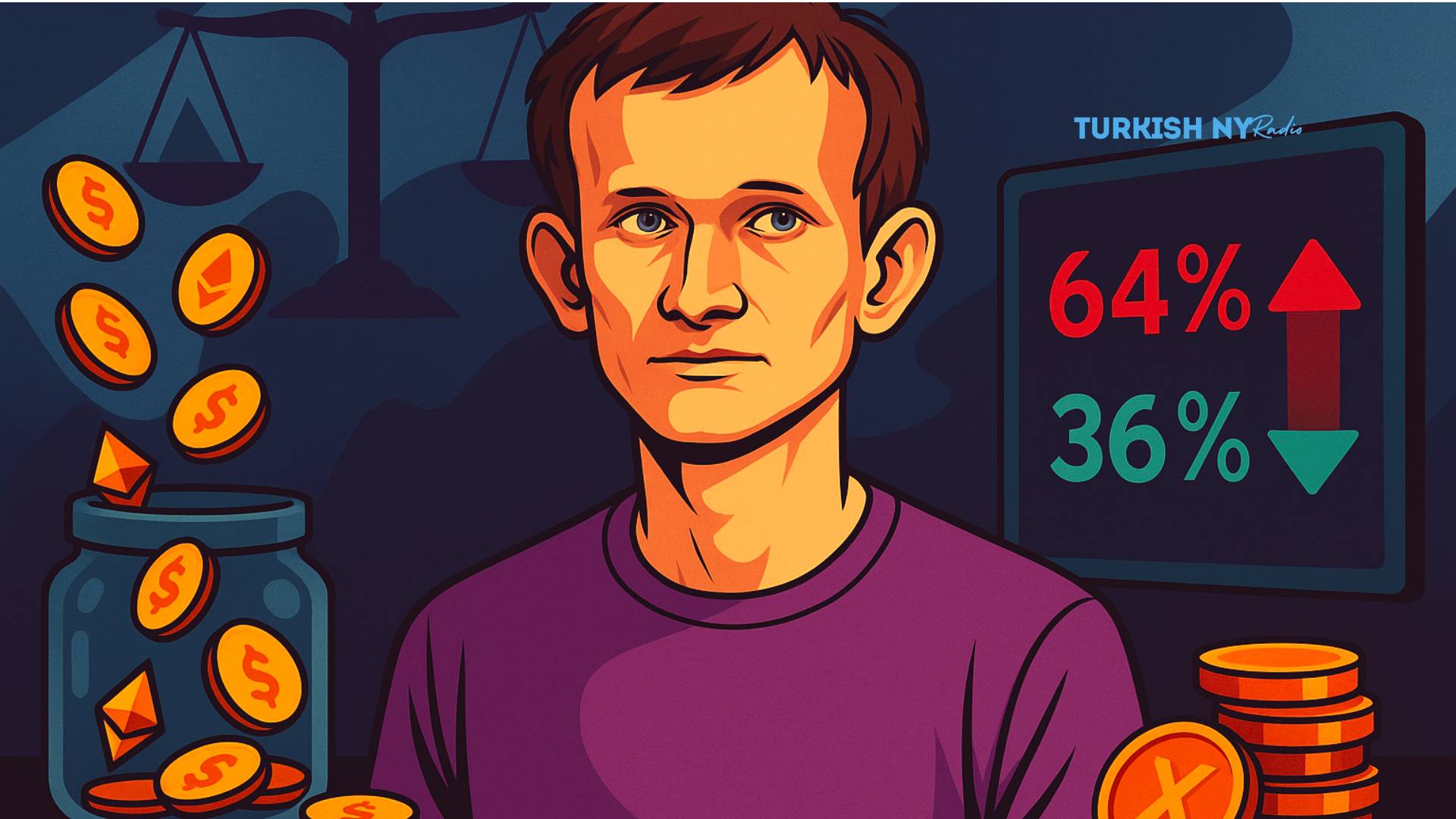
Prediction markets, long regarded as the next frontier in decentralized finance, are facing a significant design difficulty. Ethereum co-founder Vitalik Buterin has raised an important point: these platforms fail to account for the return investors forgo while locking assets.


His comments regarding Farcaster have generated a new round of debate about whether prediction markets will ever achieve broad adoption without overcoming the “yield gap.”
Buterin pointed out that cash invested in prediction platforms gets no income, while stable assets such as US dollar savings yielding over 4%. This presents a structural disadvantage for those attempting to hedge, since they effectively incur a hidden cost by foregoing passive profits.
Why the Yield Gap Matters
In conventional finance, players seldom commit capital without recompense. Bonds, money markets, and savings products all pay interest.
In prediction markets, however, players lock their cash into outcome contracts that pay only if the bet is won. That design is appropriate for speculation, but not for risk transfer, which necessitates long-term hedging.
Buterin stated, “Locking up capital without yield makes these markets very unappealing for hedgers.” His viewpoint is shared by detractors who contend that prediction platforms rely too heavily on gamblers and lack the balance of speculators, hedgers, and institutions required for functioning markets.
Institutional capital stays away
It is worth noting that institutional investors shun prediction markets in order to deploy cash in other interest-bearing assets. Without yield integration, platforms are unable to compete with traditional financial products that provide both liquidity and returns.
This fundamental flaw explains why, even when services like Polymarket expand in user base, trade volume frequently lags. Serious players may enter these marketplaces, but few remain once they realize the opportunity cost of idle money.
Bridge the Gap: Possible Solutions
Developers and researchers have developed strategies to close the yield gap. One solution is to include interest-bearing stablecoins or tokenized treasury goods into prediction contracts, which ensures users do not lose money while waiting for results.
Another includes algorithmic changes that pool idle assets into lending protocols like Aave or Compound, which automatically distribute yield to participants.
These concepts confront legislative and technological challenges, but they show a way ahead. If adopted, prediction markets might transform from speculative tools to legitimate instruments for hedging political risk, climate futures, and even cryptocurrency price exposure.
Implications for the cryptocurrency market
Buterin’s comments underscore an uncomfortable fact for the cryptocurrency industry: creativity does not ensure acceptance.


Decentralized platforms must compete with both traditional banking and emerging cryptocurrency-based technologies such as DeFi lending protocols. Without addressing structural inefficiencies, prediction markets risk becoming specialized products rather than systemic disruptors.
Interestingly, experts believe that yield integration will bring prediction markets closer to institutional-grade DeFi. As more banks and asset managers experiment with tokenization, platforms that provide both hedging and income may grab a larger market.
Conclusion: A Turning Point in Prediction Markets
Vitalik Buterin’s warning about the yield gap requires the industry to consider a basic question: are prediction markets designed for long-term finance, or are they only for entertainment? The lack of yield discourages involvement and precludes institutional adoption.
If developers can close this gap, prediction markets may finally realize their potential as decentralized forecasting engines and risk-transfer instruments. Until then, they are locked in conjecture. The discussion is no longer scholarly; it is existential.
Glossary
Prediction Market – A platform where participants bet on outcomes of real-world events.
Yield Gap – The lost interest from locking capital without earning returns.
Stablecoin – A cryptocurrency pegged to stable assets, often the U.S. dollar.
Risk Transfer – The act of using financial instruments to hedge against potential losses.
Tokenization – The process of representing real-world assets as blockchain tokens.
DeFi Lending Protocol – Platforms like Aave or Compound that allow users to earn yield on deposited assets.
Liquidity – The ease of converting assets into cash or equivalents without major price changes.
FAQs for Vitalik Buterin’s Yield Gap
What is the yield gap in prediction markets?
It refers to the interest lost when locking funds into contracts that don’t pay yield.
Why does Vitalik Buterin see this as a problem?
He believes the yield gap makes prediction markets unattractive for hedging and long-term use.
Can prediction markets attract institutions?
Not until they offer yield mechanisms similar to bonds or money market products.
What solutions exist for the yield gap?
Integrating interest-bearing stablecoins or pooling idle funds into lending protocols.
Are prediction markets financial advice tools?
No. They provide forecasts and hedging options but carry risks like any financial product.