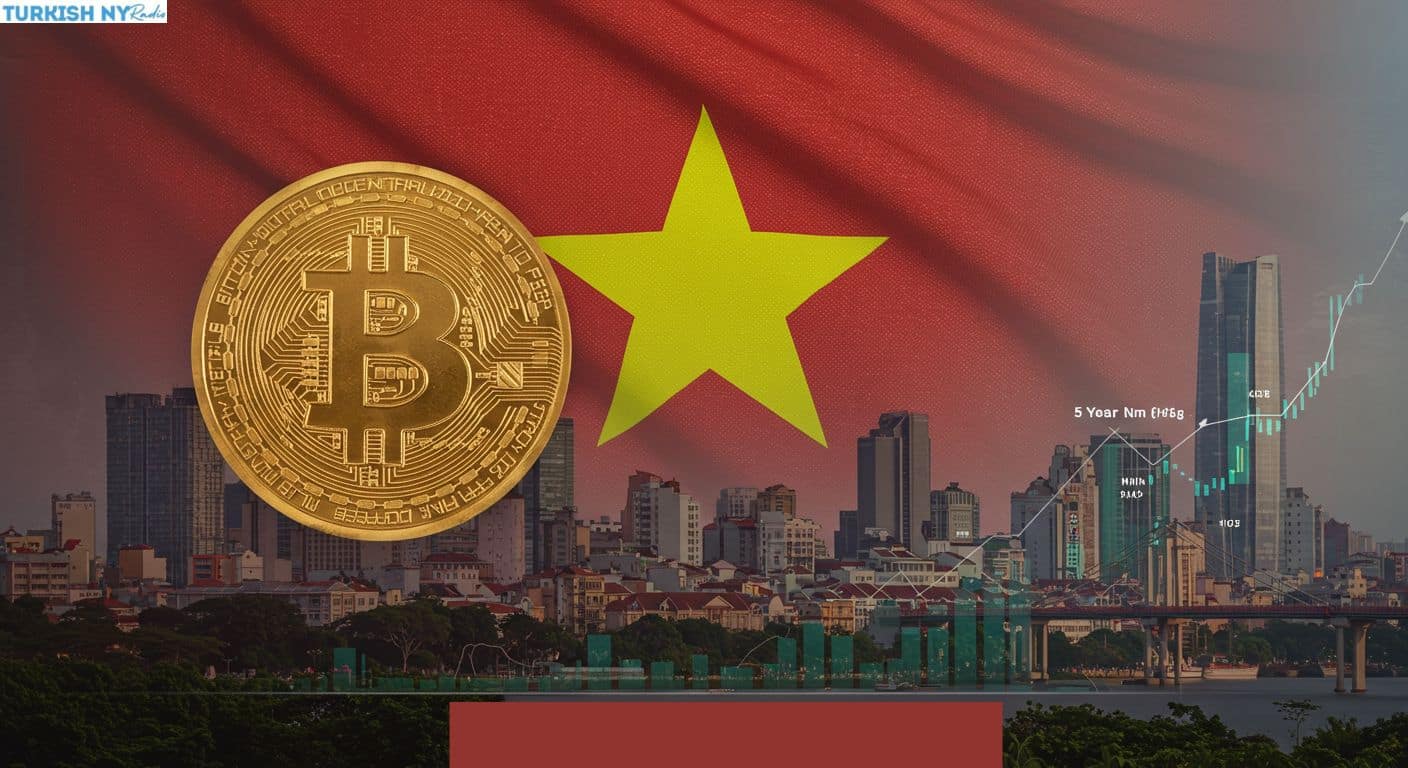
According to the latest reports, Vietnam has launched a 5-year crypto trading pilot, bringing Vietnam’s massive but previously unregulated digital asset market under the radar of the government.
The new framework requires all crypto issuance, trading and payment to be in Vietnamese dong and only Vietnamese firms can operate the exchanges.


Notable rules include a 10 trillion VND ($379M) capital requirement (at least 65% from institutional investors) and a 49% cap on foreign ownership of any exchange.
Features of the Vietnam Crypto Trading Pilot
The Vietnam crypto trading pilot is a closed experiment where only government-approved entities can operate.
Under the resolution signed by Deputy Prime Minister Ho Duc Phoc, only Vietnamese enterprises licensed by the Ministry of Finance can build and run crypto exchanges, issuance platforms or related services.
All crypto-related transactions from token creation to buying and selling must be settled in dong. Issuance of new crypto assets is limited to Vietnamese companies and must be backed by real underlying assets (no securities or fiat backed tokens).
Additionally, these token offerings can only be sold to foreign investors through licensed providers, to kickstart a regulated market without opening up speculation among domestic retail investors.
Exchange operators will face high barriers to entry. In addition to licensing, they must have at least 10 trillion VND ($379M) paid-in capital and at least 65% of this capital must come from institutional investors such as banks, fund managers, insurers or tech companies.
Foreign investment is allowed but capped; no more than 49% of an exchange’s ownership can be held by foreign entities.
The resolution also requires strict compliance with anti-money-laundering (AML), counter-terrorist financing (CTF), cybersecurity and data protection lawsvietnamplus.vn.
Issuers and operators must publish a disclosure prospectus at least 15 days before token offerings and have experienced management, cybersecurity experts, and sufficient tech personnel as part of governance requirements.
Also read: Vietnam Legalizes Crypto Assets: Clear Rules, Big Opportunities

Capital, Ownership and Compliance Rules
Vietnam’s pilot has very high capital and staffing requirements to ensure only serious and well-backed players can enter the market. Exchange providers must get financing from at least two reputable institutions (banks, brokerages, insurers or tech companies) and have profitable track records.
This institutional backing (65% minimum) is to prevent sketchy start-ups and ensure financial stability.
Exchange shareholders must be profitable, and the company leadership (CEO, CTO) must have years of financial or tech industry experience. The aim is to force licensed platforms to operate at a professional and transparent standard.
The 49% foreign cap helps balance local control with outside expertise. Analysts note that this aligns with Vietnam’s goal of attracting global crypto talent while keeping ultimate control local.
As news reports put it, “Vietnam launched a strict five-year crypto trading pilot… requiring platforms to meet high capital thresholds and limit foreign ownership”.
All platforms must do KYC and transaction monitoring, so regulators will integrate crypto into existing finance laws.
Vietnam’s Crypto Adoption and Regulatory Context
Vietnam moved to regulated crypto trading after years of gray market growth. Industry data shows 17 million Vietnamese (almost 18% of the population) hold cryptocurrencies, and in 2025 Chainalysis ranked Vietnam 4th globally in crypto adoption.


Surveys show over $100 billion of crypto assets are held locally often as investment or remittance tools. Despite this mass adoption, Vietnam had no legal framework for crypto and authorities even warned against trading.
That changed in mid-2025 when the National Assembly passed the Law on Digital Technology Industry, officially recognizing digital assets as property and laying the ground for a controlled market.
This regulatory push is also tied to global compliance. In 2023, Vietnam was added to the FATF’s “gray list” for gaps in anti-money-laundering and counter-terrorism-financing (AML/CTF) measures.
By creating a legal, supervised crypto market, Vietnam wants to address FATF concerns and improve its financial reputation. Experts say the design of the pilot with AML/KYC rules and high capital buffers is international best practice.
Basically, the government is trying to move crypto activity from informal channels to official channels.
Expert Insights
Industry leaders and experts have different views on the pilot. Some see it as a big step forward. Do Van Thuat, Director of Blockchain Solutions at 1Matrix, said once the legal framework is in place “Vietnam can be a financial hub in 2-3 years”.
This is based on Vietnam’s fast-growing tech sector and appetite for innovation. The Vietnamese Blockchain and Digital Asset Association said clear rules will attract investment and talent. Binance’s Vietnam country manager Lynn Hoang, said,
“adoption can’t grow without clear definitions. People must have true ownership without excessive control”.
Other experts, however, think otherwise. Nguyen Ngoc Anh, CEO of SSI Asset Management, says Vietnam lacks “big enough sandboxes for experimentation, and international-standard infrastructure” to absorb rapid crypto innovation.
There are practical concerns: licensed exchanges must develop robust technology and compliance systems from scratch. Also, restricting token sales to foreigners means local investors can’t buy the new Vietnamese-backed crypto tokens immediately, potentially limiting initial liquidity.
Experts report that regulators will allow multiple exchanges but will “keep the number within a manageable range to facilitate supervision”.
This controlled approach suggests authorities want gradual expansion: one Vietnamese official said exchanges will first launch in majovr hubs (Ho Chi Minh City and Da Nang) before rollout.
Overall, analysts see the Vietnam crypto trading pilot as a bold experiment balancing opportunity and risk. “Vietnam has seen boom cycles… but without regulation, markets collapse into chaos” warned Nguyen Xuan Bach of a state-backed fintech firm.
The consensus is that strict rules will be needed to build trust; as regulatory clarity improves, Vietnam could attract institutional capital and global partnerships in crypto.
Also read: Vietnam to Launch Crypto Exchange Pilot in March 2025 – What It Means for the Region

For Investors and Exchanges
Vietnamese citizens who already own crypto are given a transition path. After licensed exchanges start operation, regulators will have a 6-month window for local traders to “migrate” their assets to approved platforms.
During that period, authorities will allow existing crypto holders to open accounts and trade through the new system. But new retail trading is effectively on hold as only Vietnamese who already have crypto, and foreign investors, can use the platforms.
This approach prevents speculative surges while bringing ordinary holders into the legal fold. Outside Vietnam, major global exchanges may see changes; analysts predict some outflow of Vietnamese trading volume as the domestic system takes shape.
For exchanges, they are to meet the standards or simply get out. The 10-trillion-VND capital rule and professional staffing requirements will weed out casual entrants. In practice, this means big financial groups or tech giants with deep pockets.
Vietnamese report said at least two major institutions must fund any exchange, ensuring stability. Future licensing fees and ongoing compliance costs will also apply.
The upside for companies is huge. A legal first-mover advantage in a market of millions of users. For example, reports claim Military Bank (a state lender) is already partnering with South Korea’s Dunamu to launch Vietnam’s first licensed crypto exchange.
Meanwhile, the Vietnamese dong is at the center of the pilot so that the national currency will be prominent in crypto settlements. All trading in the pilot must use VND, which will reduce dollarization and keep trading volume within official financial channels.
Conclusion
Based on latest research, Vietnam’s crypto trading pilot is a big deal but not guaranteed to succeed. The 5 year trial will test if tight controls and institutional involvement can coexist with market growth.
Success will make Vietnam a Southeast Asian crypto hub; failure will push users back to underground channels. Going forward, how easy exchanges can attract capital, foreign investors response and retail sentiment, will be of high importance.
For in-depth analysis and the latest trends in the crypto space, our platform offers expert content regularly.
Summary
Vietnam’s government has approved a 5 year crypto trading pilot, only local licensed firms can run exchanges under strict rules; dong only settlement, 10T VND capital, 49% foreign cap. The pilot follows a new digital assets law and aims to formalize Vietnam’s large crypto market (17M users) while meeting global AML standard.
Glossary
Crypto Asset (Digital Asset): A digital medium of exchange or investment (like Bitcoin or tokenized real assets) created and secured by cryptography.
Licensed Crypto Exchange: A platform officially authorized by regulators to facilitate buying and selling crypto.
Foreign Ownership Cap: A regulatory limit on how much equity foreign investors can hold.
AML / KYC: Rules and procedures to prevent illegal financial activities.
FATF Gray List: A list by the Financial Action Task Force for countries that need to strengthen financial crime measures.
FAQs on Vietnam Crypto Trading Pilot
What is Vietnam crypto trading pilot?
A 5 year trial to regulate cryptocurrency exchanges. Only Vietnamese firms licensed by the Ministry of Finance can operate exchanges under strict conditions.
Who can provide crypto exchange services under the pilot?
Only enterprises licensed by Vietnam’s Ministry of Finance can organize crypto exchanges or related issuance platforms. These must be Vietnamese registered companies meeting governance and capital criteria.
What are the capital and ownership rules for exchanges?
An exchange provider must have at least VND 10 trillion ($379M) in paid-in capital, with ≥65% contributed by major institutional investors. Foreign ownership of the exchange is capped at 49%, ensuring majority Vietnamese control.
Can Vietnamese Citizens trade crypto under this pilot?
Vietnamese who already hold crypto can open accounts on licensed exchanges and trade during a transition period.