• Home
  • About Us
  • Terms and Conditions
  • Privacy Policy
  • Disclaimer
  • Contact
27 January Tuesday, 2026
  • tr Türkçe
  • en English
TurkishNY Radio
No Result
View All Result
  • Home
  • Cryptocurrency
  • Business
  • Economy
  • Home
  • Cryptocurrency
  • Business
  • Economy
No Result
View All Result
  • tr Türkçe
  • en English
TurkishNY Radio
No Result
View All Result
Bitcoin Bitcoin (BTC) $95,261.57 ↓ -0.05%
Ethereum Ethereum (ETH) $3,288.55 ↓ -0.06%
Tether USDt Tether USDt (USDT) $1.00 ↓ 0.00%
BNB BNB (BNB) $936.88 ↑ 0.81%
XRP XRP (XRP) $2.06 ↓ -0.16%
Solana Solana (SOL) $143.94 ↑ 1.52%
USDC USDC (USDC) $1.00 ↑ 0.01%
TRON TRON (TRX) $0.31 ↑ 0.69%
Dogecoin Dogecoin (DOGE) $0.14 ↓ -1.31%
Cardano Cardano (ADA) $0.40 ↑ 1.28%
Bitcoin Cash Bitcoin Cash (BCH) $592.58 ↑ 0.05%
Monero Monero (XMR) $626.65 ↓ -8.54%
Chainlink Chainlink (LINK) $13.72 ↑ 0.24%
UNUS SED LEO UNUS SED LEO (LEO) $9.06 ↑ 1.81%
Hyperliquid Hyperliquid (HYPE) $24.83 ↑ 0.87%
Stellar Stellar (XLM) $0.23 ↓ -0.45%
Sui Sui (SUI) $1.79 ↑ 1.00%
Zcash Zcash (ZEC) $405.35 ↑ 0.15%
Ethena USDe Ethena USDe (USDe) $1.00 ↑ 0.01%
Avalanche Avalanche (AVAX) $13.56 ↓ -1.36%
Litecoin Litecoin (LTC) $74.59 ↑ 3.87%
Dai Dai (DAI) $1.00 ↑ 0.01%
Hedera Hedera (HBAR) $0.12 ↑ 1.10%
Shiba Inu Shiba Inu (SHIB) $0.00 ↑ 1.59%
Canton Canton (CC) $0.13 ↓ -4.54%
World Liberty Financial World Liberty Financial (WLFI) $0.17 ↑ 1.92%
Toncoin Toncoin (TON) $1.71 ↓ -0.15%
Cronos Cronos (CRO) $0.10 ↑ 1.09%
PayPal USD PayPal USD (PYUSD) $1.00 ↓ -0.02%
Polkadot Polkadot (DOT) $2.13 ↑ 1.14%
World Liberty Financial USD World Liberty Financial USD (USD1) $1.00 ↓ -0.02%
Uniswap Uniswap (UNI) $5.35 ↑ 1.09%
Mantle Mantle (MNT) $0.95 ↑ 0.75%
Bittensor Bittensor (TAO) $275.98 ↓ -0.05%
Aave Aave (AAVE) $175.26 ↑ 2.58%
Bitget Token Bitget Token (BGB) $3.78 ↑ 0.56%
Pepe Pepe (PEPE) $0.00 ↑ 0.89%
OKB OKB (OKB) $114.57 ↑ 0.43%
Internet Computer Internet Computer (ICP) $4.12 ↓ -6.23%
NEAR Protocol NEAR Protocol (NEAR) $1.74 ↑ 1.23%
Ethereum Classic Ethereum Classic (ETC) $12.84 ↑ 2.02%
MemeCore MemeCore (M) $1.58 ↓ -3.37%
Tether Gold Tether Gold (XAUt) $4,594.44 ↑ 0.05%
Aster Aster (ASTER) $0.72 ↑ 1.46%
PAX Gold PAX Gold (PAXG) $4,608.64 ↓ -0.01%
Ethena Ethena (ENA) $0.22 ↓ -0.72%
Pi Pi (PI) $0.21 ↑ 0.51%
Global Dollar Global Dollar (USDG) $1.00 ↓ 0.00%
Polygon (prev. MATIC) Polygon (prev. MATIC) (POL) $0.15 ↓ -1.49%
Worldcoin Worldcoin (WLD) $0.56 ↓ -0.49%
KuCoin Token KuCoin Token (KCS) $11.43 ↓ -0.40%
Sky Sky (SKY) $0.06 ↑ 6.41%
Aptos Aptos (APT) $1.82 ↑ 1.68%
MYX Finance MYX Finance (MYX) $5.42 ↓ -1.28%
Ripple USD Ripple USD (RLUSD) $1.00 ↓ -0.03%
Cosmos Cosmos (ATOM) $2.53 ↑ 2.55%
Arbitrum Arbitrum (ARB) $0.21 ↑ 1.87%
Ondo Ondo (ONDO) $0.39 ↑ 2.39%
Kaspa Kaspa (KAS) $0.04 ↓ -1.67%
GateToken GateToken (GT) $10.39 ↑ 0.40%
Render Render (RENDER) $2.29 ↑ 4.64%
Algorand Algorand (ALGO) $0.13 ↑ 3.22%
Filecoin Filecoin (FIL) $1.52 ↓ -0.86%
OFFICIAL TRUMP OFFICIAL TRUMP (TRUMP) $5.38 ↑ 0.89%
Midnight Midnight (NIGHT) $0.06 ↓ -1.51%
Pump.fun Pump.fun (PUMP) $0.00 ↑ 2.40%
Dash Dash (DASH) $82.13 ↓ -12.23%
VeChain VeChain (VET) $0.01 ↑ 3.78%
Quant Quant (QNT) $80.61 ↑ 9.51%
USDD USDD (USDD) $1.00 ↓ -0.01%
Story Story (IP) $2.71 ↑ 8.86%
Bonk Bonk (BONK) $0.00 ↑ 1.69%
Flare Flare (FLR) $0.01 ↓ -0.44%
XDC Network XDC Network (XDC) $0.04 ↓ -0.86%
Sei Sei (SEI) $0.12 ↓ -0.18%
Pudgy Penguins Pudgy Penguins (PENGU) $0.01 ↑ 1.88%
PancakeSwap PancakeSwap (CAKE) $2.12 ↑ 4.44%
Jupiter Jupiter (JUP) $0.22 ↑ 2.98%
Stacks Stacks (STX) $0.37 ↑ 1.60%
Optimism Optimism (OP) $0.34 ↑ 1.48%
Tezos Tezos (XTZ) $0.62 ↑ 6.97%
Virtuals Protocol Virtuals Protocol (VIRTUAL) $0.98 ↓ -0.27%
Artificial Superintelligence Alliance Artificial Superintelligence Alliance (FET) $0.28 ↑ 2.33%
Nexo Nexo (NEXO) $0.99 ↑ 2.86%
Curve DAO Token Curve DAO Token (CRV) $0.44 ↑ 2.45%
Chiliz Chiliz (CHZ) $0.06 ↓ -1.33%
United Stables United Stables (U) $1.00 ↑ 0.01%
Immutable Immutable (IMX) $0.29 ↑ 7.58%
Injective Injective (INJ) $5.40 ↑ 4.75%
SPX6900 SPX6900 (SPX) $0.57 ↑ 1.57%
ether.fi ether.fi (ETHFI) $0.75 ↑ 1.08%
Lido DAO Lido DAO (LDO) $0.61 ↓ -0.98%
Aerodrome Finance Aerodrome Finance (AERO) $0.56 ↑ 0.70%
Celestia Celestia (TIA) $0.59 ↑ 5.79%
Morpho Morpho (MORPHO) $1.34 ↓ -2.60%
First Digital USD First Digital USD (FDUSD) $1.00 ↑ 0.04%
TrueUSD TrueUSD (TUSD) $1.00 ↓ -0.04%
FLOKI FLOKI (FLOKI) $0.00 ↑ 2.67%
DoubleZero DoubleZero (2Z) $0.14 ↑ 10.97%
The Graph The Graph (GRT) $0.04 ↑ 7.19%
Home News

Venezuela Oil Reserves and Bitcoin Mining: What Miners Need to Know

Areeba Rashid by Areeba Rashid
16 January 2026
in News, Business, Cryptocurrency, Economy
Reading Time: 5 mins read
0
Bitcoin mining

This article was first published on TurkishNY Radio.

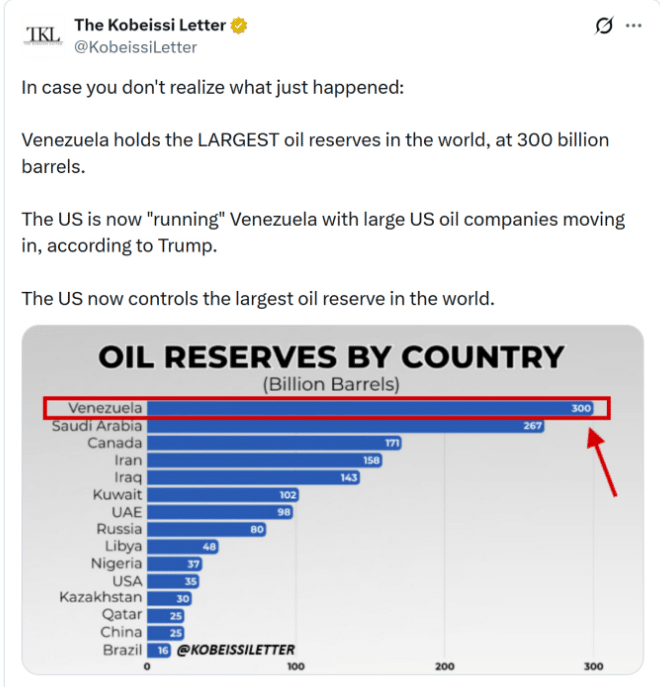
Bitcoin mining is increasingly treating Venezuela less as a cheap-power shortcut and more as a long-term energy variable. The country holds about 303 billion barrels of proven oil reserves, which keeps it on global energy watchlists. 

Table of Contents

Toggle
    • YOU MAY BE INTERESTED
    • How Ripple’s Saudi Bank Partnership Supports Vision 2030
    • Russia Blacklists WhiteBIT: Why the Crypto Exchange Was Banned
  • Venezuela Output Near 1M bpd Limits Bitcoin Mining Impact
  • Hashprice and Power Costs Define Bitcoin Mining Profitability
  • Proven Reserves Do Not Equal Fast Output
  • Extra-Heavy Crude Limits Quick Growth
  • Oil Can Still Influence Power Prices
  • PPAs Bring Stability but Need Reliable Conditions
  • Stranded Energy and Flare Gas Offer Another Path
  • Grid Reliability and Policy Risk Remain Obstacles
  • Conclusion
  • Appendix Glossary of Keyterms
  • Frequently Asked Questions About Bitcoin Mining
    • 1- Can Venezuela lower Bitcoin mining power costs soon?
    • 2- Why do reserves not guarantee cheaper electricity?
    • 3- What signals should miners watch?
    • 4- What risks make Venezuela difficult for miners right now?
      • References

YOU MAY BE INTERESTED

How Ripple’s Saudi Bank Partnership Supports Vision 2030

How Ripple’s Saudi Bank Partnership Supports Vision 2030

27 January 2026
Russia bans WhiteBIT

Russia Blacklists WhiteBIT: Why the Crypto Exchange Was Banned

27 January 2026

Yet large reserves do not guarantee near-term supply. Output remains far below historical peaks.


Venezuela Output Near 1M bpd Limits Bitcoin Mining Impact

Venezuela’s production is estimated around 1 million barrels per day. That is far under the multi-million bpd levels it once sustained. 

Analysts link the decline to underinvestment and degraded infrastructure. They also point to the difficulty of extracting and transporting extra-heavy crude.

A recent report citing Bitfinex analysts framed Venezuela as a long-horizon factor for Bitcoin mining economics. The analysts said bigger supply could lower energy costs in some markets over time. 

Hashprice and Power Costs Define Bitcoin Mining Profitability

Bitcoin mining margins depend on revenue per unit of hashpower minus operating costs. Miners track revenue using hashprice, a benchmark popularized by Luxor. Hashprice estimates the daily value of 1 terahash per second of hashing power. 

Electricity remains the main recurring cost for Bitcoin mining. The University of Cambridge mining methodology notes that power represents a large share of operating expenses. That is why operators focus heavily on energy efficiency and facility uptime. 
Bitcoin mining
Source: X

Proven Reserves Do Not Equal Fast Output

Venezuela’s 303 billion barrel reserve figure is real. It explains why the country stays in long-term energy forecasts. Estimates place Venezuela near 1 million bpd, down sharply from output above 3 million bpd in earlier decades.

Also Read: Could Greenland Become a U.S. Bitcoin Mining Hub? Trump Suggests 10,000 EH/s Potential

The gap matters for Bitcoin mining planning. Cheap energy depends on steady supply, functioning infrastructure, and stable exports. Venezuela’s reserve size does not solve those constraints. That is why analysts treat the story as long duration.

Extra-Heavy Crude Limits Quick Growth

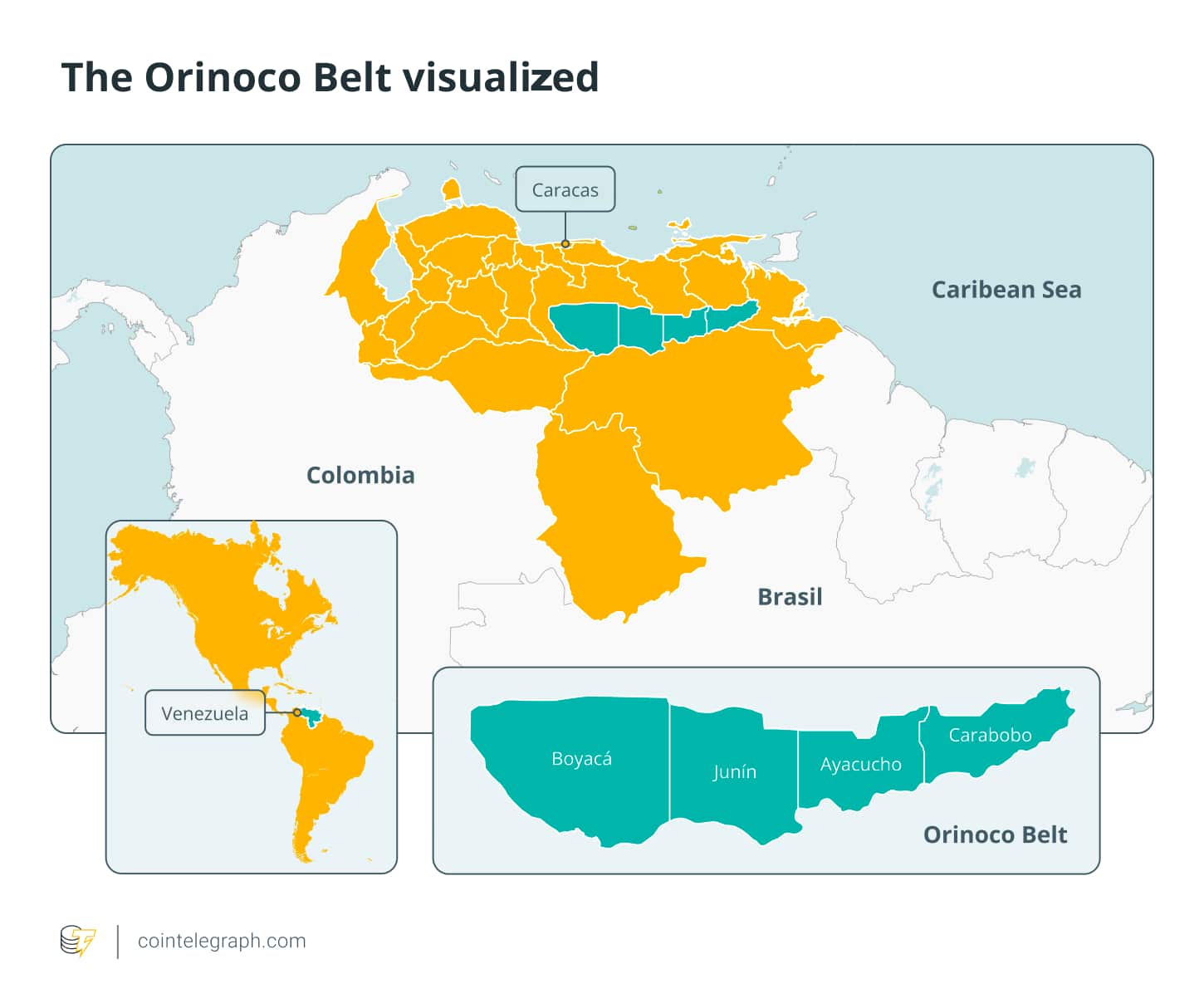
Much of Venezuela’s oil is extra-heavy, especially in the Orinoco Belt. Extra-heavy crude is harder to lift and transport than lighter oil. It often requires diluents such as naphtha to thin the crude. That makes logistics more complex and more expensive.

Processing is also harder. Extra-heavy crude requires specialized handling at refineries. Pipelines and equipment must stay operational for consistent flows. These limits reduce the chance of rapid output gains. For Bitcoin mining, this pushes the timeline outward.
BTC mining news

Oil Can Still Influence Power Prices

Still, fuel markets can influence wholesale power through generation costs. In many systems, fossil generation sets the marginal price of electricity. Research briefs from the UK Parliament describe how marginal-cost pricing can allow gas-fired power to set the wholesale rate.

Reuters reporting on power markets often points to fuel costs as key drivers of price swings. That link can matter for Bitcoin mining. It matters most for miners exposed to spot rates. Long-term pricing contracts can reduce this sensitivity.

PPAs Bring Stability but Need Reliable Conditions

Many operators prefer power purchase agreements to reduce volatility. PPAs can lock in pricing over multi-year terms. A legal primer on PPAs describes pricing structure and contract tenure as core negotiation points. 

Yet Venezuela is not a simple PPA environment. Restoring upstream output would take years. Heavy-oil logistics would need major investment. Grid performance and legal stability would also need improvement. Without that foundation, bankable contracts remain difficult.

Stranded Energy and Flare Gas Offer Another Path

Oil-field development can increase associated gas volumes. Some of that gas is flared when it cannot be transported. In other regions, operators have used flare gas to generate onsite power for Bitcoin mining. Texas A&M University has profiled flare-gas mining projects.

Firms such as Crusoe have described deploying mobile data centers near oil and gas sites. This model can reduce wasted energy while powering compute. If Venezuela’s energy sector stabilizes, stranded energy could become relevant. But permitting and infrastructure still matter.

Grid Reliability and Policy Risk Remain Obstacles

Power reliability is a major blocker. Venezuela has faced repeated large-scale outages. A nationwide blackout was reported on Aug. 30, 2024, affecting Caracas and other regions before gradual restoration. Uptime is critical for Bitcoin mining profitability.

Policy risk is also unusually direct. In May 2024, Venezuela’s Ministry of Electric Power announced a plan to disconnect cryptocurrency mining farms from the national grid as part of load control efforts.

Conclusion

Venezuela matters to Bitcoin mining mainly as a long-duration energy variable. Reserve size alone does not translate into fast output recovery or stable power. Analysts expect timelines measured in years, not months. 

Miners are likely to track sustained production growth, easing heavy-oil constraints, realistic multi-year power contracts, and clearer policy signals.

Also Read: Bitcoin vs Bitcoin Mining: A Deeper Look at Where the Smart Money Is Going

Appendix Glossary of Keyterms

Hashprice: Estimated daily revenue per 1 TH/s of mining power
Hashrate: Total computing power securing the Bitcoin network
TH/s: Terahash per second, a unit of mining machine performance
PPA (Power Purchase Agreement): Long-term contract for fixed electricity pricing
Marginal Pricing: Wholesale power price set by the marginal generator
Extra-Heavy Crude: Dense oil that needs special handling and transport methods
Orinoco Belt: Venezuela’s primary region for extra-heavy oil production
Stranded Energy: Unused energy supply due to weak grid access or logistics

Frequently Asked Questions About Bitcoin Mining

1- Can Venezuela lower Bitcoin mining power costs soon?

Analysts do not expect fast impact. Production recovery is likely to take years.

2- Why do reserves not guarantee cheaper electricity?

Reserves show resource size. Electricity pricing depends on output, logistics, and grid reliability.

3- What signals should miners watch?

Sustained output growth, improved heavy-oil logistics, bankable PPAs, and stable mining policy.

ADVERTISEMENT

4- What risks make Venezuela difficult for miners right now?

Grid outages and policy actions can disrupt operations and contracts.

References

CoinTelegraph

Coinomedia

Tags: Bitcoin miningenergy costsgrid outageshashpriceheavy crudemining electricityoil productionOrinoco BeltPPAsVenezuela oil reserves
Previous Post

Taiwan and the U.S. Deepen AI Alliance Under New Investment Framework

Next Post

What Are Stablecoins in DeFi? A Complete 2026 Guide

Areeba Rashid

Areeba Rashid

SIMILAR NEWS

How Ripple’s Saudi Bank Partnership Supports Vision 2030
Cryptocurrency

How Ripple’s Saudi Bank Partnership Supports Vision 2030

27 January 2026
Russia bans WhiteBIT
World

Russia Blacklists WhiteBIT: Why the Crypto Exchange Was Banned

27 January 2026
Asset tokenization
Cryptocurrency

Why Asset Tokenization Is Advancing Slowly but Strategically

27 January 2026

Leave a Reply Cancel reply

Your email address will not be published. Required fields are marked *

Search

No Result
View All Result
DMCA
PROTECTED

Categories

  • Business
  • Cryptocurrency
  • Economy
  • en
  • News
  • Politics
  • World

Recent Posts

  • How Ripple’s Saudi Bank Partnership Supports Vision 2030
  • Russia Blacklists WhiteBIT: Why the Crypto Exchange Was Banned
  • Why Asset Tokenization Is Advancing Slowly but Strategically
  • US Government Bitcoin Reserve Faces New Custody Questions
  • FCA Consultation Signals Major Step Forward for UK Crypto Regulation

Site Navigation

  • Home
  • About Us
  • Terms and Conditions
  • Privacy Policy
  • Disclaimer
  • Contact

TurkishNY Radio

Banner 1
Banner 2
No Result
View All Result
  • Home
  • Cryptocurrency
  • Business
  • Economy
  • tr Türkçe
  • en English

  • English